
Aachen has an unusual geographical advantage: the city sits within a few kilometres of both the Dutch and Belgian borders, which means a day trip can change country, currency and language without a car. The four destinations compared here each satisfy a different kind of day out, from dense historic city centre to tiny half-timbered town to an outdoor border marker. A base in Aachen also works well if you want to split your stay between the city itself and one or two excursions, as outlined in our Aachen: Itineraries and City Travel Guides page.
One practical note before anything else: this guide deliberately does not publish fixed journey times, fares or departure times. Regional operators update timetables and pricing regularly, and a schedule printed in a blog post can be wrong by the time you read it. Treat any number you see elsewhere, here included, as indicative and confirm the real connection yourself with the operator before you commit to a destination.
Check Your Own Connection Before You Commit
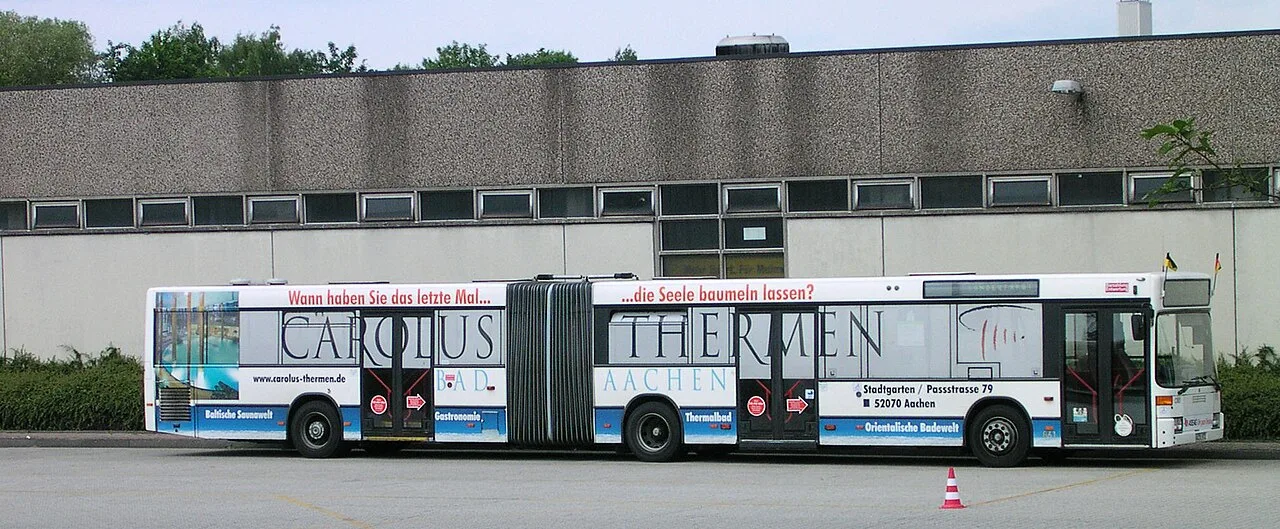
ASEAG runs the local bus network in Aachen and the surrounding StädteRegion, and its website carries a journey planner, a live departure monitor and current service notices. Start there rather than with a search result, because only the operator reflects same-day disruption such as diversions, roadworks or strike-related cancellations. Plug in your accommodation address and the destination, then compare at least two departure options before deciding on a day.
For anything beyond the immediate Aachen area, cross-check with the wider regional and national planners, since a single through-connection may only be visible in one system. If a route requires a change, look at how long the transfer window is and whether it survives a small delay. A journey that looks short on paper is less appealing if it depends on a tight connection at an unfamiliar station.
Re-check the plan the evening before and again on the morning of travel, and keep the operator's service-notice page open on your phone. Weekend and public-holiday patterns often differ from weekday patterns, and seasonal changes can shift departure times by enough to matter. If the connection looks fragile, switch to a destination with more frequent service rather than hoping the first leg runs on time.
The Ticket Question to Settle First
German regional transit is tariff-based, which means the fare depends on the zones and operators involved, not simply on distance. ASEAG markets the Deutschlandticket on its site as a flat-rate option for local public transport, so it is worth understanding what it does and does not cover before you build a border-crossing day around it. The operator's own ticket pages, not a blog summary, are where the current terms sit.
For destinations in the Netherlands or Belgium, do not assume a German pass extends over the border. Cross-border validity depends on agreements between the participating operators, and those terms change, so verify with the operator that actually runs the service you intend to take. If a pass turns out not to cover the full route, the fallback is usually a separate cross-border ticket or a day ticket for the foreign network.
Keep the ticket decision separate from the destination decision: pick where you want to go first, then price the travel honestly. That avoids the common mistake of choosing a trip because a pass seems to cover it, only to discover at the border that it does not. Museum combination offers exist as well, separate from transport, and Aachen's Suermondt-Ludwig-Museum notes that some ASEAG bus tickets can be combined with museum admission, which is a useful example of how locally specific these arrangements are.
Maastricht: Compact Dutch City, Cross-Border Logistics
Maastricht is the destination that most closely resembles a classic city day out: a walkable historic core, a riverfront, cafés, shops and museums packed into a manageable area. Because it is in the Netherlands, the trip crosses a border, which means the transport question is more complicated than for a domestic German destination. The payoff is a genuinely different urban fabric from Aachen despite the short distance.
The trade-off is straightforward. A cross-border bus or train journey may fall outside the coverage of a purely German ticket, and connections can be less frequent than an equivalent domestic route, as one widely read day-trip guide to the region observes when it flags Maastricht as a bus trip of around an hour that the author had not yet tested personally. Treat that kind of figure as a rough expectation and confirm the current schedule with the operator before you go.
A practical way to structure the day is to arrive late morning, walk the centre on foot, and leave enough slack for the return leg. Because the border complicates the ticket, buy or validate whatever you need before boarding rather than relying on buying on the vehicle. If the operator sells a day ticket for the Dutch side, do the arithmetic against a single return before choosing.
Monschau: The Small-Scale Counterpoint in the Eifel
Monschau is the opposite of a city day out: a small Eifel town of half-timbered houses packed into a narrow river valley, with the surrounding hills close on both sides. One traveller writing about the region describes it as a village you can walk through in roughly half an hour, which makes it a useful benchmark for expectations rather than a fixed rule. That compactness means the trip is about atmosphere, walking and a slow meal rather than ticking off sights.
Monschau suits travellers who want one clear destination and a calm pace instead of a packed checklist. It also stays inside Germany, which keeps the ticket question simpler than Maastricht or Liège; the same source treats Monschau and Aachen as comfortably combinable on a single outing when travelling by road. If you are relying on public transport instead, check the bus connection carefully, since a valley town has fewer services than a city on a main line.
The counterargument is that a very small town can leave you with time to spare if the weather turns or you are not in the mood for strolling. Pair it with a short stop somewhere else, or accept that the day is deliberately unhurried. Either way, do not plan Monschau as if it were a city with dozens of separate attractions; plan it as a walk with lunch in the middle.
Drielandenpunt: A Boundary Marker, Not a Town
The Drielandenpunt, also called Dreiländereck, is the point where the German, Belgian and Dutch borders meet on the Vaalserberg, and it is worth being precise about what that means. The border point itself is a marker and public outdoor area rather than a settlement, so there is no old town to wander and no main street. What surrounds it, including the maze and the tower, are separate paid attractions rather than part of a single ticket.
The section at the Labyrinth Drielandenpunt and the viewing tower are commercial attractions with their own entry, which is why the site works better as a half-day than as a full one for many visitors. If you want the classic three-country photo and a walk in the woods, an afternoon is often enough; if you also want the maze, tower and play areas, you can fill longer. That is a judgement call based on who is travelling with you, not an objective ranking.
Because the site sits on the Dutch side of the border near Vaals, check the current access arrangements and any seasonal opening pattern with the operator before travelling, and verify transport with ASEAG or the Dutch operator as appropriate. Aachen's own tourism site lists the Dreiländereck among regional activities, which confirms its role as a classic local outing rather than a hidden one. Note too that a border crossing means carrying ID, since identity checks are possible on cross-border services.
Liège: The Belgian City Option
Liège adds what the other three do not: a large Walloon city with its own culinary identity, a busy riverfront and a scale that rewards a full day of walking. It is a French-speaking environment, so the language shift is more pronounced than in Maastricht or the border area, and prices are in euros but under Belgian pricing conventions. For travellers who want a city day with a distinct regional feel, Liège is the natural counterpart to Maastricht.
The practical question is the ticket, because Liège sits well inside Belgium and a German regional pass is unlikely to cover the whole route. Verify coverage with the operator running your connection rather than assuming, and expect that a cross-border service may sit outside the standard German fare structure. One regional roundup lists Liège among destinations reachable from Aachen while noting the author had not yet visited, so treat any timing claims as unverified.
If you go, structure the day around a compact walking loop and leave buffer time for the return, since an evening connection from a foreign city can be less forgiving than a domestic one. Carry ID, check whether your bank card works in Belgian machines, and keep the operator's disruption page handy. For comparisons of how other German cities handle similar excursions, our guide to day trips from Berlin shows a comparable approach to choosing between city and landscape options.
Choosing Between the Four
The simplest decision framework is to ask what kind of day you actually want. If you want density, cafés and shops, choose Maastricht or Liège; if you want a quiet walk in a small town, choose Monschau; if you want outdoors and a landmark with a view, choose the Drielandenpunt. None of these is objectively better, and the wrong choice usually comes from mismatching the destination to your energy level rather than from picking a weak place.
A second filter is tolerance for border complexity. Monschau keeps you inside Germany, which simplifies tickets; the other three involve crossing into the Netherlands or Belgium and therefore require you to verify coverage. If you are travelling with a group or with children, fewer moving parts often beats a more ambitious destination. If you are solo and comfortable with planning, a cross-border trip is straightforward once the ticket question is settled.
A third filter is time available, and that is where the half-day question becomes decisive rather than theoretical. Consider pairing a city day with a landscape day across two days, which is the pattern suggested in our 3 days in Aachen itinerary, so that a long excursion does not crowd out the city itself.
If You Only Have Half a Day
For a short window, the Drielandenpunt is the most natural fit, because the essential experience is arriving, seeing the border point and walking a little. Monschau can also work if the connection is convenient, since the town itself is compact and a two-hour stroll plus a coffee covers its core. Both of these are realistically doable in an afternoon without feeling rushed, provided the transport cooperates.
Maastricht and Liège are harder to compress. A city with cafés, shops and museums punishes a rushed visit, and if the cross-border connection is infrequent you can lose an hour each way to waiting. If those are your only options in a half-day, narrow the scope deliberately: pick one district or one museum, and accept that you are sampling rather than seeing the city.
The honest answer is that a half-day plan should include a generous return buffer, because the last connection of the day is the one you cannot afford to miss. Check the final departure times before you leave Aachen, not when you are already tired in a foreign city. That single check turns a potentially stressful afternoon into a manageable one.
Cross-Border Practicalities Worth Ten Minutes of Preparation
Carry valid identification whenever you cross a border, even on a short regional bus or train ride, because checks are possible and rules can differ from what you are used to at home. Currency is euros in all four destinations, so no exchange is needed, but card acceptance and payment habits vary between Germany, the Netherlands and Belgium. Small cash amounts remain useful for kiosks, market stalls and small cafés.
Language shifts noticeably: German in Aachen and Monschau, Dutch in Maastricht, French in Liège, with English widely understood for basic transactions. Learning a few courtesy phrases is a small effort that improves interactions, especially in smaller establishments. A stock photograph of Aachen taken from the Lousberg is a reminder of how quickly the city's skyline gives way to the surrounding cross-border countryside once you climb above the centre.
Finally, re-check schedules the day before and again on the morning of travel. Regional operators publish disruption notices, and a route that worked last month can be affected by engineering work, diversions or strike action. If you cannot confirm a connection, choose a different destination rather than travelling on an assumption.
Basing Yourself in Aachen Between Trips
Aachen rewards at least a day of its own, and its cathedral is the obvious starting point. The cathedral's own visitor page states that admission to the cathedral is free, and that the choir and the Hochmünster with the imperial throne are only accessible as part of a guided tour. That distinction matters: you can walk into the church without a ticket, but you cannot see the throne that way.
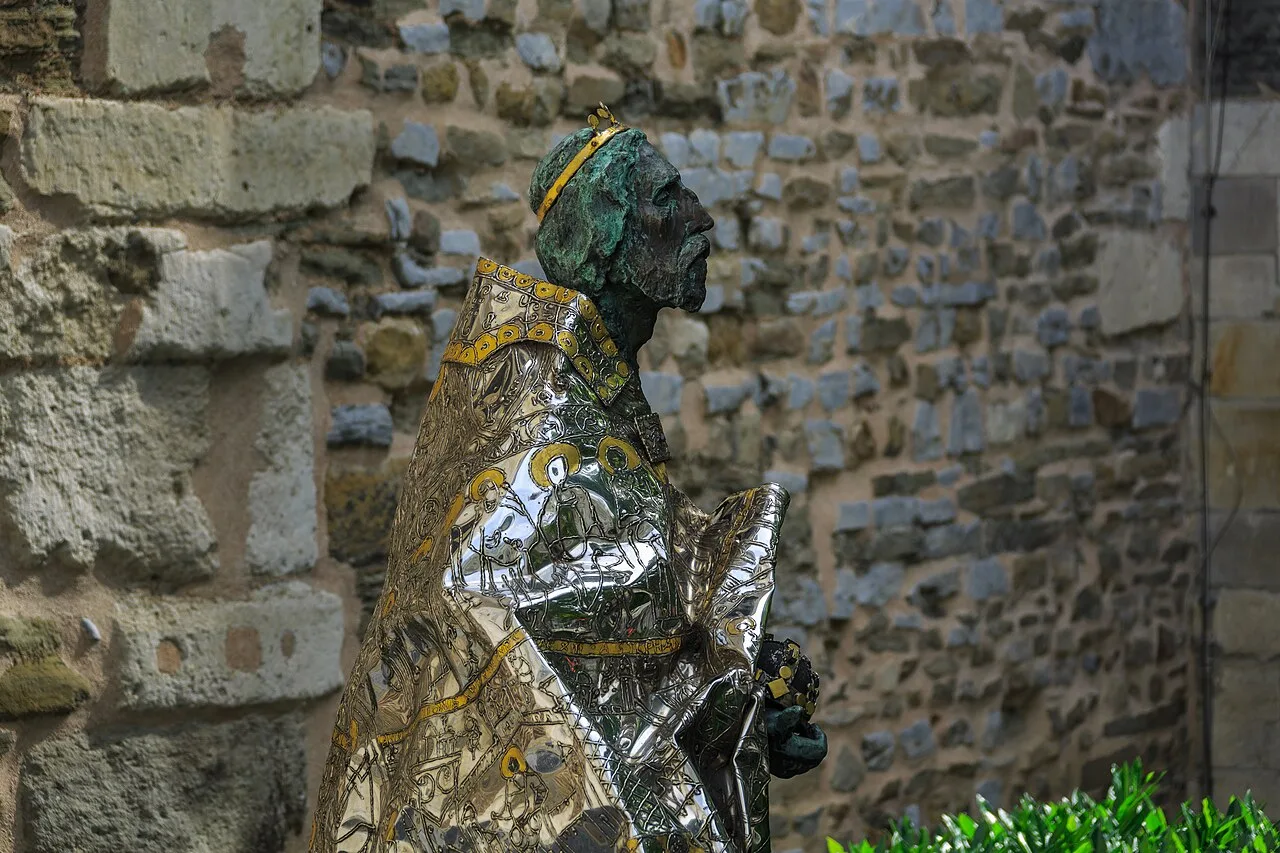
The Cathedral Treasury is a separate ticketed collection, not part of the free cathedral entry, so treat it as its own visit with its own timing. If you want a broader historic context for the city, the Couven Museum occupies a house at Hühnermarkt that was remodelled in the eighteenth century, and it presents period rooms rather than a single blockbuster exhibit. Together these give Aachen enough substance that a day trip out and a day in the city balance well.
For the full set of Aachen landmarks and visitor details, the Aachen: Landmark Visitor Guides hub collects the individual attraction pages in one place. Read it alongside this guide so that the day-trip plan and the city plan support each other rather than competing for the same hours.
Plan Your Visit
Build your days in pairs: one city excursion and one landscape excursion, with a full Aachen day in between to recover. That pattern spreads the travel effort, keeps the ticket questions manageable, and leaves room for the cathedral and the old town without cramming. It also means a single disrupted connection does not derail your entire stay.
Before each outing, confirm the connection with ASEAG or the relevant operator, verify whether your ticket crosses the border, and carry identification. If you are staying longer and want help sequencing the city itself, our 2 days in Aachen itinerary gives a compact framework that pairs well with these excursions.
Treat everything here as a starting framework rather than a schedule. Operators change timetables, attractions adjust entry arrangements, and border rules evolve, so the last word should always come from the operator or the attraction itself on the day you travel.
Frequently Asked Questions
Do I need a car for day trips from Aachen?
No. Aachen is served by a regional bus network and has rail connections in several directions, and all four destinations in this guide can be reached without driving. The caveat is that cross-border services may run less often than domestic ones, so the trip requires more checking. Use the operator's journey planner to confirm connections before you commit to a destination.
Which day trip from Aachen is easiest without a car?
It depends on how you define easy. A destination inside Germany avoids the ticket uncertainty of a border crossing, while a destination with frequent service reduces the risk of a missed connection. Check current frequency and transfer requirements on the day you plan to travel, because easier options can change with timetable revisions and seasonal patterns.
Can I use a Deutschlandticket to reach Maastricht or Liège?
Do not assume it covers a cross-border journey. ASEAG describes the Deutschlandticket as a flat rate for local public transport, but validity across a border depends on agreements between the operators involved, and those terms change. Confirm directly with the operator running your specific service before relying on the pass for a trip to the Netherlands or Belgium.
Is the Drielandenpunt worth a full day or just a short stop?
That is a judgement call rather than a fact. The border point itself is an outdoor marker and public area, while the maze and the viewing tower are separate paid attractions with their own entry. If you only want the three-country view, an afternoon is often enough; if you want the maze, the tower and the surrounding walks, you can comfortably spend longer. Decide based on who is travelling with you.
Sources
- ASEAG ► Größtes Verkehrsunternehmen im Aachener Verkehrsverbund
- The Easiest Day Trips From Aachen (by Train!) | Tall Girl Big World
- THE PERFECT DAY TRIP: MONSCHAU AND AACHEN
- A place to visit - Aachener Dom Aachener Dom - A place to visit
- Aachen Tourismus - aachen tourist service
- Home - Couven Museum
- Aachen top view from Lousberg Stock Photo - Alamy
- Visitor information - Suermondt-Ludwig-Museum EN


