

Aachen Cathedral is open daily from 7 am to 6 pm and admission is free, but the choir, the Hochmünster and the imperial throne are only accessible as part of a guided tour, according to the cathedral's own visitor page. That single distinction shapes a two-day trip: the city's headline sight costs nothing to enter, while a set of surrounding interiors are separately ticketed. Aachen rewards two days rather than one because its sights fall into two moods, and the compact Old Town stacks the cathedral, Katschhof, Rathaus and Markt within a few minutes of each other. Start with our city hub if you want the wider picture before committing to a plan.
As a suggested duration rather than an official figure, allow roughly half a day for the free Old Town core, with the cathedral itself taking about an hour on foot. The useful mental split for the trip is free public space versus paid interior: Elisenbrunnen, the Elisengarten archaeological window, the Katschhof and the Markt cost nothing to walk through, while the Cathedral Treasury, the Rathaus rooms and the city museums require tickets. If you would rather compress everything into a single loop first, our one day in Aachen itinerary is the tighter version of this same core.
Practical Framing Before You Book
The most common planning mistake is assuming one cathedral ticket covers everything. The Cathedral itself is free to enter, but the Cathedral Treasury is a separate visit with its own opening hours and its own ticket, bought in person at the Cathedral Information Centre, also called the Dominformation. That visitor centre keeps its own service hours, published on the cathedral's pages, and it is the central contact and sales point for cathedral tours and treasury tickets. Picking up what you need there on day one removes the risk of arriving at a counter on day two without a slot.
Because cathedral hours can shift at short notice for services, concerts and events, the operator recommends calling the Dominformation or checking the current week's opening times before you travel. That is not bureaucratic caution for its own sake: a concert or a wedding can close the nave to tourists on the exact afternoon you had planned around. Treat any itinerary, including this one, as a sequence rather than a schedule. Aachen's official city portal and the tourist office both publish current listings worth checking the week you go.
Museum opening patterns also split across the week rather than running uniformly. The Couven Museum's operator lists Tuesday to Wednesday from 1 pm to 5 pm and Thursday to Sunday from 10 am to 5 pm, with temporary closures for exhibition changeovers. Admission and guided tours are free for everyone up to the age of 21 from the City of Aachen and the Aachen City Region, a rule that matters if you are travelling with teenagers. Guided tour numbers are limited and reservations are not possible, with participation tickets sold at the desk from 30 minutes before the start. Check the museum's own calendar before building an afternoon around it.
Day 1 Morning: The Imperial Core on Foot
Begin at the cathedral, because everything else arranges itself around it. The Carolingian octagon, the Barbarossa chandelier, the mosaics and Charlemagne's shrine are the reason Aachen holds UNESCO status, and the building's compact size means an hour genuinely covers the main interior. Wear something you can stand in, since the useful viewing is done on your feet rather than from a bench. If you want the detail behind the architecture before you arrive, the Aachen Cathedral visitor guide on this site goes deeper on what you are looking at.
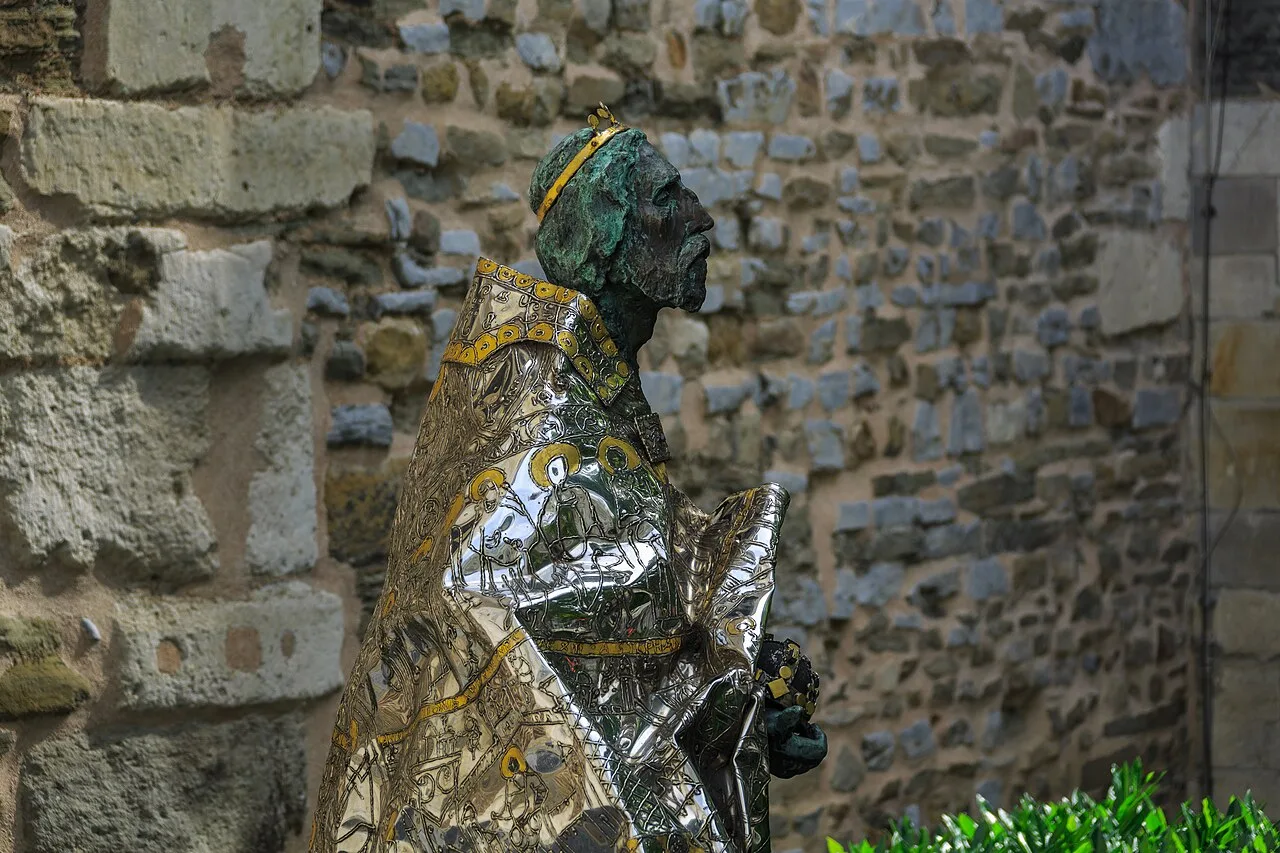
From the cathedral, walk out onto the Katschhof, the square that links the Dom to the Rathaus. This is where you can still read the outline of Charlemagne's palace complex, and it is the natural pause point between the two halves of the morning. The Aachen Rathaus stands on the former palace site and its Coronation Hall, or Kaisersaal, is where coronation banquets were once held; the building is still used by the city council, so visitor access depends on whether it is in session. The Markt in front of it is a good place to slow down and take stock.
Use the Route Charlemagne brass markers as your sequencing device rather than following a list of pinned coordinates. The markers run through the city and connect the sites tied to Charlemagne's life and legacy, which gives the walk a logic instead of turning it into a dot-to-dot of buildings. Our A Dom Viertel Walk in Aachen covers the same compact quarter in more detail if you want a structured route through it. The practical benefit is simple: you stop deciding where to turn next and start noticing what you are walking past.
Day 1 Midday: Printen, Elisenbrunnen and the Elisengarten
Aachener Printen are the local signature and they are worth treating as a stop rather than a snack. The biscuits carry an EU Protected Designation of Origin, which is why genuine versions are made in Aachen and why copies sold elsewhere under the same name are a different product. They are firm and heavily spiced, so a bag bought near the Dom doubles as a gift you do not have to think about again. Bakeries and specialist shops cluster in the Old Town around the cathedral and the Markt.
Elisenbrunnen is the free, unmissable piece of Aachen's spa identity, and the tourist information centre is housed in the same building, which makes it a sensible first orientation stop. The neoclassical pavilion was completed in 1827 and two warm sulphur springs still run there, so you will smell it before you see it. Pair it with the Elisengarten just behind, where a covered pavilion known as the Archaeological Window lets you look down at excavated Roman and medieval foundations. Both are free and together they take well under an hour.
This is also the right moment for the practical errand most two-day visitors forget. The Tourist Info at Elisenbrunnen keeps published service hours, and the Dominformation is the central contact and sales point for cathedral tours and treasury tickets. If you are considering extending the trip, our 3 days in Aachen itinerary shows which outlying stops justify the extra day inside the city.
Day 1 Afternoon: Choose One Ticketed Interior
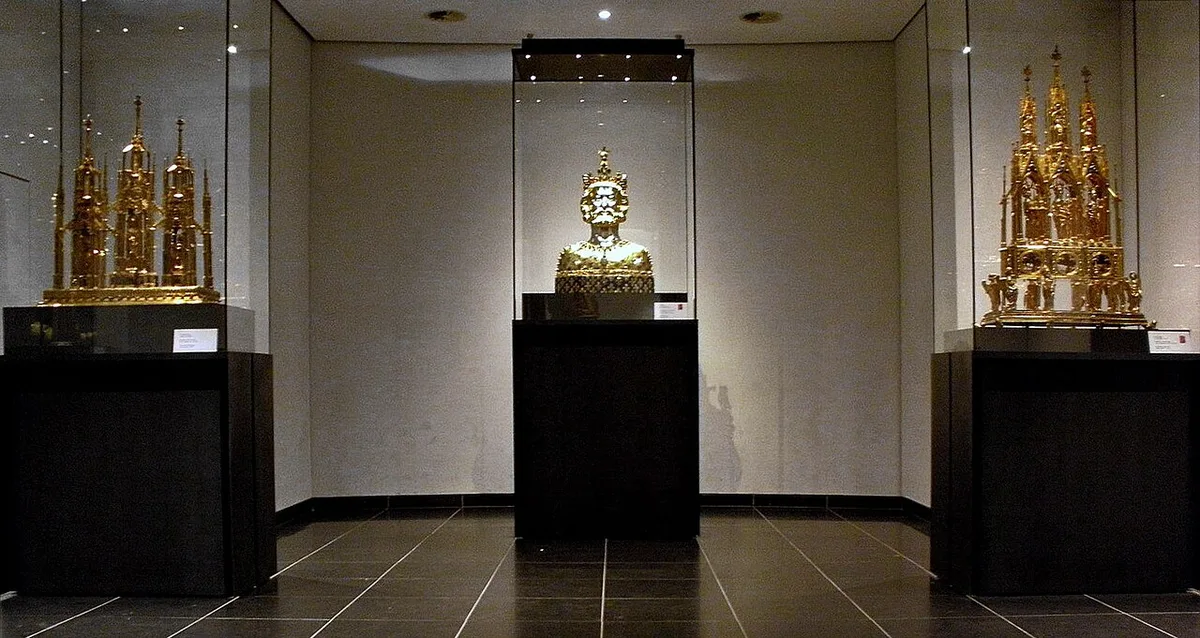
The temptation on a two-day trip is to stack three paid interiors into one afternoon, and it rarely produces a better day. Pick one and give it real time. The Cathedral Treasury is the strongest single choice for most visitors: the operator describes it as the most important and extensive church treasure north of the Alps, with roughly 130 works of art displayed across three floors. Tickets are bought in person at the Cathedral Information Centre, and the treasury keeps its own opening hours separate from the cathedral's.
If decorative interiors appeal more than goldwork, the Couven Museum at Hühnermarkt is the alternative, and it is a genuinely different experience. It occupies a house rebuilt in the 1780s by the architect Jakob Couven on behalf of Andreas Monheim, and opened as a museum in 1958, and its period rooms show how prosperous Aachen households lived across the eighteenth and nineteenth centuries. Its split opening pattern means Tuesday and Wednesday afternoons are short, so plan it for a Thursday to Sunday slot instead.
The Centre Charlemagne sits between the cathedral and the Rathaus and tells the city's story from prehistory through to Charlemagne's reign and beyond, which makes it the natural complement to a morning spent looking at the buildings themselves. If you only want one museum and you have already done the treasury, this is the one that fills in the context you have been walking through. Whichever you choose, leave the late afternoon free; the Old Town is at its best when you are not watching a clock.
Day 1 Evening: Dinner Near Markt or Along Pontstrasse
Aachen gives you a clear choice at dinner and it is worth making deliberately. Around the Markt and Katschhof the offer leans traditional and atmospheric, with historic houses serving dishes such as Aachener Sauerbraten, a beef preparation using the local Printen. Along Pontstrasse, running toward the medieval Ponttor gate, the character changes completely: student bars, kebab shops, Lebanese restaurants and casual eateries, cheaper and later. The trade-off is ambience and a longer walk versus price and energy.
Rather than treating any named restaurant as a fixed plan, use the districts as your decision and pick the specific table on the day. Menus, opening hours and reservation policies change seasonally and are not something you can safely lock in months ahead. Walk the street once, look at what is busy, and go in. That approach also protects you from the common trap of booking somewhere across town and then abandoning it for whatever looked better on the walk back.
The Multi-Museum Ticket Decision
Aachen has a city-level multi-museum ticket that bundles several of its museums under one purchase. The honest framing is that it only pays off if you will genuinely enter several of the included museums within the validity period. On a two-day trip, most visitors will realistically manage one, possibly two. If that is your pattern, a single ticket bought at the door is the better call, and it also leaves you free to change plans without feeling obliged to redeem a pass.
The trap is treating a combined ticket as a saving before you have decided what you actually want to see. Read the current inclusion list and validity rules carefully, because museum rosters and terms change and a pass bought for the wrong collection is simply a more expensive single ticket. The city and the individual museums publish their own ticketing terms, so verify with the operator rather than relying on an older blog figure. Decide what you want to enter first, then check whether the pass covers it.
Day 2 Option A: The Lousberg and Belvedere Half-Day
The Lousberg is Aachen's local hill and the obvious green counterweight to a day spent among stone and stained glass. The Belvedere tower on its slopes appears in the tourist office's own activity listings, alongside the Aachener Wald and the GrenzRouten walking routes, so treat those listings as your source for what is currently open and reachable. This is a half-day of walking and views rather than a tick-box sight, which is exactly why it suits day two. Bring shoes that handle a slope and check the weather before you commit.
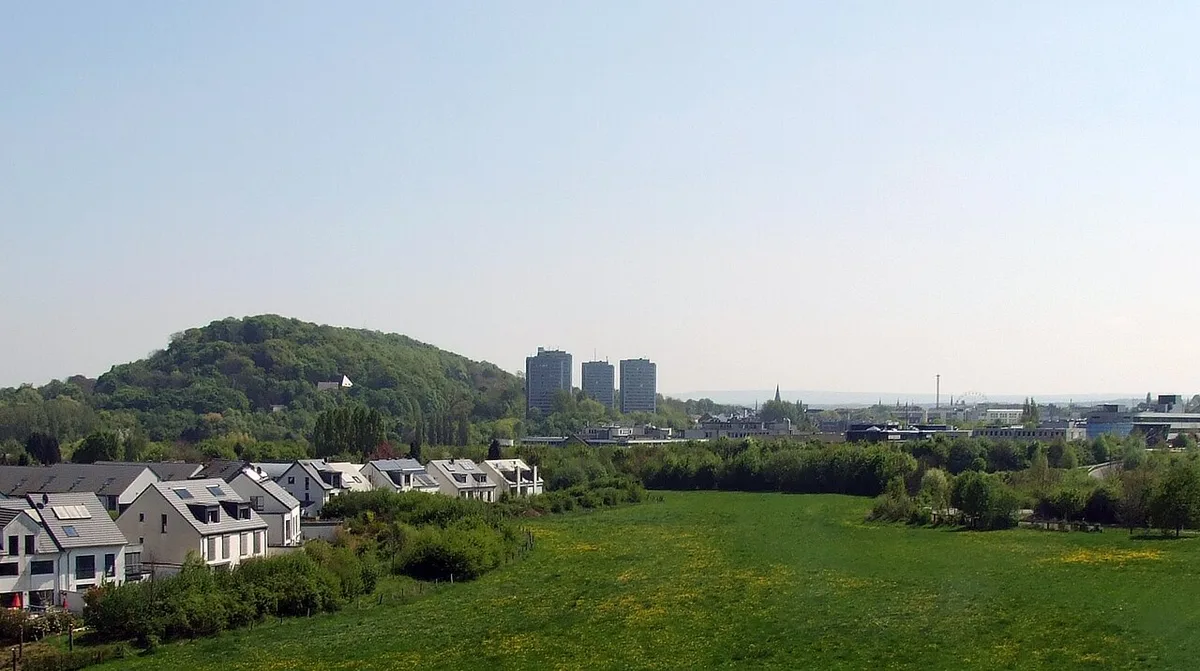
There is no single official Lousberg itinerary, so build your own rather than hunting for one. The honest advice is to pick an entry point, walk up, eat something, and walk down by a different line, using the city's own green-space listings to confirm what is there. Frankenberger Park is the larger in-town alternative if you would rather stay on level ground near the centre. Either way, the point of day two's morning is to stop moving between attractions.
Day 2 Option B: Burtscheid and the Thermal-Spring Side
The other fork for day two is Burtscheid, the district that carries Aachen's spa identity beyond the Old Town. Aachen's thermal springs have drawn visitors since Roman times, and the water that supplies the modern spa comes from the same geological system that made the city a bathing destination in the first place. A slower morning here trades monument-hopping for the thing Aachen is actually famous for. The Kurpark in the district is listed among the city's green spaces if you want a fixed anchor point.
This is the fork to choose if you have already decided the spa afternoon is the priority of day two, because the two fit together naturally. It is also the better option in poor weather, since the walking is short and the reward is indoors. Whichever you pick, do not attempt both: the Lousberg and Burtscheid pull in different directions, and splitting the morning between them leaves you with an hour in each and a rushed afternoon.
Day 2 Afternoon: A Carolus Thermen Session
Carolus Thermen is the modern expression of Aachen's two-thousand-year bathing tradition, and the operator lists a thermal bathing area, a sauna world, a spa area and on-site dining as separate parts of the complex. Those are operator-listed features, not guarantees for any given day, and individual areas can be closed or restricted for maintenance. Look at the operator's own pages for what is running, what to bring and how to book. The site also publishes current occupancy information, which is genuinely useful for deciding when to arrive.
Block more time than you think you need. A thermal bath visit is not a one-hour stop: changing, showering, moving between pools and saunas, and then drying off and leaving eats into any session. As a suggested duration, two to three hours is a realistic minimum for the bathing area alone, and longer if you want the sauna world as well. Because tickets for the thermal baths and the sauna areas are separate products at many spas of this kind, confirm what your chosen ticket actually includes before you pay.
If the spa is the reason you came, do it on day two as planned rather than squeezing it into arrival day. A session is far better when you are not watching the clock for a dinner reservation, and day one already has enough in it. If you want to see the whole of Aachen mapped out over a longer stay before deciding, the A 3-Day Aachen Itinerary is the natural next step.
What to Skip on a Two-Day Trip
The Three Country Point, where Germany, Belgium and the Netherlands meet, is the most commonly recommended add-on and the one that costs you the most time. It sits outside the city, and the area around it has taken on a fairground character with queues for the classic photograph. There are quieter markers nearby if the photo matters more than the atmosphere. It belongs in a three-day plan or a dedicated excursion day, not in two.
The same logic applies to GaiaZOO across the border in Kerkrade, the Aachener Tierpark and the outlying factory outlets and shopping centres. Each is a half-day in itself once you account for getting there and back, and each replaces one of the two things that make Aachen distinctive. If you have already committed to a two-day trip, protecting the Old Town and the spa is the better use of your hours. Save the excursions for a return visit, or extend to three days and give one of them a full slot.
Where to Base Yourself
Three base areas make sense in Aachen and each has a clear trade-off. The Old Town, around the cathedral and Rathaus, puts everything on day one within walking distance and gives you the atmosphere in the evening, at the higher end of the price range. Pontstrasse suits social travellers and budget eaters, with bars, casual restaurants and late-night options on the doorstep. Near Aachen Hauptbahnhof is the practical choice for late arrivals and early departures, though it is the least charming of the three.
If you arrive by car, note that Aachen operates a low-emission zone and certain vehicles need an environmental sticker to enter the centre, a detail worth confirming before booking a hotel with parking. Arriving by train removes that concern entirely and puts you within a walk of the Old Town from the Hauptbahnhof. For a city break of this length, the Old Town base usually wins unless you have a very early departure.
Accessibility and Etiquette at the Cathedral
The cathedral's own visitor information sets out what to expect, and it is worth reading before you go rather than at the door. Wheelchair users are asked to ring the bell at the cathedral entrance so staff can bring the mobile ramps, which have a 300 kg weight limit, and visitors using a power chair can only enter via the Krämertür entrance on Krämerstrasse. The lift in the Cathedral Treasury entrance area has the same 300 kg limit. These details come from the operator's own page and are the ones to rely on.
Photography inside the cathedral is permitted subject to a contribution paid to the Domschweizer, and the operator states that tripods, selfie sticks and flash are not allowed. Commercial, media and academic photography requires a written permit that must be presented on request. Beyond the rules, the cathedral describes itself plainly as a place of worship and asks visitors to respect that, which matters most when a service is in progress and the building is closed to tourists.
Seasonal Note: The Christmas Market
Aachen's Christmas market changes the footprint of the Old Town rather than just adding a stop to it. Stalls spread around the cathedral and past the Rathaus, and the market regularly features traders from Belgium, France and Germany alongside the German ones, which is unusual for a market of this size. If you are travelling in the run-up to Christmas, expect the squares you walked through on day one to look and feel completely different. The tourist office publishes confirmed dates each season.
The practical consequence is that the cathedral square and the Markt become bottlenecks in the evenings, so shift your walking to the morning and the ticketed interiors to the afternoon. Do not plan a two-day trip around the market without confirming that this year's edition is actually running during your dates; market dates and stall line-ups change annually and should be checked against the organiser's own announcement. If the market is the main reason for your visit, build the itinerary around it rather than trying to fit it in after a full day.
Plan Your Visit
The shape of a good two-day Aachen trip is straightforward once you accept the split. Day one belongs to the imperial core: the cathedral and its free entry, the Katschhof, the Rathaus and the Markt, with one ticketed interior chosen deliberately rather than three chosen optimistically. Day two belongs to the spa and green side, with the Lousberg and Burtscheid as genuinely different half-day options and a Carolus Thermen session as the afternoon anchor.
Before you travel, do three things: confirm the cathedral's opening times and treasury hours with the Dominformation, check the Couven Museum's calendar if a museum is on your list, and look at what the spa operator is currently listing. Confirm any multi-museum ticket's inclusions and validity at the point of sale rather than from an older article. Those checks take ten minutes and remove most of the ways a two-day trip goes wrong.
If two days leaves you wanting more, the obvious extensions are the longer Aachen itinerary on this site or one of the cross-border towns within easy reach. If it leaves you wanting a different German city break to compare against, our 2 days in Dresden itinerary and our 2 days in Berlin itinerary both run on the same city-level decision logic used here.
Frequently Asked Questions
Is two days in Aachen enough?
Two days covers the Old Town core comfortably and leaves room for either a green half-day or a spa session, which is more than a day trip allows. One day is enough for the cathedral, the Markt and Elisenbrunnen, but it leaves no space for the thermal-spring side of the city that gives Aachen its identity. If you also want a museum, the Lousberg and a full spa afternoon, three days is the more honest figure.
Is Aachen Cathedral free to enter, and what costs extra?
Admission to Aachen Cathedral is free, but the choir and the Hochmünster with the imperial throne can only be seen as part of a guided tour. The Cathedral Treasury is a separate visit with its own ticket, bought in person at the Cathedral Information Centre, and photography inside the cathedral is subject to a contribution paid to the Domschweizer. Check the cathedral's own visitor pages for current hours and tour times, since services and concerts can change them at short notice.
Should I do the spa on day one or day two?
Day two suits most visitors better. A thermal bath session needs a generous block of time once you include changing and moving between areas, and it is far more enjoyable when you are not watching the clock for a dinner booking. Day one is better spent on the cathedral, the Katschhof and one ticketed interior while your energy is fresh. If the spa is the main reason for your trip, reverse the order and put it first, then treat the Old Town as the relaxed second day.
Is the Three Country Point worth adding to a two-day Aachen itinerary?
It is a fun excursion but a poor fit for two days. It sits outside the city, the surrounding area has a busy fairground atmosphere, and reaching it and returning consumes roughly half a day that would otherwise go to the Old Town or the spa. It works well on a three-day trip or as a dedicated outing. If you do go, check current access details with the site operator before setting out.
Where should I stay in Aachen for a two-day trip?
The Old Town around the cathedral and Rathaus is the best base for a short trip, because nearly everything in this itinerary is walkable from there and the evening atmosphere is the reason many people stay over. Pontstrasse suits travellers who want bars and budget food on the doorstep. Near Aachen Hauptbahnhof is the practical choice for late arrivals and early departures, though it is the least characterful of the three areas.
Sources
- https://carolus-thermen.de/
- Is Aachen Worth Visiting? Our 1-Day Itinerary + Hidden Gems
- Top Things to Do in Aachen: The "City of Charlemagne" | Tall Girl Big World
- A place to visit - Aachener Dom Aachener Dom - A place to visit
- Willkommen in Aachen | Stadt Aachen
- Aachen Tourismus - aachen tourist service
- Frankenberger Park, Aachen Travel Guide | Evendo
- Home - Couven Museum


