

Aachener Printen are a hard, low-moisture spiced baked specialty tied to Aachen, and the city treats them as a signature food rather than a generic Christmas cookie. The dough is made with flour, sweeteners, a spice mix and only a small amount of water, and contains no eggs, fat or milk, which is why the baked result sets firm rather than soft. This guide covers what actually distinguishes them, one historic bakery to use as a starting point, and how to buy them without guesswork.
Two details frame everything else. First, the dough's lack of eggs, fat and milk is what produces the dense, dry texture rather than a soft, cake-like crumb. Second, the sweetener shift in the early nineteenth century after Napoleon's Continental Blockade, when local sugar beet syrup and beet sugar replaced imported honey, made the dough stickier and stiffer and ended the era of pressing it into fine wooden moulds. That is why today's Printen are typically flat slabs rather than stamped figures.
Plan the bakery stop as part of an old-town walk rather than a separate trip: the cathedral and the surrounding lanes sit within a few minutes of each other. If you are building a fuller day, a one day in Aachen itinerary and a look at hidden gems in Aachen show how compact the centre is and how a food stop fits without doubling back.
What Aachener Printen Actually Are
Aachener Printen are a type of German gingerbread, but the comparison undersells the difference. They are made from flour, sweeteners including beet sugar and beet syrup, a spice mixture, leavening agents rather than baking powder, and only a small amount of water. Because the recipe includes no eggs, no fat and no milk, there is almost nothing in the dough to keep it soft, so the baked cookie sets hard.
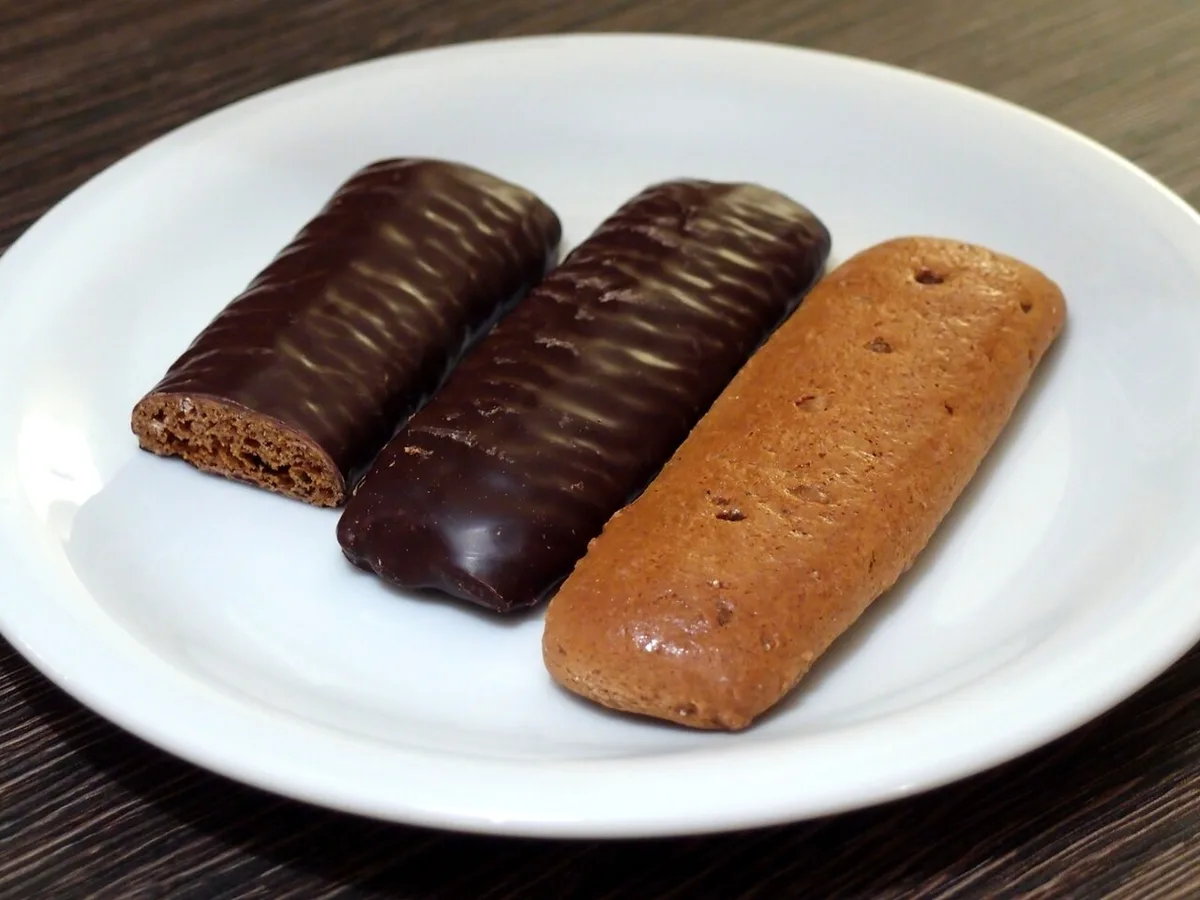
The result is a flat, dense slab rather than a plump, cake-like Lebkuchen. This is a consequence of the ingredient list, not a fault in production: a low-moisture dough behaves differently in the oven and on the shelf. That is also why the texture reads as crisp and brittle on the edges but slightly yielding in the middle when the cookie is fresh.
Aachen's Printen are protected under a Designation of Origin label, which restricts where commercially sold Aachener Printen can be made. Treat that as a shopping cue rather than a quality guarantee: the label tells you the product meets the regional definition, not that every bakery uses the same recipe or spice ratio. Each house guards its own blend, and differences between shops are part of the experience.
Why the Dough Is So Hard
The hardness is a moisture problem, not a baking mistake. The dough carries virtually no water compared with a standard cookie, and its sugars caramelise during baking, which firms the structure further. Each bite ends with the tiny crystals of brown rock sugar suspended through the dough, and those crystals are the reason a good Printen crackles instead of crumbling.
Bakers also rely on traditional leavening agents rather than modern baking powder. Baker's ammonia breaks down during baking and leaves small air pockets in the crumb, giving an otherwise rock-hard cookie a lighter, more delicate crunch. This is a technique question as much as a flavour question, and it is why a well-made Printen feels crisper than its density suggests.
For a visitor, hardness translates into a handling decision. Flat slabs are robust in a bag and forgiving in a suitcase, but they shatter rather than bend, so a soft bag in a crowded daypack is a poor container. If you plan to carry them all afternoon, ask for them boxed or keep them flat and protected under something soft.
From Dinant Moulds to Napoleon's Blockade
The origins point across the border rather than to Aachen alone. Moulded gingerbread is generally traced to Dinant in present-day Belgium, the home of the first bakery for moulded gingerbread, and the tradition arrived in Aachen through the region's dense trading and craft links. Printen were originally sweetened with imported honey and were pressed into wooden moulds cut with saints, soldiers and other figures, in the same broad family as Belgian speculoos.
The decisive break came in the early nineteenth century. Napoleon's Continental Blockade cut off the honey supply, and Aachen's bakers switched to locally produced sugar beet syrup and beet sugar, a change their counterparts elsewhere in Europe did not have to make in the same way. The new sweetener made the dough stickier and stiffer, and it could no longer be pressed cleanly into the fine wooden moulds.
So the flat rectangular Printen sold today is not the original shape but the survivor of a supply crisis. Molasses and beet sugar also changed the taste, giving the cookie a darker, caramel-leaning profile than a honey-sweetened version would have. That trade-off is worth keeping in mind if you ever taste an older-style moulded gingerbread elsewhere and wonder why it seems softer and paler. For a fuller account of this history, the Printen tales page collects the regional narrative of the Dinant connection and the blockade-era switch.
One Historic Bakery: Nobis Printen on Münsterplatz
Nobis Printen is the safest single bakery to name because its record is documented and its history is long. The firm was founded in Aachen in 1858 and is best known for its Printen, with its oldest operating location on Oppenhoffallee opening in 1932. The branch most visitors use sits on Münsterplatz, directly beside the cathedral, so it fits neatly into a sightseeing route rather than requiring a detour.
The Münsterplatz shop is split in a way that rewards a moment's orientation. An entrance leads into the cafe and bakery, while the Printen shop has its own door to the left and connects to the cafe inside. The Printen section is decorated in a festive style year-round because the product is traditionally a Christmas cookie, so a summer visit does not mean a stripped-back shelf.
Ranges and formats change, and opening hours shift with staffing and season, so do not plan around a fixed schedule from an old blog post. Check the shop's own website or call before making a special journey, especially on a Sunday or a public holiday, and treat any hours you find in a dated travel article as history rather than a current timetable. The Aachen tourist service maintains a business and attraction directory you can cross-check against the shop's own listing.
Reading the Shelf: Plain Slabs Versus Decorated Shapes
Most shops place the plainest Printen behind the counter rather than in the window display. The decorated and chocolate-coated pieces dominate the front shelves because they photograph well, but the unornamented slabs are the ones closest to the traditional product and the easiest to judge by texture. If you want to understand what Printen actually taste like, start there and only then consider the iced or coated versions.
Beyond the plain slab you will typically find chocolate-coated pieces, versions studded with nuts, and a thinly iced type often sold as Princess Printen, along with shaped pieces cut for seasonal themes. These are variations on the same dough rather than different products, so the choice is about surface and shelf life more than about flavour family. Chocolate and icing add moisture and fat, which is precisely what the plain version lacks.
Judging freshness without tasting is limited but not impossible. Look for a glossy, smooth top surface and an even shape without excessive crumbling at the edges, and be wary of pieces that look dry and dusty or whose sugar has visibly bloomed. Many shops sell broken or irregular pieces more cheaply, which is a sensible way to try a house before committing to a full slab. Any price you see quoted online should be checked against the shelf price on the day, since Printen are sold by weight and prices move.
Tasting Notes Worth Knowing Before You Buy
The spice blend is the signature, and it is closer to a gingerbread spice mix than to a single dominant flavour. Expect cinnamon, anise, cloves, cardamom, coriander, candied citrus peel and ginger in varying proportions, with each bakery keeping its own ratio under wraps. The mix is often described generically as Lebkuchengewürz, and a good version tastes freshly toasted rather than flat and dusty.
The second layer is sweetness and caramel. Three types of sugar go into the dough, and they caramelise in the oven, which gives the cookie its deep, slightly bitter edge rather than a pure sugar hit. The brown rock sugar crushed through the dough supplies the intermittent crunch, so a well-made Printen is not uniformly hard but varies from bite to bite.
Serve them with something that cuts the sweetness. Coffee works, and so does a warm mug of Glühwein in winter, when the spice profile reads as seasonal rather than aggressive. Plain Printen are also good alongside a strong black tea or an aged spirit, because the caramel notes hold up against bitterness better than against more sugar.
Buying Gifts Without Guesswork
Start with weight rather than packaging. Printen are sold by weight, and a decorative tin usually costs more for less product than a plain bag of the same cookies, so decide first how many grams you actually need. A tin is worth the premium only if the packaging itself is part of the gift, or if you need protection for a fragile item in transit.
Presentation and durability pull in opposite directions. Decorated slabs, cathedral-shaped tins and iced pieces look impressive but are bulkier, heavier and more likely to break, while loose plain slabs travel flat and stack neatly. If you are carrying gifts in hand luggage or posting them, flat plain Printen in a rigid box survive better than a tall gift tin with a window.
For shipping, do not assume that any bakery sends parcels abroad at a predictable cost. International options change with carrier rates and customs rules, and a figure quoted in an old visitor report tells you nothing about today's terms. Ask the shop directly, or check its own ordering page, and confirm whether the destination country is served at all before you promise a gift. If shipping looks impractical, buying on arrival and hand-carrying is the more reliable route.
Storage Life and Serving
Storage life is the variable most people underestimate, and it splits sharply by type. Plain Printen are effectively dry goods, while chocolate-coated versions have a much shorter window because the coating introduces fat and moisture. That means a mixed bag has the shelf life of its shortest-lived item.
Buy quantities accordingly. If you are stocking up for yourself across the coming months, plain slabs in an airtight container are the sensible purchase, and flavour generally improves rather than declines over the first weeks as the spices settle. If you are buying for immediate gifting or for a specific occasion, the chocolate and iced versions are fine, but do not plan to keep them for months in a warm kitchen.
Keep them away from damp and strong odours, because a dry, spiced cookie absorbs whatever is around it. A tin in a cool cupboard is better than a fridge, where condensation can soften the surface, and better than a shelf above a kettle. If a plain Printen does go soft, a short spell in a low oven restores some of the crunch, though it will not fully reset the texture.
Pairing the Bakery Stop With a Cathedral Visit
The geography makes the sequence easy. Aachen Cathedral stands at Domhof 1, a short walk from the Münsterplatz bakery, and the treasury entrance is a few steps away on Johannes-Paul-II-Straße. Both are in the middle of the compact Altstadt, so you can combine a cathedral visit and a bakery stop without public transport in between.
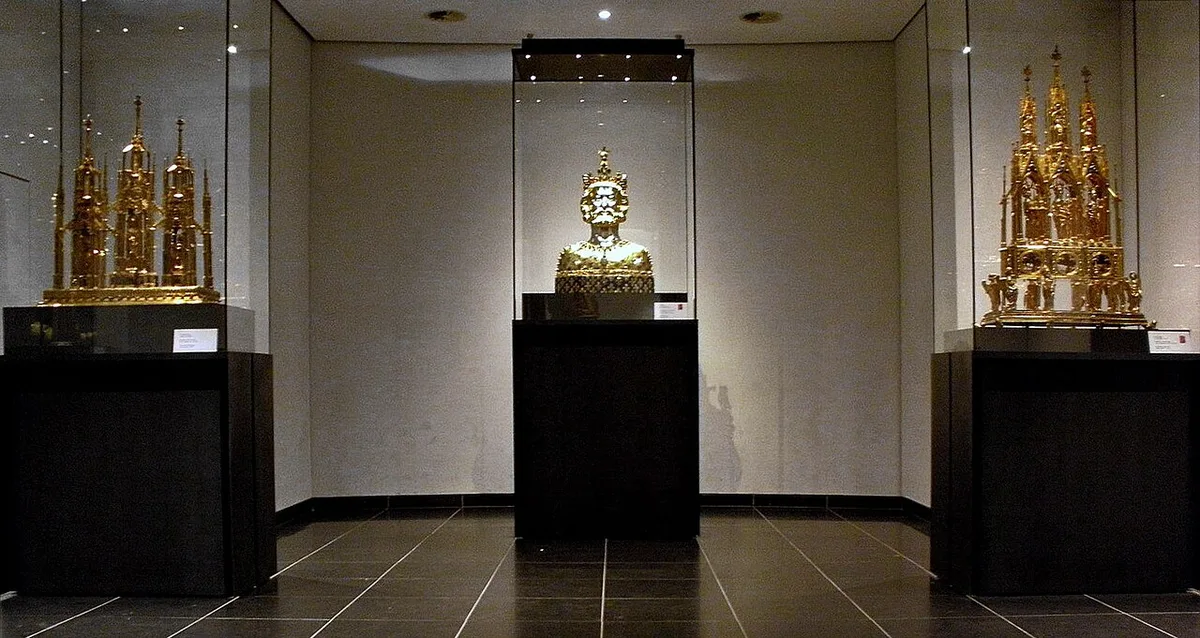
Budget your time around opening patterns rather than around a fixed schedule. Entry to the cathedral itself is free, and the treasury is ticketed separately; the operator publishes current opening hours, tour times and prices, and those are the figures to rely on because they change seasonally. The choir and the upper level with the imperial throne are only reachable on a guided tour, so decide in advance whether the throne is a priority for you.
If time is tight, skip the treasury and use the bakery as the fixed point: arrive, taste, buy, and walk the immediate lanes around the cathedral and town hall. A suggested half-day, and it is only a suggestion rather than official guidance, is enough for the cathedral interior, one bakery and a short wander. If the art museums are the priority, check their own visitor information rather than assuming a shared ticket, because each institution sets its own admission.
Practical Expectations and Limits
Be sceptical of any current figure about how many Printen bakeries operate in the city. No reliable source establishes a present-day count, and the number in circulation in older articles reflects the moment of writing rather than the current market. What can be said with confidence is that the trade is a visible part of the old-town food scene, which is reason enough to walk and compare rather than to hunt a single address.
Production volume is likewise usually an estimate rather than an official statistic. A commonly repeated figure is that Aachen's bakers produce more than 4,500 tonnes of Printen a year, which is useful for scale but should be read as an estimate, not as a published industry census. Treat such numbers as context, not as something to quote as fact.
Prices, opening hours and shipping terms are all volatile and none should be planned around without a check on the day. The same applies to whether a specific variety or gift format is in stock, since ranges are seasonal and production changes. Use the bakery's own listing and the city's official visitor pages to confirm the essentials before you travel.
Plan Your Printen Stop
Treat Aachener Printen as a texture decision before a flavour decision. The plain slab is the truest expression of the dough, keeps longest and travels flattest; the decorated and chocolate-coated pieces are the better choice for immediate gifts. Buying a small amount of both lets you compare without committing to a kilo of the wrong thing.
Build the stop into a walking loop around the cathedral and the surrounding lanes, and check current hours with the shop or the city's visitor listings rather than a dated article. For a wider set of route options, the Aachen: Landmark Visitor Guides hub collects individual site guides you can pair with a food stop.
Frequently Asked Questions
What is the difference between Aachener Printen and ordinary gingerbread?
Aachener Printen are a type of German gingerbread, but the dough contains no eggs, fat or milk and almost no water, so the baked cookie sets hard and dry rather than soft. They are sweetened with sugar beet syrup and beet sugar, heavily spiced, and studded with crushed brown rock sugar that gives an intermittent crunch. Aachener Printen are also protected under a designation of origin, which limits where commercially sold versions can be made.
Why are Aachener Printen so hard?
The hardness comes from the recipe rather than from overbaking. With virtually no water, fat or eggs, there is little in the dough to keep it soft, and the sugars caramelise during baking, which firms the structure further. Traditional leavening agents also leave small air pockets that make an otherwise dense cookie crisper rather than chewy. A plain Printen is meant to be dry and crunchy, while chocolate-coated versions soften over time.
Where can I buy Aachener Printen in Aachen?
Look in the old town, where several bakeries sell them, and start with the documented case of Nobis Printen on Münsterplatz next to the cathedral. Nobis dates to 1858 and runs a cafe and a dedicated Printen shop with separate entrances that connect inside. Beyond that, walk and compare, since no reliable current source establishes how many Printen bakeries trade in the city today.
What spices are in Aachener Printen?
The blend usually includes cinnamon, anise, cloves, cardamom, coriander, candied citrus peel and ginger, often described collectively as a German gingerbread spice mix. Proportions differ from bakery to bakery and recipes are closely guarded, so two Printen from two shops can taste noticeably different. The overall effect is warm and aromatic rather than dominated by a single spice, supported by caramel notes from the sugars.
How long do Aachener Printen keep?
Plain Printen are very low in moisture and keep well in an airtight container in a cool place, and their flavour tends to improve over the first weeks. Chocolate-coated versions have a much shorter working life because the coating adds fat and moisture. In any mixed purchase, the whole bag should be treated as expiring on the schedule of the most perishable item.
Can I buy Aachener Printen as a gift?
Yes, and the format matters more than the brand. Flat plain slabs stack neatly and survive travel better than tall decorated tins with windows, which look impressive but break more easily. If you want to ship rather than hand-carry, ask the shop directly about international options and current terms, because shipping availability and cost change and cannot be assumed from older reports.


