

Aachen's Dom Viertel is not a long walk. The cathedral, the Katschhof beside it and the Markt in front of the town hall sit within a few minutes of each other, so ground covered is rarely the deciding factor. The cathedral operator states that Aachen Cathedral is open to everyone and that admission to the Cathedral is free. For wider planning, see Aachen: Itineraries and City Travel Guides, and for the cathedral itself the Aachen Cathedral visitor guide.
What shapes the visit is access. The cathedral operator states that the Choir and the Hochmünster with the imperial throne are only accessible as part of a guided tour, and that the Cathedral Treasury is a separate UNESCO World Heritage collection with its own opening hours, prices and ticket desk. Treat those as distinct decisions rather than one continuous visit.
A suggested two to three hours covers the orientation loop with one interior stop; that is a planning suggestion, not an official figure. The route below keeps the fixed anchors in a workable order and leaves the choice of tour, treasury and museum to you.
Why the Dom Viertel Suits a Short Self-Guided Walk
The quarter is compact because it grew as a single historic core around the cathedral, the Katschhof and the Rathaus rather than as a sightseeing district. The lanes radiating outward are ordinary streets, which means the interesting content is concentrated in a small area and the walk between stops is short.
That changes how you should walk it. Instead of covering distance, you are choosing how long to stand still at each anchor and in what order to hit them so that tour slots and service times fit around the route.
It also suits mixed groups. Anyone who only wants the architecture can stay on the free loop, while anyone who wants the treasury, a museum or the throne can peel off without derailing the others.
Before You Start: Free Entry, Guided Tours and the Treasury
Aachen Cathedral is free to enter, and the operator asks visitors to respect its character as a place of worship. The operator's visiting page lists opening hours of 11am to 6pm Monday to Thursday, 11am to 7pm Friday and Saturday with weddings only from 1pm, and 1pm to 5:30pm on Sunday, and notes that a touristic visit is possible on weekdays from 11am. It warns that special church services, concerts or events can change these hours at short notice, recommends checking the current week's hours online or calling the Dominformation, and states that during church services the cathedral is not open to visitors.
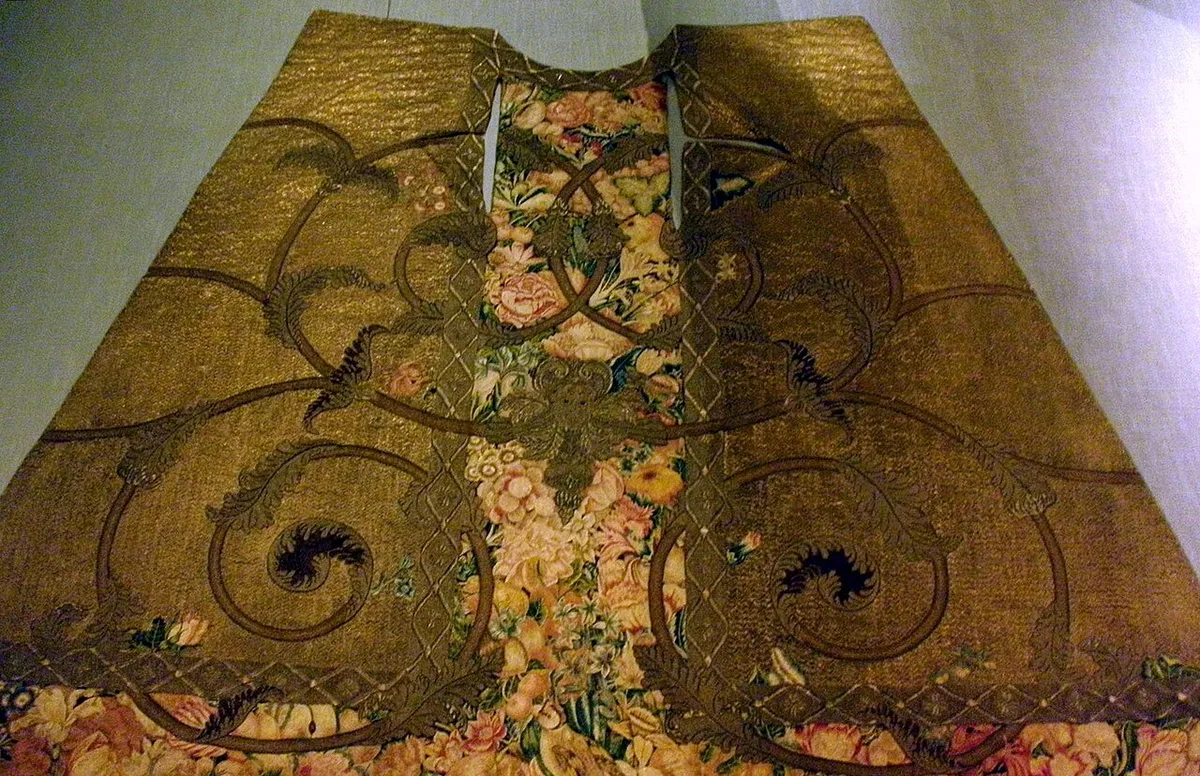
The guided tour is the only route into the Choir and the Hochmünster, where the imperial throne stands, and it is also what makes Charlemagne's shrine and the Gothic choir hall legible rather than merely decorative. The operator states that English tours are currently offered daily at 2pm and on request, German tours run hourly between 11am and 5pm Monday to Thursday, 11am and 6pm Friday and Saturday, and 1pm and 4pm on Sundays, and that online purchase is currently only possible up to 12 hours before the visit, with an additional contingent at the Dominformation box office. It publishes individual adult tickets at 8.50 euros and reduced tickets at 4.50 euros for pupils, students, trainees and holders of a severely disabled pass.
The Cathedral Treasury is a separate collection with its own admission and opening hours, not an add-on included in cathedral entry. The operator states that the Treasury is open Mondays from 10am to 2pm and Tuesdays to Sundays from 10am to 6pm, that roughly 130 works of art are exhibited on three floors, and that tickets are bought in person at the Cathedral Information Centre. The operator also notes that a one-euro contribution is payable to the Domschweizer for interior photography, and that tripods, selfie sticks and flash are not permitted. If you also want municipal museums, check each one separately: the Suermondt-Ludwig-Museum publishes its own fee schedule from 1 March 2026 and a museum card, so there is no single quarter-wide ticket to assume.
Orientation: Arriving and Picking Your Three Anchors
Orient the walk around three fixed points you can see from one another on arrival: the cathedral and its Domhof forecourt, the Katschhof behind it, and the Markt in front of the town hall. The tourist service lists public guided city walks such as the Altstadtführung departing from the Tourist Info Elisenbrunnen, which is useful if you want a staffed starting point before walking the quarter yourself. Further visitor details appear in the official event website.
Sketch the loop in your head as a rough triangle: Domhof, Katschhof, Markt, then back through the lanes to Hühnermarkt. Keep a map open only to confirm turns, because the streets are short enough that over-navigating wastes the time you saved by not planning a longer route.
Stop 1: The Cathedral Exterior and Domhof
Start outside on the Domhof rather than going straight in. Walk the length of the building slowly enough to register that you are looking at a composite: a heavy, tall central mass from the Carolingian period with a later Gothic choir hall attached, plus chapels added and remodelled along the sides over the following centuries.
Do this reading before you enter and the interior becomes far easier to interpret. The cathedral operator explains that the Carolingian Church of St. Mary was built on the remains of a Roman thermal complex, and that the west building and the octagon at the centre have been preserved to today.
Look for the contrast in stonework; the building is small by the standards of German cathedrals, so the layers sit close together and are easy to compare. Note the entrances and surrounding lanes now, because the cathedral has more than one door and the accessible route differs for some visitors.
Stop 2: Inside Aachen Cathedral
Inside, the organising feature is the octagon, a tall, focused space built around height rather than length. This is the opposite of the long nave you may expect from a German cathedral, and it explains why the building feels intense rather than vast: coloured glass and mosaic surfaces fill much of what you can see.
The Gothic choir hall adds volume to the east, and Charlemagne's shrine, an oak casket covered in silver, copper, filigree and precious stones, stands in the choir. Decorative detail rewards slow looking, including the surviving bronze fittings from the original building campaign, which are among the oldest objects in the church.
Here the access rule bites. The operator states the Choir and the Hochmünster with the imperial throne are accessible only as part of a guided tour, so if the throne is your reason for coming, book the tour rather than hoping for a sightline. The operator publishes tour times, ticket scope and purchase timing on its visiting page, and online purchase closes twelve hours before the visit, with an additional contingent sold at the Dominformation box office.
Keep the visit short if you have a tour slot booked. Self-guided time inside the nave and octagon is best spent on the architecture and windows, and leaving room before the tour avoids rushing.
Stop 3: Katschhof Between Cathedral and Town Hall
Leave the cathedral on the north side and you step onto the Katschhof, the open square between the cathedral and the town hall. It is a deliberate breathing space in the middle of the route, and it also makes plain that cathedral and civic power stood physically side by side.
Centre Charlemagne, the city museum, is listed by the tourist service at Katschhof 1, where it presents Aachen's history from the Carolingian period onwards. It is a separate museum with separate admission, useful if you want the city's story compressed into one stop before looking at the buildings again.
Cross the square slowly and look back at the cathedral mass from this new angle. The building you saw from Domhof is largely hidden here, which is a reminder that this quarter is a set of framed views rather than one continuous facade.
Stop 4: Aachen Town Hall and the Markt
From the Katschhof, walk through to the Markt, where the Gothic town hall closes the square. The tourism service lists the Aachener Rathaus at Markt in 52062 Aachen and describes the interior highlights as the largest Romantic-era history paintings, faithful copies of Charlemagne's saber, a Carolingian manuscript and the imperial crown, so treat it as a separate visit with its own access arrangements rather than something the cathedral ticket covers. For those highlights and the Coronation Hall, see this Aachen Rathaus visitor guide.
The Markt itself is the most open of the squares and the best place to pause for coffee or a look at the surrounding facades. Check the town hall's own information for current visiting arrangements before you plan around the interior, because a civic building's access changes with council business.
Two details make this stop worth more than a photograph. The square shows the burgher city that grew up around the imperial residence, and the building above you carries a set of large nineteenth-century history paintings in its halls, which means the interior rewards people who like political imagery rather than church interiors.
Stop 5: Market Lanes and Hühnermarkt
From the Markt, drift into the lanes and make Hühnermarkt the last named stop. It is a small square with the Couven Museum, a house museum of eighteenth and nineteenth century domestic interiors. The museum's own site states that the pharmacist Adam Coebergh built the house at Hühnermarkt from 1662 where he established the Eagle Pharmacy, that Andreas Monheim bought it in 1783 and had it remodelled three years later by the architect Jakob Couven, and that the City of Aachen bought the house in 1951 and opened the Couven Museum here in 1958.
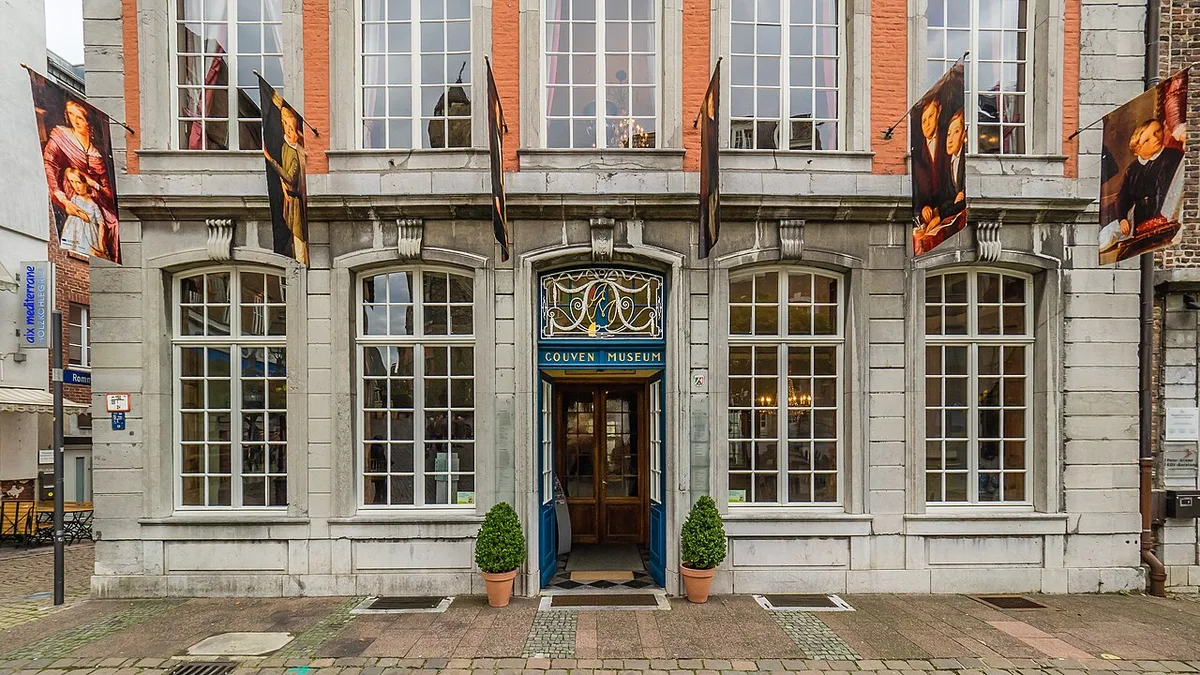
The Couven Museum publishes its own opening hours, including closures and late openings, and states that admission and guided tours are free for everyone up to the age of 21 from the City of Aachen and the Aachen City Region; booked groups and school classes can also pre-book morning slots. Reservations for guided tours are not possible, and participation tickets are available at the ticket desk from 30 minutes before the start. Check its calendar before assuming a standard day.
Beyond Hühnermarkt, the surrounding streets turn into ordinary shopping territory. Treat them as an optional extension with no fixed content, useful for a slow exit back toward the Elisenbrunnen or the station rather than as a required final stop.
Timing: A Short Loop Versus a Half Day
A short orientation loop that touches Domhof, the cathedral, Katschhof, the Markt and Hühnermarkt can be walked briskly, but the interesting content is indoors and time-bound. Suggesting two to three hours for that loop with one interior visit inside it is a reasonable planning guess only; the operator's published hours and tour schedules are the figures to trust.
A half-day version replaces rushing with one committed decision: take a guided cathedral tour or add the Treasury, and stop at one museum rather than two. Trying to add two museums and a tour on the same day usually means arriving somewhere close to a closing time and paying for a hurried look.
Timing around services matters more than timing around distance. The operator notes that the cathedral is not open to visitors during church services and that hours can change at short notice for concerts and events, so build a cushion into the walk instead of chaining fixed appointments back to back.
What to Notice as You Walk
The quarter rewards anyone watching for styles rather than monuments. The Carolingian octagon and west building are the oldest fabric, the Gothic choir hall was added later, and the side chapels were added or remodelled in subsequent centuries, which is why the exterior does not read as one period.
The second thing to notice is the shift in purpose between the buildings. The cathedral is a consecrated church and remains one, while the town hall, Centre Charlemagne and the surrounding museums are civic and cultural institutions with their own rules, tickets and hours.
Third, watch how the squares frame the buildings. Domhof, Katschhof and Markt each present the cathedral and town hall differently, and the walk is really a sequence of those framings rather than a single viewpoint.
Practical Decisions and Trade-offs
Decide early between a free self-guided look and a paid guided tour. The tour buys access to the Choir and the Hochmünster and the throne, plus interpretation; the free visit buys atmosphere, the octagon, the windows and as much time as you like standing still.
Decide separately whether the Cathedral Treasury is worth an extra ticket for you. It is a distinct collection with its own admission and hours, displayed across three floors, and its reliquaries, chalices and coronation objects suit visitors who like objects more than architecture, so it is not automatically the right second stop.
On photography, respect the operator's stated conditions: a one-euro contribution is payable to the Domschweizer for interior images, tripods, selfie sticks and flash are not allowed, and commercial, media or academic filming needs a written permit. Accessibility arrangements, including ringing the bell at the entrance for mobile ramps and using the Krämertür entrance with a power chair, are also described by the operator and worth reading before you arrive.
Mistakes to Avoid in the Cathedral Quarter
The most common error is assuming one ticket covers the quarter. The cathedral is free to enter, the Treasury is separately ticketed, the town hall is a civic building with its own arrangements, and municipal museums such as the Couven Museum and the Suermondt-Ludwig-Museum each publish their own admission. The Suermondt-Ludwig-Museum does offer a museum card giving one admission each to five museums and the Town Hall over six months, but that is that museum's scheme, not a universal quarter pass.
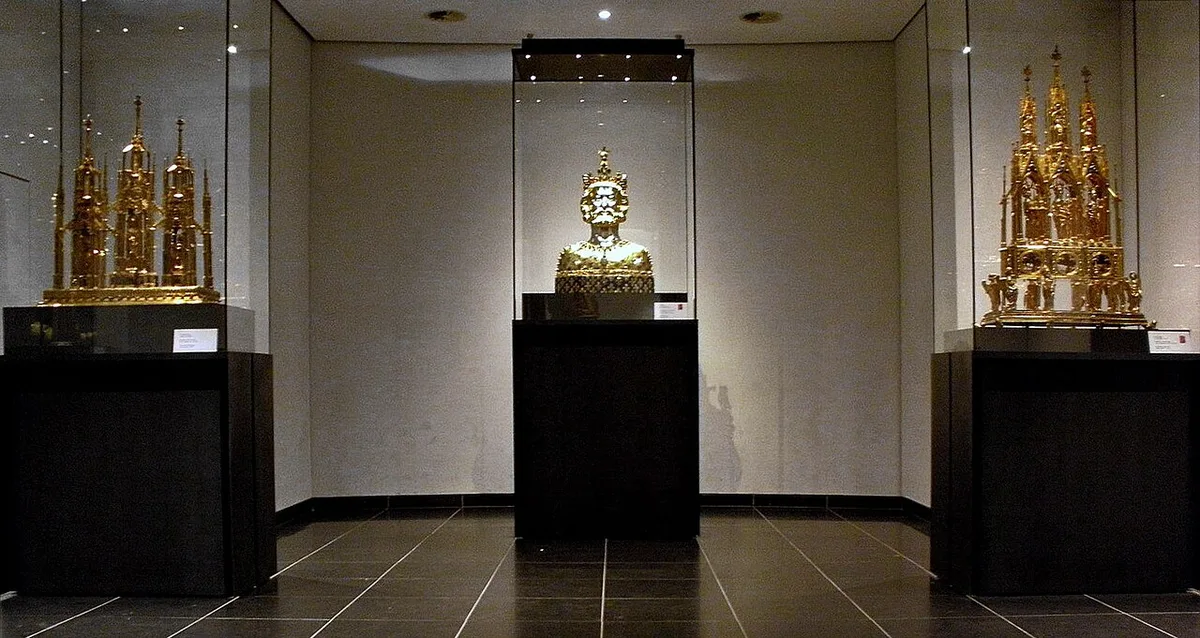
The second is treating the Treasury as part of the free cathedral visit. It sits in its own exhibition space with its own entry, so budget it as a separate stop rather than a five-minute detour on the way out.
The third is fixing a plan around opening hours read months earlier. The cathedral recommends checking the current week and calling the Dominformation if unsure, and the museums publish their own closures and late openings, so verify on the day rather than trusting a saved screenshot.
Extending the Walk Beyond the Quarter
If you have more time, the natural continuation is toward the Elisenbrunnen, the pavilion over Aachen's hot springs that the tourist service lists at Friedrich-Wilhelm-Platz, and the surrounding pedestrian streets. It shifts the theme from imperial and ecclesiastical history to the spa town whose thermal springs first drew Charlemagne to Aachen. Further visitor details appear in the official event website.
A second option is to spread the visit across a longer stay and pair the cathedral quarter with a museum day or a walk in the surrounding green belt. The tourist service publishes a two-day city itinerary and themed city walks that can be used to sequence the quarter with other districts rather than repeating it. For wider planning, see 2 Days in Aachen.
Keep the two plans distinct. A single self-guided quarter walk is about depth in a small area; a longer stay is about deciding which adjacent districts and collections deserve a half day each.
Plan Your Dom Viertel Walk
Treat this walk as a small number of decisions rather than a route to memorise. Decide on the tour, decide on the Treasury, pick at most one museum, then let the squares set the pace.
Confirm the cathedral's current hours and tour arrangements on the operator's page before you go, and check each museum's own site for the day you plan to visit. That single check removes most of the friction from a quarter this compact.
Frequently Asked Questions
Is the Dom Viertel walk free?
Walking the quarter itself costs nothing. Aachen Cathedral is free to enter as a place of worship, and the squares, lanes and forecourts around it are public. The paid elements are optional and separate: a guided cathedral tour, which is what reaches the Choir and the Hochmünster with the imperial throne, the Cathedral Treasury with its own admission, and any of the surrounding museums or the town hall interior.
How long does a self-guided cathedral quarter walk in Aachen take?
A short orientation loop covering Domhof, the cathedral, Katschhof, the Markt and Hühnermarkt can be completed in a couple of hours at an unhurried pace, and two to three hours is a sensible planning suggestion rather than an official figure. Adding a guided cathedral tour, the Treasury or a museum will extend the visit, and services or events can change how much time you actually get inside the cathedral, so leave some slack.
Can you see Charlemagne's throne without a tour?
No. The imperial throne stands in the Hochmünster, and the cathedral operator states that the Choir and the Hochmünster are accessible only as part of a guided tour. A self-guided visit still takes you through the octagon, the nave and the choir hall with Charlemagne's shrine, but the throne itself requires a booked tour. Tour times, ticket scope and purchase deadlines are published on the operator's visiting page, with an additional contingent at the Dominformation box office.
What is the difference between the cathedral and the Cathedral Treasury?
The cathedral is an active Roman Catholic church with free admission for visitors, while the Cathedral Treasury is a separate UNESCO-listed collection displayed across three floors in its own space, with its own ticket and opening hours. Treat them as two visits rather than one continuous experience, and do not assume a cathedral tour includes the Treasury or the reverse.
Do all the museums in the cathedral quarter share one ticket?
No. The cathedral is free, the Treasury is separately ticketed, and the municipal museums publish their own admission and opening hours. The Suermondt-Ludwig-Museum advertises a museum card giving one admission each to five museums and the Town Hall over six months, but that is one museum's offer rather than a quarter-wide pass. Check each museum's own site before you build a day around combined admission.
Where does a Dom Viertel walk start?
Start at the Domhof, the forecourt alongside the cathedral, and read the exterior before going in. If you prefer a staffed starting point, the Tourist Info Elisenbrunnen is a short walk away and the tourist service lists public guided city walks departing from there. From Domhof the route moves naturally through the cathedral, onto the Katschhof, then to the Markt, the town hall and finally the lanes around Hühnermarkt.


