

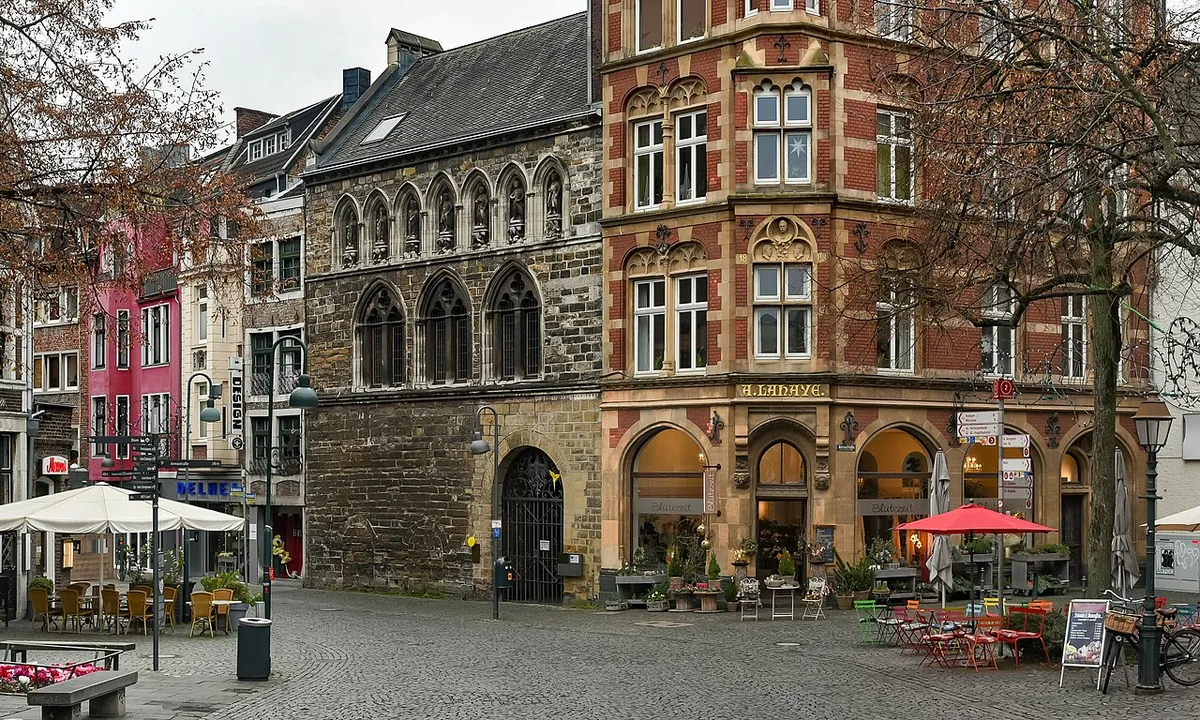
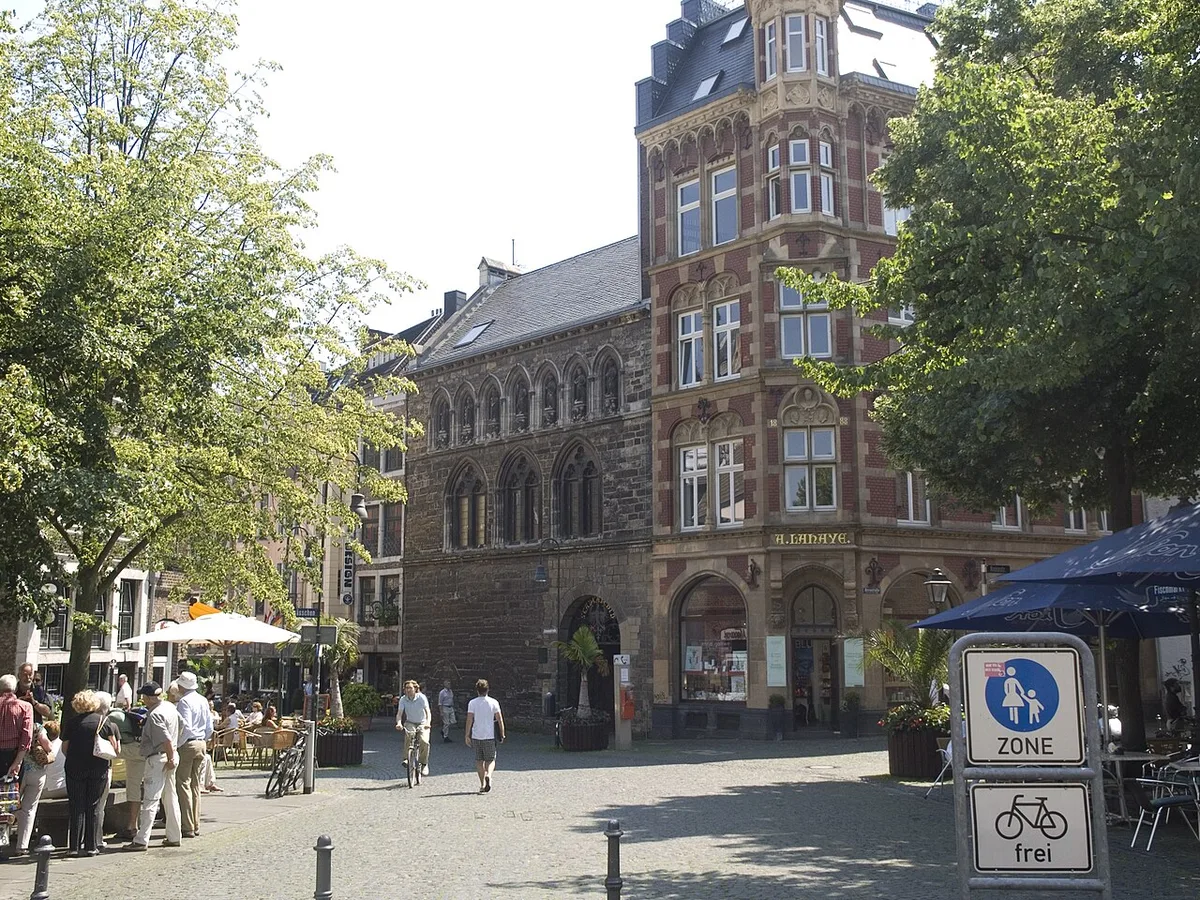
The Grashaus is one of Aachen's oldest surviving buildings and the city's first town hall, completed in 1267, and it probably stands on even older foundation walls that may date to Carolingian times. It sits at Fischmarkt 3 in the old town, close enough to the cathedral and the Rathaus that you can fold it into the same walk. The building now functions as the Europe station of the Route Charlemagne, which shapes everything about how you can visit it.
The practical trade-off comes first: the European Classroom inside is not publicly accessible and is used only through booked programmes and guided tours. That means a walk-in visit is not the realistic goal, and you should plan your stop as an exterior look unless you have arranged a group booking. A short stop still earns its place because the facade and the small square anchor a much bigger story about how Aachen governed itself.
What the Grashaus Is and Why It Matters
The Grashaus was completed in 1267 and is described as both one of the oldest houses in Aachen and its first town hall. That double identity is the reason it rewards a pause even when the doors are closed: you are looking at a building that held civic power before the cathedral's later additions changed the skyline. Its location at Fischmarkt 3 places it in the medieval commercial heart of the city rather than in a museum district.
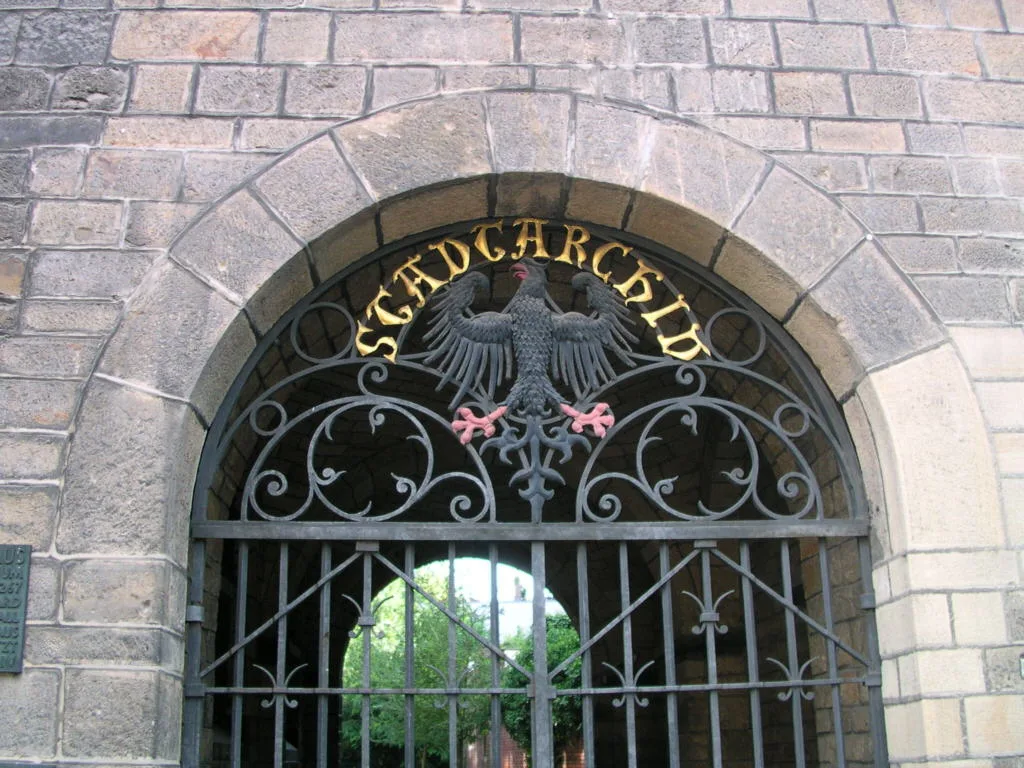
After more than a century of use as the city archive, the building was converted into an extracurricular learning centre. The upper floor now houses the European Classroom, where the theme of Europe is taught in historical, current and future dimensions to pupils from secondary level onward. The lower profile of the building and its small square mean the transition from medieval town hall to modern learning space is not visible from outside, so knowing the sequence helps you read the facade.
Where the Grashaus Stands in the Old Town
Fischmarkt 3 is a short walk from the cathedral and the Rathaus, which makes the Grashaus a natural third stop rather than a standalone destination. The square itself is small, and the building's presence is easy to miss if you are walking with your eyes on the cathedral towers. Approach from the cathedral side and the Grashaus arrives as a quiet punctuation mark between the religious and civic centres.
The museum service lists the address as Grashaus, Fischmarkt 3, 52062 Aachen, and the Route Charlemagne secretariat can be reached at the same site. If you are orienting from the main station area, the published service notes suggest heading toward Elisenbrunnen and then continuing on foot toward the cathedral and Fischmarkt. Treat those wayfinding notes as a general direction rather than turn-by-turn navigation and confirm the final stretch on a current map.
The Honest Access Answer: What Is Open and What Is Not
The European Classroom is not publicly accessible and is only used within booked programmes and guided tours. This is the single most important planning fact about the Grashaus, and it is the reason a visitor guide should not promise an interior visit. The exterior and the Fischmarkt setting remain freely viewable, so you can still make a meaningful stop without a reservation.
Two distinct functions sit inside the building, and conflating them produces wrong expectations. The European Classroom is a learning space for booked groups, while EUROPE DIRECT Aachen is an information office that offers free advice and materials about Europe and the EU. An event listing published in 2024 described EUROPE DIRECT as open Tuesday to Thursday from 12 to 16 and Friday from 10 to 14, but those hours come from that listing alone and should be confirmed before you travel.
What You Can See From the Street
From the street you can read the building's mass, its position on the small square and its relationship to the surrounding old-town fabric. Because the interior is reserved for booked programmes, the most realistic visitor goal is a well-informed exterior look rather than a room-by-room tour. Give yourself a short window, then continue toward the cathedral or the Rathaus while the context is still fresh.
A sensible plan is to pair the Grashaus with the Aachen Rathaus visitor guide and the cathedral in one continuous loop, since all three sit within a compact area and tell different parts of the same civic story. The Grashaus gives you the earliest layer, the Rathaus gives you the later Gothic civic building on the market square, and the cathedral gives you the imperial and religious frame. Keep the stops close together so you are comparing buildings on foot rather than reconstructing them from memory later.
Booked Programmes and Group Tours
Bookings for school classes, youth groups and architectural-history tours are handled through the museum service rather than through an online checkout. The published contact route is the telephone number and email address of the museum service, so plan your enquiry in advance and state the group size and preferred dates clearly. Because the classroom is designed for booked programmes only, an unannounced arrival cannot be converted into a tour on the spot.
A StädteRegion listing describes a two-hour workshop called Hallo Europa, hallo Demokratie for school classes, with a capacity of up to 32 participants plus accompanying adults and a stated cost of 190 euros for that programme. Treat that figure as the listing's price for that specific workshop, not as a general Grashaus admission fee, and confirm whether it still applies when you enquire. The same listing gives the venue as Fischmarkt 3 and notes that the workshop is open to all language levels.
EUROPE DIRECT Inside the Building
EUROPE DIRECT Aachen occupies part of the Grashaus and offers free advice and materials about Europe and the EU, and it also organises lectures, seminars and study trips. Its advice function is separate from the European Classroom, so a reader who wants information rather than a workshop should ask about the office specifically. The office is co-financed by the European Union, which is why the building carries a strong European identity alongside its medieval one.
Opening arrangements for the information office have been published in event listings, but those listings are not a live schedule, so check the current days and hours through the city's own channels before making a special trip. If your main interest is the building's history rather than EU advice, the exterior and the surrounding old town will still fill a short stop. If your main interest is the advice service, treat the published hours as a starting point and verify them directly.
Fitting the Grashaus Into a Route Charlemagne Day
The Grashaus is the Europe station of the Route Charlemagne, a city route that links several sites connected to the theme of Europe. Because the Grashaus interior is only reachable through booked programmes, the route works best when you treat the building as a short exterior stop and give the rest of your time to the sites where you can actually go inside. That avoids the common mistake of building a whole morning around a single facade.
Pair the Grashaus with the Centre Charlemagne museum at Katschhof 1, which serves as the starting point for the city's history narrative, and with the cathedral as the imperial centrepiece. Do not assume these sites share a ticket or a visit: each has separate arrangements, and the cathedral treasury in particular is a separate paid collection with its own entrance. Check the Aachen Cathedral Treasury visitor guide if you want to understand what that ticket covers before you commit.
Practical Orientation and Accessibility
The museum service's published notes name parking garages at Rathaus and Mostardstrasse and at Dom and Jesuitenstrasse as options for the old town, which is useful if you are driving and do not want to circle the pedestrian core. Those notes are general orientation rather than a reservation system, so check current availability and tariffs on arrival. Public transport in Aachen is frequent, but the specific lines and walking times published for other locations should not be assumed to apply to the Grashaus door.
Accessibility information for the Grashaus is inconsistent across the available listings, with at least one describing barrier-free access, a WC and a lift while other materials do not confirm those features. Because of that conflict, do not plan around a specific facility until the operator confirms it for your date and needs. Contact the museum service or the Route Charlemagne secretariat directly and describe what you require.
Pairing the Grashaus With Other Aachen Sights
A short look at one facade can carry a whole day if you connect it to the city's other layers. The Aachen Rathaus gives you the later civic building on the market square, and the cathedral gives you the imperial and religious context that made Aachen a coronation city for centuries. Read the Aachen Rathaus visitor guide alongside your Grashaus stop so the two civic buildings sit in sequence rather than as isolated visits.
If you want to extend the walk beyond the obvious sights, a Dom Viertel walk keeps you in the old town and lets you add smaller squares and courtyards without committing to a long detour. For a different kind of stop, hidden gems in Aachen can fill the gaps between the major sites when you are already in the centre. Keep the Grashaus as one element in that sequence rather than the destination, and the day stays balanced.
If you are still shaping the overall trip, the wider Aachen itineraries and city travel guides help you decide how many days the old town deserves and where the Grashaus fits. Use those plans to set realistic expectations: the Grashaus is a short, informative stop, and the rest of the day should carry the weight. That way a small square becomes part of a coherent visit instead of an afterthought.
Plan Your Visit
The Grashaus rewards a few minutes of attention if you arrive knowing what it is: one of Aachen's oldest buildings, the city's first town hall, and today the Europe station of the Route Charlemagne with an interior reserved for booked programmes. Confirm current arrangements and accessibility directly with the museum service or the Route Charlemagne secretariat before you build your day around it. Then let the cathedral, the Rathaus and the surrounding old town carry the rest of your time.
Frequently Asked Questions
Can you go inside the Grashaus in Aachen?
Not as a walk-in visitor. The European Classroom inside the Grashaus is not publicly accessible and is used only within booked programmes and guided tours. You can still view the exterior and the Fischmarkt setting freely, and you can ask the museum service about arranging a group programme if you want to see the interior. Check the current arrangement directly with the operator before you travel.
What was the Grashaus used for before it became a learning centre?
The Grashaus was completed in 1267 and served as Aachen's first town hall, which is why it is described as both one of the city's oldest buildings and its earliest civic centre. It was later used as the city archive for more than a century before being converted into an extracurricular learning space. That sequence of town hall, archive and learning centre is the reason the building matters beyond its facade.
Is the Grashaus the same as the Aachen town hall?
They are different buildings. The Grashaus was Aachen's first town hall and dates from 1267, while the Aachen Rathaus on the market square is the later civic building that most visitors mean when they say town hall. Seeing both in one walk gives you the early and later layers of the city's civic history, and they sit close enough together to compare on foot.
How do you book a tour or workshop at the Grashaus?
Bookings for school classes, youth groups and architectural-history tours are handled through the museum service by telephone or email rather than through online checkout. A StädteRegion listing describes a two-hour workshop for school classes with a maximum of 32 participants plus accompanying adults, but that programme is specific and its terms should be confirmed when you enquire. Have your group size and preferred dates ready and ask what is currently offered.
Is the EUROPE DIRECT office in the Grashaus free to visit?
EUROPE DIRECT Aachen offers free advice and materials about Europe and the EU from its location in the building, separate from the European Classroom. Published opening days and hours have appeared in event listings but do not function as a live schedule, so confirm the current arrangement through the city's own channels before making a special trip. If your interest is the building's history rather than EU advice, the exterior remains viewable at any time.
Is the Grashaus worth visiting if you only have a day in Aachen?
Yes, as a short exterior stop rather than a main attraction. Its value lies in what it represents: the earliest civic building in a city whose later cathedral and Rathaus dominate the skyline. Give it a few minutes on your way between the cathedral and the market square, and keep your interior time for the sites that are actually open to visitors.


