
Wiesbaden grew around hot springs, and its centre still reads as a compact stage set of nineteenth-century architecture. A suggested half day is enough to walk the Nerotal gardens, cross the old town squares and pause at the Kochbrunnen, the shell-shaped fountain on Kochbrunnenplatz that channels thermal water. That duration is an editorial suggestion, not an official timing. For wider city planning, see [Wiesbaden: Itineraries and City Travel Guides](/germany/wiesbaden).
Before you start, separate free public ground from paid interiors. Parks, squares and the riverside gardens at Biebrich cost nothing to enter, while thermal baths, museums and ticketed venues sit in a different budget. Knowing which is which before you leave saves both money and a wasted walk. For a broader look at the city's green spaces, see [parks and gardens in Wiesbaden](/germany/wiesbaden/parks-and-gardens-in-wiesbaden).
What Counts as a Hidden Gem Here
Hidden does not mean remote. The centre is small enough to cross on foot, so the real distinction is between places visitors queue for and places locals simply use. The Nerotal gardens and its villa streets, the Fasanerie animal park and the springs around Kochbrunnenplatz fall into the second group. The city's official tourism site describes Wiesbaden as a place to discover off the beaten track, which matches the appeal of these quieter stops.
Geography does half the work. The centre sits in a bowl with the Neroberg rising to the north and the Rhine to the south, so quieter spots cluster at the edges of the main pedestrian zone. Wander ten minutes past the Marktkirche in almost any direction and the crowds thin.
Treat this as a framework rather than a checklist. Pick two or three stops that sit close together and let the rest wait; a single unhurried afternoon shows you more than a rushed circuit of five. The city rewards that pace, and its smaller corners are best read slowly.
The Nerotal Gardens: A Park Framed by Grand Villas
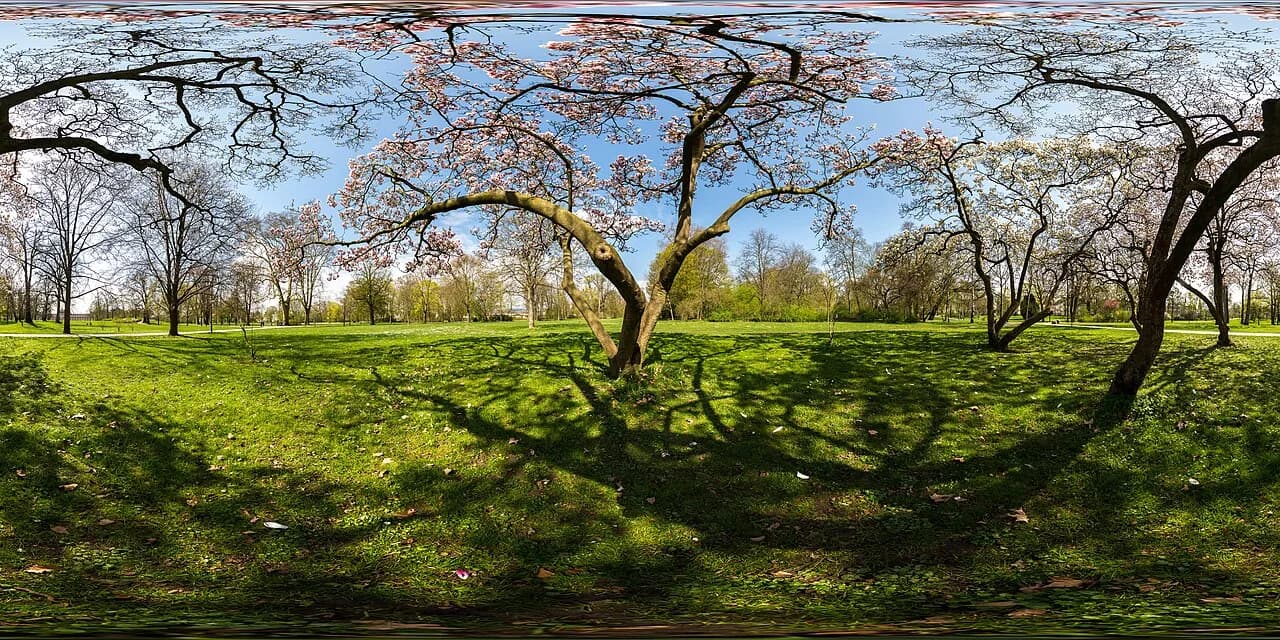
The Nerotal is often called a locals-only park, and it earns the label. A meadow with the Schwarzbach stream running through it forms the base, and the Bismarck Monument stands on the western side, easy to walk past if you are not looking for it. It feels considerably calmer than the Kurpark on a busy weekend.
What makes it worth more than a stroll is the architecture. The mansions around the park include Wilhelminian homes and several built in the Jugendstil style, making this one of the best places in the city to read Wiesbaden's late nineteenth-century building boom at close range. Look up as much as ahead, because the villas are the real exhibit.
The park also works as the natural start of the climb to the Neroberg. You can walk through the gardens and pick up the Philosophenweg, which eventually gives way to a zig-zag path to the summit. That turns a simple park visit into a proper half-day outing if you have the energy.
Nerotal to Neroberg: Walking or the Funicular
The Nerobergbahn is described by German Sights as a water-powered funicular railway built in 1888, which makes the ride part of the attraction rather than just transport. At the top you reach a hill of roughly 245 metres with a panoramic view over the city and the Rhine Valley.
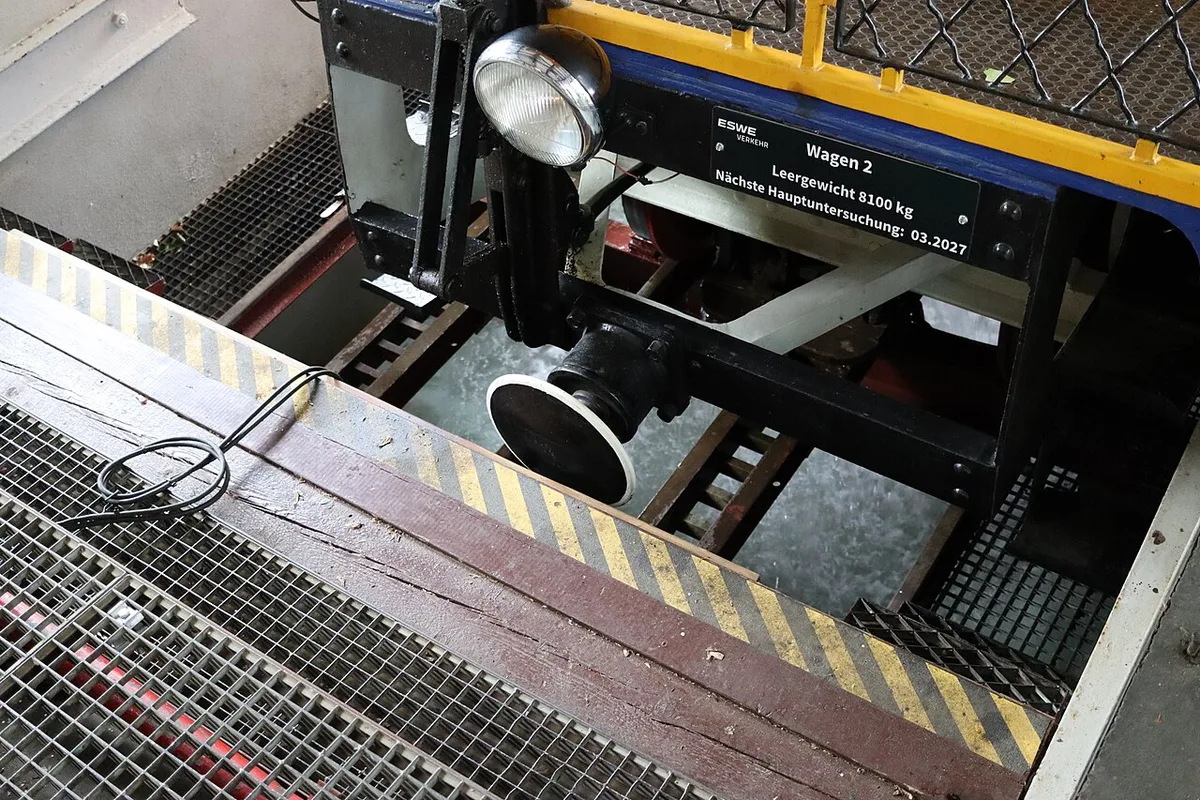
Fares apply on the funicular, and figures circulating on third-party blogs vary by season, so check the current price with the operator before you commit. Walking up through the Nerotal costs nothing but effort and gives you a closer look at the villas on the way. The ascent is steady rather than steep.
At the summit you will find the Neroberg Temple, erected in 1851 and still a favourite viewpoint, and the golden domes of St Elizabeth's Russian Orthodox church, built in the 1850s as a mausoleum for Duke Adolf of Nassau's wife according to German Sights. A small cafe and beer garden occupy what remains of the original Neroberg Hotel.
The Fasanerie: What to Expect From a Forest Animal Park
The Fasanerie is a forest animal park on the edge of the city, and it appears among Wiesbaden's quieter options. Available sources describe it only in general terms, so treat it as a woodland walk with animals rather than a full zoo day. Go with modest expectations and you will enjoy it more.
Because published coverage is thin, verify practical details before you set out. Check whether the grounds are free to enter, what is open on the day and how to reach the park, using the city's own tourism pages rather than a blog post that may be years old. A quick look at the operator's page removes the guesswork. Further visitor details appear at Tourism | Visit Wiesbaden.
Families tend to get the most from it, since a shaded forest setting suits children who need to move rather than stand and look. It pairs naturally with a morning in the Nerotal if you are already heading north. Allow more time than you think for the walk itself, because the route is as much of the appeal as the destination.
The Rittersaal in the Stadtschloss: Setting Honest Expectations
The Rittersaal sits inside the Stadtschloss, the former city palace of the Dukes of Nassau. The palace is documented as a neo-classical building completed in 1841, and it now serves civic and institutional uses. Treat the hall as a room within an active building rather than a standalone attraction.
Published sources do not set out what the hall looks like inside, whether visitors may enter independently or under what conditions. Rather than repeat assumptions, check with the Wiesbaden tourist information office or the building administration before planning a day around it. If access is not possible, the surrounding squares still justify the detour.
The Stadtschloss sits between Marktplatz and Schlossplatz, which makes it easy to fold into an old-town walk rather than a separate trip. Around it stand the Old and New Town Halls and the red brick Marktkirche, completed in 1862. Treat the palace exterior and the squares as the reliable part of the visit.
Small Fountains and Springs: A Slow-Walk Theme
The Kochbrunnen is the best known of Wiesbaden's springs and is not exactly a secret. Expedia describes the fountain as a shell-shaped stone structure that channels the waters of the city's most renowned hot spring and draws visitors who dip their fingers into the warm water. It has been a focal point of the spa town for centuries. For a broader list of free options, see [free things to do in Wiesbaden](/germany/wiesbaden/free-things-to-do-in-wiesbaden).
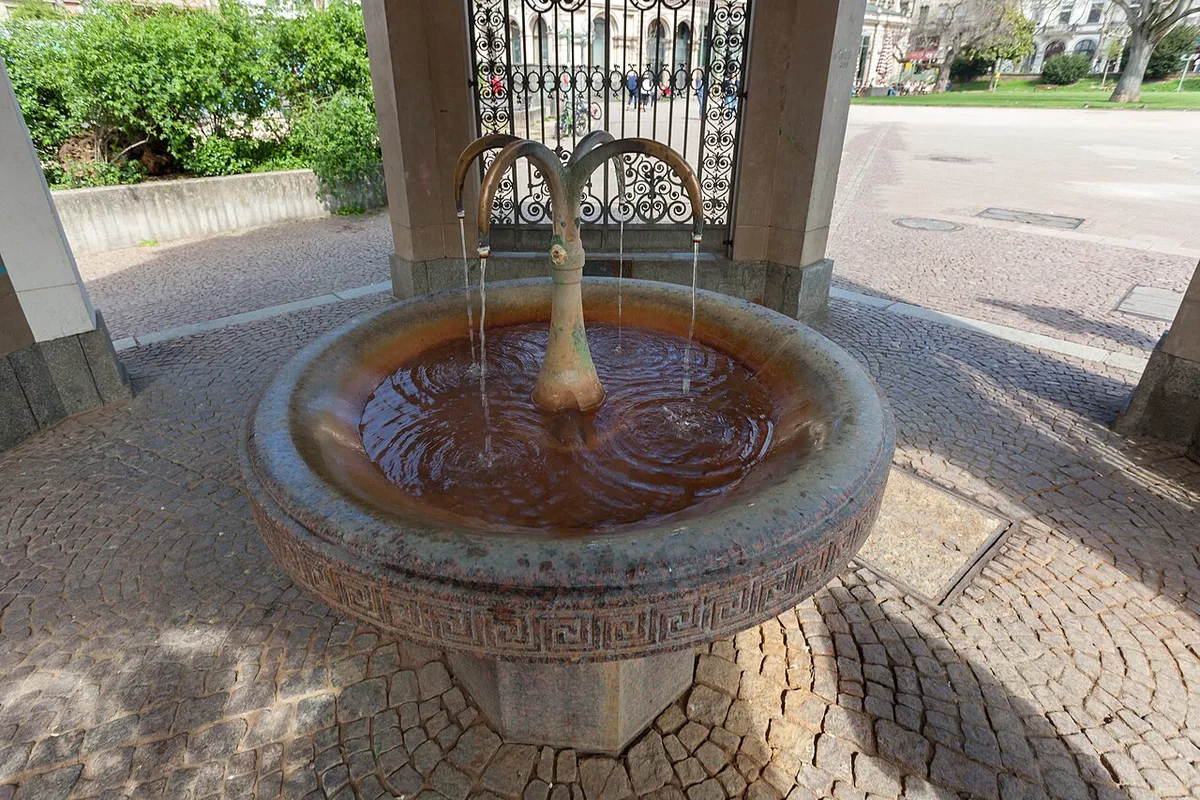
Next to the Kochbrunnen there is a smaller drinking fountain with signage describing the mineral content, and Penguin and Pia report that the water tastes unusual and that the sign advises limiting daily intake. Take a sip rather than a bottle's worth, and treat it as part of the experience rather than a hydration strategy.
Kochbrunnenplatz anchors this slow walk. From there you can move toward Mauergasse, a street known for wine shops and bars, and toward the Heidenmauer and Römertor, the Roman remnants that German Sights calls the oldest structures in the city. The whole circuit stays within the compact centre.
Pairing the Corners Without Crossing the City Twice
The main routing problem is north versus south. The Nerotal and Neroberg sit to the north, while Biebrich Palace and its riverside park lie out to the south along the Rhine, and doing both in one afternoon means unnecessary movement. Pick one direction per half day.
A sensible half day keeps the Nerotal, the Neroberg climb and the Kochbrunnen within one loop, since all three sit in the northern and central part of the city. A full day adds the old town squares and the Stadtschloss plus a longer pause in the parks. Two days lets you add a riverside afternoon without rushing. For a wider plan, see [Wiesbaden: Landmark Visitor Guides](/attractions/germany/wiesbaden).
If you only have a few hours, stay central. The pedestrian zone means you can cover the springs, the squares and a stretch of the old town on foot without transport. Save the northern hills for a morning when you have time to walk slowly.
Practical Planning for the Quieter Side
Wiesbaden Hauptbahnhof sits just south of the Mitte district and is part of the Rhein-Main S-Bahn network, with S1, S8 and S9 services linking the city to Frankfurt, Mainz and the airport according to German Sights. The same source describes the Wiesbaden Card, offered in twenty-four and forty-eight hour versions, as covering public transport plus museum and attraction discounts.
For thermal bathing, the operator mattiaqua manages the city's baths, thermal spas and saunas, including the historic Kaiser-Friedrich-Therme and Thermalbad Aukammtal. Admission is charged and the price list lives on the operator's own pages, so check there rather than relying on older travel writing. These are paid interiors, not free public grounds. See mattiaqua.
For anything time-sensitive, meaning opening hours, seasonal closures or the funicular's operating period, use the operator or the city's tourism pages as your source of truth. Third-party guides go stale quickly and Wiesbaden's seasonal offerings change with the calendar. A check on the day saves a wasted trip.
When to Go for Quieter Corners
Spring and autumn tend to suit this kind of walking best, when temperatures are mild and the parks are at their most photogenic. Early mornings are consistently calmer around the springs and squares, since tour groups gather later. If you want the Nerotal to yourself, go before the city fully wakes.
Winter changes the character of the centre rather than closing it down. Penguin and Pia note that the Bowling Green in front of the Kurhaus becomes an ice rink in the colder months, while German Sights describes the Sternschnuppenmarkt Christmas market taking place during Advent on the Schlossplatz and in front of the Marktkirche. Both draw crowds.
Summer rewards the uphill walk with long daylight and open beer gardens on the Neroberg, at the cost of more company on the trails. Whatever the season, the springs and the old-town squares remain accessible and free; only the paid interiors depend on opening times.
Plan Your Visit
Wiesbaden rewards a slower pace than its headline sights suggest. Two or three of these corners, walked without hurry, will tell you more about the city than a full circuit of its famous stops, and the Nerotal plus the northern hills make the strongest single loop. For a wider plan, see [2 Days in Wiesbaden](/germany/wiesbaden/2-days-in-wiesbaden-itinerary).
Before you go, confirm the details that change: opening hours for paid interiors, funicular operating periods and any seasonal closures. Free grounds need no planning at all, which is part of their appeal. Keep the paid stops flexible and the walking fixed.
Frequently Asked Questions
Which Wiesbaden spots are genuinely quiet?
The Nerotal gardens and their surrounding villa streets are the most reliably calm, partly because they work as a residential park rather than a visitor attraction. The forest animal park on the city's edge is another low-key option, and the springs around Kochbrunnenplatz are quietest early in the day. Central squares fill once tour groups begin moving.
Is the Fasanerie free to enter?
Published descriptions of the Fasanerie do not settle the question of admission, so confirm before you travel. Check the city's tourism pages or contact the site directly for current entry arrangements and opening times. Treat any figure you find on an older blog post as unverified.
Can you visit the Rittersaal in the Wiesbaden Stadtschloss?
Available sources do not document whether the Rittersaal can be visited independently, or under what conditions. The Stadtschloss is an active civic building, so access is likely to depend on its current use rather than published visitor rules. Ask the Wiesbaden tourist information office before planning your day around it.
Is the Nerotal worth visiting if you mainly care about architecture?
Yes. The park combines a meadow and stream with Wilhelminian and Jugendstil villas on its edges, and the Bismarck Monument sits on the western side, which makes it a strong stop for anyone interested in how Wiesbaden expanded. It also works as the starting point for the walk up to the Neroberg.
Which Wiesbaden fountains can you actually drink from?
The Kochbrunnen is the well-known thermal fountain, and beside it there is a smaller fountain with signage about the mineral water that visitors do drink from. The mineral content is high, and the posted guidance suggests limiting how much you consume in a day. Other small fountains in the city are not drinking sources.
How much time do you need for Wiesbaden's quieter corners?
A suggested half day covers the Nerotal, the Kochbrunnen area and a stretch of the old town comfortably on foot. Add the Neroberg climb and you are looking at most of a day. A two-day stay lets you add a riverside afternoon without rushing any of it.


