

Wiesbaden is a city where the headline sights sit close enough together to cover on foot, and most of the famous ones cost nothing to approach. The trick to a no-ticket day is knowing exactly where free ends: the spring fountain is free, the spa entry is not; the church square is free, the interior depends on whether the doors are open; the hill path is free, the funicular is a paid ride. Expedia groups the Apothekergarten, Wiesbaden Town Hall, Goldgasse, Kochbrunnen, Marktkirche, Neroberg and Nerotal-anlagen under free things to do, which is a useful skeleton for a centre-and-hill loop. For planning purposes, a half-day walking loop through the centre and up to the Neroberg is a reasonable editorial suggestion rather than an official duration, and it comfortably fits the free stops below.
The Wiesbaden Congress & Marketing GmbH runs the city's official tourism site, which is the place to confirm tour times, event calendars and any access rules that change through the season. Third-party travel listings are useful for orientation but often lag behind on opening arrangements, so treat them as a starting point rather than the final word. Where this guide mentions a detail that can shift, it points you to the organiser rather than freezing a number that may already be out of date.
The Kochbrunnen: Wiesbaden's Free Hot-Spring Fountain
The Kochbrunnen fountain channels water from Wiesbaden's best-known hot spring, and its shell-shaped stone basin is one of the city's signature sights. It costs nothing to walk up, look, and sit beside it; Expedia's Wiesbaden guide describes visitors dipping their fingers into the warm water, and that fingertip contact is the realistic free experience here. What the sources do not confirm is whether the water is safe to drink or what its exact temperature is, so this guide deliberately avoids both claims.
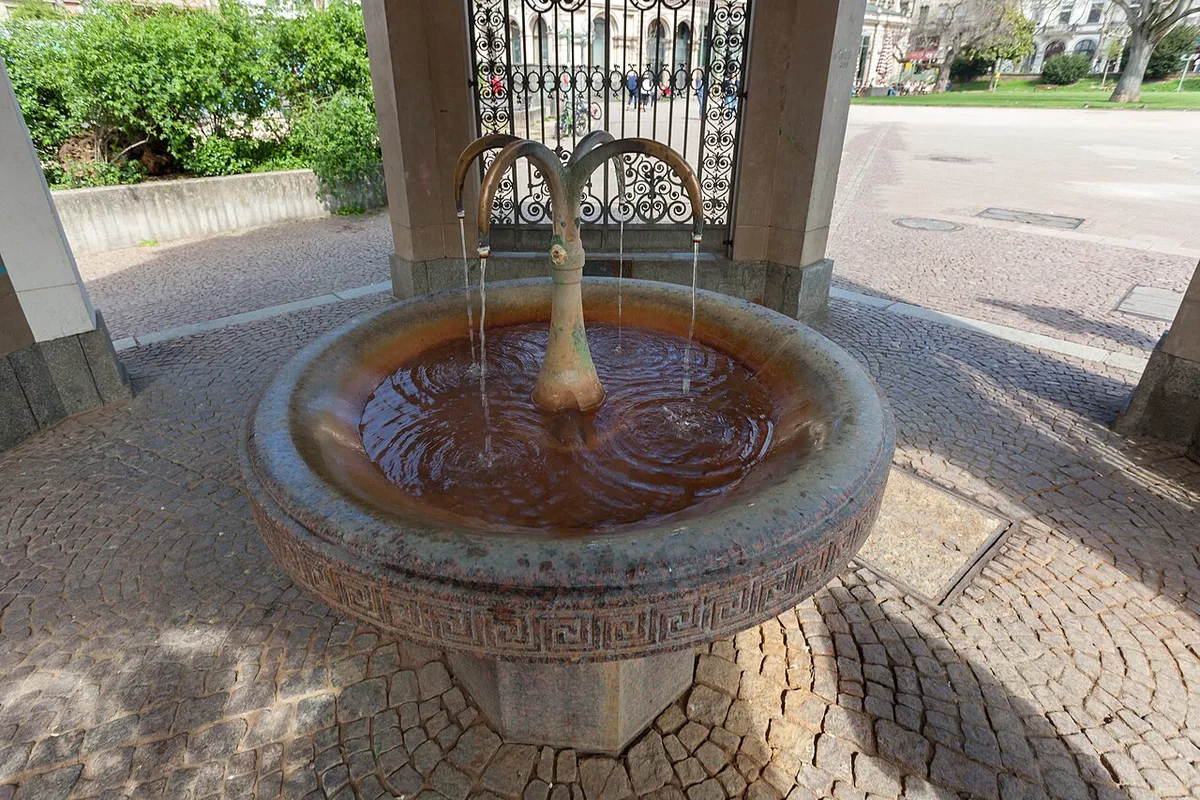
The bathing tradition behind the spring is paid: Wiesbaden's thermal spas are separate businesses with their own entry fees, and the city's tourism site is the sensible place to check current offerings. If you want a wet spa experience, budget for it as a distinct activity rather than assuming it comes with the fountain. If you only want the free version, plan a short stop and treat the fountain as a look-and-sit pause between other sights.
Marktkirche and the Market Square: Free to Approach, Interior Conditional
The Marktkirche is the red-brick neo-Gothic church that anchors Wiesbaden's market square, and its spires make it easy to find from almost anywhere in the centre. Expedia's attraction entry describes the Market Church as standing out due to its tall spires and striking red colour, with both interior and exterior beautifully designed and worth a visit. The practical question of whether the doors are open on your date is one only the church itself can answer, so treat the square and exterior as the sure thing.
Treat interior access as conditional rather than promised. Check the notice on the church door when you arrive, or look for the congregation's own published information, instead of relying on an old blog post that stated entry hours at a moment in the past. Note also that the church is not the tallest building in Wiesbaden in any verified sense, so if a source claims that, treat it as a colourful aside rather than a fact to plan around.
Kurhaus and the Bowling Green: Exterior Views Without a Ticket
The Kurhaus is Wiesbaden's unmistakable landmark, a grand building with a large dome and a set of columns that reads as classical from across the square. Expedia notes that many people spend sunny afternoons relaxing on the Bowling Green, the spacious green area in front of the Kurhaus, and that is the free heart of the visit: the facade, the colonnade area and the lawn. The one named bowling green is the open space in front of the building.
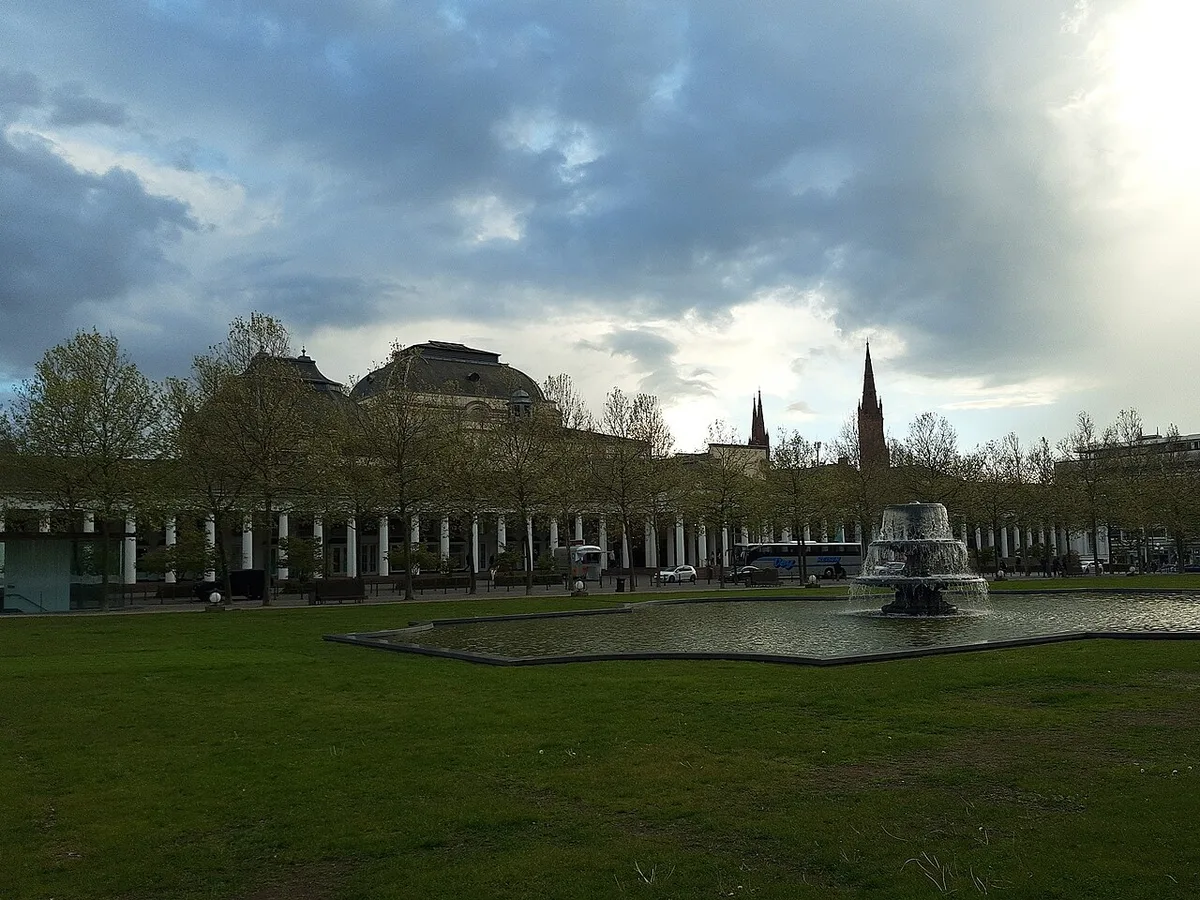
The interior is a different matter. Expedia's entry for the Kurhaus says it now holds a casino, a conference centre, and the most stunning entrance to the Kurpark behind it, which means the building is not a single free attraction. The casino in particular is a paid, restricted environment rather than a free public room. Concerts, congresses and performances on the programme are separately ticketed, so if a specific evening event is the reason you are going, buy through the organiser and confirm details on the venue's own page. For everyone else, the free move is to enjoy the exterior, walk the colonnade and let the Bowling Green be the destination.
Kurpark and the Nerotal Anlagen: Free Green Strolling
Behind the Kurhaus, the Kurpark offers exactly what a no-ticket afternoon needs: paths, fountains, sculpture and planting that you can wander without a gate or a till. The travel account of Wiesbaden describes the Kurpark as a beautiful stroll through a wooded area without climbing a big hill, with garden areas, fountains and sculptures, which makes it the natural low-effort counterpart to the Neroberg climb. Further along, the Nerotal-anlagen appears on Expedia's list of free things in Wiesbaden, so both green spaces belong in the same walking day.
These are landscaped public grounds, not ticketed attractions, so the main constraints are daylight and weather rather than admission. Check seasonal planting and any temporary works through the city's tourism pages if you are making a special trip for the gardens specifically. Otherwise, treat the Kurpark as the anchor of the centre cluster and the Nerotal as the ramp towards the hill.
Neroberg: Free Paths, Paid Funicular
The Neroberg hill sits at the edge of the city, and you have two ways up: walk it, or ride. Expedia describes the traditional Nerobergbahn funicular as a charming, old-fashioned way to reach the top, or you can go on foot; the walking option is the free one. The same listing notes that the top holds wonderful views, picturesque walking trails, an opulent Russian Orthodox Church and a pretty outdoor swimming pool, so the hilltop is a mix of free public ground and paid facilities rather than a single admission.
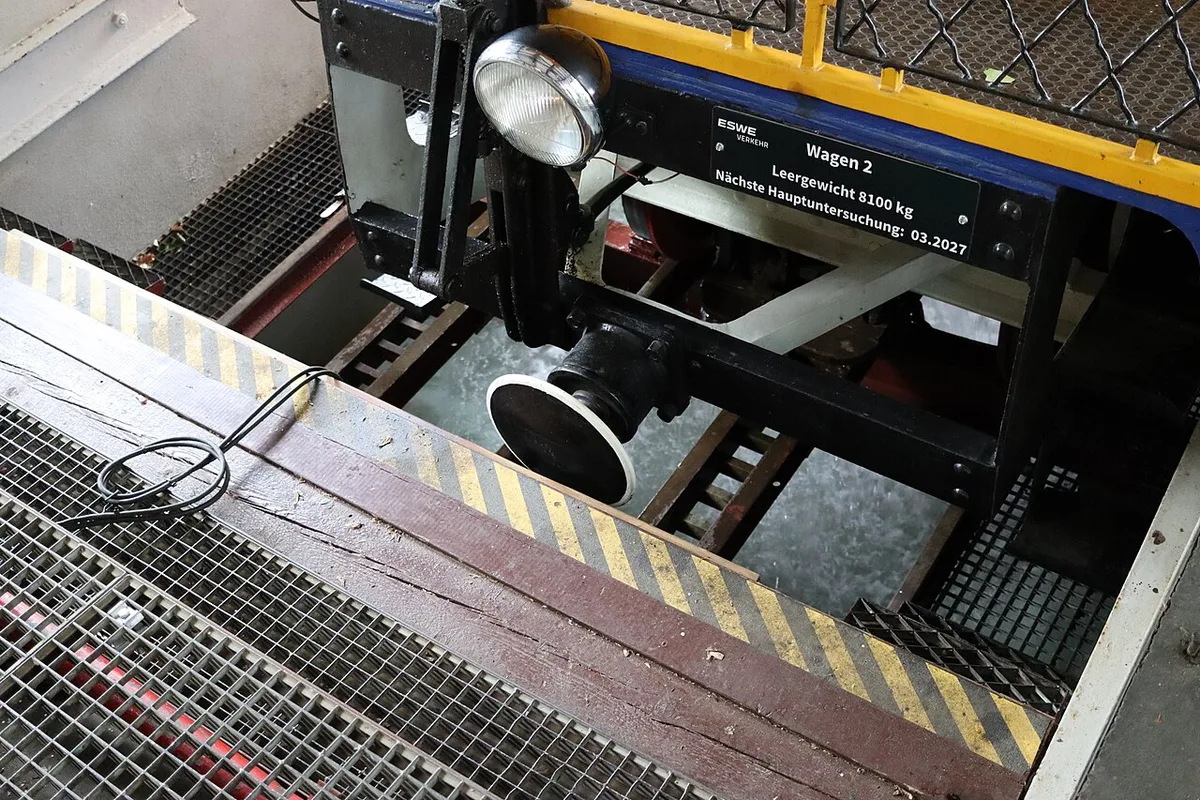
Fares for the funicular vary by journey type and by year, so check the current price with the operator rather than relying on any figure you have read elsewhere. The same caution applies to the hilltop pool: it is a paid facility with its own opening arrangements, and it should be planned as a separate outing, not as part of a free Neroberg wander. If your priority is the view, the picnic space and the paths, you can do the whole thing without buying anything.
A free climb up the Neroberg is a real half-day activity if you take it slowly, and the reward is a city panorama that changes with the light. Check the weather before committing, because a view dependent on clear air is the one thing the hill cannot guarantee. Read the details across our parks and gardens in Wiesbaden guide if you want to combine the hill with the valley gardens in one route.
St. Elizabeth's Russian Orthodox Church: The Gold Domes From Outside
The gold onion domes of St. Elizabeth's Russian Orthodox Church are one of the most photographed sights on the Neroberg, and the exterior is visible to anyone who walks up. The travel account of Wiesbaden describes the church as sitting on top of the Neroberg and being insanely beautiful from the outside, while the writer was not able to go inside; that is a useful calibration for expectations. Treat the church as a free sight in the sense that the hilltop grounds and the view of the building require no ticket, while the interior remains a separate question.
Opening status, any visitor rules and whether guided access exists are all things the church and the tourism office publish as they change, so check both before building a day around going inside. A visit to the exterior needs no such check beyond good weather and daylight. If the doors are closed when you arrive, the domes, the surrounding grounds and the view back over the city still justify the climb.
Goldgasse, Town Hall and the Apothekergarten: A Free Centre Trio
Three more stops appear on Expedia's free-things list and sit naturally in the city centre: the Apothekergarten, Wiesbaden Town Hall and Goldgasse, the lively area the site describes as a popular rendezvous point for both locals and visitors. None of them needs a ticket, and together they make an easy add-on to a Marktkirche and Kochbrunnen walk. Expedia also lists the Nerotal-anlagen and Neroberg in the same free category, which conveniently links the centre cluster to the hill route.
Sequence the trio early in a centre walk, when the streets are quieter and the light is better for the old facades along Goldgasse. There is no ticket queue to beat, but the lane and square get busier as the day goes on. Use the square as a natural pause point before you decide whether to continue to the Kurhaus or head for the Nerotal.
What Is Genuinely Free and What Is Not
The clean split in Wiesbaden is between public ground and controlled interiors. Free: the Kochbrunnen fountain area, the Marktkirche square exterior, the Kurhaus facade and Bowling Green, the Kurpark, the Nerotal-anlagen, the Neroberg paths and viewpoints, the Apothekergarten, Town Hall, Goldgasse and the Russian church exterior on the hill. Paid or conditional: the thermal spas, the casino and event programme inside the Kurhaus, the Nerobergbahn funicular, the hilltop outdoor pool, and any ticketed performance at the Hessian State Theatre. The Marktkirche interior and the Russian church interior sit in the conditional column because access depends on published opening arrangements rather than being a guaranteed free entry.
One consequence of that split is transport. Everything in the centre cluster is close enough to walk, and choosing the footpath up the Neroberg instead of the funicular keeps the day at zero spend. If you prefer the ride, treat it as a paid convenience rather than a budget item you can avoid once you are at the station, and confirm the current fare and running arrangements with the operator. For a longer stay, our 2 days in Wiesbaden itinerary picks up the same stops and adds paid options where they are worth the money.
Practical Planning for a No-Ticket Day
Weather is the biggest variable on a free Wiesbaden day. The Neroberg viewpoint, the Bowling Green and the park strolls are all fair-weather pleasures, so if the forecast is poor, keep to the centre cluster and the covered parts of the walk. Daylight matters too in the shoulder seasons, since a hill climb that starts late can run out of good light before you reach the top.
Before a special trip, verify the handful of things that genuinely change: church interior access, funicular running times and fares, pool and spa entry, and any event you hope to catch. The city's official tourism site and the venue or operator pages are the places to do that, because they reflect current arrangements. Our one day in Wiesbaden itinerary is the right structure if you only have a single day and want the centre cluster first.
If you have more time, the free stops scale up rather than running out. A slow 3 days in Wiesbaden itinerary lets you repeat the parks in different light and use the saved ticket money on the one paid experience that actually appeals. Readers comparing German cities on the same principle can also look at free things to do in Munich for a similar free-versus-ticketed breakdown.
Plan Your Visit
A genuinely free day in Wiesbaden is easy to assemble: start at the Kochbrunnen and the Marktkirche square, cross to the Kurhaus exterior and Bowling Green, walk into the Kurpark, then decide whether to climb the Neroberg on foot. The paid extras, from the funicular to the casino and the thermal spas, sit alongside that route rather than blocking it. Our Wiesbaden: Landmark Visitor Guides hub collects the individual sights if you want to go deeper on any one stop.
Confirm the conditional details, keep the plan weather-flexible, and the city costs you nothing but shoe leather.
Frequently Asked Questions
Is Wiesbaden worth visiting if I don't want to spend much?
Yes. The city's best-known sights are concentrated in the centre and on the Neroberg, and most of them are free to approach on foot. You can see the Kochbrunnen fountain, the Marktkirche square, the Kurhaus exterior and Bowling Green, the Kurpark and the Nerotal valley gardens, and walk the Neroberg paths and viewpoints without buying a ticket. The spa, casino, hilltop pool and funicular are separate paid options, so a no-ticket visit is entirely possible.
What can you do for free in Wiesbaden's city center?
The centre offers a compact free cluster: the Kochbrunnen hot-spring fountain, the Marktkirche and its market square, the Kurhaus facade with the Bowling Green in front of it, and the short list Expedia groups as free, which includes the Apothekergarten, Wiesbaden Town Hall and Goldgasse. The Kurpark sits directly behind the Kurhaus and connects the centre to the Nerotal-anlagen. Interior access at the Marktkirche depends on whether the doors are open, so check on arrival.
Can you visit the Neroberg in Wiesbaden without paying?
Yes, if you walk up. The paths, viewpoints and open ground on the hill are public, and the Russian Orthodox church's gold domes are visible from outside. The Nerobergbahn funicular is a paid ride, and the hilltop outdoor pool is a paid facility with its own arrangements, so both should be treated as optional extras. Confirm funicular running times and fares with the operator if you plan to ride rather than walk.
Are the Kochbrunnen springs worth a stop?
They are worth a short stop as part of a centre walk. The shell-shaped fountain is one of Wiesbaden's signature sights and costs nothing to visit, and the warm water is the thing most visitors come to see and touch. The exact temperature of the spring and whether the water is safe to drink are not things this guide asserts; ask locally or consult the city's tourism information if either matters to you.


