

Wiesbaden rewards a subject-by-subject photo walk rather than a race through a ranked spot list. The centre is a compact grid of nineteenth-century spa architecture where the difficulty is narrow streets and compressed perspective; ten minutes up the hill, the Neroberg replaces that with elevation, woodland, sky and a long view, which calls for an entirely different focal length. Deciding which of those two problems you want to solve on a given morning is the single most useful planning decision you can make.
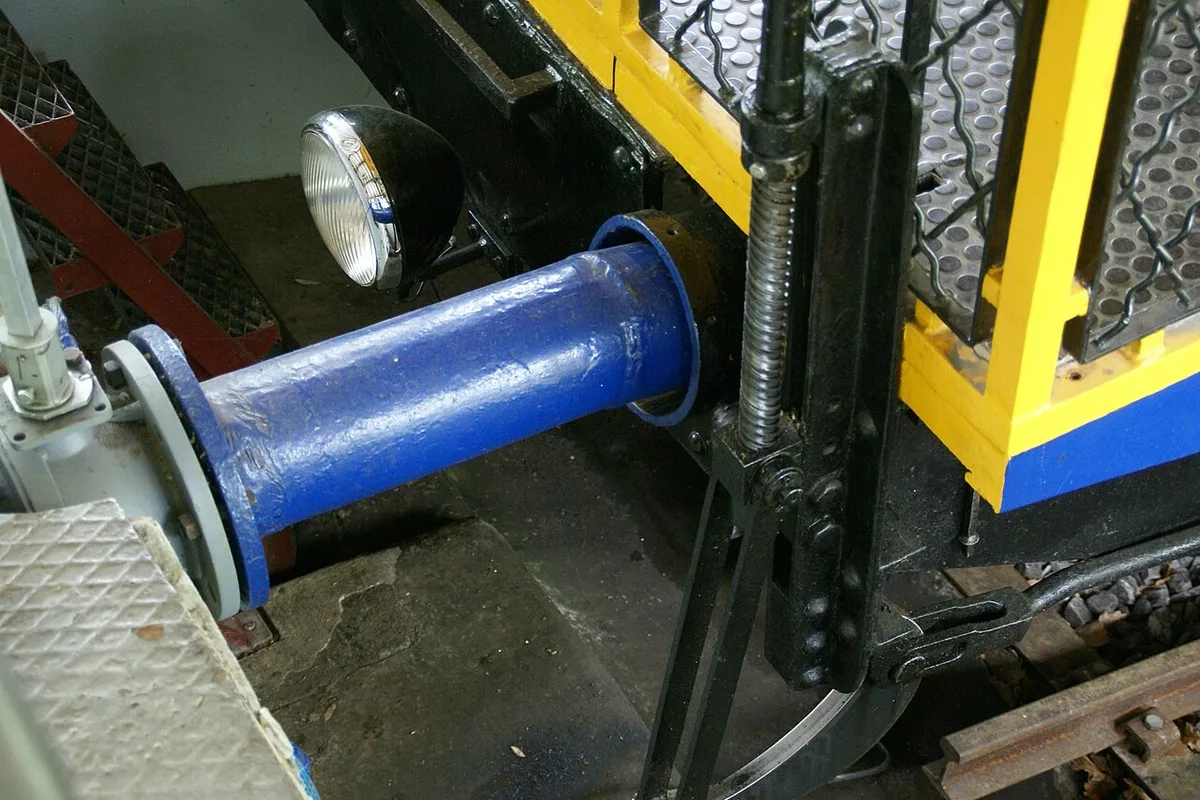
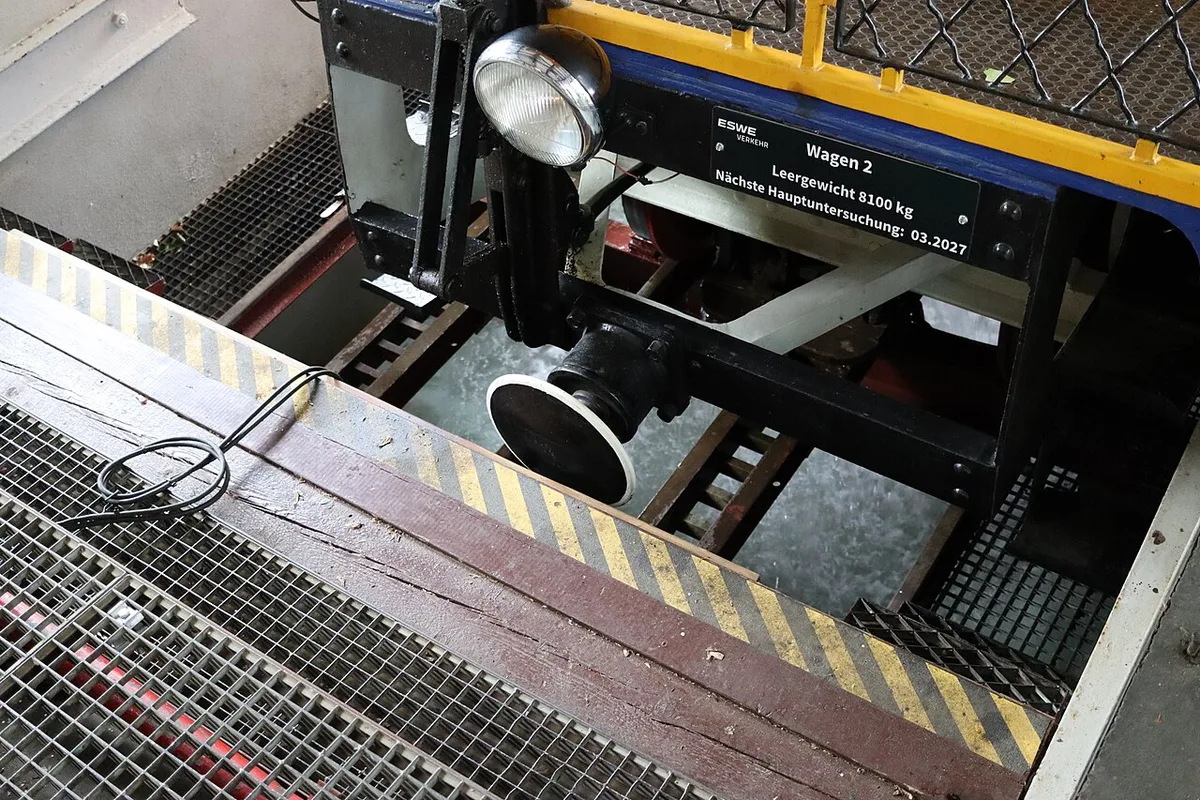
The Nerobergbahn is the practical link between those two worlds, and it is a subject in its own right rather than just transport. For the 2026 season the operator states that the water-ballast funicular runs from 3 April to 1 November every fifteen minutes, daily from 9:00 to 19:00, along a 438-metre line rising 83 metres at an average gradient of about 20 percent, with a journey of roughly three and a half minutes. Because that window is seasonal rather than year-round, confirm the current dates on the operator page before you build a day around the railway.
Why Wiesbaden Suits a Subject-by-Subject Photo Walk
Wiesbaden's historic centre is unusually coherent for a German city of its size, because large parts of the nineteenth-century townscape survived the war. That coherence is a gift for architectural photography, but it also means facades sit close together and often across a narrow street from wherever you can actually stand. Wide lenses help in the Kurpark and in interiors, while a short telephoto is more useful than you might expect for isolating ornament, spires and window detail. Think in terms of two kits rather than one: a compact centre kit and a landscape kit for the hill.
A useful way to find detail subjects is to borrow the structure of the city's own thematic trails. The city publishes an Art Nouveau trail, a nine-stop Jawlensky path, an audio-based walk with fourteen notable spots and a public-art walk covering thirty-three works across squares, parks and building facades. These are sightseeing routes rather than photography routes, but they are excellent scaffolding for a shoot, because they point you at ornament, lettering, doorways and reliefs you would otherwise walk straight past. Treat their stops as prompts and let your own eye decide where to stop.
The tourist office also offers a self-guided app walk that starts on the Marktplatz and takes roughly ninety minutes across the main sights, with historical images you can overlay on the present-day view. That overlay idea is worth stealing even without the app: many of Wiesbaden's strongest photographs are about the contrast between ornate nineteenth-century facades and what sits in front of them now. The official visitor site lists current tours, brochures and planning tools if you want some structure before you go.
Kurhaus and Kurpark: Colonnade, Park and Casino Forecourt
The Kurhaus is the obvious starting point and the most quoted view of the city, with a long colonnade and a neo-classical front facing the Kurpark. Photograph it as a set of separate problems: the colonnade as rhythm and repeated columns, the forecourt as symmetry and reflection, and the park behind as depth and greenery. Treat the colonnade as public outdoor ground, which means you can work slowly and wait for gaps in foot traffic, but do not assume you can set up a tripod inside the building or in ticketed areas. The operator publishes rooms, events and visitor information on its own site if you need to check what is open. Further visitor details appear in Startseite | Kurhaus Wiesbaden.
The Kurpark is the counterweight to all that architecture, and it is where a longer lens earns its place. Water, lawns, mature trees and fountains give you layered foregrounds that the built centre cannot, which makes the park a good place to practise compression and reflection rather than wide reportage. Because the park sits immediately behind the spa complex, you can move between hard architecture and soft landscape without repacking. Fountains and plantings change with the season, so assess conditions on the day.
The casino occupies part of the Kurhaus complex but is a separate institution with its own access rules and visitor information, so do not assume that one ticket or one opening arrangement covers both. If your interest is the historic gaming rooms and their interiors, plan that as a separate visit rather than a photography stop bolted onto the colonnade. The casino publishes its own opening and visitor details.
Marktkirche and the Market Square: Five Spires in a Tight Old Town
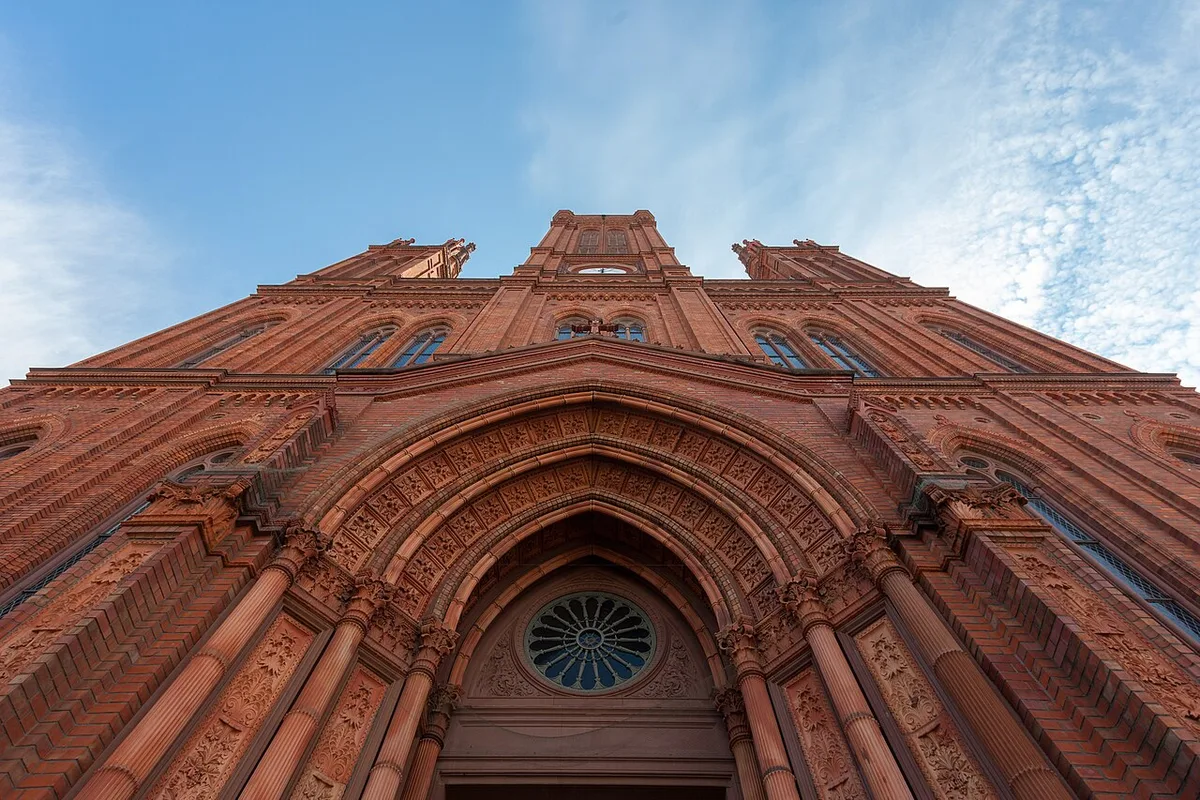
The Marktkirche is the city's skyline anchor, built in red brick with a five-spire profile that stands out against the paler classical buildings around it. The difficulty is the square itself: to include the full facade and spires you usually need to step back further than the Marktplatz comfortably allows, which pushes you towards a wider lens and some careful framing. Look for angles along the adjoining streets rather than only from the open square. The tourist information office sits on the Marktplatz, which makes this a sensible place to start a centre walk.
The city museum, known as sam, occupies around 1,300 square metres beneath the market square and documents the history of the Hessian capital, which makes it a useful counterpoint to all the facade work above ground. The city publishes service details for it, including the address on the Marktplatz and its opening hours, so you can confirm current visiting arrangements before you go. Treat interior photography there as something to ask about on arrival rather than assume.
The square around the church is also where the town's seasonal market activity happens, and that changes the photographic character of the space considerably. On ordinary days you get clean architectural lines; during festivals you get crowds, stalls and colour that obscure the facades but give you documentary material instead. Neither is better, but you cannot plan for both on the same morning. The walking tour route for the old town is a reasonable way to keep your bearings in this part of the centre before you commit to a date.
Nerotal Valley: Wooded Approach, Viaduct and the Funicular as Subject
The Nerotal valley is the approach route to the hill, and it is a photographic subject in its own right rather than just a corridor. The operator notes that the line runs from the valley floor across a viaduct before climbing the slope, which gives you a rare chance to photograph a moving heritage railway against trees and sky. The lower station sits at Wilhelminenstraße 51, near the Nerotalanlagen, and the operator mentions free parking at the valley station. Framing the viaduct well usually means arriving before the train you want, so scout the line first.
The Nerotal park area also carries public art, including a sculpture ensemble in Nerotalpark that invites visitors to identify trees in the park using matching numbers. That kind of quiet, specific detail is easy to overlook and easy to photograph well, because it gives you a narrative to hang a small set of images on. The city's art walk lists dozens of works across squares, parks and building facades, which is a practical way to build a themed portfolio rather than a scatter of unrelated shots.
One constraint changes how you plan a kit-heavy day in this valley: the funicular does not accept RMV tickets or the Deutschlandticket, because the operator treats it as a special tourist railway with its own tariff. Budget for a separate ticket and check current fares on the operator page rather than assuming your transport pass covers it. Bicycles are not carried on the railway for safety reasons and cyclists are directed to a stand at the small museum by the lower station, which matters if you were considering combining the climb with a ride.
Neroberg Summit: Russian Church, Temple and the Long View
The summit gives you three distinct subjects within a short walk of each other: the Russian Orthodox church with its golden dome, the Neroberg temple that also houses the railway's upper water reservoir, and the long view across the city towards the Rhine and the surrounding hills. Work the church as an architectural subject in its own right before you turn to the panorama, because the two demand different focal lengths and different light. The operator describes the view as reaching the Rhine and the heights of the Odenwald and Taunus, which tells you how much distance you are compressing. Plan for haze rather than hoping for crystal clarity.
Access at the summit is not uniform, and the operator is explicit that the paths on the Neroberg are surfaced entirely with cobblestones. That is a real constraint for wheeled bags, tripods with small feet and anyone intending to move quickly between positions. The same operator notes that non-motorised wheelchairs can generally be carried on the railway's large outer platform, while electric wheelchairs cannot because of their weight; that is the operator's stated position, not a general accessibility guarantee for the hill. Verify your own requirements directly before you travel.
The hill also contains the Opelbad open-air pool and woodland trails into the Rhein-Taunus nature park, both of which the operator lists as reasons people come up. Those are separate facilities with their own access arrangements and should not be folded into a photography plan without checking. For a focused visit, the church, the temple and the viewpoint are enough for an afternoon without rushing.
Building a Route: Centre Morning, Neroberg Afternoon
A workable suggestion is to split the day by photographic problem rather than by geography. Start in the centre with the Marktplatz, the Marktkirche and the surrounding streets, where you want hard lines, stone and brick, then move to the Kurhaus and Kurpark for softer park subjects and the colonnade. In the afternoon, ride up and work the church, temple and viewpoint as the light softens. This is a suggestion for pacing rather than an official itinerary, and the order can be reversed if you prefer to be on the hill early.
A half-day version is entirely realistic if you pick one problem. Either stay in the centre and shoot facades, squares and the park, or ride up and concentrate on the summit and the valley approach. Trying to do both properly in three or four hours usually means spending most of that time walking between them rather than photographing. Decide which half you are doing before you leave your accommodation.
Because the railway operates on a fixed seasonal window and a fifteen-minute interval, your route has a natural rhythm once you are on the hill. Build in buffer time on either side of the ride rather than treating it as an instant transfer. If the railway is not running on your dates, the hill is still reachable by other means, but your timing assumptions change completely.
Light, Weather and Crowds Through the Seasons
Nobody can promise you a particular quality of light in Wiesbaden, and this guide deliberately avoids claiming a best hour for any single location. What you can reason about is the general character of the place: a compact built centre with tall facades creates shade in the streets for long stretches of the day, while the hill is open and exposed to sky. That means the centre often suits overcast, even light while the hill often suits clearer conditions with some cloud structure. Check the forecast and adapt rather than committing in advance to a fixed shooting order.
Seasonality matters for crowds as much as for light. The Rheingau wine festival runs over roughly ten days in August, and the Christmas market, known locally as the Sternschnuppenmarkt, occupies the Schlossplatz and the area in front of the Marktkirche during Advent, both of which change how usable the central squares are for clean architectural images. If your priority is uncluttered facades, those periods are a trade-off to weigh in advance. If your priority is documentary atmosphere, they are the reason to come.
Autumn and spring generally give moderate temperatures and changeable skies, which suits a walking-based shoot better than the extremes of midsummer or deep winter. Winter light is low and short, which concentrates your usable hours, so plan fewer locations per day. Whatever the season, build in a fallback: a museum interior or a covered colonnade can salvage a wet afternoon.
Practical Access: Funicular, Bus, Parking and What the Operator States
The operator's own page is the source to trust for the railway, and it is specific. For the 2026 season, which ran from 3 April to 1 November, the Nerobergbahn ran daily every fifteen minutes between 9:00 and 19:00, with a journey of roughly three and a half minutes along a 438-metre line rising 83 metres at an average gradient near 20 percent. Listed adult return fares for that season were 6,00 €, with single journeys at 4,00 € and a family return ticket at 13,00 €, with children aged 6 to 14 half price; these are the operator's stated figures for that season and should be re-checked against the current one. Card payment is accepted and dogs travel free.
Reaching the valley station without the railway is straightforward by bus, and the operator names bus line 1 from Wiesbaden Hauptbahnhof to the Nerotal terminus as the connection. The valley station address is Wilhelminenstraße 51, and free parking is available there if you are driving. Do not plan to bring a bicycle onto the railway, because the operator states that bikes are not carried for safety reasons and directs cyclists to a stand at the small museum by the lower station.
Inside the city, the centre is walkable and the main station sits just south of the Mitte district, which makes a car unnecessary for a centre-focused shoot. Regional and long-distance connections are good, and the city's own tourism site is the best starting point for current transport and visitor information. Check the official source for anything time-sensitive rather than relying on a general guide.
Camera Kit and Etiquette in Churches, Squares and Spa Streets
A two-lens kit covers almost everything here: something in the 16-35mm range for squares, colonnades and interiors, and something around 70-200mm for spires, ornament, the funicular on the viaduct and the compressed view from the summit. A sturdy tripod is useful in low light, but it is more of a liability on cobbled ground and in busy squares than beginners expect. Consider a small tripod or a beanbag for the summit and leave the heavy legs behind for the centre.
Etiquette matters more than kit in a spa town where people live and shop. The Kurhaus colonnade, the Marktplatz and the Nerotal paths are working public spaces, so keep your footprint small, avoid blocking doorways, and be prepared to move on. Indoors, treat churches and museums as places where you ask first and accept a no gracefully. The city publishes service details for individual venues, such as its museum pages, which is the correct place to check before assuming interior photography is permitted.
On commercial work, this guide does not claim to know Wiesbaden's permit rules, because those requirements were not verified here. If you are shooting for a client, for advertising or with a crew, contact the relevant venue or the city directly before the shoot rather than assuming that public outdoor ground implies unrestricted commercial use. That check is cheap compared with arriving on site and being asked to stop.
Suggested One-Day and Half-Day Photography Plans
For a full day, a suggested shape is Marktplatz and Marktkirche in the morning, then the Kurhaus colonnade and Kurpark around midday, then the Nerotal valley and the funicular in the early afternoon, finishing on the summit for the church, temple and view. That is a suggestion for pacing rather than an official programme, and it assumes the railway is running on your date. If it is not, you lose the valley-to-summit transition and should plan the hill separately.
For a half day, choose one of two focused options. The centre option is the Marktplatz, the Marktkirche, the surrounding streets and the Kurpark, all on foot, with no transport needed. The hill option is the funicular, the summit and the valley, with the railway treated as both transport and subject. Both are realistic in a morning or an afternoon without rushing.
If you have two days, the sensible split is one day for the centre and one for the hill and valley, which lets you return to a location in different conditions rather than trying to capture everything in a single pass. Only publish your own route after you have confirmed the current season and times on the operator page.
Plan Your Wiesbaden Photo Walk
Wiesbaden works best when you accept that it is two photographic cities in one. The centre rewards patience with facades, stone and repeated architectural rhythm, while the Neroberg rewards planning with elevation, woodland and a view that needs clear conditions to deliver. Pick one problem per session and you will come away with a coherent set rather than a scatter of unrelated frames.
Before you travel, confirm the funicular's current season, times and fares on the operator page, and check the city's official visitor site for anything event-related, because festivals reshuffle the central squares. Everything else in this guide is a suggestion about pacing and light rather than a rule. Verify what matters for your dates, then go and shoot.
Frequently Asked Questions
What are the best photo spots in Wiesbaden?
There is no single ranking, but the city divides neatly into two subject groups. In the centre, the Kurhaus colonnade and forecourt, the Marktkirche with its five-spire facade, the Marktplatz and the Kurpark give you dense nineteenth-century architecture and parkland. Above the city, the Nerotal valley, the water-ballast funicular, the Russian Orthodox church on the Neroberg, the temple and the long view form a second, landscape-oriented group. Choose your group based on whether you want compressed facade work or elevation and sky.
Can you photograph the Nerobergbahn and the view from the Neroberg summit?
Yes, both are commonly photographed, and the railway is a subject in its own right, particularly where the line crosses the viaduct above the valley. The summit gives you the church, the temple and a wide view across the city towards the Rhine and the surrounding hills. The operator notes that the paths on the Neroberg are surfaced entirely with cobblestones, so plan footwear and equipment accordingly, and treat any specific vantage point as something to assess on arrival rather than assume.
Is the Nerobergbahn covered by the Deutschlandticket or an RMV ticket?
No. The operator states clearly that the railway is a special tourist service with its own tariff, so RMV tickets and the Deutschlandticket are not valid on it. You need a separate ticket for the funicular, and current fares should be checked on the operator's own page before you travel, because the published figures belong to a specific season. Card payment is accepted, and dogs travel free.
How long should a Wiesbaden photo walk take?
As a suggestion rather than an official figure, a focused half day is enough for either the city centre or the Neroberg, and a full day lets you do both without rushing. Trying to cover the centre, the valley and the summit properly in three or four hours usually means spending most of the time walking rather than photographing. If you have two days, split them and return to one location in different conditions. All of this assumes the funicular is running on your dates, so check the season first.
When is the light best for photographing the Kurhaus and Marktkirche?
This depends heavily on weather, season and the direction you are facing, and it is not something this guide can state as a fixed rule. What is reasonable is to expect the compact centre to hold shade in the streets for long stretches, which can suit even, overcast conditions, while the open hill is more exposed to sky and benefits from clearer weather with some cloud structure. Check the forecast, decide whether you want soft or directional light, and be prepared to swap the order of your day.
Can you go inside the Russian Orthodox church on the Neroberg?
Detailed current opening arrangements for the church were not verified while preparing this guide, so treat any visit as something to confirm on site or through the relevant parish or a city tourism source. Photographing the exterior, the golden domes and the surrounding hilltop is straightforward from the public paths. If you do go inside a place of worship, ask before using a camera and follow any instructions given there.
Sources
- Tourismus | Visit Wiesbaden
- Ausflugsziel Nerobergbahn in Wiesbaden - ESWE Verkehr
- Wiesbaden Germany - travel guide and information from German Sights
- 4 Wiesbaden walks | Quellgeflüster - der Wiesbaden Blog
- Self Guided Tour | Visit Wiesbaden
- Startseite | Kurhaus Wiesbaden
- Home
- Servicio | Landeshauptstadt Wiesbaden


