

Wiesbaden built its reputation on hot water and leisure, and the centre still reads like a town designed for people with time to look at buildings. The historic core is compact, and the walking between the Marktkirche, Schlossplatz, the pedestrian zone and the Kurhaus district stays largely on the flat. That makes a self-guided route genuinely practical rather than a test of stamina.
The organiser's own self-guided app tour sets out from the tourist information office on Marktplatz and is described as an hour and a half walk to the city's main sights, with historical photos and audio clips at roughly a dozen locations. Treat that duration as the operator's stated length, not a fixed schedule. The route below keeps that short version intact and then extends it, with times labelled as estimates rather than measured facts.
Start near the tourist information office at Marktplatz 1, which puts you at the square's edge before you have committed to any direction. Whether you pick up a paper map, ask about current conditions or just set off with a phone, beginning here means the Marktkirche and the old town hall are your first look rather than your last.
Why the Old Town Suits a Self-Guided Walk
Wiesbaden's centre is a spa town's centre: springs, promenades and squares laid out for strolling rather than sightseeing at speed. The thermal story runs underneath everything, from the historic spring sites to the Kurhaus district, so the walk has a theme even when the buildings change character. You can follow it without booking anything in advance.
The practical advantage is scale. Schlossplatz, the pedestrian zone, the Kurhaus and the Bowling Green sit close enough that you can move between them on foot and still leave room for a coffee. One published walking route describes the central walk as mostly flat and walkable, with only the Neroberg involving a real climb, which is a fair summary of the terrain.
That flatness is worth stating plainly because it shapes your choices: decide first how much time you have, not how fit you are. The city's broader spread of sights, promenades and seasonal events is covered in our Wiesbaden: Itineraries and City Travel Guides, which is useful if you want to build a longer stay around this single walk.
Starting at Marktplatz: Orientation Before You Set Off
Marktplatz gives you three things at once: the Marktkirche on one side, the old town hall nearby and the tourist information office as a fallback if you need a map or a question answered. Beginning here rather than at the station means your first impressions are the historic core, not a forecourt. It also means you finish the walk in the shopping streets if you follow the route in order.
Set off in the morning if you want the squares relatively quiet and the option of a long lunch break in the middle. If you start after lunch, the compact version still fits comfortably before the evening, but you will be walking the pedestrian zone at its busiest. Neither timing is wrong; they simply produce different walks.
Before you leave the square, decide whether this is a one-hour orientation or an afternoon with stops. Everything downstream depends on that choice, because the middle of the route is where you either push on to the Kurhaus or sit down. Committing to a duration early keeps the walk from drifting.
Leg 1: Schlossplatz and Marktkirche
Schlossplatz is the historic core, and it rewards being read in order rather than photographed from one corner. The Marktkirche sits on the square, the old town hall stands nearby as the oldest surviving building in the centre, and the former ducal palace that now houses the Hessian state parliament completes the grouping. Walking the three in sequence gives you a clearer sense of how the town grew.
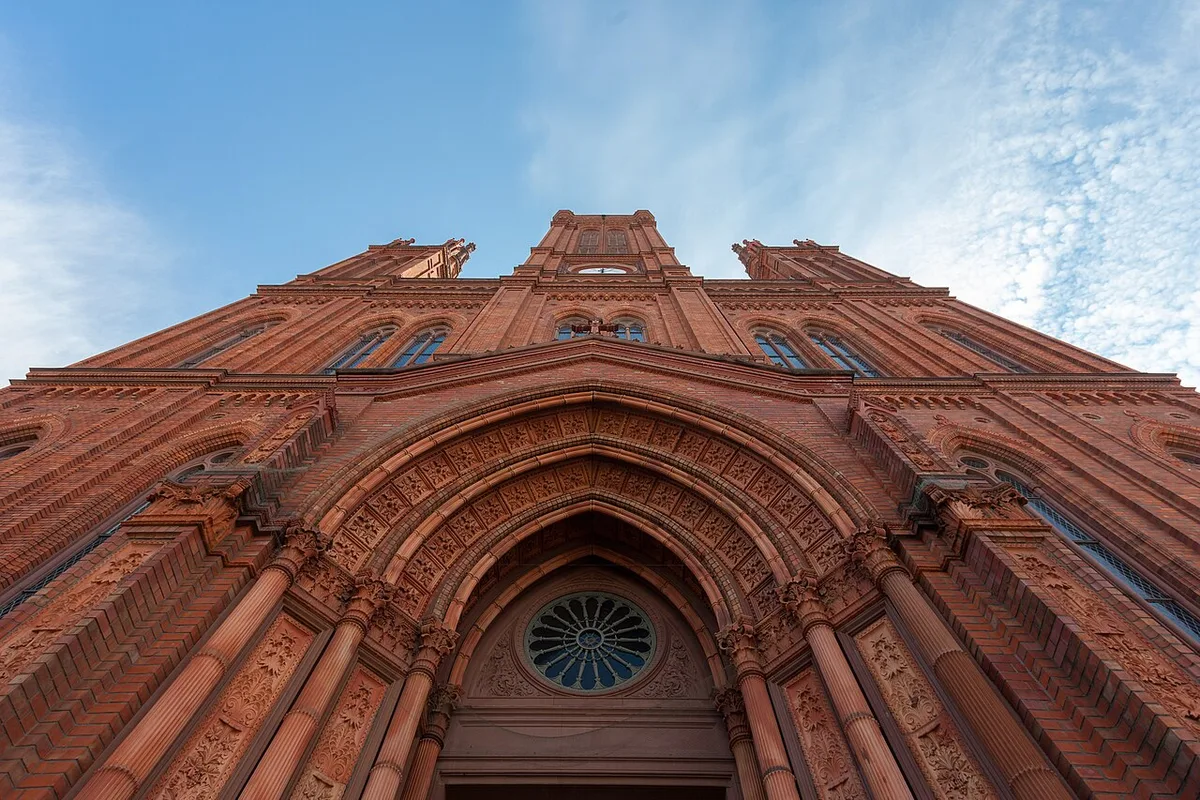
The Marktkirche is the visual anchor, a nineteenth-century brick church whose steeple dominates the skyline. If you want the architectural detail, the campanile, the brick construction and the square's layout are set out in the Marktkirche Wiesbaden visitor guide, which is worth reading before or after rather than mid-square. Allow roughly twenty to thirty minutes here if you are looking properly. Related guide: Wiesbaden photography guide.
The old town hall and the palace are best treated as exterior stops: you are reading facades and civic history, not touring interiors. Fire history in the sixteenth century and later rebuilding explain why so little older fabric survives in the centre. Keep your expectations at the level of the square itself and you will not be disappointed.
The Marktkirche Decision: Square Only or Tower
The honest answer is that most walkers should treat the Marktkirche as an exterior and square stop. Climbing a church tower involves stairs, and the tower access arrangements are not something to assume from a route description. If a climb matters to you, check current access and hours directly rather than planning the day around it.
If you do want the interior or a tower view, build slack into your timing and treat it as a separate stop rather than a pause. Stairs are one of the two real friction points on this route, the other being the Neroberg later. The flat centre stays flat; the vertical parts are optional additions with their own time cost.
Answering this question early keeps the rest of the walk simple. Square-only walkers can move on after twenty minutes and still have a generous afternoon. Tower-and-interior walkers should plan the visit as its own block and let the Kurhaus leg follow afterwards.
Leg 2: Kirchgasse and the Pedestrian Zone
Kirchgasse and the surrounding pedestrian streets are the connective spine between the historic square and the spa quarter, and they are where the town shops and eats. Treat this leg as a corridor with texture rather than a stop: you are crossing from civic Wiesbaden into the spa-and-leisure side of the centre. The walking is easy and the street is lined with places to pause.
This is also the natural place to break the walk. If you are doing the compact version, a quick coffee here is enough; if you are doing the long version, this is where a proper sit-down meal fits without derailing the afternoon. The densest concentration of food and drink sits in and around these streets, so choosing here is easier than backtracking later.
Wine is the local speciality rather than a single signature dish, and the pedestrian zone is where you will find it served year-round. If you happen to be in town during the wine festival season, expect the squares and streets to be busier and adjust your pace accordingly. Otherwise, the same streets serve the same purpose without the crowds.
Allow around thirty minutes for this leg if you are browsing, less if you are simply passing through. It is the one part of the route where the time you spend is entirely a matter of taste. The route order remains a suggestion here; walking it in reverse works just as well.
Leg 3: Kurhaus, Colonnade and Bowling Green
The Kurhaus district is the architectural payoff of the walk. The spa house itself is the centrepiece, with the colonnade running alongside and the Bowling Green lawn opening out in front. This is where Wiesbaden's self-image as a world-class spa town is most visible, and it is worth slowing down rather than ticking off.
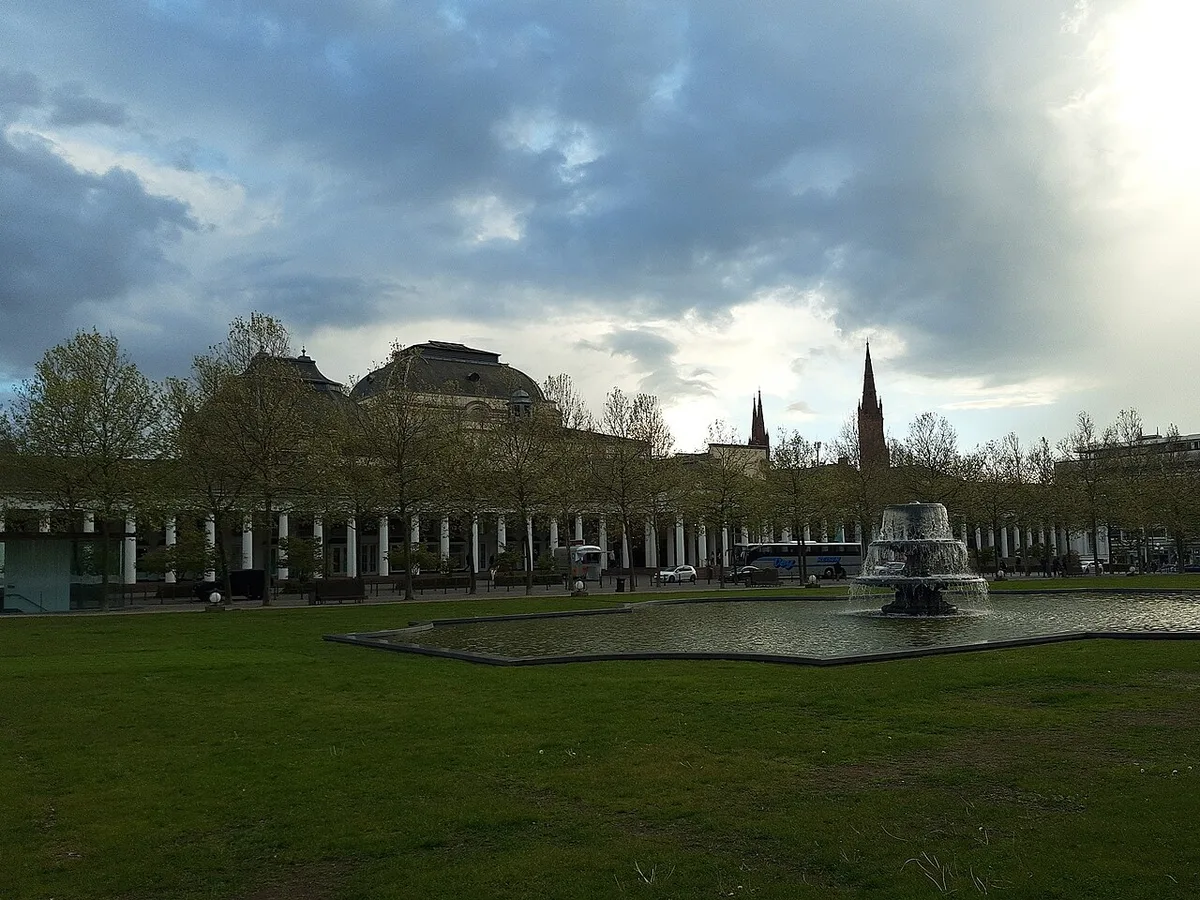
The important distinction here is between free public grounds and ticketed interiors. The square, the lawn, the colonnade and the surrounding streets are public space you can walk through; the building's halls and the casino inside are separate, ticketed or event-dependent interiors. Do not assume one ticket or one opening covers the whole complex, because it does not.
If you want to see inside the Kurhaus or the casino, check current opening and admission directly rather than relying on a walk description. Halls are used for events, and availability changes; the casino operates on its own terms. Build the exterior and the grounds into the walk, and treat interiors as a separate decision.
The colonnade and the Bowling Green deserve their own ten to fifteen minutes even on the short version. They are the reason this leg exists, and they cost nothing to walk through. Pair the visit with the spa context in the Wiesbaden: Landmark Visitor Guides if you want to understand what you are looking at.
What the Operator's Self-Guided App Covers
The organiser publishes a downloadable self-guided tour that starts at the tourist information office on Marktplatz and runs for about ninety minutes. It works as an audiovisual experience: historical photographs, audio clips and a present-day view at roughly a dozen locations along the way. That is the closest thing to an official route on this walk.
Walking it yourself without the app changes almost nothing about the terrain, but it changes the content. You lose the historical overlays and you gain the freedom to stop, detour or skip. If you are short on time and want structure, the app route is the safer bet; if you want to linger in the pedestrian zone or the Kurhaus grounds, self-navigation suits better.
The app is not a substitute for checking current conditions, and it should not be described as the only or best route. It is a specific product with a specific length, and the route order in it is a suggestion. Use it as scaffolding, not as a schedule you have to keep.
Where the Kochbrunnen Fits In
The Kochbrunnen belongs on the walk because the springs are the reason Wiesbaden exists, and the spring sites sit naturally between the old town and the spa quarter. Treat it as a short stop built into the middle of the route rather than a destination on its own. It works best when you are already crossing the spa core.
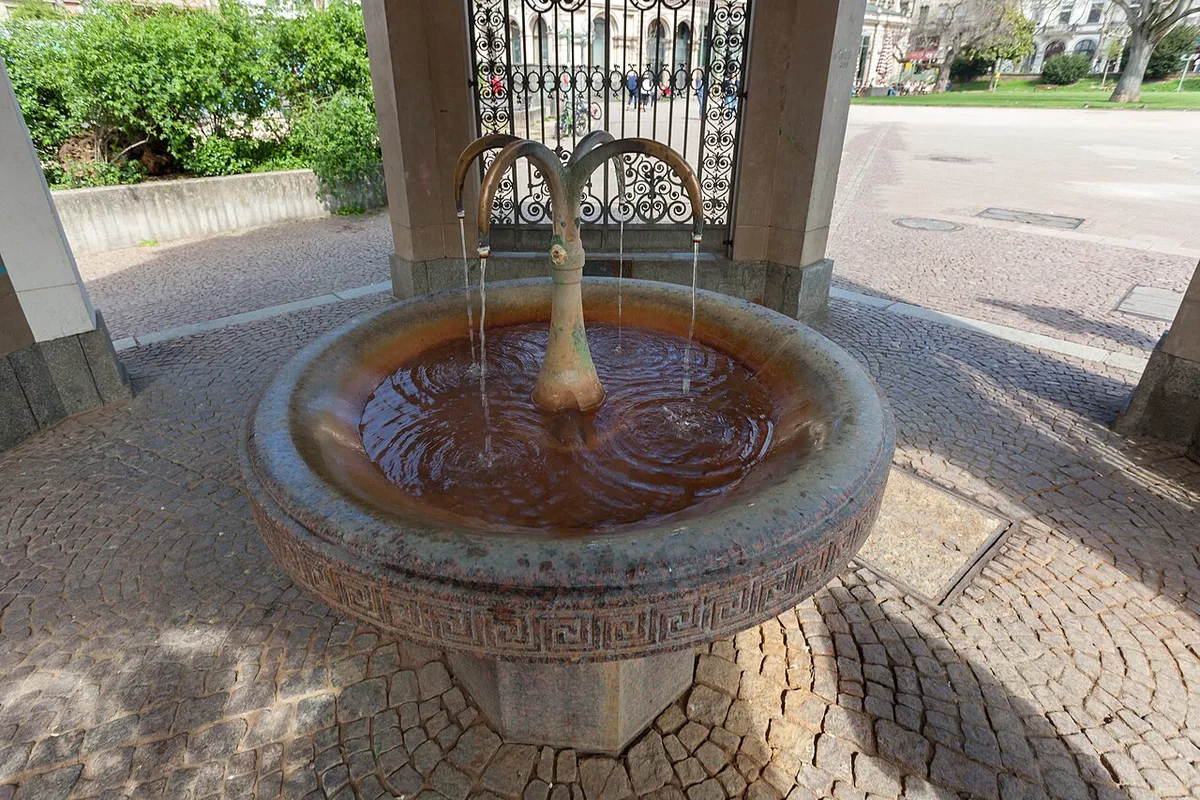
The thermal-spring story is the thread that ties the Marktkirche square, the pedestrian zone and the Kurhaus district together, so the spring stops give the walk its narrative. Without them it is a pleasant architectural stroll; with them it becomes a walk through the town's actual reason for existing.
Before you build the stop into a strict plan, confirm the current state of the site and any access arrangements directly. Spring sites can be under maintenance or temporarily altered, and a route description from any source may not reflect that. Ten minutes of checking avoids a wasted detour.
Two Suggested Timings: 90 Minutes and Three Hours
The short version follows the operator's stated ninety-minute shape: start at Marktplatz, read Schlossplatz and the Marktkirche from the outside, cross the pedestrian zone, walk the Kurhaus grounds and finish. It is a genuine look at the centre rather than a power walk, but it leaves no room for interior visits or a long meal. Label it as a suggested 90-minute option, not an official itinerary.
The unhurried version runs about three hours at an easy pace with stops, which is the shape a published Wiesbaden walking route describes for the central walk. That version absorbs a sit-down break, a proper look at Schlossplatz, and time in the Kurhaus grounds without rushing. Three hours is an estimate for a comfortable walk, not a measured distance or a fixed schedule.
Choose between them by asking what you want out of the day rather than by fitness. If you want coffee, interiors or a leisurely meal, take the three-hour version. If the walk is one item in a fuller Wiesbaden stay, the compact version leaves room for something else, and a 2 days in Wiesbaden itinerary can help you slot it in.
Where to Sit Down and Break the Walk
The pedestrian zone around Kirchgasse is the obvious midpoint break because it sits between the historic square and the spa quarter, so stopping there does not cost you a detour. The streets have the densest concentration of cafés and restaurants in the centre. Sitting down there keeps the second half of the walk light.
The Kurhaus grounds offer the other natural pause, with the Bowling Green lawn and the colonnade providing public space to rest without buying anything. If you have already eaten, this is the better second break because it is free and open. Between the two, you can structure the walk with a paid break early and a free one late.
A third option is the museum square area near the old town, which pairs a pause with a short indoor stop if the weather turns. The Stadtmuseum Wiesbaden am Markt guide is useful if you want to convert a rain break into something useful rather than waiting it out.
Adding the Neroberg as a Separate Half-Day
The Neroberg is a separate outing, not an extra stop at the end of a short walk. One published route treats it as an optional add-on of about ninety minutes, including the funicular and the hill. It involves a climb, and the centre does not, so the two halves of the day have genuinely different characters.
The funicular has its own operating pattern and fares, and the hill has its own viewpoint and church. Do not tag either onto the ninety-minute version and expect to enjoy it; treat the Neroberg as a half-day with its own start time. Check current running and ticket information before you commit, because these are seasonal and changeable.
The practical split is simple: do the old-town walk on one half of the day and the Neroberg on the other, rather than trying to chain them. That gives you a flat, unhurried morning and a hill afternoon, or the reverse. It also means weather has a smaller chance of ruining both.
When This Route Is the Wrong Choice
Skip this route if you are looking for a monument checklist. Wiesbaden is not a cathedral-and-castle city; it is a place to walk slowly and look at buildings, squares and springs. If you want big single attractions, the answer is a different town rather than a different route.
Reconsider if stairs are a problem. The flat centre is manageable, but tower climbs and the Neroberg both involve vertical movement, and this walk cannot promise barrier-free routing. Plan around the vertical parts rather than hoping they will be fine, and check specific access arrangements with the relevant site or operator.
Skip it too if you have a single hour and want to see everything. The compact version is a real walk, not a sprint, and the three-hour version is better value if you have the time. Cutting the route further produces a rushed look at the centre rather than a satisfying one.
Practical Notes on Surface, Pace and Weather
The centre is largely flat and pedestrian-friendly, which is why the walk works without a plan. The main variables are weather, crowds and how long you linger, not the terrain. Rain makes the pedestrian zone less pleasant but does not change the route.
Weekends and event periods are busier around the squares and the spa district, so morning starts give you more space. Afternoon starts trade quiet for warmth and light, which many walkers prefer in cool months. Neither is a rule; pick based on how much you mind company.
Wear shoes you can walk in for a few hours and carry a layer, because the walk mixes open squares with shaded streets. Keep the route order flexible, because a closed square, a market or an event can reroute the middle of the walk without much trouble. The centre is small enough that a detour costs minutes, not hours.
Plan Your Visit
Wiesbaden's old town works as a self-guided walk because the pieces are close together, mostly flat and thematically linked by the springs. Start at Marktplatz, read Schlossplatz and the Marktkirche from the square, cross the pedestrian zone, and finish in the Kurhaus district with the colonnade and Bowling Green. That sequence gives you the historic core and the spa quarter in one continuous line.
Choose your length before you set off: a compact version along the lines of the operator's stated ninety-minute route, or an unhurried three-hour walk with a break in the middle. Add the Neroberg only as a separate half-day. Check current opening and access information for any interior you want to see, and confirm funicular running and fares before committing to the hill.
For the buildings themselves, the Marktkirche Wiesbaden guide and the Kochbrunnen Wiesbaden guide fill in what a route description cannot. Together with the wider Wiesbaden: Itineraries and City Travel Guides, they turn a pleasant walk into a properly informed one.
Frequently Asked Questions
How long does a self-guided walking tour of Wiesbaden's old town take?
The organiser's self-guided app tour is described as roughly an hour and a half from the tourist information office on Marktplatz. A fuller, unhurried version of the same route with pauses and a break runs around three hours. Both are estimates rather than measured times, and your actual duration depends on how long you spend in the squares and the Kurhaus grounds.
Where should I start a walking tour of Wiesbaden old town?
Start at Marktplatz near the tourist information office. That puts you beside the Marktkirche and the old town hall and gives you a natural first look at the historic core rather than arriving from the station. Starting there also means the pedestrian zone and the Kurhaus district follow later in the walk, so the day builds towards the spa quarter.
Is the Wiesbaden old town walk flat and easy to do on foot?
The historic centre and the route between Schlossplatz, the pedestrian zone and the Kurhaus district are largely flat and walkable. The exceptions are vertical: any church tower climb and the Neroberg, which involves a hill and a funicular rather than a gentle stroll. Plan the flat centre and the hill as separate parts of the day rather than one continuous route.
Can I see the Marktkirche, Schlossplatz and Kurhaus in one walk?
Yes, and they sit close enough together to cover in a single outing. Read Schlossplatz and the Marktkirche from the square, cross the pedestrian zone, then finish at the Kurhaus with the colonnade and Bowling Green. Whether you also go inside the Kurhaus or climb the church tower depends on current opening arrangements, so check those separately before you plan the timing.
Is the Kochbrunnen on a Wiesbaden old town walking route?
The springs are the reason the town exists, so a stop at the spring sites fits naturally between the old town and the spa quarter. Rather than assuming any one source's route includes it, check the current state of the site before you build it into a strict plan, since spring sites can be temporarily altered or under maintenance.
Should I add the Neroberg to a Wiesbaden old town walk?
Treat it as a separate half-day rather than an extension of a short walk. One published route describes the add-on as roughly ninety minutes including the funicular and the hill, and it involves a climb that the flat centre does not. Check current funicular running and ticket information before you commit, since these are seasonal and changeable.


