

Steam drifting across Kranzplatz early in the morning is the clearest sign that Wiesbaden sits on something unusual. The Kochbrunnen, the city's hottest spring, pushes water above 65 degrees Celsius into an elegant pavilion fountain a short walk from the Kurhaus and the old town. Tasting it costs nothing at the public drinking point, which makes the spring one of the easiest free encounters with Wiesbaden's thermal heritage.
This guide separates the free fountain from the paid thermal baths that receive the same spring water, explains what the sulphurous aftertaste actually means, and suggests how to pace a visit around Kranzplatz. It also flags the practical details that organisers have not published, so you know exactly where to verify before you go.
Why the Kochbrunnen Defines Wiesbaden
Wiesbaden's spa identity rests on a supply of hot mineral water that has been drawn from the ground for centuries, and the Kochbrunnen is the most famous of the city's so-called primary springs. It is not a bathing pool but a feeding spring: a small share of its output reaches the public drinking fountain in the Kochbrunnenpavillon and the nearby Kochbrunnenspringer. The rest is channelled toward the city's thermal baths.
That dual role matters when you plan a visit, because the water you can taste for free is the same water bathers pay to soak in elsewhere. The spring supplied enough thermal water for the Kaiser-Friedrich-Therme and Thermalbad Aukammtal to be accredited as medicinal spas. Treating the Kochbrunnen as a quick stop rather than a destination in itself matches what it actually is: a working piece of spa infrastructure with a handsome public face.
The city's wider identity is worth reading before you arrive, since the spring sits inside a compact centre of grand 19th-century architecture and parkland. If you want the broader context first, start with the Wiesbaden: Landmark Visitor Guides overview and work inward. It explains how the spa quarter, the Kurhaus and the surrounding landmarks fit together geographically.
Where the Kochbrunnen Sits on Kranzplatz
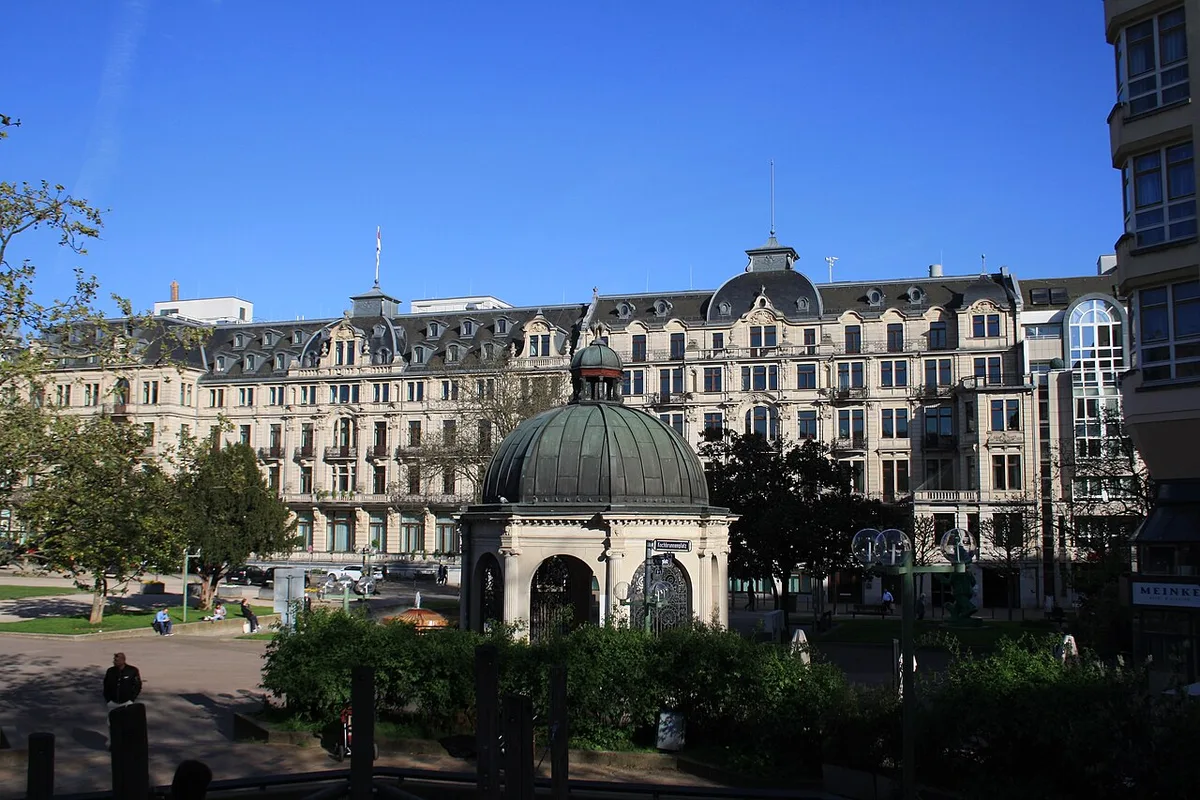
The Kochbrunnen stands on Kranzplatz, in the middle of Wiesbaden's historic spa district and within easy reach of the central shopping streets. Map listings place the Kaiser-Friedrich-Therme, one of the baths fed by this spring, around 170 metres east of the Hotel Schwarzer Bock and a short distance from the city palace. That cluster of buildings is the practical anchor for anyone navigating on foot.
Wiesbaden's main station sits just south of the Mitte district, and the regional S-Bahn network links the city with Frankfurt, Mainz and Frankfurt Airport, so arriving without a car is straightforward. Because the city centre is compact, most visitors can walk from the station area to Kranzplatz rather than using a bus. Confirm the current route on a live map or with the local transport operator before setting out, since specific lines and timetables change.
If you are building a wider city plan, the Wiesbaden: Itineraries and City Travel Guides collection is the better starting point for sequence and timing questions. Pair the spring with the neighbouring squares instead of treating Kranzplatz as an isolated stop. The whole area rewards slow walking, not a checklist.
What You See and Taste at the Pavilion
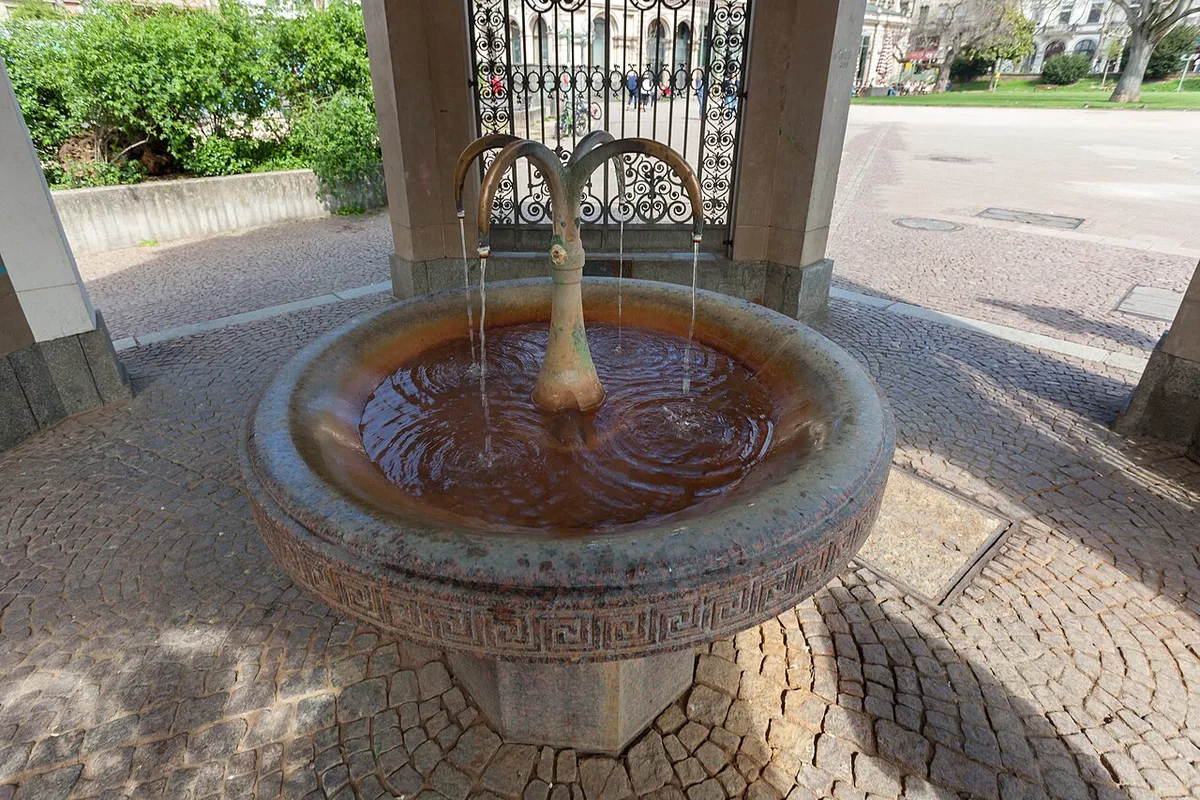
The pavilion on Kochbrunnenplatz shelters the drinking fountain, and a few metres away the Kochbrunnenspringer offers a second place to try the water. Both draw from the same spring. Because the water leaves the ground hot, expect visible steam and a fountain basin that is not designed for hands or feet; this is a tasting point, not a paddling pool.
The taste is the detail most first-time tasters underestimate. The water carries a slightly sulphurous aftertaste, and the city's own visitor material notes that it is traditionally credited with a healing effect in small doses. Sip a little rather than filling a bottle, and treat the flavour as part of the experience rather than a reason to skip it.
One caution is worth stating plainly: Wiesbaden's tourism pages do not publish the drinking fountain's opening hours, and nothing confirms that it is running on any given day. Check the city's own Kochbrunnen page or ask at the tourist information office on the Marktplatz if the fountain is central to your plans. If it is closed, the surrounding square and the spring's exterior are still worth the detour.
Reading the Water: Heat, Flow and Sinter
The Kochbrunnen is the hottest spring in the city. Published figures put it at roughly 65 to 66 degrees Celsius, and the spring produces on the order of 360 litres per minute under artesian pressure. That combination of heat and volume is why the water cannot simply be piped to a bath untreated; the city pre-treats most of it before it reaches the thermal baths.
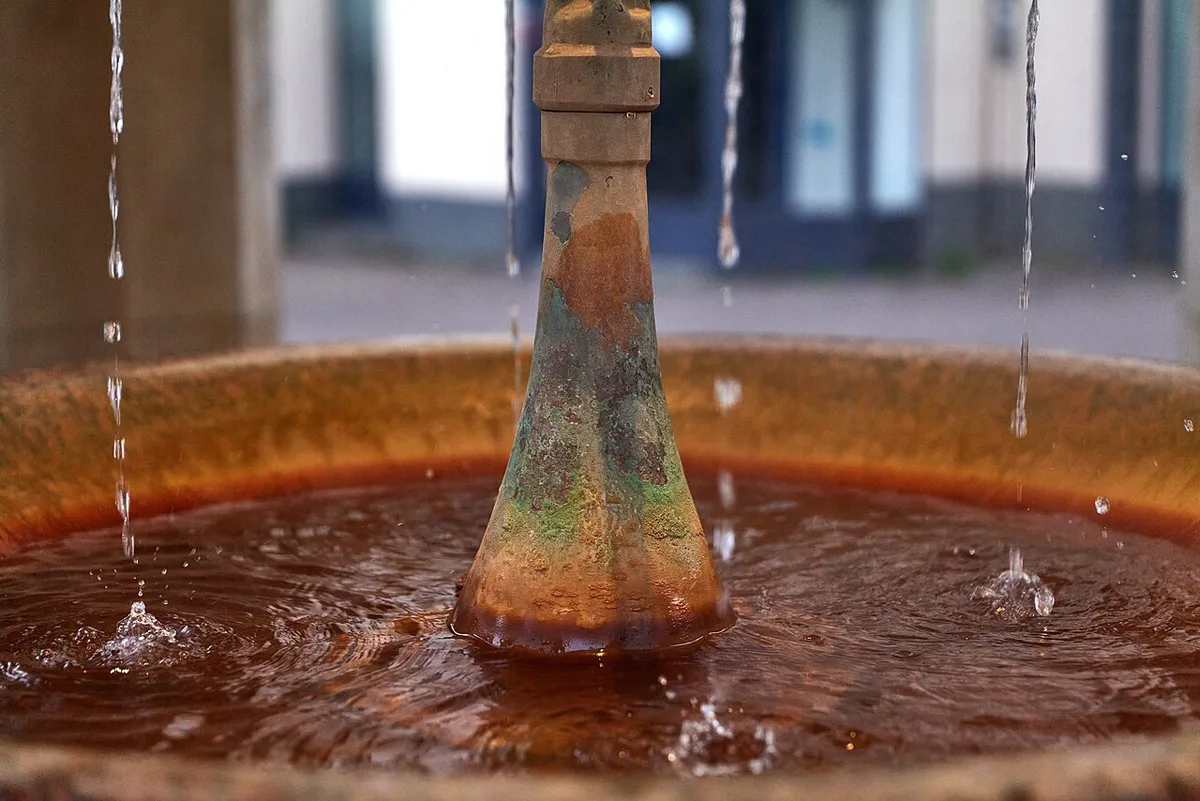
Look closely at the Kochbrunnenspringer and you will see a reddish-yellow crust building up on the stonework. This is sinter, a mineral deposit that grows roughly seven centimetres thicker each year and has to be removed periodically to relieve pressure on the shell-shaped fountain. The Romans valued the same deposit as a hair dye, which is why the spring's fame predates the spa architecture around it.
Detailed mineral analysis figures are published separately and change with ongoing monitoring, so this guide does not reproduce percentages. If you want the chemistry, the operator's spring page links its own water analysis document; that is the most reliable place to read current numbers. Treat any summary claiming a fixed blend as a simplification.
Free Fountain Versus Paid Thermal Baths
This is the distinction that causes the most confusion. Sipping from the drinking fountain on Kochbrunnenplatz is free and takes moments. Bathing in Wiesbaden's thermal water is a paid service at separate facilities, and no single ticket covers both the fountain and the baths, because there is no ticket for the fountain at all.
Most of the Kochbrunnen's water is channelled to the Kaiser-Friedrich-Therme, where it is pre-treated for use in the city's thermal baths. That historic bathhouse pairs Roman and Irish bathing traditions, with a sauna landscape and a comparatively cool historic swimming hall, and the mattiaqua group publishes its own admission prices and opening times. Check those pages directly rather than relying on older figures.
The other option is the Thermalbad Aukammtal, a modern thermal and sauna facility that also draws on Wiesbaden's medicinal water. Choosing between them is really a question of mood: the Kaiser-Friedrich-Therme for period atmosphere and nudity-based bathing culture, the Aukammtal for a contemporary spa layout. Neither is walkable from Kranzplatz in the same way the old town is, so plan transport if you commit to a soak.
Grand Hotels and the Kochbrunnenplatz Legacy
The square around the spring was designed as an elegant drinking spa, and the pavilion only received its temple form in 1887. Through the early 20th century, wealthy spa guests stayed in the grand hotels that lined Kochbrunnenplatz. Many of those facades survive even where the hotel use has ended.
The Hotel Schwarzer Bock is the standout survivor: founded in 1486 and counted among the oldest hotels in Germany, it still operates and still includes a bathhouse fed with Kochbrunnen water. Other buildings have been repurposed, including a former grand hotel now used for government offices. Walking the perimeter gives you a compact lesson in how spa tourism shaped the city's architecture.
For a slightly different angle on Wiesbaden's free sights, the free things to do in Wiesbaden round-up pairs well with this walk, since the spring itself sits at the free end of the city's thermal spectrum. It is useful if you are budgeting time rather than money.
Pairing the Spring With the Kurhaus and Old Town
The Kochbrunnen works best as one link in a short city-centre circuit rather than a standalone outing. From Kranzplatz, the Kurhaus and its adjoining Kurpark lie within the spa quarter, and the pedestrian core around the Marktkirche and Schlossplatz is equally close. Both are natural continuations of the same walk.
The Kurhaus is a neo-classical landmark completed in 1907 that now functions as an event venue, with a casino and restaurants, and a large English-style park behind it. Because programming varies, check the Kurhaus site for what is actually open or scheduled on your dates rather than assuming access to every hall.
On the old-town side, the Marktkirche's five red-brick spires make a convenient orientation point, and the surrounding streets are where Wiesbaden's market square and town hall sit. The Marktkirche Wiesbaden visitor guide covers the building itself if you want more than a passing look. In practice this makes a natural half-day loop: spring first, then the park, then the old town.
Suggested Duration and Practical Pacing
As a suggestion rather than any official recommendation, allow five to fifteen minutes at the fountain itself: enough time to read the pavilion, taste the water and look at the sinter on the Kochbrunnenspringer. Anyone expecting an attraction with exhibits or a visitor centre will be disappointed. The value here is the encounter, not the dwell time.
If you extend the visit into a half-day walk through Kranzplatz, the Kurpark and the old town, budget a couple of hours and wear shoes suited to cobbles and slight gradients. Mornings are the best chance of seeing the steam rise visibly across the square. Bring a small cup if you want a proper taste, since shared drinking vessels are not provided.
For a full day beyond the city centre, the Eberbach Abbey day trip from Wiesbaden adds a contrasting stop in the Rheingau wine region if you have a car or are comfortable with regional trains. Keep it as an optional extension, not part of the spring visit itself. The Kochbrunnen is a city-centre experience from start to finish.
Plan Your Visit
The Kochbrunnen rewards a short, deliberate stop rather than a long sit. Taste the water at the free fountain, look at the sinter building up on the Kochbrunnenspringer, and walk the square that Wiesbaden built around its hottest spring. Then decide whether the day calls for the Kurhaus and old town on foot, or a booked thermal bath somewhere else in the city.
Before you go, verify the two things the city does not publish prominently: whether the drinking fountain is currently running, and the current admission times and prices for whichever thermal bath you are considering. The tourist information office on the Marktplatz and the mattiaqua pages are the right places to check. Everything else about the Kochbrunnen you can simply walk up and see.
Frequently Asked Questions
Is the Kochbrunnen water free to drink?
Yes. Tasting the thermal water at the public drinking fountain in the Kochbrunnenpavillon, and at the nearby Kochbrunnenspringer, is free. Bathing in Wiesbaden's thermal water is a separate paid service at licensed facilities, and no ticket covers both. Because the city does not publish guaranteed operating hours for the fountain, confirm it is running before making it the centrepiece of your visit.
How hot is the Kochbrunnen spring?
Published figures put the spring at roughly 65 to 66 degrees Celsius, making it the hottest in Wiesbaden. It emerges under artesian pressure at a substantial flow rate, which is why steam is often visible over Kranzplatz. Because the water leaves the ground far too hot to drink directly, it is cooled or treated before reaching the public fountain and the city's thermal baths.
What does Wiesbaden thermal water taste like?
It has a slightly sulphurous aftertaste rather than a neutral mineral-water flavour. Wiesbaden's own visitor material notes that it is traditionally credited with a healing effect when consumed in small doses. Try a small sip first and decide whether you want more, because the flavour is distinctive and not everyone enjoys it.
Can I swim in the Kochbrunnen spring itself?
No. The Kochbrunnen is a feeding spring with a drinking fountain, not a bathing pool, and the pavilion basin is not designed for people to enter. If you want to bathe in Wiesbaden's thermal water, book a session at a licensed bath such as the Kaiser-Friedrich-Therme or the Thermalbad Aukammtal, both of which receive water from the city's springs.
Which Wiesbaden thermal baths use Kochbrunnen water?
Most of the Kochbrunnen's output is channelled toward the Kaiser-Friedrich-Therme, where it is pre-treated for use in the city's thermal baths. That supply helped the Kaiser-Friedrich-Therme and Thermalbad Aukammtal earn accreditation as medicinal spas. Individual bathhouses publish their own admission details, so check the operator's own pages rather than assuming shared pricing or access.
How long do you need at the Kochbrunnen?
As a suggestion rather than an official recommendation, five to fifteen minutes is enough to see the pavilion, taste the water and look at the mineral sinter on the Kochbrunnenspringer. If you fold the stop into a wider walk through Kranzplatz, the Kurpark and the old town, budget a couple of hours. There is no queue-based attraction here, so pacing is entirely up to you.


