

The Kaiser-Friedrich-Therme is Wiesbaden's historic public thermal bath, an Art Nouveau building with an Irish-Roman sauna landscape where bathing is textile-free. It suits a particular kind of visitor: someone who wants the ritual of an old European bathhouse rather than a warm modern pool. The city's own tourism page describes the historic swimming hall as relatively cool, with water at around 22 degrees, because cooling down is precisely the point of this pool.
The water source is what makes the place more than architecture. The baths are fed by the Adler spring, and the city secured the rights to that spring shortly before 1900, so ordinary visitors can bathe in Wiesbaden's thermal water without staying at a spa hotel with its own baths. That distinction matters when you plan: this is a public-access bath, not a hotel amenity. If you are weighing up Wiesbaden's watery sights more broadly, Wiesbaden: Landmark Visitor Guides covers the city landmark by landmark.
The essential decision for a Wiesbaden bathing day is not which venue has better reviews but which experience your body and comfort level want. The Kaiser-Friedrich-Therme pairs a cool historic pool with textile-free saunas; the Aukammtal thermal pool, also run by the municipal operator, is the modern alternative in the same city. Read on to choose by water temperature and nudity comfort, then confirm the details that change, such as tickets and hours, on the operator's pages.
What the Kaiser-Friedrich-Therme Is and Why It Exists
The bath is an Irish-Roman style thermal bath in central Wiesbaden, built between 1910 and 1913. It stands where foundations of a Roman sweating bath were found, so the Art Nouveau building sits directly on Roman history. The city tourism description explains that construction was partly prompted by criticism from Kaiser Wilhelm II, a regular visitor to the city's spas, who complained that Wiesbaden had the most beautiful spa house in the world but no representative public bath.
Architect August O. Pauly designed the Art Nouveau building, which deliberately absorbed Roman bathing traditions. That combination is why visitors today move through a sequence of rooms with Latin names rather than a single big pool. The bath stands at Langgasse 38-40, close to the Adlerquelle fountain and the former Hotel zum Adler, which map data places immediately beside it. If you are mapping your day, Wiesbaden: Landmark Visitor Guides places the bath among the city's other sights.
The important framing is that this is a bathhouse with a culture around it. The city tourism description stresses that bathing here is celebrated as bathing culture, with visitors entering the water without clothing. That ritual, rather than spa luxury, is the core of the experience, and it shapes everything from what you pack to how you pace your stay.
Bathing Culture: What Textile-Free Means for First-Timers
The Kaiser-Friedrich-Therme is one of the few textile-free thermal baths in Germany; a long-running bath directory lists it as such, and the city's tourism page states that visitors go into the water without clothes. That single convention decides the venue for many travellers, so arriving with the right expectation matters more than packing a swimsuit. Regulars treat it as normal; most first-timers settle in quickly once they see everyone following the same routine.
A simple sequence helps: change in the designated area, take a towel, and follow the German bathing routine of showering before entering pools and saunas. Do not improvise clothing rules based on what you wear at a normal municipal pool, because this venue is explicitly different. If the textile-free requirement is a dealbreaker for someone in your group, choose the modern Wiesbaden bath instead rather than hoping for an exception.
Keep valuables minimal, since you will move between pool, steam rooms, and saunas with only a towel. A second towel or a bathrobe is useful for sitting between circuits. The bath reads as an adult-oriented wellness setting rather than a family splash pool, so it pairs better with a quiet half-day than with children who want shallow water and noise.
Anyone unsure whether the city's bathing scene suits them can first compare it with Wiesbaden's free outdoor thermal landmark, the Kochbrunnen Wiesbaden hot springs guide, where you can see steaming springs in the open air without committing to a textile-free interior. That contrast is a fair test of your comfort level before you book a bathing session.
Inside the Historic Pool: Why the Water Is Around 22°C
The historic swimming hall holds water at a relatively cool 22 degrees, according to the city's tourism description. That temperature is intentional: the water exists to cool you down, because the sweating happens elsewhere in the sauna rooms. Visitors expecting a warm thermal soak in this particular pool will be surprised, and that surprise is best avoided by deciding in advance whether a cool plunge sounds refreshing or unpleasant.
Treat the cool pool as one station in a circuit rather than the main event. You warm up in the sauna landscape, then cool off in the historic hall, then repeat at whatever pace feels right; that rhythm is the traditional Irish-Roman approach. Because the pool is the cooling element, most bathers spend more time in the heated rooms than in the water itself. Anyone who mainly wants to float in warm mineral water should look at Wiesbaden's modern thermal offering instead.
The water comes from the Adler spring, the source the city secured shortly before 1900. The municipal operator, mattiaqua, frames its baths around bathing in the city's healing water, which is the practical meaning of the thermal water here. You do not need a spa hotel booking or a referral to use it; the spring water is part of the public bathing offer.
Two details are worth verifying on the day rather than trusting cached pages: current pool temperatures and any temporary restrictions in individual rooms. The operator publishes official information, and a quick check before you commit to a long visit is simpler than discovering a closed area at the door.
The Sauna Circuit: Tepidarium, Sudatorium, Sanarium and More
The building's sauna landscape follows the Irish-Roman style. The city tourism page names a tepidarium, a sudatorium, and a sanarium, and a long-running bath directory also lists a steam stone bath and a Russian steam bath among the rooms. The Latin names are not decoration; they describe a graduated sequence of heat, from gentle warmth to intense sweating and steam.
Plan the circuit as a route with time attached, not as a checklist of rooms. A typical rhythm moves from the mildest warm room into progressively hotter and steamier spaces, with rests in between, and the cool historic pool as the reset. Budget more time than you think you need, because rushing from a hot room to a cold plunge and straight back out defeats the purpose of the sequence.
The city's tourism description advises that anyone entering the baths today should not hurry, and points to massages and treatments, the Russian steam bath, the Finnish sauna, and a jacuzzi as part of the offer. That is a useful planning cue: this is a place for a slow block of hours. As a suggested duration rather than an official rule, most visitors will find roughly two to four hours comfortable for a first visit, though the operator sets out no required length of stay.
If you want to compare the sauna experience with the city's other watery landmark, the Kochbrunnen Wiesbaden hot springs guide explains the free outdoor springs that feed Wiesbaden's thermal identity. Doing both, on separate days, keeps each experience distinct.
Wellness Treatments and Massages On Site
Mattiaqua, which operates Wiesbaden's municipal baths, lists wellness offerings such as massages and softpacks as rounding out the exclusive range of the Badepalast, and calls the Kaiser-Friedrich-Therme its feel-good oasis. That is the operator's own framing of what is available on site, which makes mattiaqua the page to check for treatment details rather than a travel directory.
Treatment menus, availability, and how to arrange an appointment are exactly the kind of thing that changes, so confirm directly with the operator before you plan a visit around a massage. Do not assume a treatment is included with entry; wellness applications are typically separate from bathing admission. If a specific treatment is the reason for your visit, ask about it when you check current opening information.
The combination of a sauna circuit and a treatment is what makes a half-day here feel complete, but it also means leaving buffer time. A massage after a hot circuit, with a rest afterwards, is a different visit from a quick dip. Plan the order deliberately rather than squeezing treatments onto the end of an already full day.
Deciding Between the Kaiser-Friedrich-Therme and Aukammtal
Wiesbaden has two public thermal bathing options that visitors often confuse: the historic Kaiser-Friedrich-Therme and the modern Aukammtal thermal pool, which mattiaqua also operates. The Thermalbad Aukammtal is the contemporary facility, while the Kaiser-Friedrich-Therme is the listed Art Nouveau bath with the textile-free culture and the cool historic pool. They are not interchangeable, and the choice should follow from two questions.
Ask first whether you are comfortable bathing without clothing, because that single requirement settles the historic bath for many visitors. Ask second what water temperature you actually want, since the historic pool sits around 22 degrees while a modern thermal pool serves people who want warmth. If either answer rules out the Kaiser-Friedrich-Therme, the Aukammtal side of the operator's website is the place to check how that facility works, including its own admission details and rules.
Families with young children usually gravitate to the modern pool, where the setup suits swimming and play more naturally; the historic bath is better matched to adults seeking sauna ritual and quiet. Couples or solo travellers who enjoy European bathing culture often prefer the Art Nouveau setting precisely because it is unusual. Neither choice is superior, but picking the wrong one for your group's comfort level spoils the day.
If the weather turns and you want a non-bathing option in the same city, Wiesbaden on a rainy day covers indoor alternatives that pair well with a spa town itinerary, and the Museum Wiesbaden guide covers one of the strongest of them. For building the surrounding days, Wiesbaden: Itineraries and City Travel Guides is the better starting point.
Tickets, Hours and What to Verify Before You Go
Current admission prices and opening hours for the Kaiser-Friedrich-Therme must be confirmed, because cached directory listings go stale. One third-party bath directory historically listed a day ticket of 6.50 euro with daily hours, but that figure is old and should not be treated as the price you will pay. Check the operator's ticket page for the current day rate, any sauna or wellness supplements, and whether reduced or family options exist.
The same applies to schedules. A directory may state a daily opening window with longer hours on certain evenings, but that is not a guarantee of today's timetable. Seasonal changes, maintenance, and private events all affect access. Before travelling, look at the operator's own site for current hours and any notices, and treat directory data as a hint rather than a source of truth.
The operator's website does not publish an advance-booking requirement, so if your visit depends on a specific time slot or treatment, contact the bath directly and ask. Building a flexible plan around one confirmed detail is safer than pinning a whole day on an unverified schedule.
Mattiaqua's site is also where Wiesbaden's wider bath offerings, including the Kallebad and the thermal pool at Aukammtal, are described, so it is worth reading before you decide which facility to visit. Keeping your planning on the operator's pages avoids the most common mistake in spa-town travel: trusting a price or time that has not been updated.
Around Langgasse: Fitting the Bath into a Wiesbaden Day
The bath stands at Langgasse 38-40, with the Adlerquelle fountain and the former Hotel zum Adler close by. Map data places the neo-classical Wiesbaden City Palace about 240 metres to the south-east and the historic Hotel Schwarzer Bock about 170 metres to the east. That central position makes a bathing session easy to combine with the market square, the Marktkirche, and the pedestrian core of the old spa town.
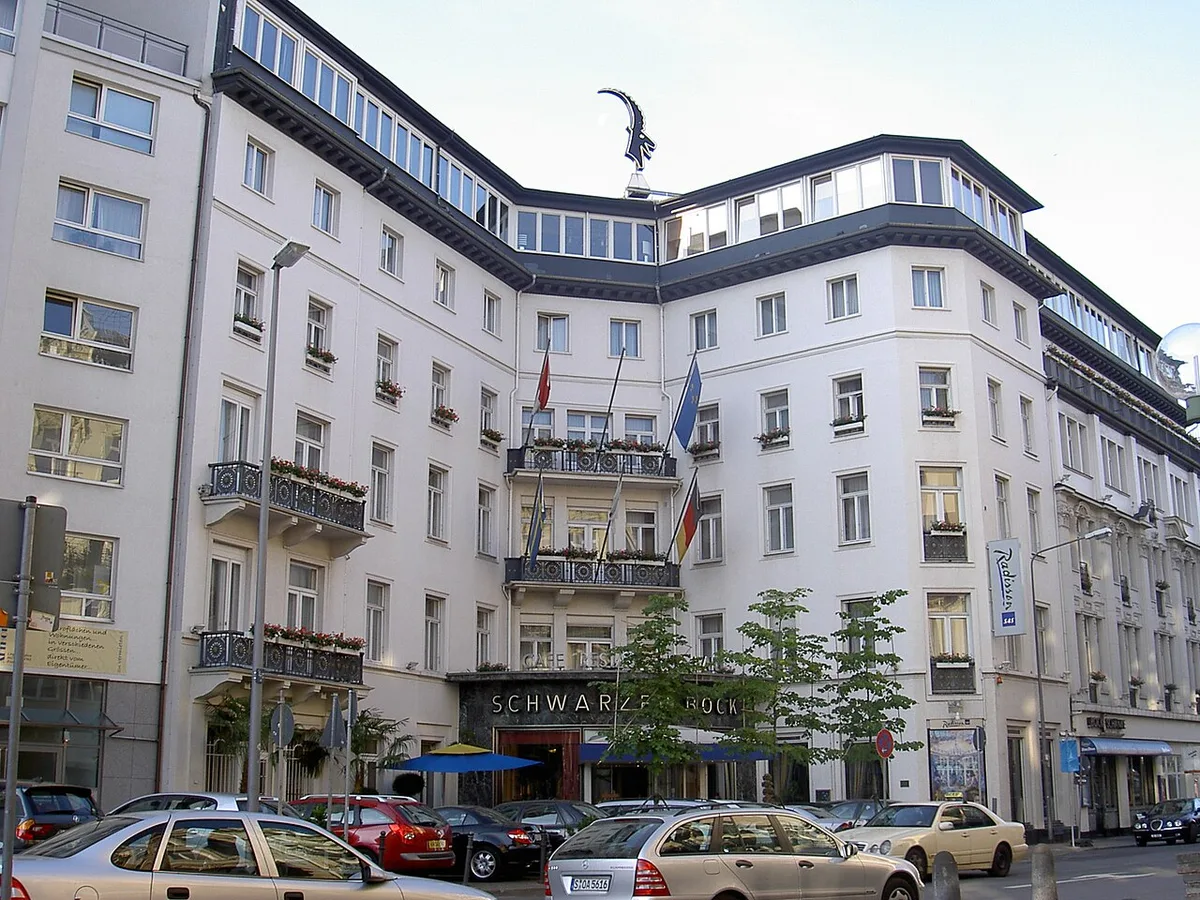
For the rest of the day, the Kurhaus and its Kurpark sit at the other end of the centre, and the Kurhaus operates as an event venue with its own public programme rather than a simple sight. The Neroberg hill, reached by the historic water-powered Nerobergbahn funicular, offers the classic panorama over Wiesbaden. Planning the bath for the middle of the day, with city sights before and a relaxed evening after, suits the slow rhythm a bathhouse encourages.
German Sights notes that Wiesbaden's pace is generally unhurried and that the city lacks the bustling nightlife of larger German cities, which is precisely why a bath visit fits here. It also states that the tourist information office sits on the Marktplatz near the town hall and Marktkirche. Building a Wiesbaden: Itineraries and City Travel Guides plan around one anchor activity per day works better than racing between sights.
If your interests lean to gardens and palaces rather than water, the Eberbach Abbey day trip from Wiesbaden covers a major Rheingau monastery in the surrounding wine country, and the Schloss Biebrich guide covers the Baroque palace whose riverfront park is freely accessible. If you would rather spend nothing on admission, free things to do in Wiesbaden lists the open-air sights, including the Kochbrunnen, that cost nothing to see.
Plan Your Visit
The Kaiser-Friedrich-Therme rewards visitors who choose it for the right reasons: an Art Nouveau setting, Adler spring water, a textile-free bathing culture, and a cool historic pool that works as a cooling station in a sauna circuit. If warm water and swimwear are non-negotiable, the modern Aukammtal thermal pool is the better Wiesbaden choice, and the operator's website is where both facilities are described.
Before you go, confirm current opening hours, admission prices, and any treatment availability directly with the operator, because directory listings can lag behind. Then decide how much time to give the bath: a suggested half-day suits a full sauna circuit plus a rest, while a rushed visit sells the experience short. Let the bathing ritual set the pace rather than your sightseeing list.
Frequently Asked Questions
Do you have to be naked at the Kaiser-Friedrich-Therme?
Yes. The Kaiser-Friedrich-Therme is a textile-free bath, and the city's tourism description says visitors enter the water without clothing. That convention applies to the pools and sauna landscape rather than being optional. If nudity is not comfortable for you or someone in your group, the modern Aukammtal thermal pool in the same city is the appropriate alternative, and the operator's website explains how that facility works.
How warm is the water in the historic pool?
The historic swimming hall is described by the city's tourism page as relatively cool, at around 22 degrees Celsius. That is deliberate: the pool exists mainly to cool bathers down between visits to the heated sauna rooms, where the sweating happens. Anyone expecting a warm thermal soak should look at Wiesbaden's modern thermal offering instead, or plan to spend most of the visit in the sauna circuit rather than in the water.
Is the Kaiser-Friedrich-Therme or the Aukammtal thermal pool better for families?
Families with young children generally find the modern Aukammtal thermal pool the easier fit, because a contemporary swimming-oriented facility suits play and warm water better than a quiet, textile-free historic bath. The Kaiser-Friedrich-Therme is an adult-oriented wellness setting built around sauna ritual, a cool historic pool, and bathing etiquette. Neither is wrong, but matching the venue to your group's comfort with nudity and cool water prevents a wasted outing.
Do you need to book in advance, and what does a ticket cost?
The operator does not publish an advance-booking requirement, so contact the bath directly if your visit depends on a specific slot or treatment. Admission prices also change, and old directory figures should not be trusted as current. Check the operator's own ticket page for today's rate and any supplements rather than relying on cached listings or secondhand guides.
Can you visit without staying at a spa hotel in Wiesbaden?
Yes. The bath is fed by the Adler spring, whose rights the city secured shortly before 1900, and the tourism description makes clear that everyone can enjoy the thermal water facilities even without staying at a spa hotel with its own baths. That is what makes the Kaiser-Friedrich-Therme a public-access bath rather than a hotel amenity: you buy entry to the bathhouse itself and use the same healing water that hotel guests use elsewhere in the city.


