

Ulm is a compact, walkable city on the Danube, and much of what visitors come to see is viewed from the outside at no charge. The Ulm Minster nave is open to visitors without a ticket, while the tower climb is a separate paid product, so the single biggest sight is really two different experiences. Plan around that split and you can fill a day without buying anything except food.
The old town sits entirely within a pedestrian zone, so you never need transport between the Minster, the Marktplatz, the Fischerviertel and the riverbank. A suggested half day on foot covers the Minster square, the city hall facade and the quarter along the Blau canals at an easy pace; that timing is a recommendation, not an official figure. Everything else on this list layers on top of that core loop.
Start at the Minster: the free nave versus the paid tower
Entry to the Ulm Minster nave is free, which surprises many first-time visitors who assume a building of this scale must be ticketed. The church is a Lutheran parish, not a cathedral, and the interior with its carved choir stalls is the part you can walk into without paying. Treat the tower as a separate decision rather than part of the same visit.
The tower climb is ticketed and closes earlier than the church itself, so if it matters to you, check the current price and last-entry time on the day at the official Minster or tourism office rather than trusting an old blog figure. Anyone with knee trouble, claustrophobia or small children should weigh the narrow spiral staircase honestly. The free nave, the square outside and the market that sometimes occupies Münsterplatz give you plenty without the climb.
The Minster's 161.5-metre spire is the tallest church steeple in the world, a fact repeated across city and national tourism pages, and it dominates every sightline in the old town. You do not need to ascend it to appreciate the scale; standing at its base on Münsterplatz is the classic free view. Photographers should note the square can be busy with market stalls on some mornings, which changes the composition.
Fischerviertel and the Tanner quarter: canals, timber and the Crooked House
The Fishermen's and Tanners' quarter is the most photogenic part of Ulm and costs nothing to wander. Narrow cobbled lanes, half-timbered facades and small channels of the Blau river thread between the buildings, and the area is dotted with little footbridges that make natural stopping points. It sits close to the river mouth where the Blau meets the Danube, so it slots easily between the Minster and the water.
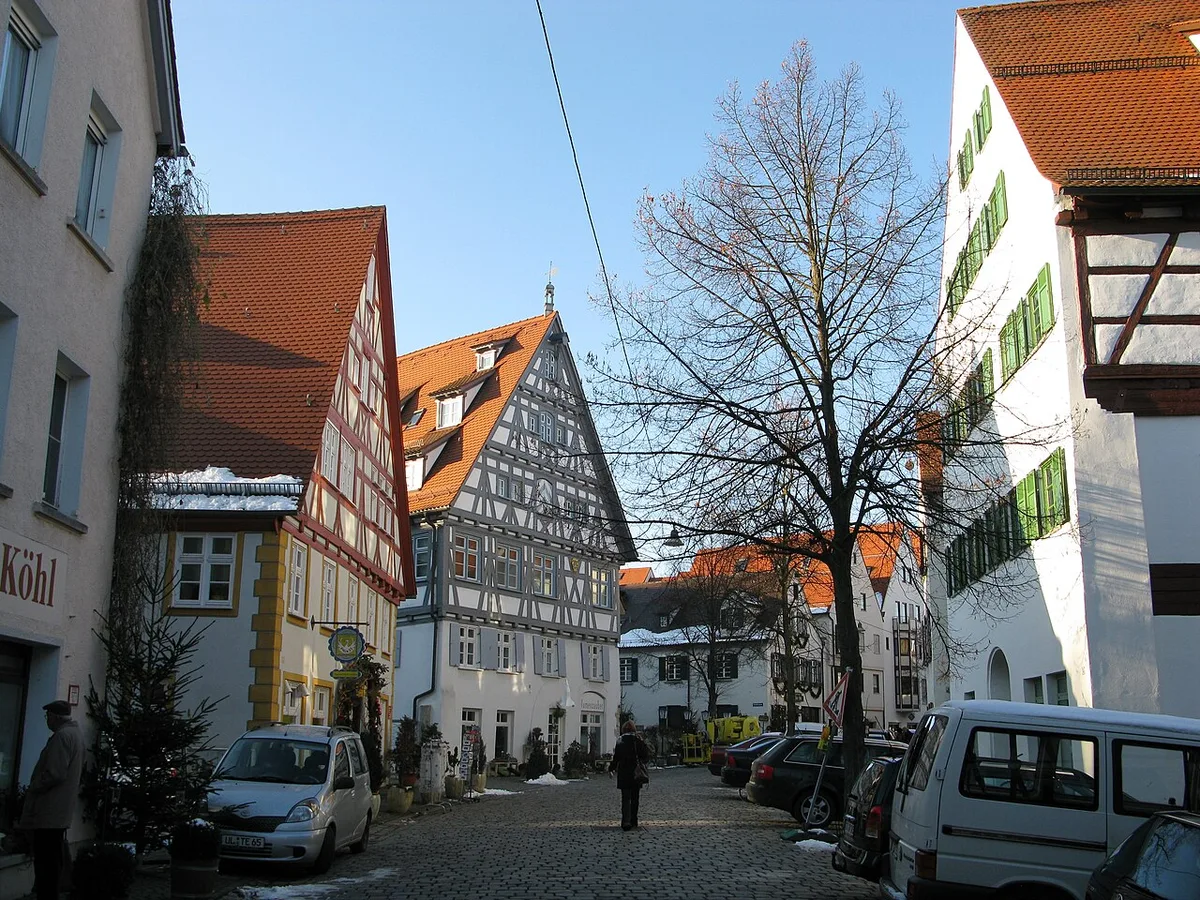
The Schiefes Haus, or Crooked House, leans over the Blau and is one of the quarter's signature sights, viewed from the outside on the lane or from a bridge. The Ulmer Spatz legend, in which a sparrow allegedly showed builders how to turn a long beam lengthwise, explains why a bird became the city's symbol and why you will see sparrow references around town. Both are free to see and to hear about from any plaque or guidebook.
Cafes and small shops occupy several of the old houses, so if you want to sit down you will pay for that, but walking the lanes themselves is free at any hour. Early morning gives the quietest photographs before the tour groups arrive; late afternoon light hits the timber facades warmly. Allow roughly an hour to stroll without rushing, though that is a suggestion rather than a fixed figure.
The city wall walk: Metzgerturm, gardens and Danube views
The city wall is a single continuous walk rather than three separate stops, and it is free. You can join it near the Metzgerturm, the slate-clad leaning tower whose 3.3-degree tilt is often compared with Pisa's, and follow it along the embankment where gardens sit on the inland side and the Danube and Neu-Ulm open up on the other. The Metzgerturm is viewed from outside; there is no need for a ticket to see it or the wall.
Legend attributes the Metzgerturm's lean to the weight of butchers imprisoned there, but the real cause is soft ground near the river, and its roof tiles reportedly came from other historic Ulm buildings. Knowing this makes the tower more interesting than a simple photo stop. Walk the wall in one direction and you naturally arrive at the river parks at the far end.
Comfortable shoes matter here because the wall and the surrounding lanes are cobbled and uneven, and the walk is exposed in places. It is stroller-friendly in stretches but not uniformly, so families with very young children should expect to lift and carry at points. There is no cost and no gate, which means you can shorten or extend the route freely.
Square to square: the Rathaus facade and the astronomical clock
The Ulmer Rathaus on Marktplatz wears one of the most elaborate painted facades in southern Germany, and you can study it for free from the square. The astronomical clock on the exterior dates from around 1520 and is one of the oldest surviving examples of its kind, later overhauled by the clockmaker Isaak Habrecht. Reading it is genuinely difficult, which is part of the appeal.
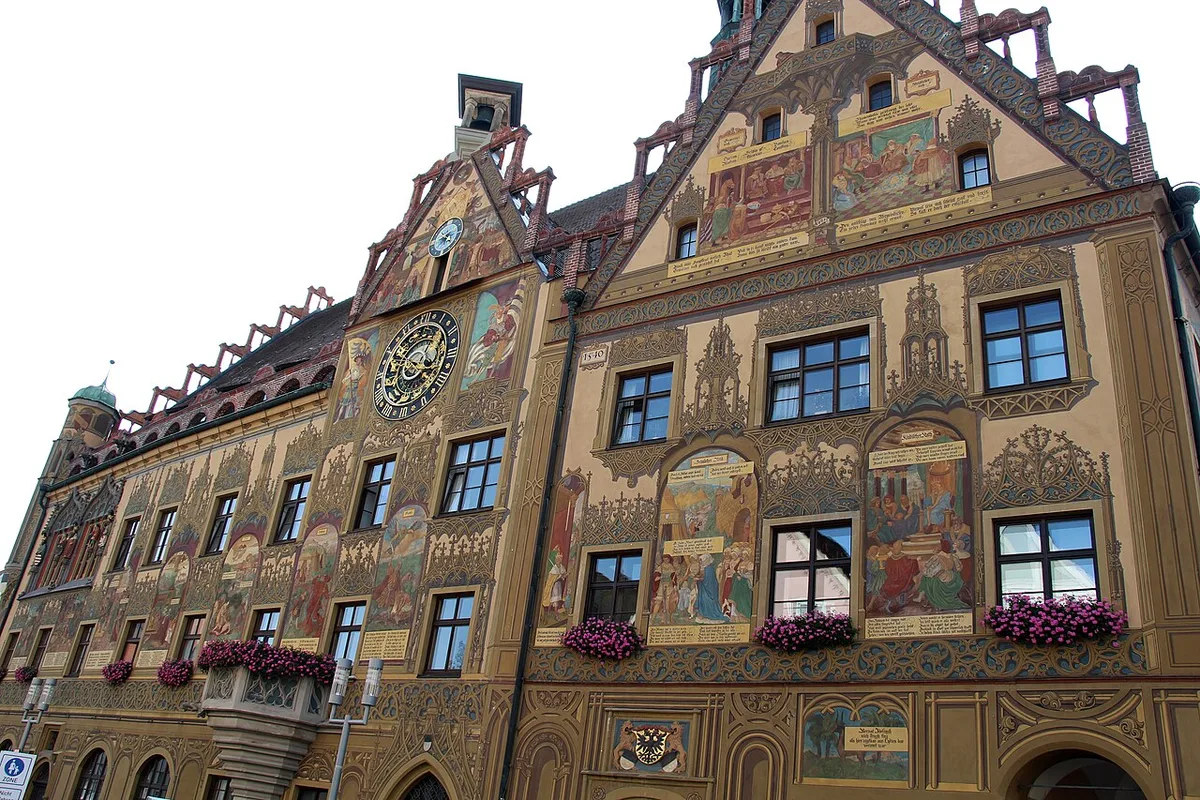
Be clear about what you can and cannot enter: the Rathaus is still an active administration, and public access is limited to the entrance hall and courtyard, with no independent guided tours of the building itself. Anyone who wants a deeper interior look should join a paid city tour that includes it rather than expect to wander the offices. Verify current access arrangements through the tourism office before you go, since administrative buildings can change their visitor rules.
The Marktplatz itself is free and is the natural link between the Minster and the river, with cafes and shops around the edges if you want to spend. A handful of lanes nearby hold the Grabenhäuschen, small colourful houses built on the old wall, which make a pleasant short detour. Combine the square with the Rathaus facade and you have a free hour that is genuinely rewarding.
If you want to trace how these pieces fit together geographically, a self-guided route through the old town helps you avoid doubling back. It covers the same free sights in a sensible order, which matters more than it sounds in a compact city full of one-way lanes and dead ends.
The Danube riverside, parks and the Berblinger Tower
A long park runs along the Danube, and on a sunny day locals use it for picnics, walks and cycling. This is the cheapest way to spend an afternoon in Ulm: bring food, sit by the water and watch the river traffic. The Donauwiese and the riverside paths are open ground with no admission charge.
The Berblinger Tower, an observation structure named for the tailor and aviation pioneer Albrecht Berblinger, sits in this riverside zone and offers a short staircase climb for city and river views. It is a modern landmark inaugurated in 2020, so treat it as a bonus stop on the riverside walk. Check locally whether it is open on the day, as small observation structures can be closed for maintenance.
Further out, Friedrichsau is a large city park with ponds, streams and playground space, and it works well as a low-cost alternative to paid attractions if you have children. The University Botanical Garden is another green option for those willing to walk or ride beyond the centre. Neither replaces the historic core, but both give you free hours if you are staying longer.
Crossing to Neu-Ulm: the classic free skyline view
The best-known view of Ulm is taken from the Neu-Ulm side of the Danube, where the Minster spire rises above the old town rooftops. The two cities were historically one and split in 1810, and today the bridge is simply a walk rather than a journey. This is the free photograph most visitors want, and it costs no more than the effort of crossing.
Time the crossing for late afternoon or early evening so the light falls on the old town facades, and remember that the view is weather-dependent rather than guaranteed. You do not need a tour, a boat or a ticket, though guided tours and river cruises exist if you want a different angle. For most travellers the free bridge view is the one that ends up framed on the wall.
The Neu-Ulm side also has riverside paths and beer gardens in the warmer months, so you can extend the walk without spending on admission. Remember you are crossing into Bavaria, which is a neat piece of trivia rather than a practical hurdle. The whole round trip from the Ulm old town takes well under an hour at an easy pace.
Memorials, small monuments and the museum question
Albert Einstein was born in Ulm, and although the house was destroyed in a wartime bombing in 1944, a memorial fountain stands nearby, with a second Einstein fountain elsewhere in the city showing the physicist with his tongue out. Both are outdoor monuments, free to visit and quick to find. They work well as small stops between the larger sights.
Museum Ulm, which holds the Ice Age Lion Man sculpture, has been closed for renovation since April 2023, and the figure has been displayed instead on the first floor of the Kunsthalle Weishaupt in a temporary arrangement. Because that loan arrangement had a stated end point, the Lion Man's location is exactly the kind of detail to confirm with the relevant venue before you build a day around it. Do not assume every museum around the New Centre is free or that a single ticket covers them all.
Kunsthalle Weishaupt is a paid private gallery with regularly changing exhibitions and its own opening hours, so check the official site if you want to add it as a ticketed extra rather than counting it among the free options. The Kunsthalle also runs occasional free-entry elements within its programme, but those change with each schedule and should never be assumed. The cleanest approach is to plan your free day first and treat any museum as an optional paid upgrade.
Practical planning: pacing a free day on foot
Ulm's old town is compact and pedestrianised, which means the free itinerary is genuinely a walking one. Arrange your day as a loop: Minster square, Rathaus and Marktplatz, Fischerviertel, then the wall and riverside, finishing with the Neu-Ulm crossing for the skyline. That order keeps you moving downhill toward the water rather than backtracking.
Season matters mostly for daylight and weather rather than cost, since all these outdoor sights are open access. Winter visits are darker earlier, so start in the morning if you want the riverside light; summer gives long evenings for the Neu-Ulm view. Rain does not close the free sights, but cobbles get slippery, so grip matters more than style.
If you want one paid extra, the tower climb or a museum visit are the obvious candidates, and both should be checked for current prices, hours and availability on the day. The tourism office publishes the details you need, along with any combined card that bundles attractions and transport. Buy nothing on assumption; confirm before you commit. For wider planning, see Ulm city travel guides. For wider planning, see Ulm landmark visitor guides.
Plan Your Free Day in Ulm
Ulm rewards the traveller who is happy to look rather than pay: the Minster nave, the Rathaus facade, the leaning Metzgerturm, the city wall, the Fischerviertel lanes and the Neu-Ulm skyline are all free, and they cover the city's signature sights in a single walkable loop. Save your budget for one chosen extra and spend the rest on food by the river.
Before you travel, check the tourism office for current opening times, tower access and any temporary closures, because small details change more often than the city's layout does. Wear shoes you can walk cobbles in, carry water, and keep the day loose enough to enjoy the free squares rather than racing between them.
Frequently Asked Questions
Is entry to Ulm Minster free?
Yes, visiting the nave of the Ulm Minster is free. The tower climb is a separate, ticketed experience and typically closes earlier than the church itself. Check the official Minster or Ulm tourism sources for current access details before you go, since these can change.
Is the Ulm city wall walk free?
Yes. The city wall is open ground and free to walk, and it links the leaning Metzgerturm with the riverside gardens and views across the Danube toward Neu-Ulm. You can join or leave the route at several points, so it works for a short stroll or a longer walk.
Where is the best free view of Ulm?
The classic free view is from the Neu-Ulm side of the Danube, where the Minster spire rises above the old town rooftops. The city wall and riverside paths also give good free perspectives of the river. All are outdoor viewpoints, so weather and daylight affect the experience.
Can you see the Rathaus astronomical clock for free?
The Rathaus facade and its astronomical clock are visible from the Marktplatz at no cost, and the building is an active administration rather than a museum. Public access inside is limited, so plan to admire the exterior and the square instead of expecting a full interior tour.


