
Rothenburg ob der Tauber is compact enough to walk its best-known streets in a few hours, so a third day is less about seeing more ticketed sights than about buying quieter hours. The local tourist service lists the Plönlein, the walkable town wall, the Marktplatz, St. Jakob's Church and the Burgtor among the town's highlights, and all of those free or church-bound surfaces sit within a short walk of each other.
The town lies in Bavaria's Tauber Valley, with the Altstadt inside an intact wall, the Castle Garden and Burgtor on its northwest edge, and the main station outside the walls. Travellers who have visited repeatedly note that coach groups tend to arrive mid-morning and leave in the late afternoon, so overnight guests get the quietest version of the same streets. This itinerary is a suggestion, not an operator-recommended schedule, and every block can be swapped.
Why Three Days Fits Rothenburg Differently Than a Day Trip
The town is small enough that a day visitor can see Plönlein, the Marktplatz, the Town Hall facade and a museum or two without rushing. What a day visitor cannot easily do is see those same places empty, because coach groups arrive mid-morning and leave by late afternoon. Staying overnight changes the rhythm of all three days more than any single attraction does.
In a long-running travel forum thread, one traveller who arrived by train preferred two days based in town, while suggesting that travellers with a car would find Rothenburg a good base. That split is still a useful way to decide your own shape: rail travellers often do better with a focused stay, drivers gain more from an extra day because they can reach smaller towns and valley viewpoints. Treat both views as opinion rather than a rule.
If you are weighing a shorter visit, the two-day version covers the core and shows what a third day actually adds. Keep one day entirely inside the walls, one day for the wall and whichever interiors appeal, and one day for leaving town.
Where Your Three Days Sit Geographically
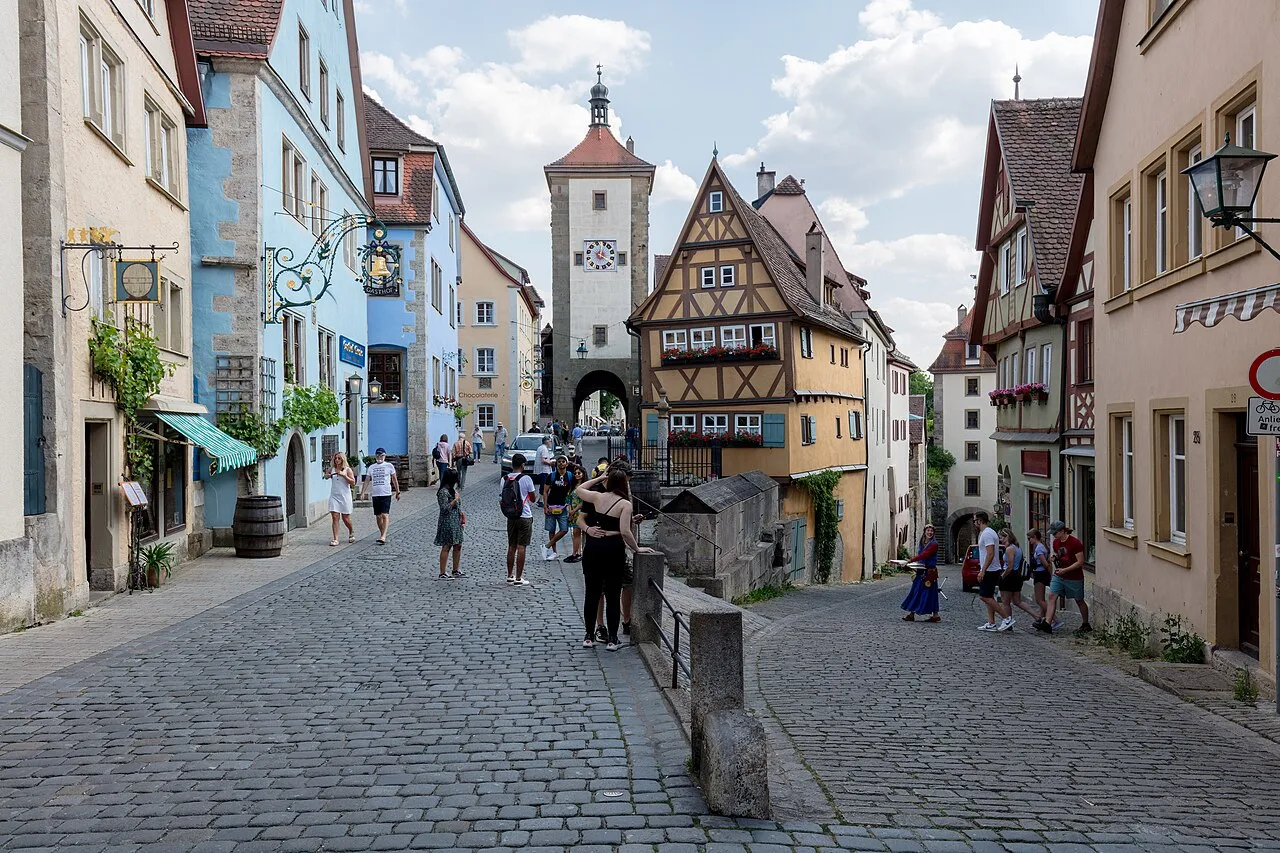
Almost everything on days one and two sits inside the Altstadt, a walkable area where the Town Hall, St. Jakob's Church, Plönlein and Marktplatz are close together. The Tower Trail runs along the town wall in stages, with stairs down to the street in various sections, so you can join and leave it rather than committing to the full loop. The Castle Garden sits by Burgtor just outside the medieval walls.
Outside the walls, the station is roughly a fifteen-minute walk from the Old Town, or a short taxi ride with luggage. The Tauber Bridge, also called the Double Bridge, is about ten minutes outside the Old Town and easiest to reach with a car. Build those two anchors into arrival and departure rather than treating them as separate outings.
Day 1: Settle In and Walk the Core on Foot
Use the first day to orient yourself without buying a ticket. Start at the Marktplatz, where the Town Hall mixes 16th-century Renaissance and Gothic elements in its facade, then drift through the lanes toward Plönlein. Because Plönlein is the town's most photographed corner, going early or late gives you a calmer view without changing your route.
From Plönlein, continue to the Castle Garden for Tauber Valley views and the formal garden with sandstone sculptures and flowerbeds. Walking to the far end of the park is where the best outlook opens up, and the garden itself is free to enter.
Finish with an evening wander once the coaches have gone, when the lit streets and the Marktplatz do the work for you. If you want a structured path through the squares and gates, a Rothenburg old town walking tour gives you a sequence to follow without a guide. Where to eat and which cellars are open is best checked locally on the day.
Day 2: The Wall and the Interiors You Actually Want
The Tower Trail is the centrepiece of day two, but treat it as a set of stages rather than one attraction. One frequent visitor reports the full route runs around 2.5 miles and takes roughly 2.5 to 3 hours, is open around the clock and is free. Because stairs lead down to the street in several places, you can walk a section, drop into the lanes, and rejoin later.
Rothenburg ob der Tauber visitor information is the right place to check current wall access, museum listings and the event programme before you plan a full circuit. The local tourist service also publishes the town's top sights and seasonal events, so any date-sensitive decision belongs there rather than in an old itinerary.
For interiors, pick one or two rather than all of them. The Medieval Crime and Justice Museum suits anyone interested in the darker side of medieval law, while the German Christmas Museum lets you see Christmas traditions outside the festive season. The Alt-Rothenburger Handwerkerhaus is a preserved medieval house showing traditional crafts and trades, and St. Jakob's Church is known for its stained glass and the Holy Blood Altar by Tilman Riemenschneider.
These interiors sit in different buildings and collections, so do not assume one ticket covers them all. Check each museum's own published information for current admission, opening days and whether any combined offer exists. If you are in town in the run-up to Christmas, the market season fills the square and shifts how you move through the Altstadt.
Day 3: Leave the Walls
The third day is where Rothenburg stops being a single town and becomes a base. Drivers can head out along the Romantic Road or into the Tauber Valley, while train travellers are better served by picking one well-connected city and giving it the whole day. Either way, leave an evening free unless you are willing to sacrifice the quietest hours in town.
If you prefer to stay local, a Tauber valley walk from Rothenburg takes you down to the river and the Double Bridge on foot. That option costs you no transfer time and keeps the afternoon flexible. Choose it when you want the third day to slow the trip down rather than add a second destination.
Dinkelsbühl, a walled Franconian town on the Romantic Road, is the closest thing to a smaller-scale Rothenburg and works well as a half-day if you are driving. Confirm current opening details on the destination's own visitor pages. If you would rather compare options first, start with the day trips from Rothenburg ob der Tauber overview.
Day-Trip Decision Table: What Each Option Asks of Your Day
Nuremberg offers the most substance: a large old town, a hilltop castle and several major museums, which makes it a full day rather than a half. Würzburg is known for Baroque architecture, above all the UNESCO-listed Residenz with its Tiepolo fresco, and sits in Franconian wine country where the old bridge is a natural stop. Both reward travellers who want a city rather than another small walled town.
Drivers who want a break from cities can use the Romantic Road sibling guide to compare smaller options around the Tauber Valley. Dinkelsbühl and the Romantic Road ask less of you and give back smaller-town texture, timbered streets and countryside between stops. They suit drivers better than train travellers, because the appeal is in the fragments between towns rather than in one destination.
Match the day trip to the energy you have left, not to a checklist. A packed day out can cancel the evening atmosphere that justified staying overnight in the first place.
Car or Train: The Real Base Decision
Train travellers plan around connections and should verify routes, times and tickets directly with Deutsche Bahn rather than relying on any itinerary summary. From the station it is about a fifteen-minute walk into the Old Town, or a short taxi ride with luggage. Once inside the walls, you will not need the car or the train at all.
Drivers gain flexibility for the Romantic Road and valley stops, but they trade that for parking outside the walls, since space inside is limited. Confirm current parking arrangements and costs with the town or your accommodation rather than assuming any lot's facilities. Where the car sits relative to the walls determines how often you will actually drive during your stay.
Where to Stay and Why the Overnight Changes Everything
Staying inside the walls puts the Marktplatz, Plönlein and the wall within a few minutes on foot, which is exactly what makes early mornings and late evenings possible. Staying outside them, near the station, can be easier with luggage but adds a walk each time you want to be in the Altstadt. Weigh that trade-off against how much you value empty streets.
Book directly with properties or through the local tourist service, and confirm current room availability and amenities yourself, since hotel details change. Accommodation inside a historic centre also helps fund the upkeep of expensive old buildings, which is worth knowing when you compare prices. Treat any named hotel as a category rather than a guarantee.
Mistakes to Avoid on a Three-Day Stay
The most common mistake is front-loading every museum on day one and then having nothing left but shops. Rothenburg's paid interiors are small, and two in a day is usually enough. Space them so one day stays mostly outdoors.
The second mistake is treating the wall as one attraction to be completed. It runs in stages with street stairs, and quitting halfway is a legitimate plan. The third is booking a day trip that returns late and leaves no evening in town, which wastes the main advantage of sleeping inside the walls.
Finally, do not build your trip around a specific event unless the organiser has published that edition's dates. The local tourist service lists events such as the Meistertrunk, the Reichsstadt-Festtage and the Reiterlesmarkt, and those listings are where you confirm what is actually scheduled. Confirm day trips too, since city visitor pages change more often than the towns themselves.
Plan Your Visit
Three days in Rothenburg works best when you spend the first two inside the walls and leave the third open. Keep the free surfaces — the wall, Plönlein, the Marktplatz and the Castle Garden — as your fixed points, and treat churches, museums and tours as optional additions with their own published terms. Start with the core Rothenburg ob der Tauber guides to check current opening arrangements before you lock the plan.
Then verify the moving parts: train connections with Deutsche Bahn, event dates with the tourist service, and admission details with each museum. Those three checks protect the itinerary from the details that change most often. Everything else, including how far you walk on the wall, you can decide on the day.
Frequently Asked Questions
How many days should you spend in Rothenburg ob der Tauber?
Many visitors see the core in a single day, but two nights let you experience the Altstadt before coaches arrive and after they leave. Three days suits travellers using Rothenburg as a base for the Romantic Road or the Tauber Valley. The extra time buys quieter hours rather than more ticketed sights, and the plan is a suggestion rather than an official schedule.
Can you reach Rothenburg ob der Tauber by train, and how do you get from the station into the Old Town?
The town has a main station outside the walls, and the Old Town is roughly a fifteen-minute walk from it, or a short taxi ride with luggage. Check current routes and connections with Deutsche Bahn, since timetables change. Once inside the walls, everything in the Altstadt is walkable.
Which day trips from Rothenburg ob der Tauber are realistic in a single day?
Nuremberg and Würzburg make full days, with Nuremberg offering a large old town and castle and Würzburg known for the Baroque Residenz and Franconian wine country. Dinkelsbühl and the Romantic Road suit drivers who want smaller towns and countryside. Confirm current opening details on each destination's own visitor pages before you commit.
Should you stay overnight in Rothenburg or visit as a day trip?
Overnight guests get the streets at their quietest, in the early morning and late evening after coach groups leave. Day visitors see the same landmarks but rarely see them empty. If you cannot stay overnight, plan your visit at the edges of the day.


