

Rothenburg ob der Tauber is small enough to see on foot, which makes it an unusually good base for excursions: you can spend the morning inside the walls and the afternoon outside them without ever opening a timetable. Rothenburg Tourismus Service publishes an Ausflüge category and a 2026 theme year, Rothenburg – Stadt.Landschaft.Natur, that frames town, landscape and nature as one experience, so the valley below is part of the visit rather than a separate trip.
That framing matters when you start comparing options. The closest excursion needs no train and no car: from the Burggarten and the Burgtor you can look down toward Detwang, and one traveller account suggests roughly a 20-minute walk from the Castle Gardens to St. Peter and Paul's church, with the stop taking about an hour or two in total. Those are suggested visitor timings, not an official schedule. Start with that walkable option, then decide whether you need wheels at all.
Why Rothenburg Works as a Base for Short Excursions
The old town is compact and walled, with the main sights clustered between the Marktplatz and the western edge near the Burgtor. That density means you can finish a solid circuit of the centre and still have half a day left for something beyond the walls. The trade-off is that Rothenburg has one small station and limited local transport, so the easiest add-on is the one you can walk. If you want to understand the town's individual landmarks before you leave it, the Rothenburg ob der Tauber landmark visitor guides are a useful reference point.
If you are deciding how much time to give the town itself before adding excursions, a structured plan helps. The 3 days in Rothenburg ob der Tauber itinerary shows how sights, walls and valley time can be spread across several days instead of crammed into one. Treat it as a template and adjust for your own arrival and departure times.
The No-Transport Option: Burggarten, Burgtor and the Walk to Detwang
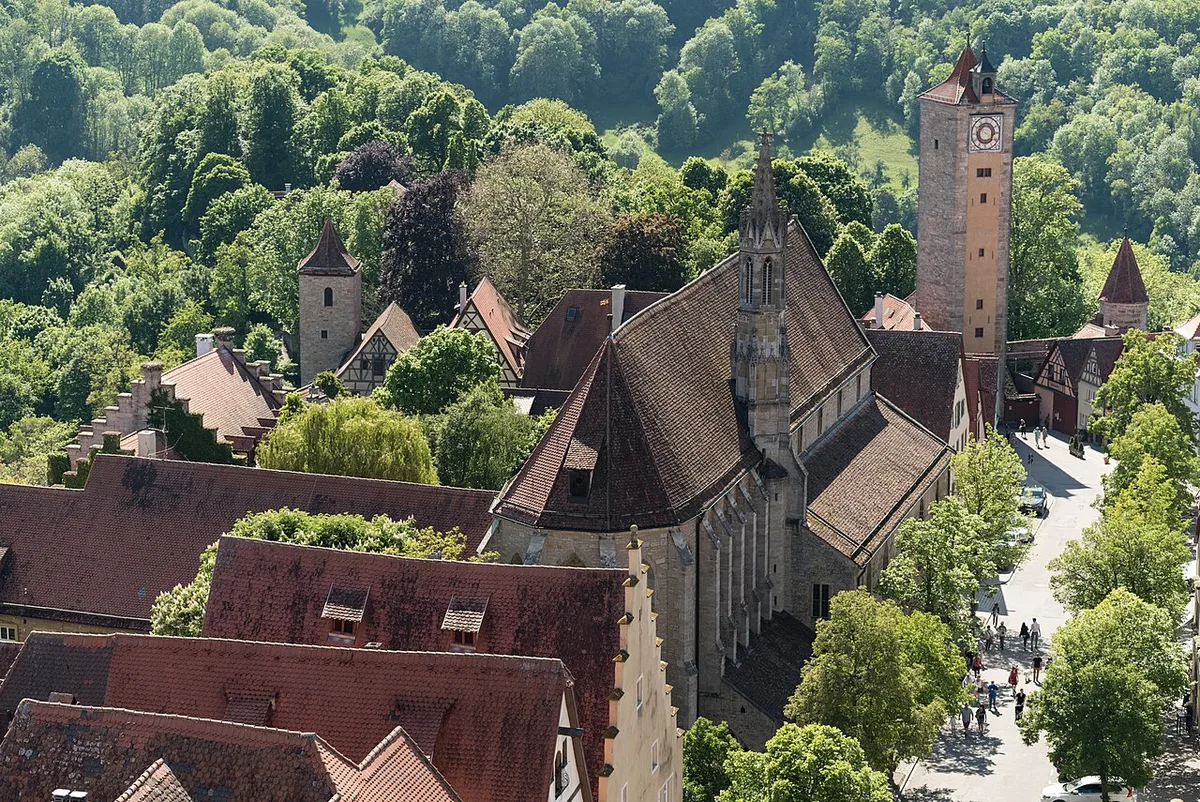
Start at the Burggarten, the castle garden at the western end of the old town, reached through the Burgtor gate. The garden occupies the site of a former castle and offers observation points over the Tauber valley; looking north, Detwang is visible below. This is free ground, open to wander, and it doubles as the natural launch point for a walk. A traveller account of things to do in Rothenburg describes the castle garden as a free activity and notes the two observation platforms by the Burgtor with views toward the Detwang district and, to the south, the Tauber valley.
From the garden, the path descends toward Detwang, a village that is walkable from town and does not require a train or car. The same account suggests roughly a 20-minute walk from the Castle Gardens to St. Peter and Paul's church, and that the stop takes about an hour or two in total; those are a visitor's suggested timings, not an official schedule. The descent is the easy part; the return climb back up to the Burgtor is what to plan your energy around. Because this is a walk rather than a scheduled excursion, you control when you turn back.
This is the excursion to choose if you have only one free block of time, if timetable gaps worry you, or if you simply want the valley without committing to a return connection. It is also the option that works when smaller places run reduced services on Sundays or public holidays. For a fuller version of the same ground, the Tauber valley walk from Rothenburg ob der Tauber guide extends the idea beyond Detwang.
Detwang Specifics: What You Are Walking To
Detwang's church, St. Peter and Paul, is the reason to make the walk. It holds a crucifixion altarpiece by Tilman Riemenschneider, the Würzburg sculptor and woodcarver whose late Gothic work is among the most significant in the region. A traveller account identifies the crucifixion reredos inside as the work to look for. The Detwang St. Peter and Paul church near Rothenburg visitor guide covers what is inside the building and what to notice when you arrive.
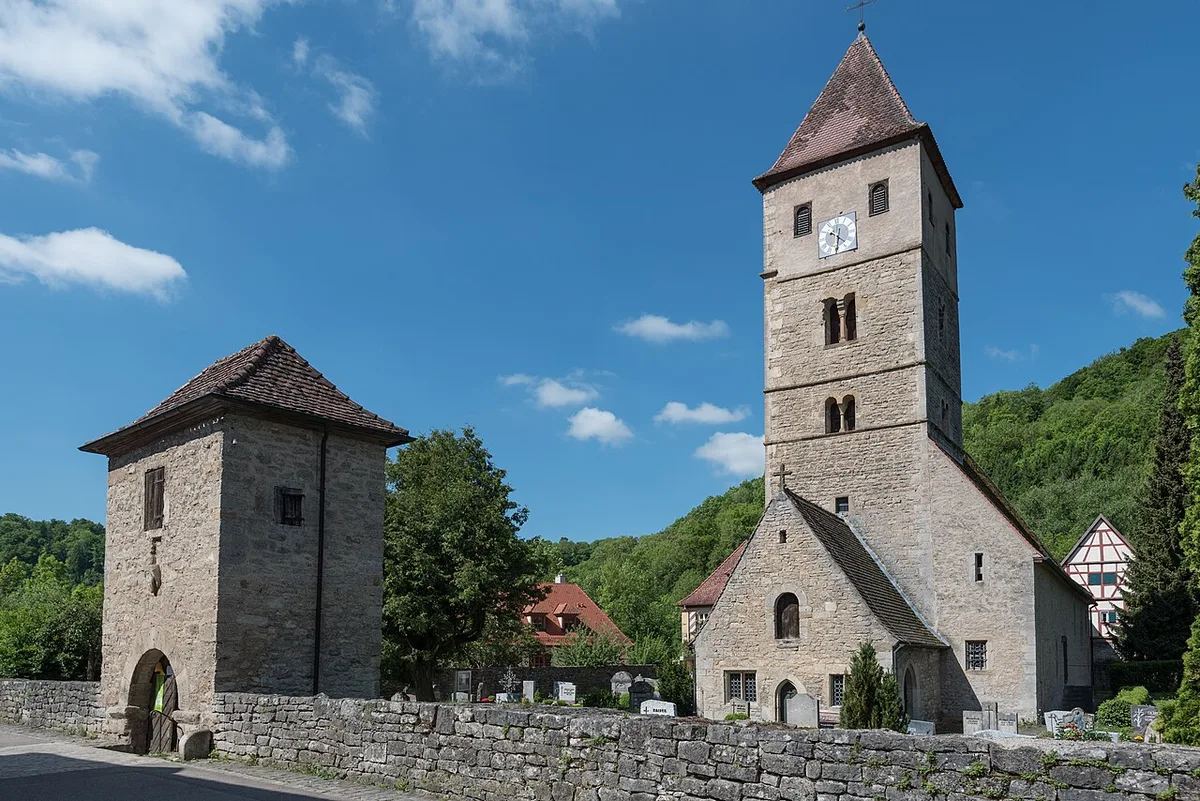
Do not assume the church interior is always open just because the village is walkable. Opening depends on the parish, and the same account advises emailing the Protestant parish office about opening hours, publishing the parish address for exactly this kind of query. If the church is closed when you arrive, the walk itself still stands as the outing.
Budget roughly one to two hours for the round trip including a look inside, which is the kind of estimate a walking guide gives rather than an official figure. If your day in Rothenburg is already tight, the church and village are the part to drop, not the town centre. The decision point is whether you want the valley view from below or only from the garden.
The Tauber Valley and the 2026 Stadt.Landschaft.Natur Theme
The Tauber valley is the landscape the town was built beside: river, vineyards, meadow paths and small settlements such as Detwang. Rothenburg Tourismus Service devotes its 2026 theme year, Stadt.Landschaft.Natur, to the idea that town, landscape and nature have shaped each other here for centuries. That is the reason a valley walk belongs in your plan rather than being an afterthought. The dedicated Tauber valley walk from Rothenburg ob der Tauber guide maps out the same ground in more detail.
Direction matters more than distance. From the Burggarten viewpoint you can look north toward Detwang and south toward the vineyard side with the Kobolzeller church and the double bridge, which gives you two genuinely different walks from the same start. Choose north for the village and the Riemenschneider altar, and the southern side if you want vineyard scenery and river views.
The theme year also means programming, guided walks and events are published by the tourism service and in its programme PDF, rather than on third-party blogs. If you want a led nature or valley activity, check the service's own calendar close to your dates. That is also where any changes or cancellations would be posted first.
Train vs Car: What Each Mode Actually Buys You
Rothenburg has a train station, and arriving by rail is straightforward; a traveller account describes the town as very easy to reach by train and notes that from Munich the journey takes about two to three hours, after which you can walk to the old town or take a bus. For excursions outward, rail is best when your target sits on a direct line and you are happy to work around fixed departures. The trade-off is that a missed connection can cost you the rest of the afternoon, so build in slack.
A car buys flexibility: you set the route, stop at viewpoints, and reach villages and valley roads that no train serves. The cost is not just fuel but the parking problem, because central spaces in a popular walled town fill quickly in peak season. The same account notes that on-street parking generally costs money during the daytime, with free parking possible from 6 pm until 9 am, though you should verify the signs on arrival rather than budgeting from a blog.
Guided day tours are the third option and shift the logistics to someone else, which suits travellers based in Munich or Frankfurt who want Rothenburg without changing hotels. The same account links organised departures from both cities, while a tour operator such as Enchanting Travels builds Rothenburg into tailor-made private itineraries rather than selling single excursions. Availability, meeting points and inclusions change, so confirm details with the operator before booking.
Dinkelsbühl and the Romantic Road as a Suggested Direction
Dinkelsbühl is the most natural suggestion for a second medieval town, since it sits in the same Romantic Road corridor and shares Rothenburg's walled, timber-framed character. The Romantic Road itself runs toward Neuschwanstein, with Rothenburg as one of its best-known stops; a traveller account describes the route as more than 400 kilometres long and ending at the castle near the Austrian and Swiss border. Treat Dinkelsbühl as a direction to research, not as a service you can assume.
Before committing, verify three things yourself: how you would get there, what you want to see once you arrive, and whether the return timing works with your evening. Train and bus options on this corridor change, and no reliable schedule is published here, so check the current timetable at the station or with the tourist information office. If the connections look awkward, Dinkelsbühl becomes a full-day project rather than a half day.
If you are already planning a longer stay in the region, the 3 days in Rothenburg ob der Tauber itinerary is useful for slotting a second walled town into the sequence rather than treating it as a standalone outing. One well-chosen outward trip usually beats three rushed ones.
Half-Day or Full-Day: Sizing an Excursion
A half day suits the on-foot options: the walls, the Burggarten and Detwang can be combined without transport, and you still have the evening in town. A full day is better for anything requiring a train or car, because getting out, seeing the place and getting back consumes most of the daylight. Ask yourself whether the target is genuinely better than another afternoon inside the walls.
Combining an excursion with town sightseeing is realistic if you keep one block fixed: do the excursion in the morning and the museums or churches in the late afternoon, or the reverse. Trying to fit a rail trip, a wall walk and a major museum into one day usually means doing all three badly. Build the day around one anchor and let the rest flex.
If you are staying several nights, spread the excursions instead of stacking them. Alternating town days and valley time keeps the pace sustainable, and the city travel guide for Rothenburg ob der Tauber is the right surface for deciding how the days divide up.
Practical Planning: Start at the Tourist Information Office
Rothenburg Tourismus Service sits at Marktplatz 2 and is the single best starting point for excursion planning. Its published hours vary through the year: in November and from January to Easter it opens Monday to Friday 9.00–17.00 and Saturday 10.00–13.00, closed on Sundays and public holidays, with different windows in other seasons, so check the current listing before you go.
Ask specifically about three things: whether your intended destination is reachable without a car, what the return options look like, and whether any local event will affect access or crowds. This is also where you pick up printed material on the town sights and the Tower Trail, which pairs well with an excursion plan. Bring your dates; the answers change with the season.
For anything with a published time or opening window, verify with the operator or parish directly rather than relying on older blog posts. Church interiors, small museums and seasonal attractions are the usual culprits when a plan fails. A two-minute check at the source prevents a wasted afternoon.
Mistakes to Avoid When Planning Excursions
The first mistake is assuming every nearby town is rail-served or that a connection runs often enough for a casual day out. In this part of Franconia, small places may have limited or irregular service, so a village that looks close on a map can be awkward without a car. Confirm the return leg before you leave, not after you arrive.
The second is overloading the day: walls, museums, a valley walk and a train trip in one itinerary leaves no room for the town to be enjoyable. The third is skipping the walkable option entirely, even though Detwang and the Burggarten give you a genuine excursion with zero transport risk. If you only have one free block, take the walk and keep the rail trip for a longer stay.
Finally, do not treat third-party prices as current. Museum admissions, tour fees and parking charges change, and older posts may quote figures that no longer apply. Use published prices from the operator or the tourist office at the time of your visit, and treat blog figures as historical context only.
Plan Your Visit
The practical order is simple: decide how much time the town itself deserves, then pick the excursion that fits the remaining block. If that block is short or uncertain, walk to Detwang through the Burggarten and skip the timetable entirely. If you have a full day and clear connections, look outward to Dinkelsbühl or the wider Romantic Road.
Whatever you choose, verify the volatile details at the source: transport connections, church and museum opening times, tour availability and any charges. Rothenburg Tourismus Service is the fastest route to current, local answers, and its site carries the 2026 Stadt.Landschaft.Natur programme. Confirm before you commit, and the day will run on your schedule rather than on an outdated blog post.
Frequently Asked Questions
Is there a day trip from Rothenburg ob der Tauber you can do entirely on foot?
Yes. The most reliable walk-only excursion starts at the Burggarten and Burgtor at the western end of the old town and descends toward the village of Detwang, where St. Peter and Paul church holds a Riemenschneider altarpiece. Because it needs no train or car, it works even on days when services are reduced. Allow a relaxed block of time for the descent, a look around and the climb back up, and check church opening with the parish before you set out, since interior access is not guaranteed.
Is Dinkelsbühl a realistic day trip from Rothenburg ob der Tauber?
It is a sensible direction rather than a guaranteed itinerary. Dinkelsbühl sits in the same Romantic Road corridor and shares Rothenburg's walled, medieval character, which makes it a natural pairing for travellers who want a second historic town. What you must verify yourself is how you would get there, what you want to see once you arrive, and whether the return timing leaves you an evening in Rothenburg. Check current connections at the station or with the tourist information office, because a convenient-looking route can turn the trip into a full-day commitment.
Do you need a car to explore the Tauber valley from Rothenburg?
No, not for the closest and most dependable stretch. The valley below the town is reachable on foot from the Burgtor and Burggarten, and Detwang is a walk rather than a rail destination. A car becomes useful if you want to range further along the valley or reach villages without convenient service, but it also brings parking pressure in a popular walled town. Start with the walkable section and add a car only if you have a specific, verified destination in mind.
How much time should you set aside for a short excursion from Rothenburg?
For the walk to Detwang and the Burggarten viewpoint, think in terms of a half day at most, including the climb back to town. A traveller account suggests about 20 minutes down to St. Peter and Paul and one to two hours for the stop overall, but those are suggested visitor timings rather than official figures. Anything requiring a train or car should be treated as a full-day project, because departure, travel, sightseeing and the return consume the better part of the daylight.


