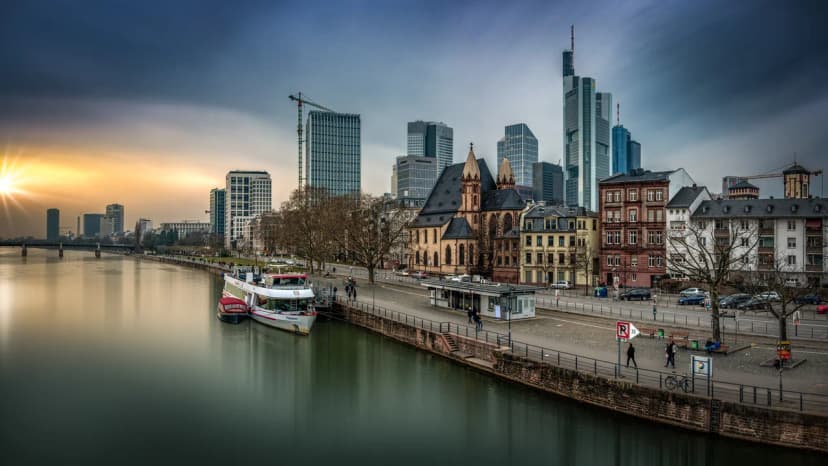
Three days in Frankfurt am Main gives you enough room to treat it as a city rather than a stopover. You can walk the compact centre, cross the Main on foot, give a proper block of time to a neighbourhood, and still leave one whole day for a regional trip.
One concrete starting point from the city's visitor board: its five first impressions for a first visit single out the New Frankfurt Old Town, the Old Opera House, the Main Riverbank, the Frankfurt Skyline and the Palmengarten. That list is a sensible filter for what belongs in three days. Start from the Frankfurt am Main city hub to see how the individual days split before you fix an order.
The decision that shapes everything is whether day three goes to the Rhine region or stays in the city. Making that call early stops you from repeating the same riverbank route twice and keeps days one and two spatially separate.
At a Glance: How the Three Days Divide
Day one covers the historic core on foot, starting around the old town and continuing along the Main. Day two moves between skyline views and street-level time on the south bank in Sachsenhausen. Day three is deliberately open, either for a regional excursion or a slower city day.
Treat each block as a suggested duration rather than a schedule. Two or three hours of walking, a proper lunch and one afternoon anchor is a realistic rhythm for most visitors. If your window is tighter, a suitable one-day Frankfurt itinerary concentrates the same ground into a single day.
Day 1 Morning: Old Town, Römerberg and the Riverbank on Foot
Start in the reconstructed old town around Römerberg, where the timber-framed houses and the square give you a compact orientation point. From there the walk down to the Main is short enough that you need no transport planning at all.
The tourism board's own first-impressions list groups the New Frankfurt Old Town, the Main Riverbank and the skyline, which is a useful way to order a first morning. Walking between them also shows you how small the historic core really is.
Day 1 Afternoon: Free Grounds, Paid Interiors and the Museumsufer
Separate free from ticketed before you commit an afternoon. The riverbank promenade and the Eiserner Steg footbridge cost nothing to walk and give you the skyline view most people come for.
The museums along the Museumsufer are individual institutions with their own ticketing rather than one shared ticket, so pick a single collection that genuinely interests you instead of trying to sample several. Each museum publishes its own admission details, so confirm prices and opening days on the individual museum's page rather than assuming a combined Museumsufer pass.
If you would rather compare how much museum time fits across a shorter stay, a two-day Frankfurt itinerary lays out that balance and helps you decide whether to spend an afternoon indoors here or save it for a greener option later.
Day 1 Evening: Apple Wine Culture and a Riverbank Walk
Frankfurt's apple wine tradition is the city's signature evening ritual, and the tourism board invites visitors to enjoy a slice of the Frankfurt way of life at a cosy apple wine pub. Ordering a glass in Sachsenhausen is a low-cost way to anchor the first evening without booking anything.
Follow it with a walk back along the Main for the illuminated skyline, which is free and needs no planning. For more evening ideas, a Frankfurt at night guide covers options across the city centre and the river docks.
Day 2 Morning: Skyline Views or Street-Level Architecture
The obvious way to see the skyline is from a height, and the financial district is where the towers cluster. Whether a viewing platform is worth paying for depends on the weather that day, because cloud and haze flatten the payoff. Any tower admission and opening information belongs to that operator, so a landmark guide to the financial district walk is a better starting point than a fixed schedule.
A cheaper alternative is to stay at street level and read the architecture instead, walking the banking district and the area around the Old Opera House. You see the same skyline framed between buildings. The Frankfurt am Main: Landmark Visitor Guides hub collects the single-attraction guides if you want detail on one named sight.
Day 2 Afternoon: Sachsenhausen and Real Neighbourhood Time
Cross to Sachsenhausen and give it a proper block rather than passing through. The south bank combines the museum cluster with ordinary residential streets and apple wine taverns, which is where the neighbourhood texture actually lives.
Resist the urge to fill this slot with a second museum. Two indoor collections in one day blur together, and one is usually enough. Instead, use the afternoon to walk slowly, sit along the river, and let the pace drop after a morning of sightseeing.
Day 2 Evening: Keep the Night Flexible
If day three is a regional trip, treat the second evening as a quiet one and pack the night before. That means checking your departure and the current service situation the evening before rather than the morning of. The operator site publishes disruption notices and a journey planner for exactly this purpose.
If you are staying in the city, the tourism board keeps a calendar of events and states that it organises ten large-scale folk festivals per year. Treat anything you find there as a published listing rather than a fixed personal plan.
Choosing Between a Mainz and a Rhine Day Trip
Mainz is the easier regional add-on: an old town, a cathedral and riverbank time in a compact, walkable centre. A Rhine excursion trades urban streets for valley scenery, which usually means more time moving and less time on foot.
Judge the choice on three things: how much you want to walk, whether boating is part of the appeal, and how far you are willing to travel in one day. For a low-risk first regional day from Frankfurt, the routing decisions in Day trips from Frankfurt by train are the practical starting point.
A third option is to skip the excursion entirely and add a city day that you keep unfilled until the weather decides. Three days with two neighbourhood days and one free day is a sound trip, especially in poor conditions.
Getting Around: RMV, Day Tickets and Regional Travel
Frankfurt's transport sits inside the RMV network, which covers the city and the wider Rhine-Main region, so a regional day trip toward Mainz usually falls inside the same structure. The network's own site is the place to compare options before you travel.
The RMV site also carries the Freizeitlinien programme, which the operator presents as leisure services for reaching regional sights. Treat these as an option to check on the official site rather than assuming a route or timetable. For repeated trips over several days, compare a day ticket against a weekly or subscription product before deciding, because the cheapest choice changes with how many journeys you actually make. The operator states that the Deutschland-Ticket can only be bought as a subscription, so it rarely suits a short visit purchased on the spot unless you already hold one.
The RheinMainCard is another regional product listed in the operator's leisure section. Its exact inclusions change over time, so confirm current details on the operator's own pages rather than relying on an older description. Do not assume a single regional ticket covers every attraction you plan to visit, because museum entry is separate unless a specific combined offer is published.
Day 3 Option A: Mainz as the Easy Regional Add-On
Mainz rewards a day spent almost entirely on foot: an old town, a cathedral and level riverside paths along the Rhine are all close together. It suits anyone who wants one clearly different city without a long transfer or a boat booking.
The trade-off is that Mainz is still a city, so you get another set of streets rather than a change of landscape. If that sounds like repetition after two days of Frankfurt, take the scenic option instead. Otherwise, verify current train connections on the RMV journey planner rather than working from an outdated timetable.
Day 3 Option B: A Rhine-Area Day for Scenery
A Rhine-area day delivers the valley views that central Frankfurt cannot. The cost is complexity, because boat services generally run seasonally and rail engineering work can interrupt journeys. The RMV page currently carries a notice about the Korridorsanierung Rechter Rhein, major modernisation of the right-bank rail corridor between Wiesbaden and Troisdorf, with knock-on restrictions between Wiesbaden and Koblenz.
Check sailing schedules and service notices shortly before travelling, and keep a rail-only fallback in mind if boats are not running. If scenery is your main goal and boats are uncertain, a Rhine Valley day trip explanation is a better starting point than a fixed itinerary.
Weather and Season Swaps
Rain changes the whole plan, because so much of days one and two depends on walking outside. Move museum time forward on a wet day and hold the riverbank walk for a clearer evening. Keep one indoor anchor available as a reserve rather than filling every block in advance.
Winter shortens the usable daylight considerably, so front-load outdoor blocks and save interiors for the dark afternoon. Summer evenings, by contrast, are long and the riverbank stays comfortable well past dinner. Whatever the season, check current opening days directly with each museum you plan to visit, since individual institutions set their own.
Green Breaks: Palmengarten and the Main Riverbank
The riverbank and the Palmengarten are the two reliable pace resets, and the tourism board lists the botanical garden among its own five first impressions. Neither has to be an event, and a slow hour in either does more for the third day than a rushed extra attraction.
Budget-wise the riverbank is always free, while the Palmengarten is a ticketed site with its own admission details. Check its current hours and prices directly, since these change seasonally and are not fixed year-round.
Where to Base Yourself and What Shapes the Cost
Central accommodation minimises transport time and keeps the walking days genuinely walkable. Outside the centre you often gain space and quiet but pay for it in daily travel. For a three-day trip the balance usually favours staying near the middle.
On cost, the biggest lever is not where you sleep but how you split free and paid. Free grounds, the riverbank and walking routes carry the days, while one paid interior or one viewing platform carries the highlight. Use transit passes rather than single tickets if you move more than two or three times a day, and compare regional products on the operator's site before choosing.
Practical Notes for Booking and Timing
Frankfurt is compact, but three days still rewards a little pre-trip checking. Confirm museum days individually, look at the transport operator's service notices the evening before any regional trip, and treat any seasonal boat or festival offer as something to verify rather than assume.
Two hours of walking is a realistic morning in the old town, and a single ticketed museum can easily absorb an afternoon. That leaves enough slack to move blocks around if the weather turns or a service change appears on the journey planner.
Putting the Days Together
The clean version is two city days followed by one regional day. Day one is old town, riverbank and an evening apple wine. Day two is skyline and Sachsenhausen. Day three is Mainz if you want easy, or the Rhine if scenery matters more.
Keep the third day flexible until the forecast and the service notices are clear. That single decision protects the rest of the trip, because it stops the regional day from crowding out the slower neighbourhood time that makes three days worth having.
Plan Your Visit
Three days works because Frankfurt is compact enough to walk and connected enough to leave. Give the first two days to the city on foot, then choose Mainz for a low-effort regional day or a Rhine excursion if scenery matters more than convenience.
Before you travel, confirm current museum hours and admission individually, check the transport operator's site for works and leisure services, and read the tourism board's listings for anything time-limited. Then keep day three fluid until the forecast tells you which way to go.
Frequently Asked Questions
Is three days too much for Frankfurt?
It is comfortably enough, and not too much, if you treat the time as two city days plus one regional day. The centre is compact and most of the historic core and riverbank can be covered on foot. The third day is what justifies staying three nights rather than two, because it lets you leave the city without cutting your time in it.
Can you visit Mainz as a day trip from Frankfurt?
Yes, Mainz is the most straightforward regional add-on. It sits within the same transport network as Frankfurt, its old town and cathedral are walkable from the station area, and you can spend most of a day there without a car. Check current connections and any service changes on the transport operator's journey planner before you go.
What should you do in Frankfurt when it rains?
Shift your indoor blocks forward and save outdoor walking for a clearer window. Because days one and two rely heavily on streets and the riverbank, a wet day is the moment to use your one ticketed museum visit rather than trying to keep the original route. Keep one indoor option unbooked as a reserve so you can move it at short notice.
Is Frankfurt walkable enough to skip public transport?
For the old town, the riverbank and Sachsenhausen, walking covers nearly everything and is usually faster than waiting for a connection. Use public transport for the day trip and for longer hops within the city when your feet need a break. An RMV day ticket makes those occasional hops simple if you expect to move more than a couple of times in a day.