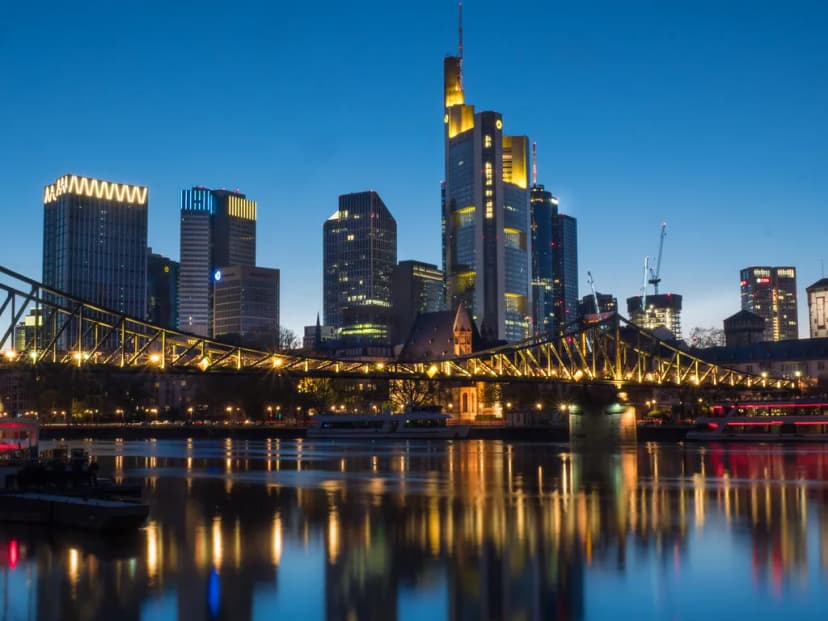
Frankfurt compresses a medieval core, a dense museum bank and a working riverbank into a walkable centre, which is exactly why two days can feel generous or chaotic depending on how they are split. The suggestion here is to give day one to the inland old town and day two to the Mainufer, its museums and the evening. It is a suggestion, not an official schedule, and you can reverse it if arrival time or weather pushes you the other way.
Because dates, prices and opening hours change, treat this itinerary as a shape rather than a timetable. One concrete seasonal detail worth knowing: the Frankfurt Christmas Market runs 23 November to 22 December 2026, beginning at Roßmarkt and stretching along the Zeil to Römerberg and the Mainkai, where a children's Christmas market is presented as a premiere, with stalls also at Hauptwache, according to the city's tourism board.
How to Split Two Days in Frankfurt
A workable decision model rests on three things: when you arrive, how much energy you have and whether you want interiors or grounds only. Day one suits the old town because it is compact and forgiving if you start late. Day two suits the river because museums reward a fresh morning and the Mainufer gives you something to do even when you are tired.
If you are weighing whether two days is enough, comparing a longer plan helps you see what a third day would add. Reading a Frankfurt three day itinerary: with day trip options alongside this one is a useful way to decide whether to extend or stay compact. Either way, keep one half-day flexible so a late train or heavy rain does not unravel the whole plan.
Day One Morning: Römerberg and the Römer
Römerberg is described as Frankfurt's historic old town square, known for its reconstructed half-timbered houses and its historical significance, in a mapped Frankfurt two-day itinerary. The Römer is described there as the city hall, a Gothic-style building comprising three gabled houses that has been the centre of civic life since the fifteenth century. Seeing it as a working town hall rather than a museum changes how you read the facade: the gables and balcony are civic architecture, not stage scenery.
If you only have a short window at the start of your trip, this square is also the anchor for a Frankfurt one day itinerary: first-time visitor plan, which shows how much of the old town fits into a single day. Use it to judge whether your two days are comfortably paced or overloaded.
Day One Midday: Frankfurt Cathedral
Frankfurt Cathedral is described in the mapped itinerary as a towering Gothic edifice, officially known as St Bartholomew's Cathedral, that played a role in Germany's imperial history and offers panoramic views from its tower. The decision here is between going inside, climbing for a view or simply circling the exterior as part of your walk. Rather than assume the tower is open when you arrive, check the cathedral's current visitor information, because hours and access change with the season.
The cathedral also sits close enough to Römerberg that you do not need to plan transport between them; treat the two as one continuous stroll. Verify current opening arrangements on the operator's or the city tourism site before building your day around an interior visit. If you want a sense of the wider old town first, a Frankfurt one day itinerary outline helps you see which stops cluster naturally around the cathedral.
Day One Afternoon: The New Frankfurt Old Town
The New Frankfurt Old Town is best walked as an area rather than ticked off as a checklist. The interest is in the contrast between timber-framed lanes and the skyline rising behind them, and that contrast only registers if you slow down. Give yourself space to wander without aiming at a specific address, and let the streets decide the route.
If you want a broader orientation before choosing which old town corners matter most to you, the city's tourism board presents the New Frankfurt Old Town among its five first impressions, alongside the Old Opera House, the Main Riverbank, the Frankfurt Skyline and the Palmengarten. Use it to sanity-check your route rather than to construct an hour-by-hour schedule.
Keep the afternoon loose and you will have energy left for the evening. The old town rewards repetition: walking the same lane at a different hour often shows you more than rushing to a new one.
Day Two Morning: Choosing One Deeper Museum
The Museumsufer is described in the mapped Frankfurt itinerary as a collection of museums along the Main, covering art, architecture and history, and the temptation is to sample several in one morning. That dilutes the experience: trying to absorb an art collection, an architecture collection and a history collection in the same half-day leaves you with impressions of three lobbies. Commit to one institution and give it the morning.
If you are unsure which single museum fits your interests, a focused comparison makes the choice easier than a list. A Frankfurt museum decision guide is the kind of resource that helps you pick by subject and mood rather than by name recognition. Because admission and opening arrangements vary by institution, confirm them individually on each museum's own site rather than assuming a shared ticket.
Free Riverbank Space Versus Ticketed Interiors
The Mainufer is the free layer of the Museumsufer: a riverbank where you can walk, sit and watch the skyline without paying for anything. The museums behind it are separate buildings with separate arrangements. Treating the embankment as one paid experience is the most common planning mistake here.
If you want to add a second institution without crowding your morning, use the landmark visitor guides for Frankfurt am Main: Landmark Visitor Guides to check what each one actually contains before committing. It is better to choose one museum deeply and leave the rest for a future trip than to sprint through two.
Day Two Afternoon: Goethe House or Green Frankfurt
Goethe House is Johann Wolfgang von Goethe's birthplace, now a museum providing insights into the life of one of Germany's great literary figures, as described in the mapped Frankfurt itinerary. The alternative green option is the Palmengarten, presented there as Germany's largest botanical garden, featuring greenhouses and outdoor gardens, and the quieter Grüneburgpark, described as a peaceful park for a stroll or picnic.
Choose between them by energy rather than by prestige: interiors demand attention, while gardens let you recover. Confirm current visiting arrangements for any paid interior on its official page, since these change seasonally. If you want a wider view of how Frankfurt fits into the region before deciding, the Frankfurt am Main city guide is a reasonable place to check before committing your afternoon.
Skyline Views: Main Tower as a Judgement Call
Main Tower is described in the mapped Frankfurt itinerary as one of Frankfurt's tallest skyscrapers, offering panoramic city views from its public viewing platform. That does not make it a landmark you should treat as permanently available in all conditions, so build it in as an option for a clear day rather than the fixed centrepiece of day two. Before you go, check the operator's current status rather than relying on older descriptions.
If the tower is not workable, the Mainufer itself gives you the skyline from ground level for free, which is the trade-off worth remembering. A viewing platform buys height; the riverbank buys atmosphere without a ticket decision.
Evening: Sachsenhausen and Apple-Wine Taverns
Sachsenhausen is described in the mapped Frankfurt itinerary as a district known for its traditional apple wine taverns, where visitors can enjoy local dishes like Handkäs mit Musik. It pairs better with day two than day one because it sits on the river side of the city, so you are not crossing back through the old town. Keep the evening simple: one tavern, one long table, and no fixed plan after that.
If apple wine is not for you, the Mainufer evening still works: the riverbank is the fallback that costs nothing and needs no reservation. Either way, keep the route short and the decisions few.
Zeil and MyZeil: A Rain and Tired-Legs Fallback
Zeil is described in the mapped Frankfurt itinerary as Frankfurt's premier shopping street, featuring a blend of high-end shops and local boutiques, and MyZeil is the shopping centre on Zeil known for its striking architecture. Treat both as a practical fallback for rain or a late-afternoon energy dip rather than as headline sights. From the tourism board's Christmas market description, Hauptwache has festive stalls, and the Zeil is located right across from Hauptwache, so in winter the area doubles as an evening route.
The trade-off is straightforward: an indoor break saves a wet afternoon but costs you an hour of daylight. Decide by forecast, not by obligation. The city tourism board lists shopping and current events for Frankfurt if you want to check what else is happening nearby.
If Your Trip Falls in Late November or December
The Frankfurt Christmas Market runs 23 November to 22 December 2026, starting at Roßmarkt and stretching along the Zeil to Römerberg and Mainkai, with stalls also at Hauptwache and a children's Christmas market at Mainkai presented as a premiere. That geography reshapes an evening route: you can move between Roßmarkt, the old town and the riverbank without treating any single square as the whole market.
In that season, keep your daytime plans flexible and leave the evening for the market lights. Verify the current dates and stall locations on the official tourism site each year, because the market is seasonal and the layout has changed with new additions.
What to Cut When Time Runs Short
If you lose half a day, cut the second museum first, then the shopping stop. The old town and the riverbank are the two things that define the city's shape and they cost the least to rearrange. Never try to combine a deep museum morning with a cathedral interior and a tower visit in the same half-day.
A practical rule is one ticketed interior per day, with free outdoor space around it. That keeps the pace human and leaves room for the unplanned moments that usually end up mattering most.
If your two days are part of a longer trip, a Frankfurt three day itinerary: with day trip options can absorb the things you cut without regret, and nearby options such as Day trips from Frankfurt by train can fill an extra morning. That is a better solution than compressing them into an already full day.
Plan Your Visit
Two days in Frankfurt are enough for the old town, one serious museum and a proper evening on the river, provided you resist the urge to add a second institution to the same morning. Keep day one inland and day two on the Mainufer, and leave one block of time deliberately unfilled. That blank space is what makes a short trip feel unhurried rather than thin.
Before you travel, confirm current opening details, ticket arrangements and seasonal events through official sources, since these are the facts most likely to differ from any guide. Everything else, the route, the timing and the tavern, is yours to adjust on the day.
Frequently Asked Questions
Do you need more than two days in Frankfurt?
Two days cover the essentials: the old town, one museum and an evening on the Mainufer. A third day adds breathing room for a slower museum visit, green space such as the Palmengarten or Grüneburgpark, or a trip out of the city. If you prefer depth over coverage, two days are workable.
Can you see the old town, a museum and the river in one day?
It is possible but tight, because the museum tends to absorb more time than expected. A more comfortable version is the old town and the riverbank in one day, and the museum on a separate morning. If you attempt all three, choose one small collection and set an exit time.
Is the Mainufer worth an evening if you are not visiting a museum?
Yes. The riverbank is the free layer of the Museumsufer, useful for walking, sitting and watching the skyline without buying a ticket. Pair it with a tavern in Sachsenhausen, or simply walk until you find a quiet stretch. It works as an evening in its own right, not just a museum overflow.