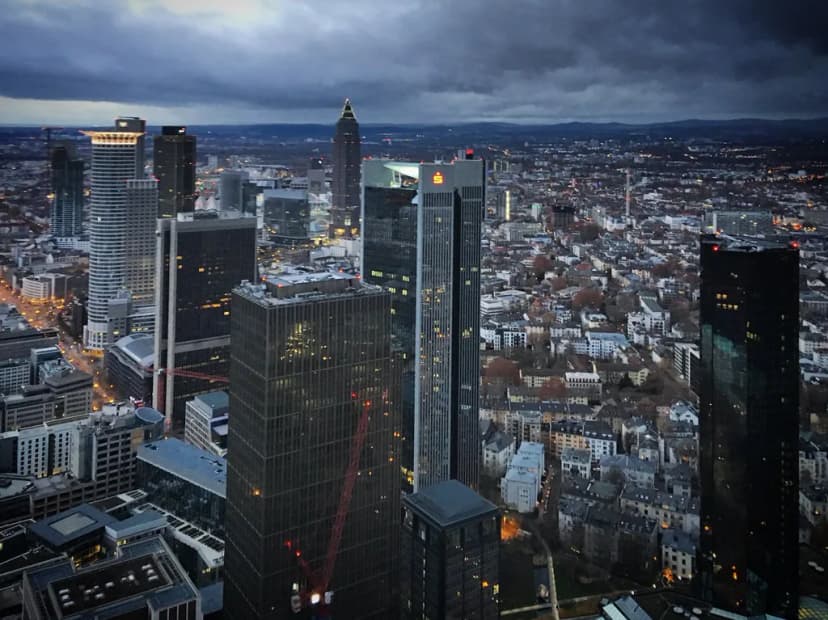
Frankfurt am Main suits a one-day visit because the pieces first-timers care about sit close together. The rebuilt old town, the cathedral, the riverbank path and the high-rise cluster are reachable on foot in one loop, with one river crossing needed. As a suggested editorial timing rather than an official figure, allow about sixty to ninety minutes in the old town before moving on, then treat the cathedral, one museum and the river as optional anchors.
The city's official tourism site frames Frankfurt around the Main and the juxtaposition of historic timber-frame architecture with skyscrapers, and lists the New Frankfurt Old Town, the Main Riverbank and the Frankfurt Skyline among its five first impressions of the city. That is a useful frame for a day built on contrast rather than a checklist: you are walking between two versions of the same city rather than collecting unrelated sights.
Before You Start: One Museum or the Whole Museumsufer
The south bank of the Main holds a long line of museums, and first-timers often assume a single day can cover several. The embankment should be treated as a district to choose within rather than a single attraction. Each institution runs its own visit with its own admission and opening pattern, so a realistic plan picks one named museum and treats the rest of the Museumsufer as scenery.
The Städel Museum is the usual pick for a short visit because its holdings span roughly seven centuries. One traveller's account describes the collection as ranging from fourteenth-century works to modern photography, with Monet, Rembrandt, Picasso and Van Gogh represented. That breadth is why a single museum slot can still feel varied.
If you would rather spend the afternoon on the city's deep past, the Archaeological Museum is the alternative; it is a different building from the open ruins near the cathedral. Either way, check the specific museum's own site for current admission, opening hours and any discount scheme it participates in, because those conditions change and a general itinerary cannot promise them.
Morning: Römerberg and the New Frankfurt Old Town
Start at Römerberg, the central square of the historic district, and work outward through the lanes rather than marching through them in a straight line. One account explains that the old town was once among the largest half-timbered quarters in Germany, was largely destroyed in the Second World War, and was rebuilt in a process finished only in 2018, which is why it is often called the New Old Town. Presenting it as genuinely medieval will set your expectations wrong.
The visual payoff is the deliberate collision of coloured timber fronts against glass towers rising just behind them, a pairing the city's tourism board also uses as a signature image. Spend your suggested sixty to ninety minutes on side streets rather than only the main square, and note that the official pages highlight the chicken market area as part of the New Old Town. Morning light and lighter crowds make this the best slot for photographs before groups build up.
Frankfurt Cathedral: Two Separate Decisions
The cathedral, often called the Kaiserdom, is described in one traveller's account as the largest religious building in the city. The same account gives its timeline: construction began in 852, it did not reach its current size until 1550, and it was among the few buildings left relatively standing after the Second World War. It also ties the interior to the electoral and coronation ceremonies of the Holy Roman Emperors, with the Golden Bull of 1356 and a coronation period from 1562 to 1792. Treat those dates as historical context from travel reporting rather than as anything you need to verify on the day.
There are two decisions here, and they cost different amounts of energy. Walking through the interior is a short, calm look at the red-toned nave; climbing the roughly ninety-five-metre west tower is a physical commitment up a single narrow spiral staircase with no place to stop once you have started, and the reward is an outdoor walkway with a full circuit of the city. That description comes from the same first-person account, so treat the difficulty as a realistic warning rather than a rule.
Neither the interior nor the tower is a guaranteed open door. Confirm the current visiting arrangements through the tourism board or the church itself rather than assuming your chosen hour works, and build in a buffer because a queue at the stairs can quietly consume time you had earmarked for the riverbank.
Optional Add-On: Kaiserpfalz Franconofurd
Directly across from the cathedral you can look down into the excavated remains of the Kaiserpfalz Franconofurd, maintained by the Archaeological Museum Frankfurt. One account reports layers of occupation including a Roman bathhouse from about 75 AD, the walls of a Carolingian royal court from 794, and late medieval cellars, with signs in German and English explaining what you are seeing. The same source states that the ruins are free to visit, which makes them an easy fit if your morning is running short.
This is the clearest example of the free-grounds-versus-paid-interiors split that shapes a one-day budget. The viewing area is separate from the Archaeological Museum's own exhibition building elsewhere in the city, so visiting one does not cover the other. If the ruins spark your interest, that is your signal to consider the museum as your single named museum choice instead of an art gallery.
Midday: Kleinmarkthalle and the Crowd Trade-Off
For lunch, the central decision is atmosphere versus breathing room. Kleinmarkthalle is the best-known covered market, and one account describes more than sixty stalls selling produce, flowers, wine, cheese and spices alongside places to eat and drink, with a history reaching back to the 1800s before wartime destruction and a near-replica rebuild. The same source calls it beautiful but very crowded, with shoving at busy times, so go in expecting elbows rather than calm.
The trade-off runs the other way too. The same account describes a smaller market across the river as only operating on Saturdays, much smaller and more relaxed, which makes it useless on a weekday and pleasant on a weekend. Decide based on your travel day rather than on which one sounds better in the abstract, and keep the indoor market in reserve as a rain shelter if the weather turns.
Stall counts and trading days for these markets come from travel reporting rather than from an official market authority, so treat them as directional and check the market's own listings before you build a meal around it. If queuing at counters is not how you want to spend a short visit, plan a sit-down lunch and use the market purely as a walk-through.
Afternoon: One Named Museum on the Museumsufer
Cross into the afternoon with a single museum commitment on the south bank. One account states that the embankment holds twenty-six different museums, which is precisely why treating it as one destination with one ticket fails: these are separate institutions with separate admissions. Pick the Städel for a broad art sweep, or the Archaeological Museum if the morning ruins left you wanting the fuller story of the city's deep past.
Expect language and layout quirks that shape how long you stay. One account notes that the Archaeological Museum's first exhibition is entirely in German while later sections past the monastery cloister carry English translations, so a non-German speaker may move faster at the start and slower later. As a suggestion, give a large art museum around two hours and a smaller archaeological collection around one, and accept that either can absorb a whole afternoon if you let it.
Eiserner Steg and the Mainufer Walk
The Eiserner Steg is the pedestrian bridge over the Main, and one account describes its iron railings as covered with heart-shaped locks and calls it the only pedestrian bridge crossing the river, linking the museum embankment with the Römerberg area. That makes it the natural hinge of any one-day route even if you never planned to cross it. Sequence your day so you cross exactly once: morning in the old town, museum on the south bank, then back over as the light softens.
On the riverbank, the walking itself is the attraction. The city's tourism board includes the Main Riverbank among its five first impressions of Frankfurt and describes the river as unfolding its calm power, a counterweight to the density behind it. Paths, seating and open sightlines make this the right place to slow down rather than tick off another sight, so plan a relaxed stretch rather than a timed march.
Somewhere near the bridge you may pass the oversized euro sculpture that one account says stands directly in front of the Euro Tower, the European Central Bank's former headquarters, and was created in 2001 to celebrate the launch of the currency. The same source notes that the statue stayed in place after the bank moved. From this stretch the skyline reads as a dense wall of towers, while the opposite direction gives you the museum facades; that two-way view is the reason to walk the bank rather than cut inland.
Skyline Viewpoint: Choosing Without Guessing
Frankfurt's skyline is the finale most visitors want, and there are broadly two ways to get it. A paid observation deck gives you a controlled, high, weatherproof platform with a defined view, while the free alternative is simply to stand on the riverbank or bridge as the towers light up across the water. Neither is objectively better; the deck is better in poor weather and the bank is better when you want flexibility and no schedule. The tourism board counts the Frankfurt Skyline among its five first impressions, which is reason enough to leave it for last.
Do not commit to a specific viewpoint on price or timing from a general itinerary. Admission, opening hours, last-entry rules and seasonal closures for observation decks change and are published by the operators themselves, so check the individual attraction's own page or the tourism board in the days before your visit. If you plan to end the day here, work backwards from sunset rather than forwards from lunch, and keep a riverbank viewpoint as your fallback if tickets are unavailable.
For a wider sense of which viewpoints and landmarks suit different appetites, browse the landmark guides for Frankfurt am Main before you lock the order of your day. Deciding the viewpoint in advance is what keeps the last hour of a one-day trip from turning into a search.
Short-on-Time Variant and a Two-Day Extension
If you only have half a day, cut the museum rather than the walk. A compressed loop of Römerberg and the New Old Town, the cathedral exterior, a single crossing of the Eiserner Steg, and the riverbank with the skyline in view covers the essential contrast between the two Frankfurts and fits comfortably into a few hours. Skip the tower climb entirely, because the stairway queue is the least predictable part of the day.
With a second day you can spread the city out and give a second museum real time instead of a rushed hour. The Frankfurt two day itinerary: museums, old town and Mainufer builds its first day on the outline above and gives the Museumsufer a more generous slot, while the three day itinerary: with day trip options adds travel beyond the city. A longer trip is also your chance to leave the centre altogether.
The temptation on an extended trip is to fill the extra time with more of the same central sights. Better value often comes from using rail links to reach a smaller historic town and returning in the evening, which gives you a genuine change of scale. A Frankfurt day trips guide is the place to compare those options, but that decision belongs to the multi-day plan, not the one-day one, so keep the two separate.
Common First-Timer Mistakes
Overpacking the day is the most frequent error. Frankfurt looks small on a map, but every museum, tower climb and market visit has a hidden queue or a language barrier that stretches it, so two anchor activities plus a riverbank walk is a more honest day than six stops. Build slack into the afternoon rather than the morning, because delays accumulate as the day goes on.
Backtracking across the Main is the second mistake, and it is entirely avoidable with sequencing. Order the day as a loop: old town and cathedral first, then one museum on the south bank, then a single bridge crossing back for the riverbank and skyline. A third error is assuming every museum on the embankment shares one ticket or one discount scheme; as the source on the embankment makes clear, these are separate institutions with separate admissions and separate participation in any city-wide offers.
A fourth mistake is treating the rebuilt old town as authentically medieval. Knowing that the reconstruction was completed only in 2018 changes how you read the quarter: you look at it as an interpretive rebuilding of a lost cityscape rather than as surviving fabric. That framing makes the contrast with the skyscrapers more interesting, not less.
Practical Constraints and How to Verify Before You Go
This plan deliberately avoids exact admission prices, opening hours, last-entry times, booking availability, transport line numbers and journey times, because none of those are stable enough to carry in a general itinerary. The reliable approach is to check the specific operator for anything you intend to pay for, and the tourism board for seasonal programmes and city orientation. Note also that some markets operate only on particular days and that observation decks can close for weather or private events.
Several details in this article, including the cathedral's construction dates, the 2018 completion of the New Old Town, market characteristics and museum language arrangements, come from individual travel reporting rather than from official city sources. Treat them as useful orientation and confirm anything load-bearing through the relevant official page. If a detail matters to your day, it is worth two minutes of checking rather than an afternoon of improvising.
Plan Your Visit
A one-day Frankfurt itinerary works best as a loop with a single river crossing: old town and cathedral in the morning, one chosen museum in the early afternoon, and the Eiserner Steg, the Mainufer and a skyline viewpoint as the day closes. Give yourself roughly an hour of slack somewhere in the middle, and accept that one strong museum beats three hurried ones.
Before you travel, confirm anything you plan to pay for directly with the operator, and use the city's official tourism material for seasonal context and orientation. If your trip grows beyond a day, build the multi-day plan out rather than packing it into the same hours, and use the day trips guide when you want to leave the city.
Frequently Asked Questions
Is one day enough to see Frankfurt?
One day is enough for the compact central experience: the New Old Town and Römerberg, the cathedral area, one museum on the south bank, the Eiserner Steg, and the riverbank with the skyline in view. It is not enough to do justice to the full museum embankment or to explore beyond the centre. If you want a second museum and a slower pace, plan a second day rather than compressing everything into one.
What can you do in Frankfurt in a few hours?
Cut the museum and focus on the walkable core. Römerberg and the rebuilt old town lanes, the cathedral from the outside, one crossing of the Eiserner Steg, and a stretch of the Main riverbank with the towers in view together give you the essential contrast between the historic centre and the skyline. This works well for a layover, because it needs no timed tickets and no fixed opening hours beyond the public spaces.
What is free to visit in Frankfurt's old town and riverfront?
Walking the old town lanes, the central squares, the pedestrian bridge over the Main, the riverbank promenade and the open archaeological remains near the cathedral generally do not require a ticket, and travel reporting describes the Kaiserpfalz ruins as free. Cathedral interiors, tower climbs and museum galleries are separate paid spaces with their own conditions. Confirm current arrangements with each operator, since access can change.
Do Frankfurt's Museumsufer museums share one ticket?
No. The embankment is a cluster of independent institutions, each with its own admission and its own opening pattern, and any city-wide discount scheme applies only to participating museums. If you want to visit more than one, check each museum's own site rather than assuming one purchase covers the group. For a single day, choosing one named museum is the practical approach.
Is the New Old Town actually old?
The quarter occupies the site of Frankfurt's historic district, which was largely destroyed in the Second World War, and travel reporting states that the reconstruction was completed in 2018, which is why it is often called the New Old Town. The streets and building forms follow historic patterns rather than surviving fabric. Knowing this makes the timber fronts against the skyscrapers more interesting to look at, not less.