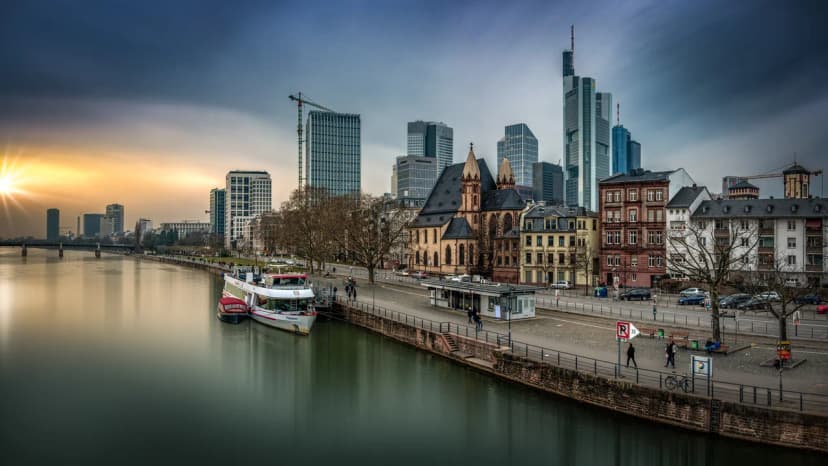
Frankfurt's Museumsufer, or Museum Embankment, concentrates an unusual number of museums along the River Main, close enough to move between on foot. The Museumsufer organisation publishes the current list of participating museums and the admission and ticket options under one roof, which makes its pages the practical starting point for planning a day.
The embankment works best as a cluster to navigate rather than a checklist to complete. The museums differ widely in scale and subject, and the banks of the Main hold different kinds of institutions, so the first decision is what you actually want to see.
This guide explains how the stretch is laid out, how to choose two or three museums that suit your interests, and how the MuseumsuferCard and MuseumsuferTicket fit into a visit. Treat any museum count or list of highlights you read elsewhere as needing confirmation on the official museum list before you plan around it.
What the Museumsufer Actually Is
The Museumsufer is not one building or institution but a stretch of museum-going along the Main, most commonly described as running along the southern bank between the Friedensbrücke and the Eiserner Steg, with the museum names clustered in that riverside zone. The official Museumsufer list, which includes the Städel Museum, the Liebieghaus Skulpturensammlung, the SCHIRN KUNSTHALLE FRANKFURT, the MUSEUM MMK FÜR MODERNE KUNST and the Weltkulturen Museum, is the place to confirm which institution currently belongs to the grouping.
The name describes a district of culture rather than a gated site. The promenade, the bridges, the skyline views and the walking between buildings are public and unticketed, which is why a low-cost visit to the embankment is possible even if you skip the interiors.
One useful habit: check the official museum list at the start of planning, because which museums sit where and which are grouped as Museumsufer institutions is published there rather than fixed in a mental map.
Where the Embankment Runs and How the Two Banks Relate
The classic description places the museum run along the southern bank of the Main between the Friedensbrücke and the Eiserner Steg. The Eiserner Steg is the pedestrian bridge that lands close to the old town on the northern side, which makes it a natural anchor for a day that starts in the centre and crosses south.
Museums such as the Städel Museum, the Liebieghaus Skulpturensammlung, the SCHIRN KUNSTHALLE FRANKFURT and the MUSEUM MMK FÜR MODERNE KUNST sit within this riverside area, though not in a single orderly line; some front the water, others sit just behind the promenade or are reached through nearby streets. Use the official list to see how these fit with the wider museum grouping across the city.
The northern bank matters too. Crossing the Eiserner Steg puts you close to the old town, the Römer and the cathedral quarter, so a Museumsufer morning pairs naturally with an afternoon of historic Frankfurt. If you want that historic side in more depth, a dedicated guide to Frankfurt's landmarks is a sensible companion.
How to Choose: Match the Museum to Your Interest
The most useful filter is subject matter. For the big art narrative, the Städel Museum is the anchor, with its collection spanning Old Masters through modern art. If sculpture is the draw, the Liebieghaus Skulpturensammlung nearby is a quieter, more contained visit, and both are listed among the Museumsufer museums.
For temporary exhibitions and contemporary programming, the SCHIRN KUNSTHALLE FRANKFURT and the MUSEUM MMK FÜR MODERNE KUNST are the obvious candidates, and both appear on the official museum list. That same list is where you check the wider set of options, from the DFF – Deutsches Filminstitut & Filmmuseum to the Weltkulturen Museum.
Two practical notes. First, a themed day built around one subject will usually beat a day built around geography alone. Second, special exhibitions rotate, so check what is currently on view before you commit to a themed itinerary. For a structured comparison across Frankfurt's main museums, a museum decision guide can help you weigh the options.
Suggested Two-Museum, Three-Museum and Full-Day Patterns
For a short visit, a suggested pattern is two museums within one subject area, allowing roughly half a day including the walk between them and a break. A natural pairing is the Städel Museum followed by the Liebieghaus Skulpturensammlung, since both are collection-driven and sit in the same riverside zone. This is a suggestion, not an official itinerary.
For a three-museum day, a suggested approach is one large collection, one smaller or specialist venue, and one place where the setting itself is part of the appeal. Keeping to a single theme rather than crossing the city repeatedly is what makes the pattern work.
A full Museumsufer day can hold three substantial museums or four lighter ones, plus riverside time. The constraint is attention rather than distance: the museums are close together, but each has an entrance, a bag check, a floor plan and a route to work out. Beyond four stops, most visitors start skimming.
Whichever pattern you choose, build in the riverbank. Walking the promenade or crossing to Sachsenhausen for food is part of what makes the Museumsufer more than a sequence of lobbies.
MuseumsuferCard and MuseumsuferTicket: What These Options Are For
Frankfurt offers more than one multi-museum product, and the Museumsufer organisation lists both a MuseumsuferCard and a MuseumsuferTicket under Seasonal Tickets. They exist because the embankment is a cluster: if you plan to visit several museums within a short window, a combined option can replace a stack of individual admissions.
Do not assume either product makes every museum on the river free to enter, or that the two products cover exactly the same institutions. Scope, validity period and which exhibitions are included are set by the organisers and can change between seasons, so read the current terms on the Museumsufer admission and tickets pages before you buy.
The same organisation publishes free-admission schemes and municipal museum admission prices, including the Satourday free Saturday and a cultural pass for students. Because these arrangements are seasonal and can be revised, treat any price or day you remember from an earlier trip as unverified. For a comparison of Frankfurt's museum ticket options, see the dedicated guide.
Free Versus Paid: Riverbank, Grounds and Ticketed Interiors
The clearest free-versus-paid line on the Museumsufer is the riverbank itself. The promenade, the bridges and the walking between museums cost nothing and are not ticketed, so budget-conscious visitors can enjoy the embankment without entering a museum.
Inside is different. Museum interiors, including permanent collections, are generally ticketed, and special exhibitions can be priced or ticketed separately from the collection. Do not assume that a ticket to one museum in the cluster grants anything at the next one.
If cost is a deciding factor, check the Museumsufer admission pages for current municipal museum prices and any free-admission schemes before you go. Prices are deliberately not reproduced here because they change and should be read from source at the time of your trip.
Pacing, Walking and Pairing with Sachsenhausen
Plan the day around two anchors rather than a route. Choose the museum you care most about, give it the best hours of your attention, and place a smaller museum after it. Allow a real break between them, ideally outdoors, because the embankment's main advantage is that you can reset between buildings without leaving the area.
Sachsenhausen, on the southern side, is the natural place to eat and slow down, and some of the embankment's museums sit in or near it. A straightforward walk across the Eiserner Steg connects the southern bank to the old town and the Römer, so you can end the day with historic Frankfurt rather than another gallery.
Check one practical detail per museum before you go: its closing day, whether timed entry applies, and whether the exhibition you want has its own ticket. The Museumsufer site and each museum's own pages are the places to confirm. If you are shaping a wider city day, an itinerary for one day in Frankfurt can help you sequence the riverbank with the old town.
Common Mistakes to Avoid
The most frequent mistake is overbooking. The museums are close together, which creates the illusion that you can do five or six in a day; in practice three substantial collections is a full and satisfying day, and four requires discipline.
The second mistake is assuming one ticket opens everything. Multi-museum products exist, but their scope is defined by the organisers and should be read from the current terms rather than inferred from the name.
The third is ignoring rotation. Permanent collections stay put, but special exhibitions change what a museum is actually showing. Check what is on view before you commit to a themed itinerary, and treat any count of museums or list of highlights you read elsewhere as needing confirmation on the official museum pages.
Plan Your Museumsufer Visit
Approach the Museumsufer as a dense district with more museums than any single visit can absorb. Decide what you want from the day first, whether that is art, contemporary exhibitions, film, world cultures or city history, then pick two or three venues that sit close together. The Frankfurt am Main city guide hub is a useful next step for shaping a broader itinerary.
Read the current terms on the Museumsufer organisation's pages for the MuseumsuferCard and MuseumsuferTicket, check each museum's own site for the day you plan to go, and confirm what exhibitions are on view. Prices, opening hours and ticket scope are best taken directly from the operator pages at the time of your visit.
Frequently Asked Questions
What is the Museumsufer in Frankfurt?
The Museumsufer, or Museum Embankment, is the riverside area along the River Main where a dense group of Frankfurt museums is concentrated, commonly described as running along the southern bank between the Friedensbrücke and the Eiserner Steg, with further museums and cultural venues on the northern side and inland. It is a district of culture rather than a single ticketed site: the promenade and bridges are public, while museum interiors are generally ticketed.
How many Museumsufer museums should I visit in one day?
Three substantial museums is a full day for most visitors, or four lighter ones, plus time on the riverbank between them. The limiting factor is attention rather than distance, since the museums sit close together but each one has its own entrance, layout and route. Two museums is a comfortable half-day and usually the better choice for a first visit.
What do the MuseumsuferCard and MuseumsuferTicket cover?
The Museumsufer organisation lists both a MuseumsuferCard and a MuseumsuferTicket under Seasonal Tickets, but scope and validity are set by the organisers and can change between seasons. Check the current terms on the admission and tickets pages before you buy, and confirm what each product includes. Coverage across museums may not be uniform, so read the terms rather than assuming.