The Städel Museum holds more than 700 years of European art under one roof, spread across painting, sculpture, photography, drawings and prints, and arranged by period rather than by theme. That breadth is what makes tickets, layout and timing interlock: choosing the right ticket category and knowing where you want to linger matters more than seeing every room. Tickets start at €19 for adults, with a reduced rate of €17 and a Tuesday afternoon special, according to the museum's visit page. This guide separates what admission covers, maps the five collection areas and suggests how long to spend.
Opening Hours and Closing Days
The museum is open from Tuesday to Sunday and closed on Mondays, with Tuesday, Wednesday, Friday, Saturday and Sunday running from 10 am to 6 pm and Thursday extended to 9 pm. Special holiday hours appear separately, including closures on 24 and 31 December and a 1 January 2027 opening from 11 am to 6 pm. Because these hours are published on the museum's visit page and can change with events, check the official schedule shortly before travelling.
The Städel Rooftop keeps the same 10 am to 6 pm hours from Tuesday to Sunday, but access may be restricted at short notice because of weather. That makes the rooftop a flexible add-on rather than a fixed anchor for your schedule, so plan the collection first and climb up when conditions allow. If the rooftop matters to your visit, ask at the entrance on the day rather than assuming it will be open.
Ticket Types Explained
Standard adult admission is €19, with a reduced rate of €17 for those who qualify, and group visitors pay €17 per person. Families pay €30, children under 12 enter free, and members of the Städelverein also enter free. These are the museum's published rates, so confirm your category on the ticket page before booking and note that a reduced rate usually requires proof at the entrance.
The Tuesday Special is a timed window rather than a general discount: every Tuesday from 3 to 6 pm, admission to the permanent exhibition and all special exhibitions costs €10. To use it, you need to begin your visit after 3 pm, so the saving depends entirely on whether that window fits your day. Because the offer is tied to a specific day and time, verify current conditions on the ticket page before you build a schedule around it.
Anyone holding a MuseumsuferCard should read the museum's own note for those visitors before buying, since the page points to separate information rather than stating blanket terms. Do not assume the card simply replaces a standard ticket. How you want to structure museum visits across Frankfurt also affects whether a combined ticket makes sense, and our Frankfurt museum decision: which museum should you choose guide compares options if you are weighing several collections.
What the Ticket Actually Covers
A standard Städel ticket is not a pass to every cultural space on the Museumsufer. The museum presents its own permanent exhibition and special exhibitions under one admission structure, while the nearby Liebieghaus sculpture museum is a separate institution with its own ticket, hours and collection. If you want both, plan them as two visits rather than assuming one charge covers the other.
Inside the museum, certain spaces carry their own conditions. The Library and Mediatheque and the Study Room of the Department of Prints and Drawings both ask visitors to register in advance, and the study room runs on limited days. Treat these as scheduled appointments rather than walk-in rooms, and check the current registration details if you want to see works on paper close up.
Collection Layout: Five Areas, One Route
The permanent collection is organised into five broad areas: Old Masters, Modern Art, Contemporary Art, Prints and Drawings, and Photography, all spread across more than 15,000 square metres of exhibition space. Old Masters covers European painting from 1300 to 1800, while Modern Art runs from 1800 to 1945 and Contemporary Art picks up from 1945 to the present. Knowing this chronology lets you move roughly forward through the building instead of zigzagging between periods.
Prints and Drawings behaves differently from the painted galleries because works on paper are light-sensitive and can only be displayed occasionally; they are otherwise kept in storage and made available in the study room on request. Photography entered the collection around 1850 and now numbers more than 5,000 works. If your interests lean toward works on paper or photographs, treat those as variable rather than guaranteed on any given day.
Highlights by Period
Rather than chase a single famous painting, orient yourself around the periods. The Old Masters galleries include a room created in March 2024 where visitors can encounter the museum's founder, Johann Friedrich Städel, and his idea of a citizens' museum. The Modern and Contemporary sections cover rapid shifts in European art and its movements, and the museum's own page for each area includes a 'Discover highlights' entry point if you want a curated starting selection.
If you prefer structure, the museum runs a Collection Highlight Tour described as connecting visitors with the most important artworks in the permanent exhibition, and it also offers guided tours in English through Art Talks. Booking details and times change, so check the programme listings rather than relying on a fixed daily schedule. A tour can be a useful way to see how the periods link before you explore independently.
A Suggested Visit Duration
No official recommended duration is published, so treat any timing here as an editorial suggestion rather than a museum figure. The scale of the collection, with five areas across more than 15,000 square metres, means a two-hour stop can feel rushed if you want both Old Masters and Contemporary Art. Decide which two areas matter most and build your time around them rather than trying to cover everything evenly.
A practical middle option is around three hours, which allows a focused pass through two or three areas plus a pause at the café and the rooftop if the weather holds. A half-day of four to five hours suits visitors who want the Modern and Contemporary galleries in depth, plus time in the study room or library if registered. A shorter ninety-minute visit works best if you pick one period and accept that you will skip the rest.
The real variable is not the size of the building but your own pace: special exhibitions add time on top of the permanent collection, and a highlight tour occupies a scheduled slot. Because the cafe is open from 10 am to 6 pm while the restaurant remains closed for renovation, plan your break around the cafe rather than expecting a full meal on site. If you are combining museums, our Frankfurt am Main guide helps you judge how much ground to cover in a single day.
Audio Guide App: What It Offers
The museum offers a free Städel Highlights audio guide app covering the collection from the Middle Ages to contemporary art, and it is published as a free app for Android and Apple devices. The app is not described as essential, so whether you need it depends on how much context you want while standing in front of a work. If you prefer reading labels or taking a guided tour, you can reasonably skip it.
There is an important current limitation: the app is not available for the latest operating systems on Android devices, and the museum says it is working on an update. Android users should plan an alternative before arriving. The Digital Collection provides audio files with in-depth background information on numerous highlight works, which makes it a usable fallback if the app is unavailable on your phone.
Practical Rules: Bags, Jackets, Food and Photos
Bags larger than DIN A4 and jackets must be checked at the cloakroom for security reasons, and no clothing may be carried over your arm in the exhibition rooms. The cloakroom is free and sits to the back right of the main foyer, though suitcases and trolleys cannot be stored because of space limits. A €1 or €2 coin is needed for a locker, so keep change handy.
Food and drink are not permitted in the exhibition rooms, and beverages cannot be taken into the exhibition halls. Photography without flash is allowed in both the permanent and special exhibitions for private use unless a specific work is marked otherwise, but tripods, selfie sticks and extra lighting are prohibited. Commercial filming or photography requires written permission from the press department before your visit.
Seating is available throughout the museum and in the special exhibition, but folding stools are only allowed in the permanent exhibition and not in the special exhibition. Free WiFi is available by connecting to the network without a password. Wheelchairs, walking frames and canes can be borrowed from the cloakroom, and the building is accessible via a lift at the main entrance, with disabled parking on Holbeinstraße at the corner of Schaumainkai.
Around the Museum: Rooftop, Cafe, Garden and Shop
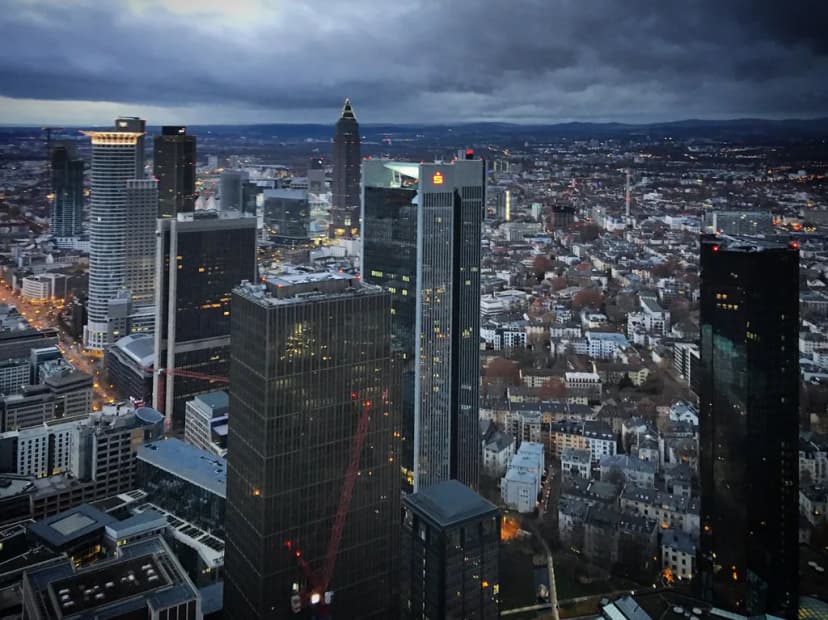
The Städel Rooftop offers a skyline view and is presented as part of the visit, but remember that access can be restricted at short notice because of weather. The museum shop closes at 8 pm on Thursday rather than 6 pm. The Städel Garden and the cafe round out the ground-level spaces, so a visit can extend beyond the galleries without leaving the site.
The Städel Restaurant has been closed for renovation since 1 July 2025, with work covering the roof, terrace, kitchen, sanitary facilities and dining area, and a reopening with a new culinary concept planned. The museum directs visitors to the cafe at the museum and the nearby cafe at the Liebieghaus during this period. Do not plan a full meal at the Städel itself until the museum publishes a reopening date.
Getting There and Nearby Options
The museum sits at Schaumainkai 63 in Frankfurt am Main, on the Museumsufer. The page names the underground lines U1, U2, U3 and U8 to Schweizer Platz, and tram lines 15 and 16 to Otto-Hahn-Platz, as public transport options. Car parks listed by the museum include Walter-Kolb-Straße 16, Willy-Brandt-Platz 5 and Untermainanlage 1, and coach parks cannot be reserved.
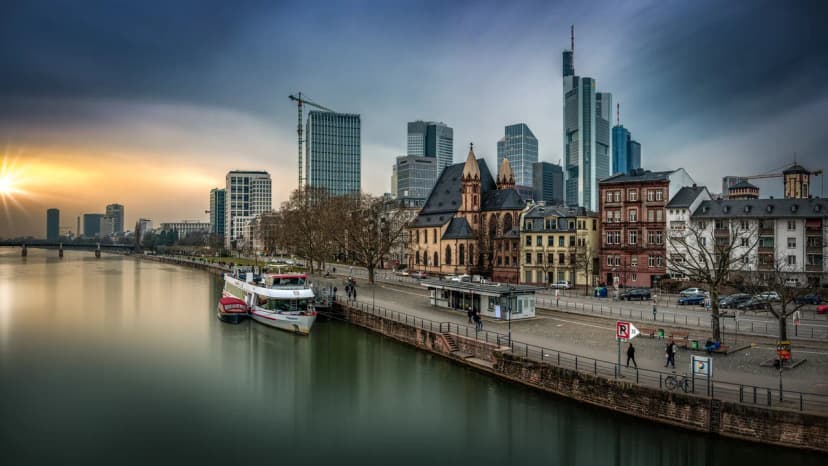
Because the Städel shares the riverbank with other museums, it pairs naturally with a wider Frankfurt itinerary. The city's official visitor site covers attractions, events and practical services across Frankfurt am Main, which is useful for filling the rest of a day around the museum. For skyline views from a different angle, the Main Tower Observation Deck Guide covers a separate ticketed viewpoint nearby.
Plan Your Visit
The Städel rewards a deliberate plan more than a checklist. Choose your ticket category against the day you can visit, note that the Tuesday Special only applies from 3 to 6 pm, and decide whether Old Masters, Modern or Contemporary Art deserves the bulk of your time. Two to three hours covers a focused visit, while four to five hours suits a deeper pass through several periods.
Before you go, confirm the current opening hours and ticket prices on the museum's visit page, check whether the audio guide app supports your phone, and register in advance if you want the library or study room. Pair the Städel with the Liebieghaus Sculpture Collection in Frankfurt or the Main Tower Observation Deck for a fuller Frankfurt day, and keep the rooftop flexible in case of weather.
Frequently Asked Questions
What does a Städel Museum ticket include?
A standard ticket covers the permanent exhibition and the special exhibitions presented by the Städel Museum, according to the museum's ticket information. It does not act as a combined ticket for other institutions on the Museumsufer, such as the Liebieghaus sculpture museum, which has its own admission. Check the museum's ticket page for the current scope before you buy.
Is the Tuesday Special at the Städel Museum worth it?
The Tuesday Special applies every Tuesday from 3 to 6 pm and covers the permanent exhibition and all special exhibitions at a reduced single price. It is worth it if you can start your visit after 3 pm and do not need a full day inside. If you want to arrive in the morning or spend four or more hours, a standard ticket fits better.
How long should I spend at the Städel Museum?
No official recommended duration is published, so any figure is a suggestion. The permanent collection spans five areas over more than 15,000 square metres, so a focused visit of two to three hours suits two or three areas, while a half-day of four to five hours allows a deeper pass through Modern and Contemporary Art. Pick the periods that matter most and build your time around them.
Do I need the Städel audio guide?
The Städel Highlights app is a free audio guide covering highlights from the Middle Ages to contemporary art, but it is not presented as required for a visit. It is currently unavailable for the latest Android operating systems, and the museum says an update is in progress. Android users can use audio files in the Digital Collection as a fallback, or rely on labels and a guided tour.
Can I take photos inside the Städel Museum?
Private photography without flash is permitted in the permanent and special exhibitions unless a specific work is explicitly marked otherwise. Tripods, selfie sticks, flash and additional lighting are not allowed. Commercial photography and recording require written permission from the press department before your visit.
Is the Städel Rooftop included in the visit?
The Städel Rooftop is presented as part of the museum visit with its own Tuesday to Sunday opening window, but access may be restricted at short notice because of weather. That makes it an add-on rather than a guaranteed stop. If the rooftop view is a priority, ask at the entrance on the day of your visit.