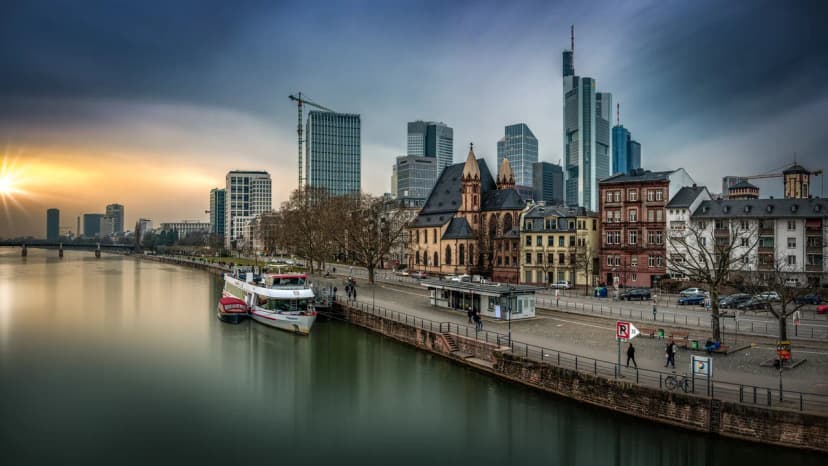
Frankfurt's skyline gets the postcards, but the city's quieter hours happen away from it: in a free botanical garden behind the Palmengarten, in small Museumsufer collections, and along riverbank paths that thin out once the day-trippers leave. One concrete planning detail shapes everything, because the Botanischer Garten runs a seasonal opening pattern and is closed over the winter months. As of the garden's own site, it is open daily during the season, with free admission and stated closing dates, so that single fact decides whether your quiet day is built on greenery or on interiors.
This guide treats the quieter city as a set of trade-offs rather than a checklist. You will see where a headline museum ticket is worth it, where a smaller collection does more for a short visit, and how to group stops so you are not crossing the river repeatedly. Durations mentioned below are suggestions for planning, not official timings.
How to Plan a Quiet Frankfurt Day
Start by deciding what a ticket actually buys, because Frankfurt's museum landscape is not one product. The Museumsufer area concentrates major museums along the southern bank of the Main, and the city's museum organisation publishes the seasonal card and ticket options that bundle admissions across participating houses. That matters for a quiet day: if you plan two or three small collections, a bundled ticket can be the cheaper logic, while a single deep visit may not need one.
Crowd timing in Frankfurt is less about clock-watching and more about direction of travel. The riverside promenade fills when the weather is good and empties quickly once people drift toward food and the old town, so a walk planned to end, rather than start, at the busiest bridge keeps the quiet stretch in front of you. Weekday mornings generally work better than weekends for the smaller museums, but confirm the day's opening before you commit.
Walking distances are the hidden cost of a quiet itinerary. Schaumainkai, the street that strings the river museums together, is a straight run, but the gardens sit on the opposite, northern side near Siesmayerstraße, so a day that combines both involves at least one river crossing. Group your stops by bank and accept that one crossing is the maximum a relaxed half-day can absorb.
Build in slack for the fact that not everything in a museum complex shares a ticket. Collections housed in the same building or campus can have separate admission, separate opening days and separate closing times, which is why the city's museum listing separates seasonal passes from individual museum pricing. Check each museum's own page the week you travel rather than assuming a single purchase covers the group.
The Free Garden with a Season
The Botanischer Garten is the quietest free green space covered here, and its rhythm is unusually strict. The garden's own site states that it is open daily during the season from March to October, that admission is free, and that it closes over the winter months; the same page lists the seasonal hours, with slightly shorter opening in March and October than from April to September. For 2026 the garden has also posted a farewell-to-the-season walk marking the autumn close, so a late-year trip needs a different garden plan.
The garden belongs administratively to the Palmengarten, which is the paid botanical garden next door, but the two are not the same visit. The Palmengarten organisation handles guided tours, school groups and the free botanical garden app, and it notes that public guided tours run by the friends' association require no advance registration while group tours through the Green School are chargeable. If you want a guide, that is the distinction to act on.
Access is straightforward by city transport, and the garden's address on Siesmayerstraße sits close to the Palmengarten entrance, which makes it easy to combine the free garden with a paid visit next door if you want both. The friends' association also publishes a monthly programme of free walks, with meeting points that differ depending on whether the walk falls inside normal opening hours: the meeting point for public tours is the shelter by the pond, while tours outside opening hours start at the main entrance on Siesmayerstraße. Read that listing before setting out, since the meeting point is not always the same gate.
Small Museums Versus the Städel
The Städel is the anchor of the southern bank and it publishes full visitor information, including opening hours, ticket tiers and a Tuesday discount window in the late afternoon. Its operator page lists the standard adult and reduced rates and, as of its own visitor information, states that children under twelve enter free and that members of the Städelverein enter without charge. If your quiet day is built around one big collection, the museum's own page is the version to trust over any reseller listing.
The decision lever most visitors miss is the museum's Tuesday Special, which the operator describes as covering the permanent exhibition and all special exhibitions for a single reduced price on Tuesdays between 3 and 6 pm. Treat that as a scheduling tool rather than a slogan: if your dates are flexible, an early-week arrival turns a headline-price museum into a moderate one. The same page also notes that the Städel Restaurant is closed for renovation, while the Café at the museum and the nearby Café at the Liebieghaus remain open for visitors.
Smaller collections along the same street give you a quieter alternative when a large museum's rooms are busy, and Frankfurt's museum body lists the full roster of participants, from design and film to sculpture and applied art. Pick by subject rather than by fame: a single-subject museum takes less time, costs less attention and returns you to the riverbank sooner. That is the real trade-off against the Städel's 700 years of art.
One caution for anyone planning a photography-led quiet day: museum interiors vary in what they allow, and the Städel's visitor information sets out its own rules, including a ban on flash, tripods, selfie sticks and other equipment, while handheld photography without flash is permitted for private use in the permanent and special exhibitions unless stated otherwise for specific works. If your interest is mainly capturing the city rather than the collections, check the rules where you intend to shoot before you buy a ticket.
The Liebieghaus Reopening as a Decision Point
The Liebieghaus Skulpturensammlung on Schaumainkai has been closed for renovation, and its own site states that it reopens on 18 November 2026, with an exhibition titled Athena, the Stage is Yours alongside its permanent sculpture collection. Because that date is now past relative to today, the reopening is history, not a future event, and the relevant question has shifted to what the museum's current opening pattern looks like. Check the museum's own visit pages rather than relying on reopening coverage.
One detail separates the museum closure from the site as a whole: the Liebieghaus Café remained open while the galleries were shut and is described by the museum as a small oasis by the Main, with its own stated days of Tuesdays through Sundays from 10 am to 6 pm. For a quiet break rather than a collection visit, that distinction still matters. The museum does not publish current interior admission on its landing page in a form you should treat as fixed, so confirm on site or through its online ticket shop before planning around a paid visit.
If you are choosing between sculpture and painting on a short trip, this is a genuine either-or. The Liebieghaus collection is a five-thousand-year overview of sculpture, from Ancient Egypt through neoclassicism, which is a different appetite from the Städel's painting-led survey. Allow roughly ninety minutes to two hours for a focused look as a planning suggestion rather than an official figure, and note that the two museums sit within walking distance on the same street, so a single afternoon can hold both if you start early.
Beyond the Centre: Höchst and Bethmannpark
Frankfurt's quieter corners are often district-level rather than landmark-level. Höchst, in the city's west, keeps a compact old town of protected timbered buildings and the baroque Bolongaropalast, and it draws far fewer visitors than the rebuilt centre. It is the kind of place to wander without an agenda, which is exactly why it rewards a half-day rather than a rushed hour.
Closer in, Bethmannpark in the Nordend district holds a Chinese garden that functions as a small, deliberate pocket of quiet inside a residential neighbourhood. It is a good pairing with a slow morning in the surrounding streets, where nineteenth-century villas and small cafés set the pace. Neither stop needs a ticket or a booking, which makes them useful fillers when a museum day falls apart.
For a broader sense of what else fills a free or low-cost day in the city, it helps to compare districts against the centre before committing your time. Free things to do in Frankfurt covers the obvious no-cost options, and a quiet plan works best when the paid stop is surrounded by unbooked time on either side.
Riverside Stretches: Which Bank, Which Hour
The Museumsufer promenade on the southern bank is the classic riverside walk, running as a cultural mile along the Main between the Friedensbrücke and the Eiserner Steg. Because the museums sit on the same bank, a promenade walk doubles as orientation for a museum day, letting you see distances before you buy anything. The stretch is at its quietest when the weather is ordinary and the light is low.
The Eiserner Steg pedestrian bridge is the busiest crossing and the one most photographed, partly because it frames the skyline against the museums. If you want the view without the crush, cross it once, deliberately, then do your walking on the quieter bank rather than looping back and forth. Early mornings and the hour before sunset are the two windows most often recommended for the bridge itself.
A useful crowd-avoidance principle for the promenade is to walk away from the old town rather than toward it. Traffic concentrates near the bridge connecting the riverbank to the Römer area, while the sections further along stay calmer and are better suited to sitting by the water. If you want a Mainufer walk with actual breathing room, plan it as an out-and-back in the quieter direction.
Half-Day and Full-Day Quiet Loops
A half-day loop works best on one bank. Choose the southern riverside for museums: arrive when the first collections open, spend the morning in one smaller museum, walk the promenade, then finish with a coffee rather than a second ticket. This keeps the day under five hours of activity and leaves room for the unplanned courtyard you will inevitably find.
A full day can carry two museums plus a garden, but only with one river crossing and a real lunch break. A workable shape is a northern green start at the free Botanischer Garten in season, a crossing to the southern bank, one larger collection and one small one, and a riverside finish as the light drops. If the garden is closed for winter, swap it for a district walk in Höchst instead and keep the museum hours intact.
If you have longer, spreading the quiet stops across several days beats compressing them into one. A three day framework lets you give the gardens, the small museums and a district like Höchst a slot each, with weather as the deciding factor rather than a fixed schedule.
Mistakes That Waste a Quiet Day
The most common error is assuming one ticket covers a complex. Frankfurt's museums sit under different operators, from the city's own cultural office to independent foundations, and the Städel's own information shows how specific its pricing tiers are, including reduced rates and free entry for young children. Buy for the museums you will actually enter, not for the cluster on the map.
The second mistake is treating markets, cafés and small venues as fixed facts. Independent food markets and courtyard venues in Frankfurt come and go, change days and take seasonal breaks, and no reliable operator page here confirms a weekly schedule you could plan a trip around. If a market is the centrepiece of your day, check its own current channels first, or build the day so a cancellation costs you nothing.
The third, and the most costly in winter, is planning around a garden that is shut. The free botanical garden's own published season runs from March through October, which means a December quiet day has to be built from interiors, courtyards and the riverside instead. Pair that with the reminder that not every museum in a complex shares a ticket, and most quiet-day problems disappear before you leave the hotel.
Plan the Quieter Version of Frankfurt
The quietest Frankfurt itinerary is built on three decisions rather than a long list. Decide your season first, because the free botanical garden closes in winter and reshapes the whole day. Then decide whether you want one deep museum visit or several shallow ones, and let the matching ticket solve itself at the counter.
Finally, treat every volatile detail as something to verify in the week you travel: opening hours, closure periods, current admission and whether a café or market is trading. Start from the wider Frankfurt am Main city guide when you want itineraries and district context, and use the Frankfurt am Main landmark visitor guides when a single museum or tower is the anchor of your day. A ten-minute confirmation the day before saves an entire wasted morning.
If you want to compare this slower plan against a busier, more structured version of the city, the two day and three day itineraries are useful for checking whether your quiet stops fit the shape of your trip.
Frequently Asked Questions
Where can I find quiet places in Frankfurt away from the crowds?
The most reliably calm options are the free Botanischer Garten on Siesmayerstraße, which opens through the March to October season, the small collections along the Museumsufer rather than the headline museum, and district walks such as Höchst and Bethmannpark's Chinese garden. Riverside sections away from the busiest bridge also stay quiet when the weather is unremarkable. Check each site's own page before travelling, since the garden is closed in winter.
Is the Frankfurt Botanical Garden free and when is it open?
Yes, admission is free, and the garden's own site states it is open daily during the season and closed over the winter months. The published season runs from March to October, with slightly shorter hours in March and October than from April to September, and the garden has posted a farewell-to-the-season walk marking the 2026 close. Confirm the current schedule on the garden's page before you go, and plan a different garden if you are visiting in winter.
Which smaller Frankfurt museums are worth choosing over the Städel?
It depends on appetite rather than quality. The Städel is a 700-year survey of painting-led art, while the smaller Museumsufer houses concentrate on single subjects such as film, design, applied art and communication, and the Liebieghaus covers five thousand years of sculpture. For a short visit, one smaller museum plus a riverside walk often feels more complete than a rush through a large collection. The city's museum listing shows the full roster so you can match a subject to your interests.
When did the Liebieghaus reopen?
The Liebieghaus Skulpturensammlung states on its own site that it reopened on 18 November 2026 after renovation, with an exhibition on Athena alongside its permanent sculpture collection. That date is now in the past, so treat the reopening as history and check the museum's current visiting information for opening days before you plan around it. The Liebieghaus Café remained open during the museum closure and publishes its own days.
Is there a cheaper time to visit the Städel Museum?
The Städel runs a Tuesday Special covering the permanent exhibition and all special exhibitions for a single reduced price on Tuesdays in the late afternoon. The museum also lists reduced and family categories, with free entry for children under twelve and for members of its supporting association. Because prices and hours are volatile, compare the museum's own visitor page with the age and status categories that apply to you before booking.
Do I need one ticket for every museum in Frankfurt?
No. Frankfurt's museums operate under different organisations, and collections that sit close together are not automatically covered by a single admission. The city's museum body publishes seasonal card and ticket options that bundle several houses, which suits a day with two or three shorter visits. If you only plan one deep visit, buying individually is often simpler. Always check the specific museum page for what its ticket includes.
Sources
- A Local's Guide to Alternative Things to Do in Frankfurt, Germany
- Your Visit | Städel Museum
- Permanent Exhibition | Städel Museum
- Frankfurts Culture Museums Neighborhoods & Events | THE FLAG
- Museum Embankment - Maingau Hotel Frankfurt
- Museen / Museumsufer Frankfurt
- Start / Botanischer Garten Frankfurt
- Guided tours & App
- Homepage | Liebieghaus