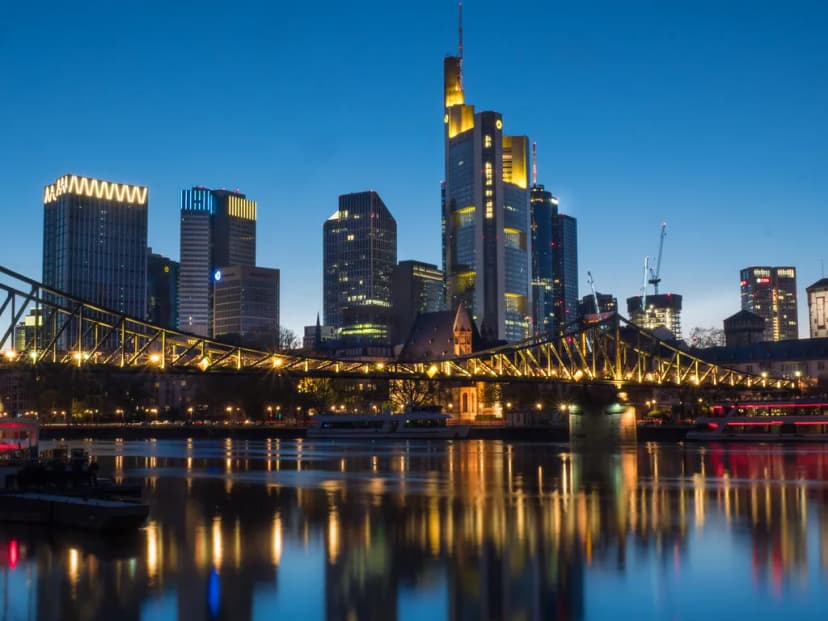
Walking Frankfurt's two riverbanks as one route is simpler than splitting them, because the Eiserner Steg pedestrian bridge links the old town side to the Sachsenhausen neighbourhood, and the Museumsufer sits on the far side. City tourism material lists the Main Riverbank and the New Frankfurt Old Town among Frankfurt's headline sights, so this is core visitor ground rather than a local-only path. A suggested one-hour loop is enough for the crossing and the embankment; that duration is editorial advice, not an official figure.
The route makes most sense when you decide in advance whether the day is about the river or about a museum interior. The riverbank costs nothing and needs no planning; the museums are separate, individually ticketed institutions. That single decision sets your pace, your footwear and how much of Sachsenhausen you actually see.
Why the Mainufer and Sachsenhausen Belong in One Walk
The Mainufer is the north-bank promenade, Sachsenhausen is the district opposite, and the river between them is narrow enough to cross on foot. That geography is the whole argument for combining them: you get the old town, the skyline and the traditional cider quarter inside one continuous route instead of making three separate trips.
The second reason is the view. From the south bank the skyline rises across the water in a single band, which is why so many Frankfurt photographs are taken from that side. Walking north first and south second means you see the city twice from opposite angles without retracing a step.
Route Logic: North Bank, Eiserner Steg, South Bank
The clean sequence is north bank first, crossing second, south bank third. Begin around Mainkai, drift past the old town edge, cross the Eiserner Steg, then turn onto Schaumainkai. This order works because the museums, the cider pubs and most return crossings sit on the southern side, so you finish where the choices are.
Keep the crossing roughly in the middle of the walk so both halves feel similar in length. Walking the north bank first also puts the view behind you on the return leg rather than in your face. Reverse the order and you end in the busiest part of the old town as tour groups arrive.
For a fixed southern trailhead, a self-guided audio product lists its meeting point at Schaumainkai 41 and asks walkers to start in front of the Museum Embankment. That places the embankment, not the old town, at the southern end of the route. Treat it as a navigation anchor rather than a recommendation to buy that tour.
Suggested Durations: Short Loop Versus Half Day
Every duration here is a suggestion, not an official figure. A short river loop that crosses the Eiserner Steg, touches Schaumainkai and returns takes roughly an hour at a steady pace without stops. A half-day version adds one museum interior, a proper break and a slower look at Sachsenhausen.
For one measurable stretch, the Mainuferpark Walk via Mainfeldstraße is listed at 3.3 km with a time of about 40 minutes and only 6 m of elevation gain. Those figures describe that specific mapped trail, not the whole Mainufer and Sachsenhausen route, so use them as a pace gauge. Most visitors walk further once crossings and detours are added.
Starting on the North Bank at Mainkai
Mainkai runs along the northern edge of the old town, which makes it the natural place to begin. You start with the river on one side and half-timbered facades and church towers on the other. That contrast between water and reconstructed history is the first thing most visitors notice about this bank.
Do not rush the first few hundred metres. The north bank is where you orient yourself: locate the footbridge ahead, note the skyline opposite and pick a rough turnaround point. Once you cross, buildings block the long view and the geography becomes harder to read. Settle your bearings before you commit to the bridge.
Crossing the Eiserner Steg on Foot
The Eiserner Steg is the pedestrian bridge that makes this route possible. It is the documented crossing between the Römerberg side and the Sachsenhausen neighbourhood, and it is one of the most photographed structures on the river. Cross slowly, keep to one side and let the view open as you reach the middle.
Practical note: the bridge is for walkers, and traffic gets dense at popular hours. If you are photographing, step to the railing rather than stopping mid-span. The crossing itself takes only a few minutes, which is exactly why the route works as one walk rather than two.
Landing on Schaumainkai: What the Museum Embankment Actually Is
Schaumainkai is the riverside street on the south bank, and the Museumsufer is the cluster of institutions lining it. It is a street with museums on it, not a single attraction with one entrance, one queue or one ticket. That distinction matters the moment you arrive on the far side of the bridge.
The stretch is geographically generous, which is why walking it feels different from walking the north bank. Between the buildings you get river access, benches and open sky. Budget time for the street itself, not only for doorways, or you miss much of what makes the embankment pleasant.
Free Riverside Paths Versus Paid Museum Interiors
The riverbank is free public ground. Walking the Mainufer, crossing the bridge and strolling Schaumainkai cost nothing and require no forward planning. This is the part of the route you can do on impulse, in whatever weather you are willing to tolerate.
Museum interiors are a separate decision with separate tickets, and there is no single embankment pass to assume. Each institution sets its own admission, opening days and rules about photography and bags. Check the individual museum's own website for the current price and hours on the day you plan to visit, because published details change and seasonal schedules differ.
The honest trade-off is time. One museum interior can absorb two to three hours and breaks the riverside rhythm; three turns the day into a museum visit with a stroll attached. If you want both experiences, pick one interior and give the river the rest of the day.
Mainuferpark: The Easier Stretch on the South Side
Mainuferpark is the green riverside parkland on the southern bank and the gentlest part of the route. The mapped trail through it is tagged as a paved, stroller-friendly, wheelchair-friendly and kid-friendly city walk, with benches along the way. That combination makes it the natural choice for families and anyone travelling with wheels.
Do not read that as a guarantee for the entire walk. The Eiserner Steg crossing, kerbs, cobbles in Sachsenhausen and temporary works are separate conditions that change independently. If step-free access is essential, check the city's own barrier-free travel information and treat the park stretch as the reliable part rather than the whole.
The same trail description notes the path can become slippery after rain. That is the most useful practical line in the whole plan, because a riverside surface that is comfortable in dry weather behaves differently after a wet night. Choose footwear accordingly.
Reading the Skyline From the South Bank
The classic Frankfurt skyline view is taken from the south side of the Main looking north, with the towers lined up in one band and the river in the foreground. That composition is stronger than anything the north bank offers, and it is the payoff for crossing. Plan the south-bank stretch for the second half of the walk and the light usually solves itself. For wider planning, see Frankfurt am Main landmark visitor guides.
If you cross early and finish early you get flatter light and a busier bridge; cross later and you get the reverse. Photographers should note that the north bank looks toward the towers, while the south bank looks back at the old town, so each side frames a different city.
Sachsenhausen's Apfelwein Character
Sachsenhausen is the district where Frankfurt's cider tradition lives, and Apfelwein is the drink that defines it. Expect a plain, sociable pub culture rather than a polished restaurant experience: shared tables, simple food and a drink that is tart rather than sweet. That character belongs to the district as a whole, not to one address.
City tourism material invites visitors to enjoy a slice of the Frankfurt way of life at a cosy apple wine pub and describes hot apple wine as an essential in Frankfurt. That is as specific as official promotion gets about the tradition; it does not publish a tavern list, so treat any ranking you find online as someone's personal shortlist. Wander the side streets, judge by atmosphere and check opening times on the day.
If you are unsure about the drink, order the smallest size before committing to a second round, and note that sweetened variations exist for visitors who find the standard pour too sharp. Food in these pubs follows the same sour, hearty profile as the cider.
Where to Slot in a Break Without Over-Planning
Put the break after the crossing and before the return, roughly at the midpoint of the day. By then you have the south-bank stretch behind you, the skyline photographs taken and enough daylight left to walk back unhurried. Stopping on the north bank instead means breaking before the best part of the route.
Keep the break open-ended rather than booked. Cider pubs in Sachsenhausen are informal, and a fixed reservation adds pressure to a walk whose main appeal is flexibility. Decide where to stop when you see the street, then let the length of the break set how leisurely the return leg becomes.
Weather, Surfaces and Footwear
This is a river walk, so wind is the factor most visitors underestimate. The Main corridor funnels air along the water and the open embankment offers little shelter, so a light jacket helps even on a mild day. Rain makes paved riverside surfaces slick, as the trail notes for Mainuferpark make clear, and the bridge deck gets slippery too.
Comfortable closed shoes with grip are the right choice. Cobblestones in Sachsenhausen and around the old town punish thin soles over a half day. Bring water in warmer months, as the trail guidance recommends, since shade along the embankment is limited.
Extending the Day: Römerberg and the New Old Town
The north-bank end of the walk sits beside the rebuilt old town, which makes a natural extension. Römerberg is the historic square with the town hall facade and surrounding reconstructed houses, a short step inland from the river. Add it before or after the crossing rather than in the middle of the river stretch.
This is the moment to make a second landmark decision deliberately. If architecture and city history interest you more than art, spend the extra time in the old town. If you came for museum interiors, skip the square and put those hours into Schaumainkai, where the density of institutions rewards a longer stop.
Families sometimes prefer a different second stop entirely, and the science centre is the obvious hands-on alternative when a riverside walk needs a counterpart. It is a separate ticketed visit with its own schedule, so check it directly before building the day around it.
Getting Back: Planning Your Return Crossing
You do not have to return the way you came; several bridges cross the Main within walking distance of the embankment, so the loop can close further east or west than it opened. Decide at the start roughly where you will cross back, because that choice controls how much of Sachsenhausen you actually see.
Finishing in the old town leaves you beside public transport and cafés, convenient but busy. Finishing on the south bank leaves you closer to the cider pubs and further from the central sights. Neither is wrong; the right answer depends on whether your evening is about dinner or about getting back to a hotel.
Mistakes First-Time Walkers Make
The most common error is treating the Museum Embankment as one attraction with one ticket. It is a street of separate institutions, each with its own admission, days and rules, and assuming otherwise leads to wasted time at a closed door. For wider planning and sibling guides, see the Frankfurt am Main landmarks index.
The second mistake is walking out and back on the same bank, which doubles the distance without adding a new view. Cross once, walk the opposite bank and return by a different bridge. The third is packing three museum interiors into a river walk, which converts a relaxed promenade into a queueing exercise.
Finally, do not rely on vague transit assumptions. Reaching the riverside from the centre is straightforward, but specific lines and journey times change, so check current local transport information instead of a fixed plan. Distances inside the route are short enough that logistics matter far less than the order you do things in. For wider planning, see Frankfurt am Main city travel guides.
Plan Your Visit
Walk the Mainufer and Sachsenhausen as one route: north bank first, Eiserner Steg in the middle, Schaumainkai and Sachsenhausen afterwards. Decide before you start whether the day is a riverside promenade or a museum visit with a walk attached, and let that single choice set your pace and your footwear.
The riverbank is free ground and the museums are individually ticketed, so verify current admission, opening days and access arrangements directly with each institution and with the city's own visitor information. The bridge crossing and the south-bank skyline view are the constants; everything ticketed deserves one quick check before you go.
Frequently Asked Questions
How long does a Mainufer and Sachsenhausen walk take?
A short river loop that crosses the Eiserner Steg and returns takes roughly an hour of steady walking without stops; a half-day version that adds a museum interior, a break and a slower look at Sachsenhausen takes considerably longer. Treat both figures as suggestions rather than official walking times, and check the opening days of any museum you intend to enter.
Is the walk from the Eiserner Steg to Sachsenhausen doable on foot?
Yes. The Eiserner Steg is a pedestrian bridge and the documented crossing between the Römerberg side and the Sachsenhausen neighbourhood. The crossing takes only a few minutes, and Schaumainkai begins on the far side. Cobbles and kerbs in the district are the main surface considerations.
Do I need a ticket for the Museum Embankment?
No. Walking Schaumainkai and the riverside is free public ground. The Museum Embankment is a street lined with separate institutions, each with its own admission and opening days, and there is no single embankment ticket to assume. Check the individual museum's own website for current prices and hours before planning a visit around it.
Where should you stop for Apfelwein in Sachsenhausen?
Apfelwein belongs to the character of the district rather than to one address, and official city tourism material promotes the apple wine pub tradition without publishing a tavern list. Choose a side street that looks busy and welcoming, and confirm its opening hours on the day. Order a small pour first if you are unsure about the tart flavour.
Is the riverside path suitable for strollers or wheelchairs?
The mapped Mainuferpark route on the south bank is tagged as paved, stroller-friendly, wheelchair-friendly and kid-friendly, mostly flat with benches along the way. That description covers that specific trail, not the whole route. The bridge crossing, kerbs and cobblestones have their own conditions, so check the city's barrier-free travel information if step-free access is essential.
What should you wear for this walk?
Comfortable closed shoes with grip, plus a light windproof layer, because the river corridor is exposed and open. Paved riverside surfaces can become slippery after rain, as the Mainuferpark trail notes warn, and bridge decks are worse. Bring water in warmer months, since shade along the embankment is limited.