The most commonly reported half-day trip out of Dresden is the run to Kurort Rathen in Saxon Switzerland: according to an independent visitor account, you take the S1 from Dresden Neustadt to Kurort Rathen, walk about five minutes to the Elbe ferry, cross to the village and follow marked hiking signs uphill to the Bastei. That source reports the walk itself takes roughly an hour at a steady pace, while many visitors stretch the outing to about three hours at the lookouts and bridge. Treat those figures as reported experience and a suggested duration, not official timings.
What the city confirms is the wider picture: Dresden's official tourism pages state that the city is well connected to its nearer and wider surroundings by rail, roads, waterways and air, and that the local network includes trams, buses, Elbe ferries and two mountain railway lines. That combination is what makes a half day or a full day out realistic without a car. Use the Dresden travel hub for city-level planning and the Dresden landmark guides for individual sights.
How to Decide Between a Half Day and a Full Day
Count the hours you genuinely have, then subtract the walk from the station to the thing you came to see. A half day suits one anchor sight plus a short wander; a full day only pays off if you accept that a single delayed regional service can eat an hour. If you are weighing whether to leave the city at all, the 3 days in Dresden itinerary shows what staying put looks like.
Decide your one priority before booking anything, because the destination shapes the logistics. A compact town centre close to its station rewards wanderers; a single landscape or monument rewards whoever picks the route ending nearest to it. Stacking three stops into one afternoon is the most common way a day trip turns into a train-riding exercise.
Half-Day Option: Kurort Rathen and the Bastei
The Bastei Bridge outing is frequently described as a half-day trip in independent visitor reporting, with the routing given as the S1 from Dresden Neustadt to Kurort Rathen, a roughly five-minute walk to the ferry, a crossing to the village and marked paths uphill. That route and the ferry crossing are visitor-reported rather than operator-confirmed, so check the current timetable yourself before relying on it. Our guide to Saxon Switzerland from Dresden covers the destination in more detail.
The ferry is a separate crossing from the rail journey: one visitor source states the Rathen ferry requires its own ticket and is not included in VVO or Deutschlandticket fares. That source also quotes older fare figures, which should not be treated as current for 2026. Confirm the ferry's present price and operating pattern with the operator before you travel rather than budgeting from a blog post.
Why the Bastei Fits a Half Day
The Bastei is a rock landscape with a bridge and multiple lookouts rather than a building you enter, which is exactly why it compresses into half a day. Visitor reporting describes the terrain as more of a nature walk than a serious hike, with about an hour of walking for those who move steadily. How long you actually spend depends on the climb from the village and how long you linger at each viewpoint.
Because there is no single interior to tour, the variables are your pace and the weather. Wear shoes that handle uneven rock steps, carry water, and set a hard turnaround time at the bridge if you have only a morning. This is planning advice, not an official schedule, and the site's own opening pattern and any fees should be checked before you go.
Half-Day Alternative: Stay in Dresden and Use the Local Network
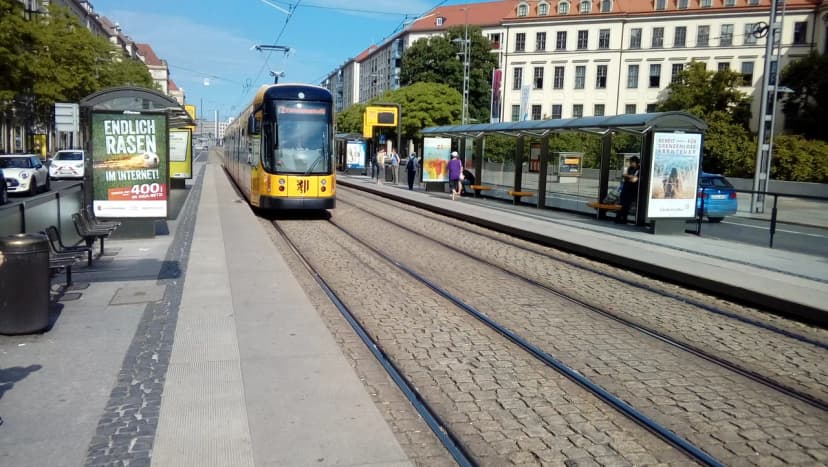
A slow morning inside the city is a legitimate half-day option, and the official city page confirms that trams, buses, Elbe ferries and two mountain railway lines operate within Dresden. That mix lets you pair a riverside walk with a short ride to a different quarter instead of committing to an intercity connection. Our Dresden public transport guide explains how the network is organised for visitors.
A practical shape for this: walk the riverside promenade in the morning, cross into the Neustadt for lunch, and return on foot or by tram before the afternoon builds. Keep free public space and paid interiors separate in your head. An openly accessible courtyard or terrace does not mean that the museums inside the same complex share one ticket or waive entry.
Full-Day Option: A Historic Saxon Town by Regional Train
For a full day, choose one historic Saxon town reachable by regional train and plan a single museum or church plus a walk, not three stops. Meissen is the obvious candidate and deserves its own plan; our Meissen day trip from Dresden covers what to prioritise there. Check the connection the evening before so you know which Dresden station your service uses and whether a change is needed.
Station choice matters. Visitor reporting notes that long-distance trains commonly serve both Dresden Hauptbahnhof and Dresden-Neustadt, while bus stops vary by service, so you should confirm the stop printed on your own ticket instead of assuming every service calls at both. Getting that wrong at the start of a full day costs more than getting it wrong on the way home.
Full-Day Option: A Longer Saxon or Bohemian Switzerland Day
A longer day into the sandstone country, or across into the Bohemian side, can be done self-guided with a rented car or as a guided tour that handles driving and the border crossing. Self-guided travel gives you control over where you stop and how long you stay; the guided version gives you a fixed itinerary and no navigation decisions. Neither is automatically right, but they suit different travellers.
If you book a tour, read what is actually included, because entrance fees, ferry crossings and meals are often listed as extras rather than in the headline price. If you drive, check whether your route crosses into the Czech Republic and what that means for your rental agreement and any vignette requirement. Border-adjacent itineraries are where small administrative oversights become expensive surprises.
The Elbe Valley as a Day Trip in Itself
Cycling is a genuine full-day alternative rather than filler. The City of Dresden states that cycle paths along many main roads now total more than 360 kilometres, and that the Elberadweg along the river is the most important inner-city route, running away from road traffic. That makes a bike-and-train combination a practical way to cover a long stretch of the valley in a day.
The realistic plan is to ride one direction along the Elbe and return by train with the bike, rather than looping back exhausted. Bike carriage rules, reservation requirements and seasonal restrictions vary by operator, so confirm them before committing to the route. If you would rather not cycle, paddle steamer trips on the Elbe offer the same valley scenery from the water. Our guide to a Dresden Elbe river cruise explains the options.
Tickets, Passes and What Is Not Included
Assume nothing about pass coverage. Whether a city card, a regional ticket or a nationwide pass covers a specific route, zone or crossing must be verified for your own journey, since coverage rules and prices change and older figures circulating online are not a reliable basis. The Rathen ferry in particular is described in visitor reporting as a separate crossing, so do not plan on it being bundled into a rail fare.
Check current fares, fare zones and pass conditions at the point of sale, whether that is a ticket machine, an app or a staffed counter. If your trip involves two operators, a ferry or a mountain railway, check each one separately rather than assuming one ticket covers the chain. Our Dresden ticket zones notes cover the basics, but the operator is the source that counts on the day.
Seasonal and Timing Considerations
Daylight decides what a full day can hold, especially from late autumn to early spring, when an afternoon outdoors can end in fading light. Long summer evenings make a late return by train far easier and let you push a full day further from the city. Build the plan around sunset rather than around a fixed number of stops.
Seasonal closures and reduced winter services affect mountain railways, ferries and outdoor sites more than city transport, so check the specific operator's notices close to your travel date. Do not rely on last year's season dates for anything that runs only part of the year. Five minutes of checking the week before departure prevents arriving at a closed gate.
Plan Your Visit
The trips that go well are usually one anchor sight plus one unplanned hour, with slack built in for a missed regional connection. Dresden's position makes both a half-day Saxon Switzerland outing and a full day in a smaller Saxon town achievable, provided you resist stacking three destinations into one ticket. Pick the block of time you truly have, then choose the destination that fits it.
Before travelling, verify three things: your departure station, the current fare and zone for your route, and whether any pass you hold covers it. If you are comparing options across Germany, our guides to day trips from Berlin and day trips from Munich show how other cities handle the same half-day versus full-day trade-off, and our Dresden gardens and parks guide is useful if you would rather keep a spare afternoon local.
Frequently Asked Questions
What is the easiest half-day trip from Dresden without a car?
The most commonly reported option is the S1 train toward Saxon Switzerland with a stop at Kurort Rathen, followed by a short walk to the Elbe ferry and marked paths up toward the Bastei rock formations and bridge. This routing comes from independent visitor accounts rather than an operator confirmation, so check the current timetable before relying on it. Staying in Dresden and using trams, buses and riverside paths is the other low-effort half-day choice, and the city confirms that trams, buses, Elbe ferries and two mountain railway lines all operate locally.
Can you visit the Bastei Bridge from Dresden independently, or do you need a tour?
Independent travel is feasible on the reported route: train to Kurort Rathen, walk to the ferry, cross, then follow the marked paths uphill. A guided tour removes the logistics and typically adds other Saxon Switzerland or Bohemian Switzerland stops, at the cost of a fixed schedule and group pace. If you go independently, set your own turnaround time rather than assuming a set duration, since the one-hour walking figure in visitor reporting is experience rather than an official timing.
Is the Elbe ferry at Rathen included in train tickets or the Deutschlandticket?
Visitor reporting describes the Rathen ferry as a separate crossing that is not included in VVO or Deutschlandticket fares. Coverage rules can change, and this is not something to assume from an older blog post. Confirm current ferry pricing and whether any pass you hold applies by checking with the operator locally before you travel.