Saxon Switzerland lies about 30 kilometres from Dresden and roughly 150 kilometres from Prague, according to the region's official arrival and mobility page. The same source describes the Elbe Sandstone Mountains as easily reachable by almost any means of transport, with most regional transport companies belonging to one network. That proximity makes a day trip realistic, but it does not make the region small or simple. Use our Dresden city travel guides to plan the city portion of your stay.
Expect to choose one anchor area. The Bastei delivers the rock bridge and river panoramas on a compact circuit, while Bad Schandau anchors the national park core with ferries, the Kirnitzschtal tram and the National Park Railway. Trying to cover both in one day usually means more time in transit than on foot.
Why Saxon Switzerland Works as a Day Trip from Dresden
The region's own tourism board frames accessibility as a strength: the Elbe Sandstone Mountains are easily and quickly accessible by almost any means of transportation, and most transport companies in the region belong to the Regional Transport Saxon Switzerland Eastern Ore Mountains association. Within Dresden, the city tourism office says you can rely on a dense network of trams, buses, Elbe ferries and two mountain railway lines, plus rail, road, water and air links to the wider surroundings. That combination supports a car-free plan. Our Dresden landmark visitor guides cover the city sights to combine with this excursion.
Plan one anchor sight plus one walk. Attempting both the Bastei area and the Bad Schandau core in a single outing usually leaves little trail time, and the return train becomes a hard deadline rather than a fallback. If you want both, staying overnight and splitting them across two days is the honest solution.
First Decision: Bastei Area or the Bad Schandau National Park Core
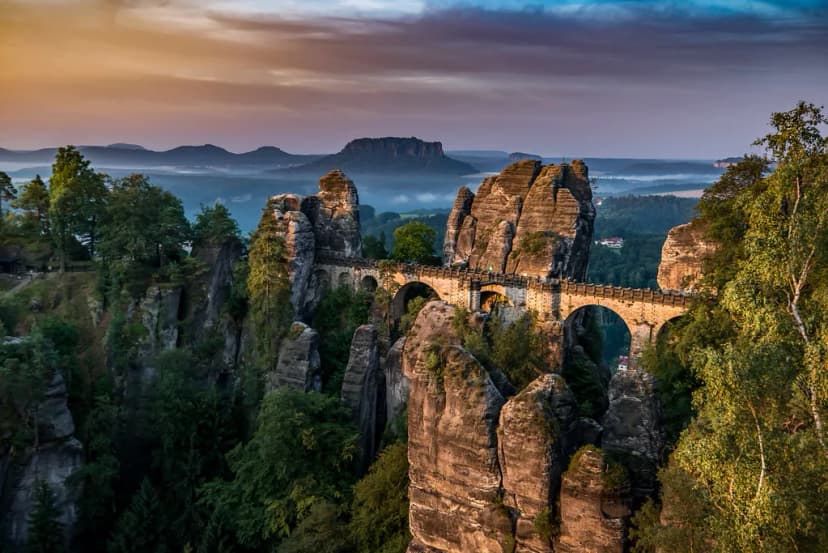
The Bastei area delivers the postcard: the rock bridge, sandstone towers and wide Elbe views. It is the busiest corner of the region and the one most day visitors target. The region's tourism board lists Bastei as a headline highlight and runs the Saxon-Bohemian National Park Express to it along with other sought-after destinations such as Königstein Fortress, Hohnstein and the Prebischtor.
The Bad Schandau side plays a different game. Bad Schandau is reachable directly by long-distance train, which the region's mobility page confirms, and it functions as the starting point of the Kirnitzschtal valley tram. That mix of train, ferry, tram and trailheads makes it the better base if you want a longer walk, a valley route or a cross-border extension.
A third option sits between them. Towns along the S-Bahn corridor, such as Stadt Wehlen and Rathen, pair a shorter viewpoint walk with a ferry crossing and an easy return train. These make quieter alternatives when the Bastei crowds look unappealing.
Getting There by Train and Public Transport
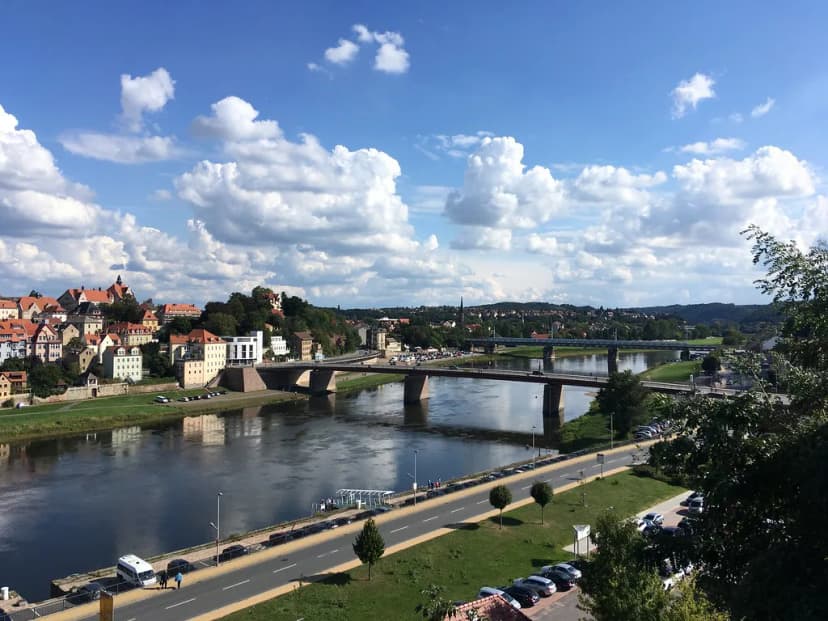
The S-Bahn line S1 is the backbone. The region's mobility page describes it as the main traffic artery, connecting the Elbe Sandstone Mountains with Dresden and Meissen, with tracks following the Elbe from Pirna onwards and views of rock formations and towns such as Stadt Wehlen, Rathen and Bad Schandau. The same source states that whether S-Bahn, train, bus or ferry, one ticket is valid for all modes of local transportation within the network. That is a transport principle, not an attraction pass.
Onward connections fan out from the river stops. Buses run throughout the national park region under the RVSOE network, and hiking buses reach popular trail areas without changes. Bicycle buses operate on selected routes from early April to late October on weekends and public holidays, carrying bikes on a trailer, so cyclists can skip the climbs.
Bad Schandau is also served directly by long-distance trains, so travellers from outside Saxony can skip Dresden entirely if they prefer. For everyone else, Dresden Hauptbahnhof is the natural origin, with transfers onto the S-Bahn from there. Long-distance bus lines also arrive at Dresden's main station, where you transfer to the S-Bahn, per the region's mobility page. Check the connection you actually intend to take on the operator's journey planner before committing to a trailhead.
If you are weighing options, this guide to day trips from Dresden helps you judge whether Saxon Switzerland or a closer destination suits your available hours. The Dresden public transport guide gives you a frame for slotting the park in without crowding the rest of your city days.
Getting There by Car: Highways, Exits and the Parking Trade-Off
The fastest road approach uses the A17 or A4 motorways. The region's mobility page advises switching from the A4 to the A17 at the Dresden-West interchange and taking the Pirna exit. The Hintere Sächsische Schweiz area is reached via the A4 exit at Radeberg, or from Dresden-Nord along the B6 towards Bautzen with turns towards Stolpen for the Bastei, or via Sebnitz towards Bad Schandau and Hinterhermsdorf.
Driving buys flexibility at the cost of the last mile. Parking near the busiest rocks fills on weekends and holidays, and the walk from a car park to the viewpoints can add meaningful distance to an otherwise short outing. A rail arrival drops you within walking distance of the classic Bastei circuit, which is why many day-trippers leave the car in Dresden.
If you do drive, the official district publishes a road construction site list and a parking overview map, both worth checking in the days before you travel, since works and lot availability change. A car also opens the quieter valleys and the Bohemian side, which public transport reaches less directly.
Boats, Heritage Rails and Seasonal Services
Two heritage services double as both transport and attraction. The Kirnitzschtal tram is described by the region as the only tram in the world that enters a national park, running nine stops from Bad Schandau to the Lichtenhain Waterfall, with each stop a starting point for hikes. The National Park Railway Saxon-Bohemian Switzerland has linked Bad Schandau and Sebnitz since the nineteenth century, climbing about 200 metres through seven tunnels and crossing the Sebnitz River 28 times over roughly 16 kilometres, according to the same source.
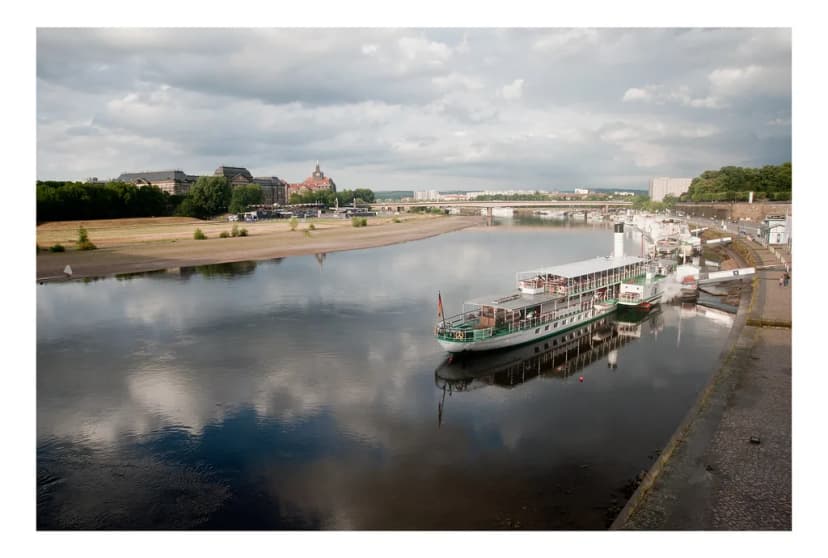
Elbe shipping covers the river corridor. Upper Elbe Passenger Shipping runs the route Pirna, Obervogelgesang, Stadt Wehlen, the spa town Rathen, Königstein, Bad Schandau and Hřensko in the Czech Republic on a regular schedule, per the region's mobility page. Choosing a steamer leg turns transit into the day's centrepiece; using it to hop between two trailheads is the other valid framing.
Vintage buses and trains under the Saxon-Bohemian National Park Express branding serve destinations including Bastei, Königstein Fortress, Brand, Hohnstein, Prebischtor and Edmundsklamm. The express to Königstein Fortress runs from April to October daily from 9 a.m. every half hour to the foot of the fortress and back, according to the same source. Seasonal lines change, so confirm current operating dates with the operator before relying on them.
Matching Your Hiking Ambition to Your Transport
Start from your last connection, not your first. A trail that ends at a river stop with frequent ferries and trains is far more forgiving than one finishing at a bus stop with a handful of daily runs. If your return ticket is fixed, walk an out-and-back route; if you hold a flexible day pass, a linear route with a ferry crossing becomes realistic.
Short viewpoint walks suit the Bastei and Rathen area, where the reward comes quickly and distances stay modest. Longer valley routes fit the Bad Schandau end, where the Kirnitzschtal tram and national park railway put multiple trailheads within reach. The Malerweg long-distance trail passes through the region and offers a taste of its terrain on individual stages if you want something more committed.
Budget for elevation, not just distance. Sandstone steps and switchbacks slow you down more than a flat kilometre would, and autumn leaves on rock can be slick. Bring layers, water and a headlamp or phone light for the shoulder season, and leave buffer time at the trailhead rather than compressing the walk to catch a specific train.
A Realistic Day-Trip Structure
A suggested duration of eight to ten hours from central Dresden covers an early departure, one anchor sight, one walk of a few hours and a comfortable return. That is a planning suggestion, not an operator-stated figure, and it assumes you are not attempting both the Bastei and the Bad Schandau core in the same outing. Treat it as a shape to adjust.
Begin with the first sensible train. Morning arrivals beat coach groups to the busiest viewpoints, and the light along the Elbe is better before mid-morning. Lunch near a river stop rather than at a summit kiosk keeps you mobile, and an afternoon hike that ends at a ferry or tram stop protects you if the day runs long.
Aim to be back at a station well before the last connection you could accept. The last train is a poor target; the second-to-last gives you a buffer for delays, missed crossings or a slower descent than expected. The 2 days in Dresden itinerary shows how to pair a park day with a lighter museum or Old Town day without exhausting yourself.
Timing, Weather and Crowd Trade-Offs
Weekends and public holidays concentrate visitors, especially around the Bastei. A third-party visitor account of the park advises coming a few days either side of holidays for more space, and notes that arriving first thing in the morning is the surest way to have the place to yourself. Treat that as traveller advice rather than an official rule, and expect the same pattern at Königstein Fortress and the popular Bohemian sights.
Autumn is a strong season for colour, and the same account singles out the region's autumn foliage as particularly photogenic. Spring brings variable weather; winter can be beautiful but shortens daylight and may close seasonal services. Check conditions and any closures with the operator before travelling.
Weather in the Elbe valley can differ from Dresden's. The city publishes current Elbe water level and weather data, which gives you a rough read on river conditions but not on trail state. For path conditions, ask at the national park visitor centre or tourist information once you arrive rather than assuming the valley is dry.
Ticket Scope and Cost Planning
The key concept is a network ticket, not a park ticket. Most regional transport companies around Saxon Switzerland belong to the Regional Transport Saxon Switzerland Eastern Ore Mountains association, and the region's mobility page states that one ticket is valid across S-Bahn, train, bus and ferry. Separate attractions, such as a fortress or a castle ruin, are not covered by that ticket.
Overnight guests in many locations receive the Guest Card, which lets them use public transport in the region at no extra cost, per the same source. The card is issued in listed towns including Bad Schandau, Königstein, Pirna, Hohnstein, Sebnitz and Stadt Wehlen, and its validity covers the tariff zones of the Upper Elbe Transport Association, the Kirnitzschtal tram and the cross-border Tisá line. Kurort Rathen issues a separate version. If you are based in Dresden rather than the region, you will not receive it.
Cross-border options exist for Bohemian Switzerland. The Elbe-Labe Ticket is valid on buses and trains throughout the VVO network, on Czech Railways local trains in the Ústí Region, on Děčín city buses and on the cross-border ferry between Schöna and Hřensko, per the region's mobility page. Deutsche Bahn's Saxony-Bohemia Ticket allows small groups of up to five people to travel from anywhere in Saxony to areas near the Czech border on selected local trains, and is also available for individual travellers. Fares and validity change, so confirm current scope and price with the operator rather than relying on older reports.
Common Mistakes to Avoid
The biggest error is treating Saxon Switzerland as one place. Bastei and Bad Schandau are separated by river bends and transfer time, and trying to cover both turns the day into a transport exercise. Pick one area per day unless you are staying overnight.
The second is underestimating transfers. A ferry crossing, a bus from a car park or a tram ride can each eat a chunk of an hour, and they do not line up neatly with train arrivals. Build the crossing into your walking estimate rather than assuming it costs nothing.
The third is assuming one ticket covers everything. Entrance to specific sites is separate from transport, and the national park landscape itself is free to enter with no single gate, according to the third-party visitor account. The same account describes Felsenburg Neurathen, the rock castle near the Bastei, as a small area accessible for a fee. Confirm what is included before you assume your day pass handles it all.
Preparing Before You Leave Dresden
Pack for rock, not pavement. Sturdy shoes with grip, a rain shell, water and snacks cover most days, and a small power bank keeps your phone alive for maps and tickets. Cards are widely accepted, but confirming cash acceptance in advance is sensible in smaller valley villages.
Buy or load your transport ticket before boarding where possible, and screenshot your return connection times. The city's trams and buses are reliable, but the regional timetable is what matters on the return, so keep the last two options in mind on both the S-Bahn and any ferry. Check construction notices the day before you go.
Finally, verify the pieces that change: current ferry and heritage service operation, parking availability and any trail closures. The region publishes a tourist route map and the district lists road works, which together give you a reasonable pre-trip picture. Confirm anything that is critical to your plan directly with the operator.
Plan Your Visit
Saxon Switzerland is close enough to Dresden for a genuine day trip, and the decision that matters most is which part you are visiting. Pick the Bastei for the classic rock bridge and wide river views, or the Bad Schandau core for longer walks, ferries and heritage transport. Trying to do both in one day rarely works well.
Let the return connection set your pace. Build the day around one anchor sight and one walk, keep buffer time, and treat boat, tram and express services as either logistics or the main event depending on your mood. Confirm schedules, ticket scope and conditions with the operators before you leave.
Frequently Asked Questions
How can I take a day trip from Dresden to Saxon Switzerland?
Ride the S-Bahn S1 along the Elbe towards Bad Schandau and the surrounding river stops, then continue on foot, by bus, by ferry or by heritage tram depending on your target. A car works via the A17 or A4 with a Pirna or Radeberg exit if you prefer door-to-door flexibility. Either way, plan around one anchor sight and your last return connection. Confirm current timetables with the operator before travelling.
Can you visit Saxon Switzerland from Dresden without a car?
Yes. The region is served by rail, bus and ferry, and the regional tourism board states that one ticket is valid across S-Bahn, train, bus and ferry within the transport association. Overnight guests in many towns receive a Guest Card that covers regional public transport. Confirm current timetables and ticket scope with the operator before travelling.
Should I go to the Bastei or Bad Schandau for a day trip?
Choose the Bastei area for the rock bridge, sandstone towers and Elbe panoramas on a compact circuit. Choose Bad Schandau if you want longer valley hikes, ferry crossings and heritage transport such as the Kirnitzschtal tram and the National Park Railway. Both are reachable from Dresden, but doing both in one day leaves little time on foot.
How long should I allow for a Saxon Switzerland day trip?
A suggested duration of eight to ten hours from central Dresden covers travel, one anchor sight, a walk of a few hours and a relaxed return, but that is a planning suggestion rather than an official figure. Shorter visits work if you stick to a single viewpoint circuit. Build in buffer time so you are not chasing the last train.
Is Saxon Switzerland free to enter?
The national park landscape itself is generally open and free to enter, with no single gate, according to a third-party visitor account. Individual sites and services such as Felsenburg Neurathen, Königstein Fortress, ferries, heritage trams and some buses may charge separately. Check current arrangements with each operator, since a transport ticket alone does not cover attractions.