

The most useful transport fact about Bamberg is that you will barely need public transport once you are inside the old town. The tourism board describes the old town as having everything close together, with the cathedral a few minutes from typical accommodation. The catch is the walk in from the main station, which sits in a different neighbourhood entirely and takes about fifteen minutes on foot.
A suggested half day is enough to walk the historic core, since the hill city, the island city around Little Venice and the market gardeners' quarter sit within minutes of each other. Public transport earns its place in three situations: arriving with luggage, climbing Cathedral Hill, and reaching the surrounding countryside. Fares and timetables change, so confirm details with the operator before travelling.
Is Bamberg Walkable? A Reality Check
The compactness is real, but the approach is not. The main station sits in an ordinary commercial area, roughly a fifteen-minute walk from the historic centre, and that walk is the least scenic part of a Bamberg day. Plan for it in both directions, or take a bus for the arrival leg if you are carrying bags. Once inside the old town, the geography changes completely.
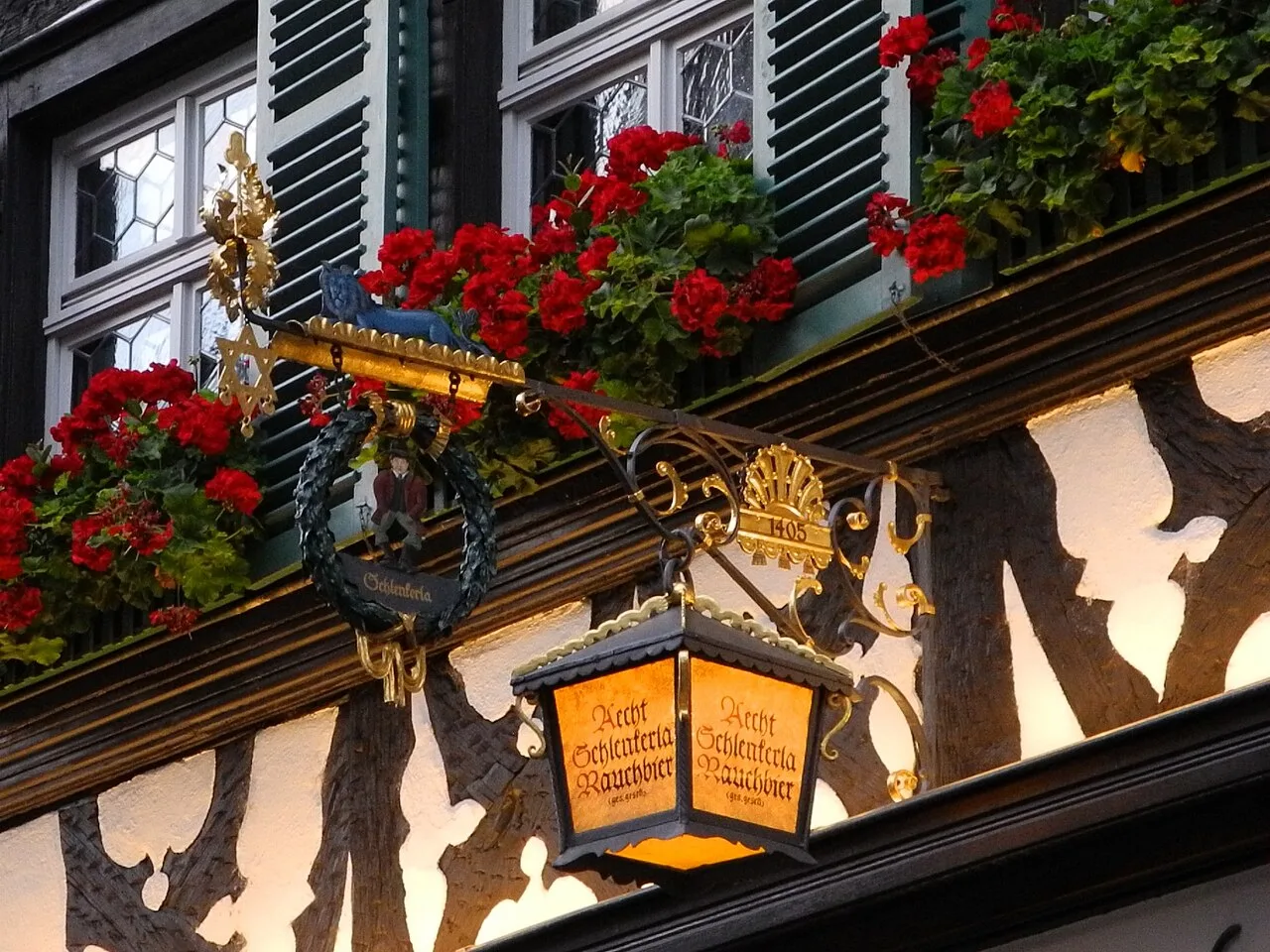
The tourism board splits the World Heritage site into the hill city, presented as the Franconian Rome, the island city with Little Venice and the shopping district, and the market gardeners' quarter as a traditional district. That framing is a useful route plan, because each quarter is short enough to cover on foot within a morning or afternoon.
Gradient, not distance, is the variable to plan around. Cathedral Hill and the climb to St Michael's Monastery above the old town are the two ascents most visitors notice, while the riverside paths, Little Venice and the market gardeners' quarter stay largely level. Shaping a day around the flat ground is entirely possible if you would rather not climb.
City Buses Inside Bamberg
Local buses in Bamberg are run by Stadtwerke Bamberg, which describes its mobility services as covering the city area, the surrounding district and the entire VGN network. For a visitor this means one operator and one fare system covering both the short hop across town and longer regional journeys, without switching providers halfway.
That same operator publishes service notices rather than a neat visitor summary of fares, so treat any figure quoted on a blog as unreliable, particularly if the post is old. Check the operator's own ticketing pages or the VGN information before buying, and confirm current validity conditions close to your travel date rather than trusting a screenshot from a previous year.
The tourism board promotes a separate mobility-style product for sightseeing, the BAMBERGcard and its cärdla version, alongside a paid Bamberg app costing 4,49 € that guides you around the main sights. Those bundle or complement attractions rather than replacing transport tickets, so decide first whether you want discounted entries or bus coverage.
Bus Line 910 to Domplatz
If you remember one line number, make it 910. The Historical Museum, which occupies the Alte Hofhaltung on Domplatz, states that bus line 910 stops at the Domplatz stop directly in front of it, and the Bavarian Palace Administration gives the same instruction for the New Residence: bus 910 to Domplatz. For anyone avoiding the climb, that is the single most valuable route fact here.
Treat the line as a fallback rather than a default. Walking up to the cathedral quarter is the pleasant option, and 910 is what you keep in reserve for the return when your legs are done or rain has made the cobbles slippery. Because the stop sits at Domplatz itself, you step off level with the cathedral, the New Residence and the museum cluster rather than below them. For wider planning, see Bamberg Cathedral visitor guide.
The Seasonal BambergBus Sightseeing Loop
The BambergBus is a sightseeing vehicle rather than a commuter route. Its operator describes a red convertible bus running from 1 March until the day of Epiphany at the beginning of January, with a tour of about sixty minutes through the Bergstadt, Inselstadt and Gärtnerstadt and fifteen stops where you can get off and back on, using a day ticket. Those figures are the operator's published description, not a guarantee for your date.
The trade-off is straightforward. The loop suits an orientation day or a short visit, and the operator lists stops near the Old Town Hall, the mill quarter, Schillerplatz, the Hain with the botanical garden, the main station and Cathedral Hill, which is roughly the ground you would otherwise cover slowly on foot. It adds little if you are already comfortable walking the compact centre.
Keep the two services distinct in your head: the BambergBus exists to show you the city, while line 910 exists to move you to a specific square. Combining them makes sense mainly if you want both an overview and a lift, and one afternoon is usually enough for the loop. The operator publishes running dates and ticket terms on its own site, which is where current information should be checked.
Tickets: Thinking About Cost Without Guessing
Whether a day ticket, a single fare or a subscription makes sense depends entirely on how much riding you plan, and Bamberg's small centre argues against buying much. A day built around walking with one or two bus legs rarely justifies a day pass; being based outside the centre or adding regional trips changes the calculation in the other direction.
Because prices and validity conditions change, this guide deliberately quotes no figures. Check current fares, accepted ticket types and any subscription coverage on the operator's pages and in the VGN information before travelling, and confirm whether the ticket you hold covers the specific service you intend to use. A few minutes of checking prevents the most common ticketing mistake here.
If your day is mostly about the old town, spend the money on a Katakomben-style experience or a brewery lunch instead of transport. For everything involving trains, the regional day-trip article on this site covers how to use Bamberg as a base. For wider planning, see Bamberg day trips by train.
Bikes, Taxis and the Riverside Alternative
A bicycle is a good way to reach the surrounding countryside and the outlying brewery gardens, but it is a poor match for the steep lanes of the hill city, where most riders end up pushing. The flat, rewarding ground is the riverside itself, along the canal district and the water-meadow paths that line the Regnitz. For wider planning, see Klein Venedig Bamberg fishermen's quarter.
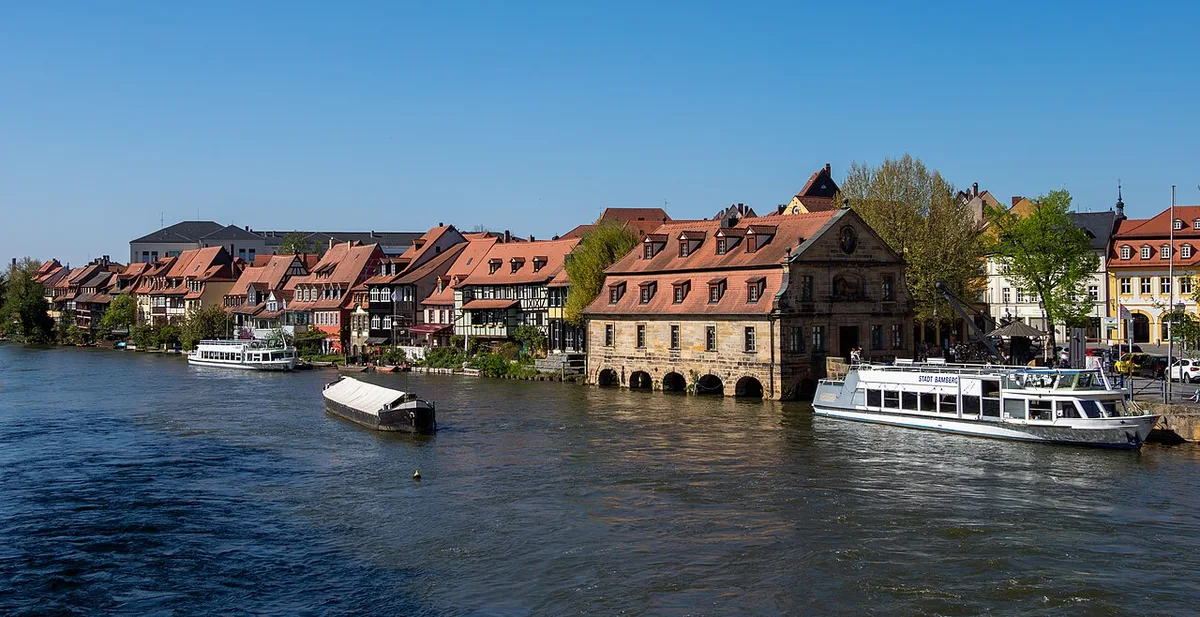
Taxis make sense mainly for station transfers with luggage or for late evenings when walking back across town is unappealing; they are a convenience, not a sightseeing strategy. Rather than quoting fares, which change, ask your accommodation to call one or use a local app and confirm the estimated cost before setting off. The same caution applies to bike hire: check current local rates on the day.
If quiet green space is the goal rather than a destination, Bamberg's parks and gardens reward a slow loop on foot, and the riverside routes connect most of them without any vehicle at all.
Construction Works and Checking Before You Go
Stadtwerke Bamberg publishes line-specific construction notices on its news pages, and for a short visit they matter more than a generic timetable. Recent examples on the operator's site include works affecting lines 906, 916 and 938 on the Gaustadter Hauptstraße, line 912 in Mühlendorf, line 914 near Gundelsheim and line 904 during the Hallstadt bridge rebuild. These are service updates, not suggested visitor routes; use them only to check whether your journey is affected.
The practical routine is simple: scan the operator's news page in the week before arrival for diversions, and check stop information at the station or your accommodation on the day itself. Construction work moves, and a diversion that ran through the previous month may already be finished. That single habit avoids the frustration of waiting at a stop that is temporarily out of use.
Beyond the Old Town: Day Trips by Public Transport
Bamberg's rail links make it a practical base for regional days out, and two destinations stand out for travellers without a car. Erlangen, less than an hour away by public transport according to one travel guide, offers a university town centre worth a few hours, while Würzburg combines baroque architecture with a wine-growing setting that rewards a full day. Neither needs a car if you are content with trains and local buses at the far end.
The Devil's Cave is the exception worth flagging. The same guide notes that it is theoretically reachable by public transport from Bamberg but that the connection is a hassle and adds considerable time, while a car shortens the trip substantially. If the cave is a priority, plan it as a car day or join an organised excursion rather than forcing a bus-and-walk combination.
Plan Your Visit
Build the day around walking first. The three old-town quarters sit within minutes of each other, the cathedral and the Hain are close to typical accommodation, and the best moments happen in the alleys between them rather than through a bus window. Treat public transport as the tool that solves specific problems: the climb to Cathedral Hill, the arrival walk from the main station, or a rainy afternoon when the cobbles lose their charm.
Before departure, confirm current fares and connections with the operator, check the construction notices for diversions, and note the BambergBus season if a sightseeing loop is part of your plan. Those three checks take minutes and remove most of the uncertainty from getting around a city that is, on the whole, very easy to navigate on foot.
Frequently Asked Questions
Do you need public transport to see Bamberg's old town?
No, not for the sightseeing itself. The tourism board describes the old town as having everything close together, with the cathedral only minutes from typical accommodation, so walking is the normal way to move between the hill city, the island city and the market gardeners' quarter. A bus becomes useful for the arrival from the main station with luggage, for the climb to Cathedral Hill, and on wet days. If you have mobility limits, line 910 stops at Domplatz and removes the hardest ascent.
Which bus goes to Bamberg Cathedral and Domplatz?
Bus line 910 stops at Domplatz, the square directly in front of the cathedral. The Historical Museum states that the line serves its Domplatz address, and the Bavarian Palace Administration gives the same instruction for reaching the New Residence. Confirm the current timetable with Stadtwerke Bamberg before relying on it, since routes and schedules are updated periodically, and keep the line in mind as a downhill or rainy-day alternative to walking.
What is the BambergBus, and is it worth taking?
The BambergBus is a red sightseeing bus whose operator describes a route of about sixty minutes through the Bergstadt, Inselstadt and Gärtnerstadt, with fifteen hop-on hop-off stops and a day ticket, running from 1 March until the day of Epiphany at the beginning of January. It is worth taking if you want a quick orientation or prefer not to climb, and unnecessary if you are happy exploring the compact centre on foot. Ticket terms and running dates should be checked on the operator's own site.
Is Bamberg manageable without a car?
Yes, for a normal city visit. Trains serve Bamberg, the old town is walkable, and Stadtwerke Bamberg describes its buses as covering the city area, the surrounding district and the wider VGN network. The main limitations are the hills and outlying sights such as the Devil's Cave, where public transport is awkward and a car is genuinely easier. For everything inside the old town, a car adds parking hassle rather than convenience.
Sources
- Stadtwerke Bamberg
- Bamberg Tourismus
- Staycation Collection — Our guide to Bamberg: why to go and what to do
- Bavarian Palace Administration | Palaces | Bamberg New Residence
- Welcome to Bamberg / Der BambergBus
- St. Michael's Monastery - Bamberg Tourismus
- Informationen zum Historischen Museum Bamberg | museum.bamberg - Museen der Stadt Bamberg


