
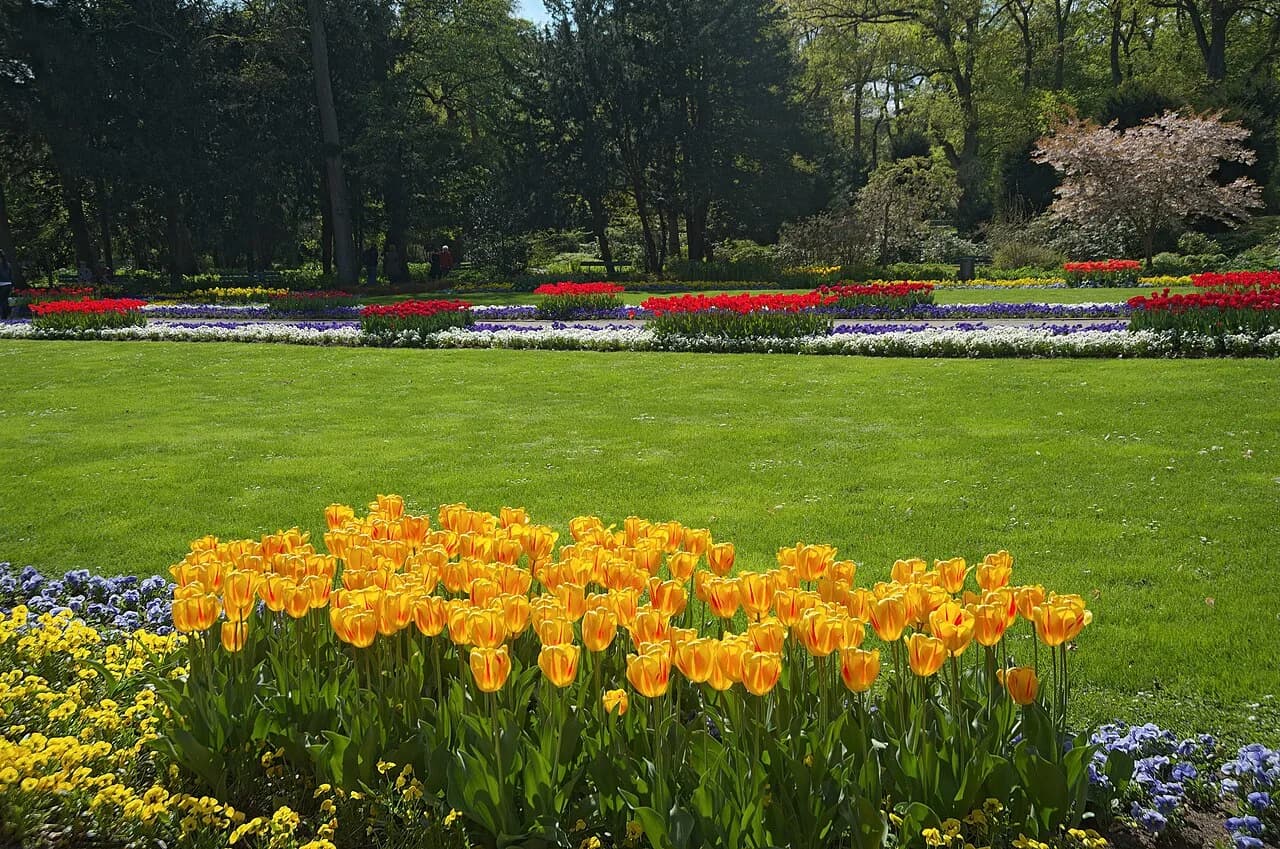
Bamberg rewards travelers who treat its green spaces as sights in their own right rather than filler between churches. The city sits on hills above the Regnitz, so a garden is often also a viewpoint, and the cheapest good skyline in town belongs to a garden that costs nothing to enter. The essential split is between free grounds and paid interiors: the same hilltop can offer one without the other.
That distinction matters most at the New Residence on Domplatz, where the baroque palace and its Rose Garden share a site but not a purchase. The Bavarian Palace Administration states that admission to the Rose Garden is free, while the palace carries a 2026 admission charge. Knowing which of Bamberg's gardens are simply open and which sit behind a ticket desk saves both money and the wrong kind of detour, especially on a short stay where every hour counts.
What Counts as a Park or Garden in Bamberg
Bamberg's green spaces fall into three practical groups: hillside gardens attached to historic complexes, the central parkland of the Hain next to the old town, and small city squares and private allotment clusters that visitors rarely plan around. The tourism board's own framing helps here, describing an old town where sights sit close together and the Hain park lies only minutes from a hotel or apartment.
Third-party green-space listings place the Hain park, the Rose Garden, and the Harmoniegarten in the Altstadt quarter, while the Gärtnerstadt district holds the botanical garden and several nurseries and allotment associations. Those listings are useful for orientation, but they mix commercial garden centers with public grounds, so treat them as a map of green pins rather than a visitor guide. Decide what you actually want from a stop, a view, a bench, or a picnic, before choosing which hill to climb.
Museum grounds deserve separate handling, because a garden attached to a collection may or may not be covered by that collection's ticket. The Historical Museum in the Alte Hofhaltung at Domplatz 7 is a good example of a ticketed interior in a courtyard setting, with its own hours and admission separate from the palace next door. Check each institution's own page before assuming one ticket covers a whole complex.
The Rose Garden at the New Residence: Free Entry, Real View
The Rose Garden behind the New Residence is the clearest example of a free ground attached to a paid interior. The Bavarian Palace Administration states plainly that admission to the Rose Garden is free, while the palace itself carries a 2026 admission charge of 7 euros regular and 6 euros reduced, with children under 18 admitted free. That single line resolves the most common confusion in Bamberg garden planning, because the view over the old town does not depend on buying anything.
The site sits at Domplatz 8, on the cathedral square, so it pairs naturally with the cathedral, the Old Court, and the Diocesan Museum without any transport in between. The palace administration notes a café and restaurant in the Rose Garden, which makes the garden a reasonable rest stop rather than only a viewpoint. Treat the picnic and rest framing in this guide as editorial suggestion, not as an official statement about what is permitted on the lawns.
One practical wrinkle: garden and palace keep different rhythms, because the palace closes on January 1, Shrove Tuesday, and December 24, 25, and 31, while the garden is simply open ground. If your priority is the skyline and a coffee, you can ignore the palace calendar entirely. If you want the interiors, plan around those closures and the season-based opening hours.
The New Residence Interiors: A Separate Decision
Buying into the New Residence is a different purchase from standing in its garden, and the 2026 tariff reflects that. The palace administration lists 7 euros regular and 6 euros reduced for the residence, and a combination ticket with Seehof Palace at 10 euros regular and 8 euros reduced; children under 18 enter free. Tickets are sold only at the cash desk on site, so there is no online booking to arrange in advance.
Renovation has narrowed what a residence ticket currently covers. The palace administration's current information page states that the Elector's Apartment and the Old German section of the State Gallery are not accessible until further notice due to renovation work, while the other state rooms can be visited without restriction. Anyone buying a ticket specifically for those closed rooms should expect to wait until the work finishes rather than plan around a reopening date that has not been published.
Seasonal hours also argue for checking before you commit: April to September the palace opens 9am to 6pm, and October to March 10am to 4pm, daily except the listed holidays. Guided tours of the Prince-Bishop's Apartment run regularly in German, while other rooms can be seen without a guide. A garden-led day rarely needs any of this, which is exactly why the free-versus-paid split is worth settling before you reach the square.
St. Michael's Monastery on Michaelsberg
Michaelsberg is where Bamberg's garden planning gets genuinely useful, because access to the grounds and access to the church follow different rules. The Bürgerspitalstiftung, which owns the complex, states that the gardens, monastery courtyard, and observation deck are accessible at all times, while St. Michael's Church is open only Friday through Sunday and on public holidays from 11am to 4pm. That means the terrace view can be your fallback on a weekday when the church itself is shut.
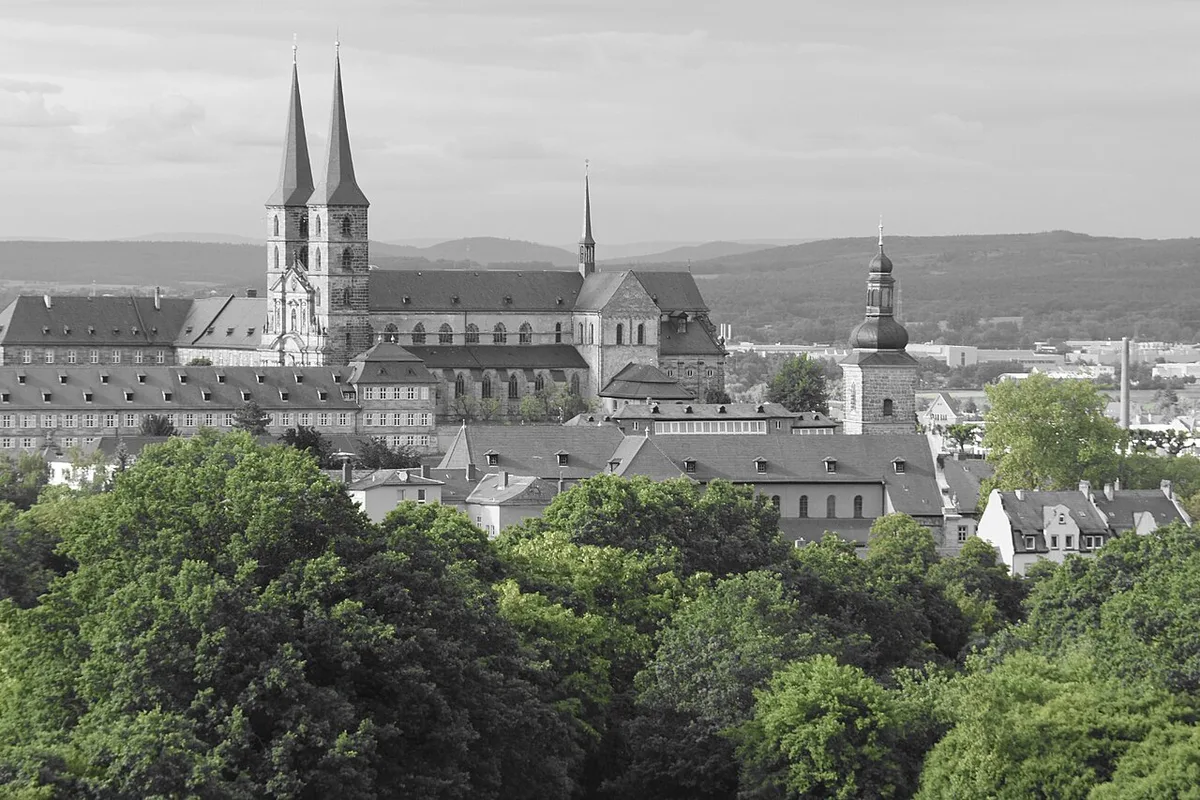
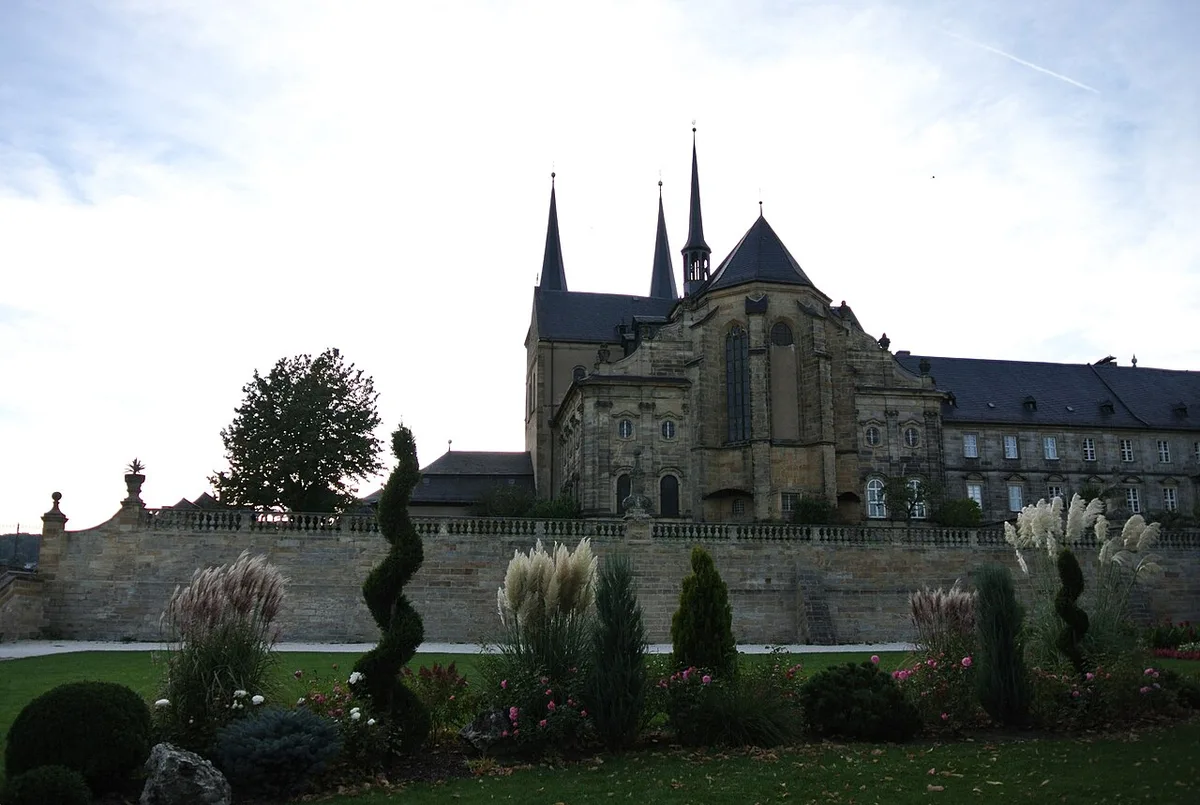
The site is a former Benedictine foundation established around 1015 on the initiative of Emperor Henry II, and it later grew into one of the largest and wealthiest monasteries in Europe before secularization in 1803. The tourism board describes a cohesive baroque ensemble of church, abbey wings, convent building, forecourt, and gardens, largely shaped by the Dientzenhofer brothers, with a terrace behind the church offering a panoramic view over the city. A stroll through the baroque terraced garden with its fountain and two pavilions is part of the same visit.
Vines have grown on the slopes again since 2012, and the abbey shop sells products from the Bamberg Abbey Garden, which gives the walk up a concrete reward beyond the view. Renovation work continues in the church and across the site, and the foundation notes that visitors have had access to the courtyard and gardens while construction proceeds. The short version for planning: assume the grounds are open, verify the church hours if the interior matters to you.
Getting there is a deliberate climb rather than a passing stop. The foundation lists a walking route via the Panoramaweg along Aufseßstraße or Benediktinerweg, and city bus line 910 from the central bus station to the Klinikum Michelsberg stop on weekdays. Parking on the grounds is limited to evenings and weekends for restaurant visitors, so arriving on foot or by bus is the simpler choice.
The Hain and the Old Town Green Belt
The Hain is the central green space next to the old town, and the tourism board treats it as part of the walkable city rather than an excursion. Its own description of Bamberg places the Hain park within minutes of hotels and apartments, which makes it the natural resting point when you are moving between the cathedral square and the river. Local green-space listings also group the Hainbadestelle and the Hainpark among the Altstadt spots visitors rate highly.
Because the sources do not describe the Hain's lake, bathing areas, trails, or facilities in usable detail, this guide deliberately avoids claims about them. What is safe to say is that the Hain functions as the old town's main breathing space and sits close enough to the sights to slot into a walking day. Since the surrounding riverbank is where Bamberg's green belt and its waterways meet, the city's riverside walking routes make a sensible companion plan.
One green-space trap sits at the edge of the Hain district: Villa Dessauer on Hainstraße 4a is a municipal gallery for contemporary art, not a public garden or a free resting spot. The city museums list its own opening days, Thursday to Sunday plus public holidays, and its own admission charge, with reduced rates and free entry for under-18s and card holders. Plan it as an art stop with a ticket, and do not count on its grounds as a substitute for the Hain.
Matching Garden to Purpose: View, Rest, or Picnic
For a view over the old town without spending anything, the Rose Garden is the straightforward answer: free admission, a café on site, and a position on the cathedral square. For a bigger panorama and a wine-slope walk, Michaelsberg's terrace and baroque garden deliver more drama at the cost of a climb. Both are outdoor experiences that do not require a museum ticket.
For a low-effort rest between sights, the Hain wins on location, because it sits beside the old town rather than above it. For a paid interior that earns its ticket, the New Residence's state rooms are the pick when they are open, with the caveat that two sections remain closed for renovation. The honest ranking depends on whether you value skyline, shade, or baroque interiors, and no single garden is objectively best for everyone.
If you are traveling with children, the outdoor gardens are the easier sell, since both the Rose Garden and the Michaelsberg grounds involve no ticket desk at all. The city's wider family-friendly options, including the bridges and riverside paths, pair well with a short garden stop rather than a long museum visit. Build the day around one paid interior at most and let the free grounds do the rest.
Fitting Green Space Between Sights
A practical sequence starts on the cathedral square, where the Rose Garden, the cathedral, the Old Court, and the Diocesan Museum sit within a few steps of each other. Do the free garden first while the light is good, then decide whether the palace interiors or the museum collections deserve the ticket. The city's free sights give you a fallback plan if you decide against paying at all.
From the cathedral hill, treat Michaelsberg as a separate half of the day rather than a quick add-on, since reaching it means a walk along the Panoramaweg or a bus ride. Keep the church's Friday-to-Sunday hours in mind and let the always-open gardens and terrace carry the visit if you arrive on a weekday. Finish downhill in the Hain for shade and a slower walk back toward the old town.
If you are building a fuller itinerary, spread the gardens across two days instead of stacking every hill into one. A two-day structure lets you pair the cathedral square and the Rose Garden with the museums on one day, then give Michaelsberg and the Hain their own afternoon. That rhythm also leaves room for Bamberg's riverside and brewery stops without rushing the viewpoints.
What This Guide Deliberately Does Not Claim
Several details about Bamberg's gardens simply are not published in a form worth repeating. Rose counts, bloom seasons, picnic permissions, and the opening hours or prices of gardens beyond the ones cited here are all left out on purpose, because guessing would be worse than saying nothing. If a specific garden's rules matter to you, check the operator's own page or ask at the tourist information before you go.
Walking times between sights are also excluded, since the sources do not give them and terrain on Bamberg's hills changes the answer anyway. What the sources do support is the shape of the day: a compact cathedral square, a hilltop monastery reached on foot or by bus line 910, and a central park beside the old town. Use those anchors and let your own pace set the schedule.
Prices and hours quoted here are the 2026 figures published by the operators at the time of writing, and they can change with seasons, renovation, or policy. Renovation in particular is live at both the New Residence and Michaelsberg, so confirm current access on the operator pages before a trip built around a specific room or church interior. The gardens themselves are the most stable part of the plan.
Plan Your Visit
Bamberg makes it easy to get a good view without spending anything, provided you separate the free grounds from the paid interiors before you set out. The Rose Garden on Domplatz costs nothing to enter, the Michaelsberg gardens and terrace stay open even when the church does not, and the Hain sits close enough to the old town to absorb a rest between sights. Pick one paid interior at most, and only if it is actually open.
Check operator pages for current hours, renovation status, and 2026 admission before you travel, since the palace and monastery are both works in progress. Then decide what you want from each stop, a skyline, a bench, or a baroque hall, and let that choice set the order of your day. The gardens will still be there; the tickets are optional.
Frequently Asked Questions
Is the Rose Garden in Bamberg free to enter?
Yes. The Bavarian Palace Administration states that admission to the Rose Garden is free, which makes it the simplest free viewpoint over the old town. The palace behind it is a separate, ticketed visit, so you can enjoy the garden and its café without buying anything. The garden sits at Domplatz 8, on the cathedral square.
Is the Rose Garden the same ticket as the New Residence?
No. The garden is free, while the New Residence interiors carry their own admission, sold only at the cash desk on site, with reduced rates and free entry for children under 18. A combination ticket with Seehof Palace is also offered. Because parts of the residence are closed for renovation, check the palace administration's current information page before buying.
Are the St. Michael's Monastery gardens open when the church is closed?
Yes. The Bürgerspitalstiftung states that the gardens, monastery courtyard, and observation deck at Michaelsberg are accessible at all times, while St. Michael's Church is open only Friday through Sunday and on public holidays, 11am to 4pm. That makes the grounds a reliable option on a weekday. Renovation work continues across the site, so access details can shift.
Which Bamberg garden is best for a picnic?
That depends on what you want, and this guide does not rank the gardens objectively. The Rose Garden offers a view and a café, while the Hain is the central green space closest to the old town and the easiest place to pause between sights. Picnic permissions and rules in Bamberg's parks are not something this guide asserts; treat any picnic suggestion here as editorial and check locally if it matters to you.
Where can you get a view over Bamberg's old town without buying a ticket?
Two free options stand out. The Rose Garden at the New Residence is free to enter and looks down over the old town, and the terrace behind St. Michael's Church on Michaelsberg offers a panoramic view with gardens, courtyard, and observation deck accessible at all times. Both are outdoor spaces, so no ticket desk is involved.
Does the New Residence ticket include everything in the palace?
Not currently. The Bavarian Palace Administration states that the Elector's Apartment and the Old German section of the State Gallery are not accessible until further notice due to renovation, while the other state rooms can be visited. Tickets are sold on site, and the palace keeps seasonal opening hours, so check the current information page before planning around specific rooms.
Sources
- Bamberg Tourismus
- Community Gardens in Bamberg — 13 Local Spots | Polomaps
- Informationen zum Historischen Museum Bamberg | museum.bamberg - Museen der Stadt Bamberg
- Englisch - Museen der Stadt Bamberg
- St. Michael's Monastery - Bamberg Tourismus
- General information
- Bavarian Palace Administration | Palaces | Bamberg New Residence
- Bavarian Palace Administration | New Residence in Bamberg | Tourist information | Admission charges


