

Rain in Bamberg rarely means staying in a hotel room, because the UNESCO-listed old town packs its main sights onto a few steep streets where the walk between buildings is short enough to tolerate in a downpour. What actually determines the quality of a wet day is not the weather but the calendar: several of the best indoor options keep irregular opening days, and some interiors have been partly closed by renovation. Build the day around what is confirmed open, then fill the gaps with free courtyards and gardens.
The cathedral hill concentrates three of the strongest wet-weather stops within a couple of minutes of each other, so you can move between them without a long soaking. Below the hill, the New Residence and the Michaelsberg monastery complex add two more indoor or semi-indoor options. For a wider look at how these pieces fit together across a longer trip, see the Bamberg city guide, which maps the neighbourhoods, the hills and the main sights.
One practical warning shapes the whole plan: ticket rules differ sharply between museums, and no single pass covers the cathedral, the Diocesan Museum and the Historical Museum together. Treat each venue as its own booking decision rather than assuming a combined ticket.
The Cathedral Hill: Free Grounds, Paid Interiors
Bamberg's Domplatz is framed by three large buildings that document a thousand years of the city's history: the cathedral, the Alte Hofhaltung and the New Residence. Walking the square and the courtyards costs nothing, which makes the hill a sensible first stop when rain is intermittent and you want to keep moving. The Alte Hofhaltung, a Renaissance complex built on the site of the former Castrum Babenberg, is generally open from morning onwards on a daily basis, with the inner courtyard closed at sunset.
The interiors are the part that needs planning. The Historical Museum occupies the Alte Hofhaltung itself, and its admission is separate from the Diocesan Museum a short walk away. The Bavarian Palace Administration describes the cathedral square arrangement in detail, noting which buildings it maintains and where the city museum sits.
Access to the hill is straightforward by public transport. Bus line 910 serves the Domplatz stop in the old town and also runs to the Klinikum Michelsberg stop, which is useful if you plan to combine the cathedral hill with the monastery later in the day. Tiefgarage Geyerswörth is the nearest car park, roughly a short walk away via Karolinenstraße.
Historisches Museum in the Alte Hofhaltung
The Historisches Museum Bamberg sits inside the Alte Hofhaltung at Domplatz 7, which means you can step off a wet square straight into the collection. It opens Tuesday to Sunday and on public holidays from 11 am to 5 pm, and closes on Mondays, so a Monday arrival needs a different plan. Adult admission is 8 euros, with reduced rates for seniors aged 65 and over, students and trainees from 19, visitors with severe disabilities, groups of ten or more, and Volunteer Card holders.
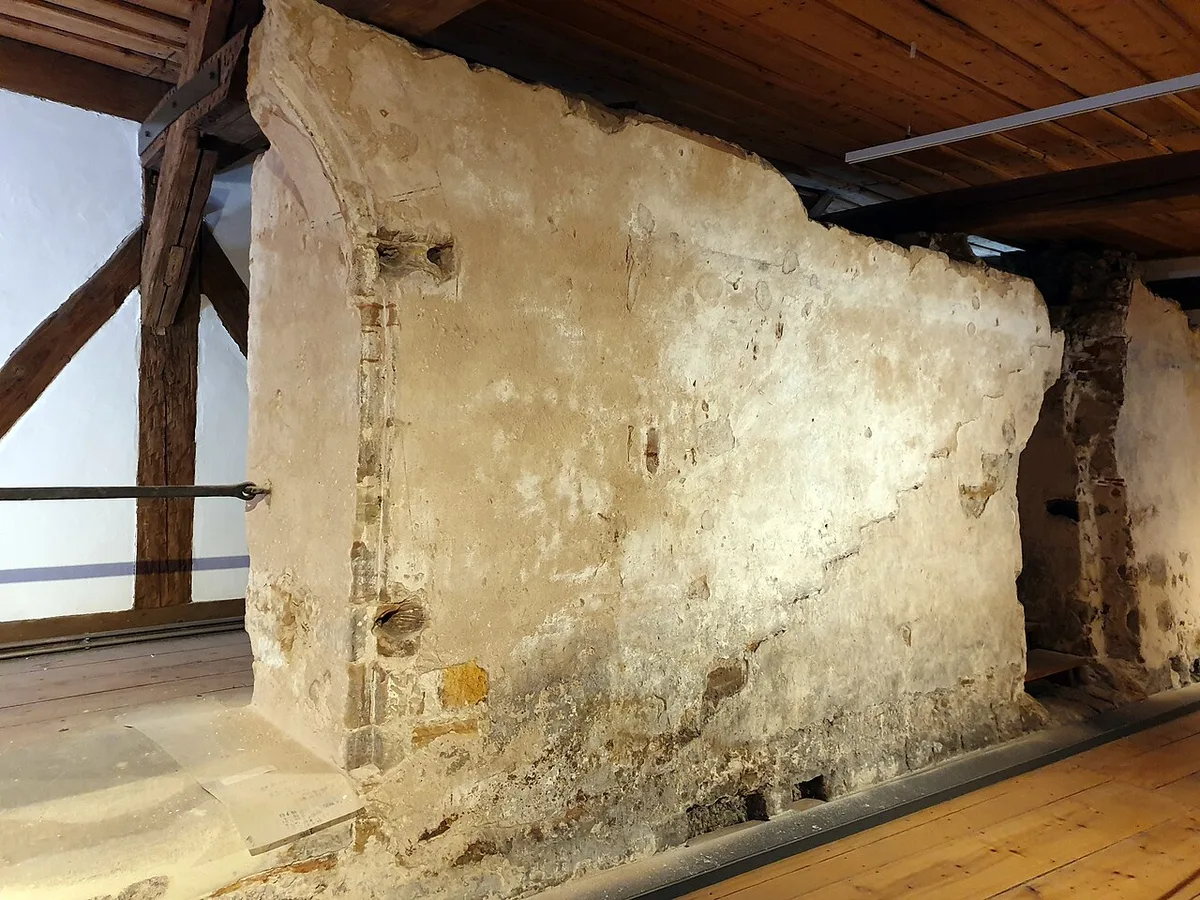
Two concessions make this the easiest museum to slot into a rainy afternoon. Children and young people up to and including 18 enter free, as do BambergCard holders, so a family or a card holder can treat the museum as a low-risk stop rather than a committed outing. A last-minute ticket from 4 pm is sold at half price, which rewards a late decision if the rain arrives in the afternoon rather than the morning.
Because the museum closes at 5 pm, the discounted window gives you roughly an hour inside, which is enough for a focused look but tight for the full galleries. Check the current exhibition programme before you commit, since several shows have run through the spring and summer with end dates in early November. For a deeper look at what the building and collection offer, the guide to the Historisches Museum Bamberg in the Alte Hofhaltung covers the layout in more detail.
Diocesan Museum and Cathedral Treasury: One Collection, One Visit
The Diocesan Museum grew out of the cathedral's old treasury, so the cathedral treasure and the museum are best understood as a single collection rather than two separate tickets. It is housed in the chapter house built by Balthasar Neumann in 1733, and the cloister doubles as a display space for sculpture from the Prince's Portal and the Adam's Gate. Highlights include the eleventh-century imperial cloaks and the papal regalia of Clement II.
Its weekly rhythm differs from the Historical Museum in one important way: Wednesday is a closing day, while the museum opens Monday, Tuesday, Thursday, Friday and Saturday from 10 am to 5 pm, and Sunday from 1 pm to 5 pm. Because that pattern shifts around public holidays, verify the current schedule on the operator site before you build a day around it rather than relying on a printed guide.
Accessibility here is unusually well documented compared with other Bamberg sights. Step-free access, a disabled parking space, seating and service dogs are all listed, and the barrier-free entrances sit on the west side of the cathedral, reached via the Mesnerhof and the Kunigundenpforte. If you need step-free routes, this is the cathedral-hill interior to prioritise.
One Wet Afternoon: Which Cathedral-Hill Museum to Choose
If you have a single wet afternoon and want to stay on the hill, the decision comes down to subject matter and timing. Choose the Historical Museum if your visit falls on a Tuesday, Thursday, Friday or Saturday and you want local and civic history alongside temporary exhibitions. Choose the Diocesan Museum if you want liturgical treasures and medieval textiles, and remember that it is the one that shuts on Wednesdays.
The calendar, not the collection, usually decides. On a Wednesday the Diocesan Museum is out, so the Historical Museum becomes the default; on a Monday the Historical Museum is out and the Diocesan Museum is open. Checking both opening patterns before you leave your hotel avoids a wet walk to a locked door.
Neither museum shares a ticket with the other, and neither includes the cathedral interior, so budget for each separately. If your time is genuinely short, the free courtyards and the cathedral square still let you see the ensemble without buying anything.
New Residence: State Rooms, Imperial Hall and Rose Garden
The New Residence faces the cathedral across Domplatz and holds the prince-bishops' state rooms, including the Imperial Hall decorated with sixteen larger-than-life portraits of emperors. In 2026 admission is 7 euros regular and 6 euros reduced, with children under 18 free, and the Rose Garden costs nothing to enter. A combination ticket covering the New Residence and Seehof Palace is 10 euros regular and 8 euros reduced.
Two parts of the building are closed until further notice because of renovation work: the Elector's Apartment and the Old German section of the State Gallery. The remaining state rooms can be visited without restriction, and the Bavarian State Collection of Paintings galleries attached to the residence are separately worth a look. Plan around the closure rather than expecting the full sequence of rooms.
The Rose Garden works as a rain break rather than a rain shelter, since it is an open terrace with a café and a wide view over the city. Use it when the sky clears, then go back inside. Because tickets are sold only at the cash desk on site, you cannot reserve ahead, so treat a visit as something to attempt on arrival rather than schedule precisely.
Checking the New Residence Before You Go
Renovation is the main variable at this site, and it changes what you actually see rather than whether the building is open. The operator publishes current notices on its German-language site as well as the English pages, and the accessibility page gives the detail you need if stairs are a problem. Read both shortly before your trip rather than relying on a guidebook printed earlier.
Opening hours follow a seasonal pattern, so confirm them for your travel dates instead of assuming a year-round schedule. The same page also lists guided tour times for the Prince-Bishop's Apartment, which run regularly during opening hours in German, while the other rooms can be walked without a guide.
If the state rooms are your priority and a closure is announced, the Diocesan Museum and the Historical Museum on the same square are the natural substitutes, both within a short walk under the arcades.
The Cathedral Itself: What to Verify on the Day
Bamberg Cathedral is the centrepiece of the hill and remains an active church rather than a museum, so its interior access depends on services, concerts and conservation work. Reliable opening hours for the interior are not published in a form this guide can state with confidence, which means the sensible approach is to check at the cathedral or through the tourist information office on the day you visit.
What you can rely on is the setting. The square outside, the surrounding courtyards and the view down to the Regnitz and the old town remain accessible in the rain, and the cathedral's exterior with its four towers is worth the walk even when the doors are shut.
For a sense of how the cathedral fits into a broader day, the landmark guides for Bamberg group the major sights by area and indicate which are interiors and which are open ground.
St. Michael's Monastery on Michaelsberg
The former Benedictine monastery above the old town offers a different kind of wet-day stop: the church interior has a narrow opening window, but the complex around it stays accessible. St. Michael's Church is open Friday to Sunday and on public holidays from 11 am to 4 pm, while the gardens, the monastery courtyard and the observation deck can be visited at all times.
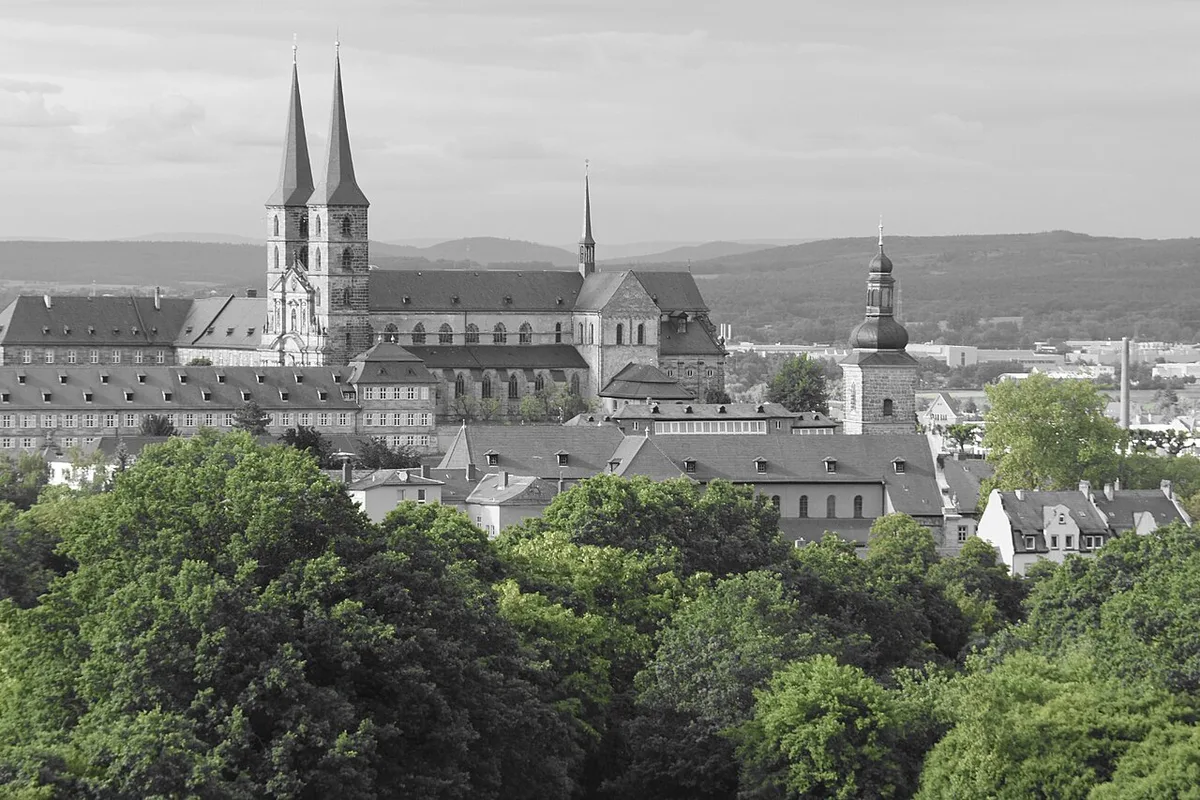
That split matters on a rainy day, because the courtyard and the Baroque terraced garden with its fountain and pavilions give you somewhere to walk under grey skies even when the church is locked. The terrace behind the church looks over the city, though the view will obviously be limited by cloud. Vines have grown on the slopes again since 2012, and vineyard visits are arranged through guided tours and events rather than on your own.
Getting there without a car is simple on weekdays, when city bus line 910 runs from the central bus station to the Klinikum Michelsberg stop. On foot, the Panoramaweg along Aufseßstraße and Benediktinerweg or the route via Maienbrunnen both climb to the complex. Parking on the grounds is limited to evenings and weekends for restaurant visitors, so treat public transport as the default.
Indoor Alternatives You Cannot Plan Precisely
Two obvious rainy-day options have to stay flexible because the reliable detail is thin. Bamberg's brewery museum on Michaelsberg is a natural fit for a wet hour given the city's brewing history, but current opening times and admission for it are not published in the sources used here, so check with the operator before making the climb. The Franconian Brewery Museum on Michaelsberg and Bamberg's Smoke-Beer Tradition explains what the collection covers.
Covered lanes and arcades get recommended often as a rain strategy, but no verified list of named passages exists in the material behind this guide, so do not rely on a specific route being under cover. The realistic approach is to use the arcades around the inner courtyards and the enclosed lanes you pass naturally between Domplatz and the riverfront, and to keep distances short rather than committing to a long outdoor walk.
Brewery tap rooms and traditional pubs are a dependable way to wait out a shower, and the old town has them within a few minutes of the cathedral hill. The city's tourism site is the best place to confirm what is currently open and which establishments are running normally.
A Suggested Order of Play for a Wet Day
A workable sequence starts on the cathedral hill in late morning, when you can walk the free courtyards and the square before committing to an interior. Move into whichever of the two hill museums is open that day, then break for lunch nearby while the worst of the rain passes. As a suggestion rather than an official figure, allow three to four hours for the hill including a meal.
In the afternoon, cross to the New Residence for the state rooms, but buy at the desk on arrival rather than planning a fixed slot. If the sky lifts, use the free Rose Garden as a pause, then return indoors. End the day in a brewery tap room or a café, which needs no ticket and no timing.
If you have only two stops in you, pair the Historical Museum or the Diocesan Museum with the New Residence, since all three sit within a couple of minutes of each other and none requires advance booking. For readers extending the stay, the 2 Days in Bamberg itinerary shows how to spread the same sights across two drier or wetter days.
Plan Around Opening Days, Not the Forecast
A rainy day in Bamberg is manageable because the old town is compact and the key interiors sit close together on the cathedral hill. The decisive information is the weekly pattern: the Historical Museum closes on Mondays, the Diocesan Museum closes on Wednesdays, and St. Michael's Church opens only from Friday to Sunday. Check those before you leave, and a wet forecast stops being a problem.
Keep the free elements in reserve. The Alte Hofhaltung courtyard, the cathedral square, the Michaelsberg gardens and the monastery courtyard cost nothing and stay accessible when other doors are shut, so they fill the gaps between timed visits. The Rose Garden is free too, and worth saving for a break in the weather.
Confirm volatile details on the operator pages shortly before travelling, because closures and renovation work change what is actually visitable. Tickets for the New Residence are only sold on site, which means flexibility matters more than a fixed schedule.
Frequently Asked Questions
Is Bamberg worth visiting on a rainy day?
Yes, provided you build the day around interiors rather than viewpoints. The cathedral hill puts a city museum, a diocesan collection and a large residence within a couple of minutes of each other, so you can move between them with minimal exposure. The main risk is a closed day rather than the weather, since the museums keep different weekly patterns.
Which Bamberg museums are open when it rains?
The Historical Museum in the Alte Hofhaltung opens Tuesday to Sunday and on public holidays, and the Diocesan Museum opens most days except Wednesday. Both are indoor. The New Residence state rooms are also indoor and open daily apart from a few holidays, though parts of it are affected by renovation work. Always confirm current times on the operator pages.
Is the cathedral treasury a separate ticket from the Diocesan Museum?
No. The cathedral treasury and the Diocesan Museum are treated as one collection rather than two ticketed attractions, so a visit to the museum covers the treasury material. Neither shares a combined ticket with the Historical Museum or with the cathedral itself.
How much does the Historical Museum in Bamberg cost?
The city museums publish the current price list, with a regular adult rate, reduced rates for seniors, students, groups and visitors with severe disabilities, and free entry for children and young people up to and including 18 as well as BambergCard holders. A last-minute ticket from 4 pm is sold at half price. Rates can change, so check the official page before your visit.
Do you need to book the New Residence in Bamberg in advance?
No advance booking is offered. Tickets for the New Residence are sold only at the cash desk on site, so you cannot reserve a slot ahead. That makes it a good flexible stop, but it also means arriving without a guarantee, and renovation work currently keeps the Elector's Apartment and part of the gallery closed.
Can you visit St. Michael's Monastery in the rain?
Partly. The church interior has a limited opening pattern, generally Friday to Sunday and public holidays, while the gardens, monastery courtyard and observation deck stay accessible at all times. Renovation work is continuing across the site, so the courtyard and gardens are the dependable part of a wet visit.
Does it rain a lot in Bamberg and Bavaria?
Bavaria sees rain across the year rather than in one concentrated season, and Bamberg is no exception, so a wet day can arrive in almost any month. Rather than chasing a dry forecast, plan a mix of indoor sights and free courtyards so a change in the weather never leaves you without an option.
Sources
- Bamberg Tourismus
- Informationen zum Historischen Museum Bamberg | museum.bamberg - Museen der Stadt Bamberg
- Englisch - Museen der Stadt Bamberg
- Startseite
- DiözesanMuseum Bamberg (Diocesan Museum Bamberg) - Museen in Bayern
- St. Michael's Monastery - Bamberg Tourismus
- General information
- Bavarian Palace Administration | Palaces | Bamberg New Residence
- Bavarian Palace Administration | New Residence in Bamberg | Tourist information | Admission charges
- Bayerische Schlösserverwaltung | Neue Residenz Bamberg | Besucher-Information | Eintrittspreise
- Alte Hofhaltung – visit Bamberg


