

Bamberg's brewing story starts on the hill above the old town. The former Benedictine monastery of St. Michael's was founded around 1015 on the initiative of Emperor Henry II, and Benedictine life shaped the site until secularization in 1803. Brewing belonged to that self-sufficient monastic economy, which is why the complex reads as an origin story for the city's beer culture.
One confirmed detail shapes everything else. St. Michael's Monastery Church is currently open only from Friday to Sunday and on public holidays, from 11 am to 4 pm, while the gardens, monastery courtyard and observation deck are accessible at all times. Renovation work continues across the whole site, so treat the church as a scheduled stop and the outdoor ensemble as the flexible part of the day.
The second decision is how much time to spend on the hill versus in the old town. Rauchbier tap rooms sit down in the valley, within walking distance of the cathedral square, and they make more sense once the exhibits have explained what smoked malt actually is. For a wider view of the city first, start with the Bamberg: Landmark Visitor Guides and the Bamberg: Itineraries and City Travel Guides.
Why Michaelsberg Is the Right Starting Point
Bamberg's brewing reputation grew out of its monasteries before it became a visitor attraction. St. Michael's was founded around 1015 at the instigation of Emperor Henry II, gained considerable importance under Bishop Otto I in the 12th century, and remained in Benedictine hands until secularization in 1803, developing into one of the largest and wealthiest monasteries in Europe. Brewing was part of that monastic economy, which is why the hill reads as an origin story rather than an arbitrary museum location.
The building you walk through today is largely a Baroque rebuild rather than a medieval brewery ruin. Earthquakes, fires and wars repeatedly damaged the monastery, and the 17th and 18th century renovations gave the church, abbey wings, convent building, forecourt and gardens their current appearance, an ensemble largely credited to the Dientzenhofer brothers. That matters for how you read the place: it is a designed monastic landscape.
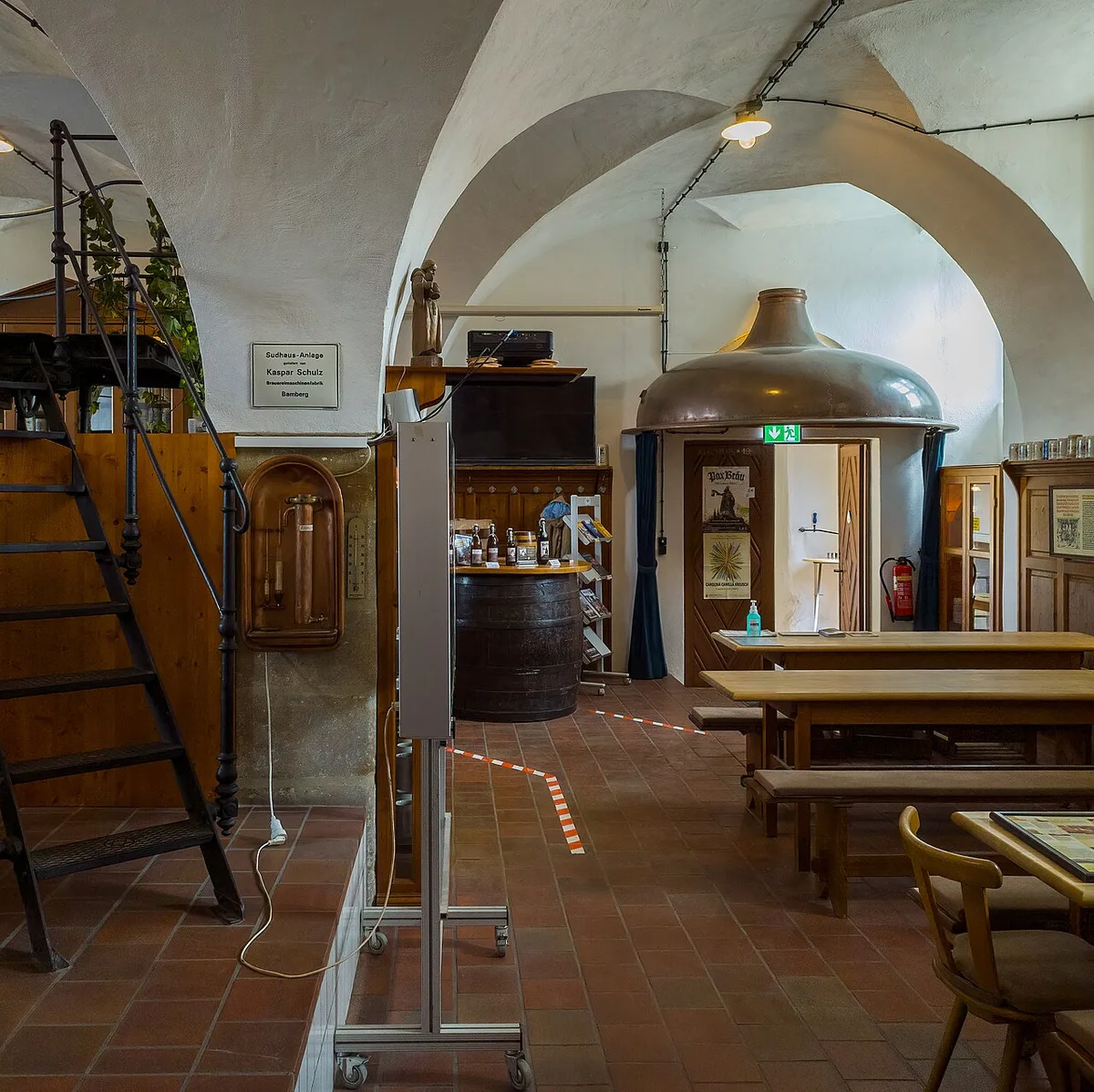
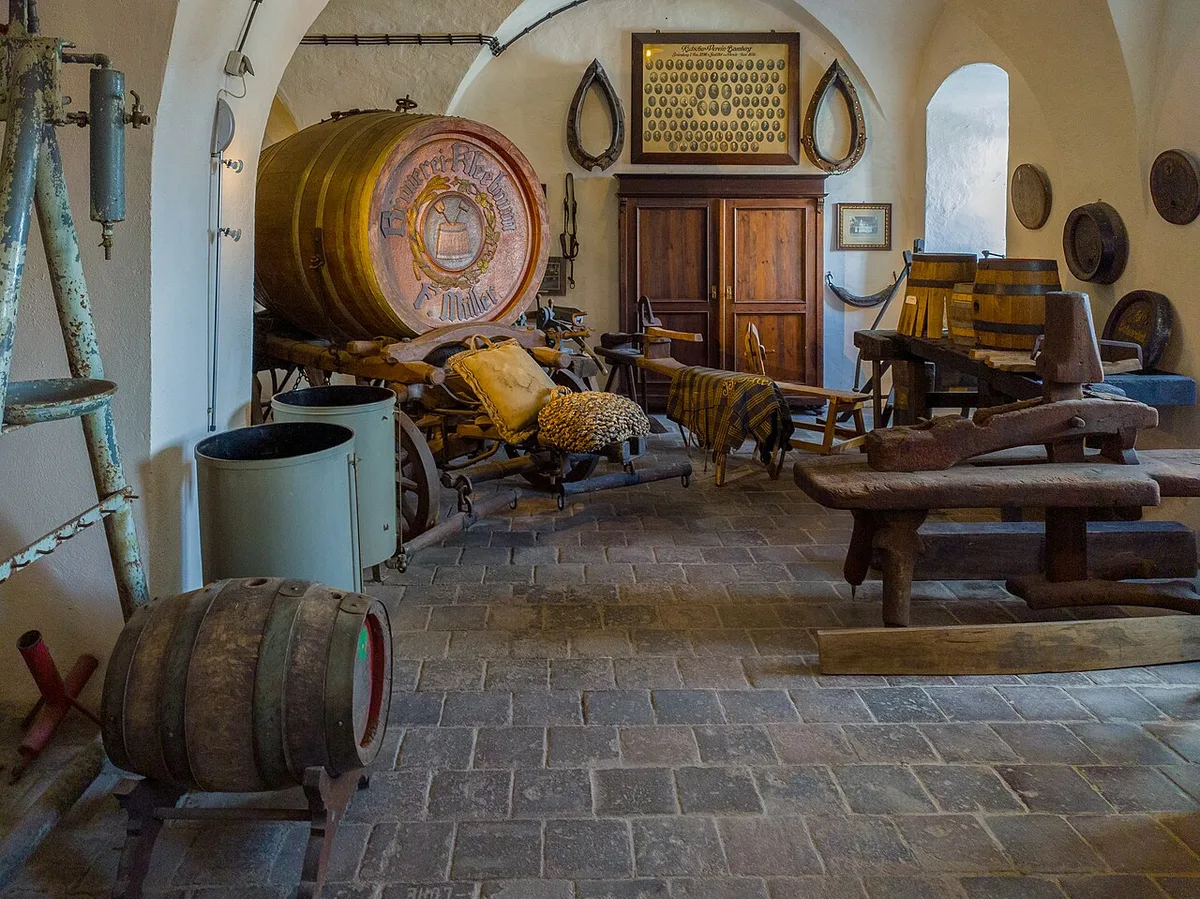
One building check before you rely on any map. The Franconian Brewery Museum sits inside this complex, but its own exhibitions, admission and opening hours are not confirmed in the material this guide is based on. Confirm those directly with the Franconian Brewery Museum's official page and its Bamberg tourism listing before you plan the day around an interior visit, and do not assume one ticket covers everything on the hill.
What You Actually See on Michaelsberg
The site works as a landscaped ensemble rather than a single building. Alongside the monastery church and abbey wings you get the forecourt, extensive orchards, a vineyard and a Baroque terraced garden with a fountain and two pavilions, plus a terrace behind the church that opens onto a panoramic view over Bamberg. Vines have grown on the slopes again since 2012.
The complex is owned by the Bamberg Citizens' Hospital Foundation, which also runs an abbey shop on Michelsberg selling products from the abbey garden and uses it as the information point for visitors. That shop is the practical anchor on site and the place to ask when you arrive and find something fenced off. For the architecture in more depth before you climb, the Michaelsberg Abbey Bamberg visitor guide covers the complex building by building.
Renovation, Access and What to Check Before Climbing
The high risk of collapse in the church became known in 2012, and since then visitors have been able to use the monastery courtyard and gardens while construction proceeds. Current access reflects that work: St. Michael's Church is open Friday to Sunday and on public holidays from 11 am to 4 pm, while the gardens, the monastery courtyard and the observation deck are accessible at any time. No completion date is published, so do not plan around a fully reopened church.
That split creates a clear trade-off. The free, always-open grounds are the reliable part of a visit, so you can climb the hill on any day and still see the terraced garden, the courtyards and the city view. The church interior is the constrained part, which means a Monday to Thursday visit is best treated as an outdoor landscape visit, with the church as a reason to return at the weekend.
Access to the church is free, and no ticket is required for the courtyard, gardens or observation deck. Anyone planning an interior museum visit must confirm the museum's own admission and hours separately, because those are not published in the material about the monastery complex. Visits to the vineyard, by contrast, can be arranged as part of guided tours and events.
Getting Up the Hill and Orienting Yourself
Walking is the standard approach. The complex can be reached on foot via the Panoramaweg along Aufseßstraße and Benediktinerweg, or via Maienbrunnen, both climbing from the old town side. On weekdays, city bus line 910 runs from the central bus station to the Klinikum Michelsberg stop, which is the practical option if you are carrying luggage or arriving on a wet day.
Parking is the main constraint for drivers. Parking on the grounds is only available in the evenings and on weekends for visitors to the restaurants, so a daytime arrival by car leaves you looking for street parking below the hill. Build in a walk either way and treat the climb as part of the visit rather than an inconvenience.
Once you are up, orient yourself around the terrace behind the church and the abbey garden. The information centre in the abbey shop gives you a fixed point, and from the terrace the old town spreads out below, which usefully shows how short the walk down to the rauchbier bars is. This is also where a companion guide such as the Michaelsberg Abbey Bamberg visitor guide helps you identify individual buildings.
The Brewing Legacy Behind Bamberg Rauchbier
Monasteries brewed partly to stay self-sufficient, and Bamberg's brewing identity grew from that religious foundation. The popular account holds that smoked beer emerged when a fire in a religious foundation smoked stored barley, and that monks were permitted to brew during the Middle Ages. Treat that as the story rather than a documented date, while the link between monastic brewing and Bamberg's later brewery economy is real.
The scale of that economy is easier to grasp through numbers. Franconia still has one of the densest concentrations of working breweries anywhere, with nearly 300 breweries shared by a population of around four million, and Bamberg has historically supported several breweries ranging from small brewpubs to large export operations. According to one long-form beer travel account, the city was home to eight breweries at the time of that visit, down from around 60 in the 1850s.
For the on-the-ground version of the tradition, pair what you read with the Visiting Schlenkerla in Bamberg guide, which covers the city's best-known rauchbier tap room rather than the museum. The connection between the two is direct: one explains the process, the other lets you taste the result.
What Defines a Bamberg Rauchbier
The defining step is the malt, not the water or the yeast. Green malt is dried over an open fire, and in Bamberg the fuel of choice is dry beech wood, usually seasoned for several years, which is what gives the beer its smoke rather than a campfire harshness. Only a few breweries still kiln their own malt, as the smoke source directly determines the aroma and flavour of the finished rauchbier.
A second variable is time and flame control. According to one account of the process, barley may be exposed to smoke for something on the order of 36 hours, and the brewer adjusts the fire during kilning to hold a profile consistent with beers made centuries earlier. That is the detail worth carrying from any exhibit to the glass: the smoke is a manufacturing decision, not a flavouring added afterwards.
In the tap room, watch for the vocabulary that signals it. A beer labelled Aecht, meaning real, is brewed with the brewery's own smoked malt, and some Bamberg rauchbiers are still served from oak casks by gravity in the traditional houses. If you are building a route around this, the Bamberg: Itineraries and City Travel Guides help you slot a tasting stop into a day that already includes the hill.
Matching Tap Rooms to What the Exhibits Explain
Bamberg's classic rauchbier addresses cluster around the old town, within walking distance of the cathedral square and the river. Brauerei Spezial on Obere Königsstraße has brewed smoked beer since the 16th century and is one of the few houses still kilning its own malt, while the Schlenkerla tap room on Dominikanerstraße occupies the old brewery building and has served rauchbier from oak casks by gravity. Both are natural complements to an exhibit about smoked malt.
Not every brewery in the city brews with smoke. Some Bamberg houses deliberately produce only unsmoked lagers, dark beers and seasonal bocks, which is exactly why it pays to read the menu rather than assume. If smoked malt is the point of your visit, ask which beers are rauchbier before ordering, and use what the exhibits taught you to tell the difference.
A useful habit is to taste earlier in the day. A tap room that opens in the morning can be quiet before the tour groups arrive, and you get a clear first impression of the smoke before your palate is crowded by a full meal. Prices, beer lists and seasonal closures change constantly, so check each brewery's current information on the day rather than relying on any older published list.
Adding City Museums and the Residence to the Day
Bamberg's city museums have their own separate tickets and hours, so never assume one admission covers several venues. The Bamberg Historical Museum sits in the Alte Hofhaltung on Domplatz and is open Tuesday to Sunday and on public holidays from 11 am to 5 pm, with adult admission at 8 euros and free entry for children and young people up to 18 as well as for BambergCard holders among others. Reduced rates apply to groups of ten or more, seniors from 65, students from 19 and visitors with severe disabilities, and a last-minute ticket from 4 pm is half price.
That makes the Historical Museum the strongest addition if you want more museum time after the hill, since it shares the cathedral square with the New Residence and the Old Court. An exhibition running from 26 March to 1 November 2026 explores the Old Court's layered architectural history a few steps from the Michelsberg panorama. If rain is forecast, the Bamberg on a rainy day guide covers how to shift the plan indoors.
For the princely side of the city, the New Residence on Domplatz has separate admission at 7 euros regular and 6 euros reduced in 2026, with a combination ticket covering the New Residence and Seehof Palace at 10 euros regular and 8 euros reduced, children under 18 free, and tickets sold only at the cash desk on site. The Elector's Apartment and the Old German section of the State Gallery are not accessible until further notice because of renovation, while the other state rooms can be visited without restriction. The Rose Garden itself is free, and the Alte Hofhaltung Bamberg sits on the same square if you want to see the Historical Museum's building from outside.
Half-Day and Full-Day Plans on the Hill
A suggested half day on Michaelsberg runs roughly two to three hours, and that is a planning suggestion rather than an official figure. Walk up via the Panoramaweg, spend time in the monastery courtyard and the Baroque terraced garden, take the terrace view behind the church, and finish at the information centre in the abbey shop. If the church is open, add time inside rather than treating it as a five-minute stop.
A full day adds both an interior and the valley. Budget the morning for the hill, walk down through the old town for rauchbier and lunch, then use the afternoon for one ticketed museum on the cathedral square. Keeping to one paid interior per day avoids collecting admissions you only half use and leaves room for a second tasting stop.
Two mistakes are common here. Some visitors assume the monastery church is open daily and discover on arrival that it is not, while others assume the free grounds and the paid collections share a ticket. Check the church opening pattern before climbing, and buy museum admission at the venue where you actually intend to spend time.
Practical Notes Before You Go
Dates move, and Bamberg's museum calendar proves it. The E.T.A. Hoffmann House is closed during renovation and scheduled to reopen in 2028, and the Ludwig Collection has moved its display space while the Old Town Hall undergoes extensive renovation. Any current programme should be confirmed on the operator's site rather than from a guide written years earlier.
For anything ticketed, check the venue's own page for the period you are travelling, because hours shift by season. The Historical Museum and the New Residence each publish their own opening times and prices, and each is titled separately so you can see exactly what a ticket includes. The wider Bamberg tourism site is the place to confirm the monastery church's current access before you climb.
Weather matters more than you might expect on an exposed hilltop site. The courtyards and terraced garden are outdoor spaces, so a windy or wet day changes the experience even though access is technically always possible. Save the church and any museum interior for the poorer half of the day if the forecast looks unsettled.
Plan Your Visit
Treat Michaelsberg as two visits in one: the free outdoor complex, which you can walk any day, and the church, which is limited to Friday to Sunday and public holidays from 11 am to 4 pm while renovation continues. Plan the outdoor half around your own schedule and the church around its advertised window, not the other way round.
Then take the brewing story downhill. Use what you have learned about smoked malt and beech wood and the old-town tap rooms to taste the difference, checking current beer lists and hours directly with each brewery. Finish with one ticketed museum on the cathedral square, knowing that admission is per venue.
Frequently Asked Questions
Can I visit the Franconian Brewery Museum itself, and what is confirmed?
The monastery complex around it has confirmed access, but the museum's own exhibitions, admission and opening arrangements are not treated as settled here and should be checked on the museum's own page and its Bamberg tourism listing shortly before you travel. What is confirmed is the site itself: St. Michael's Church is currently open Friday to Sunday and on public holidays from 11 am to 4 pm, and the gardens, monastery courtyard and observation deck are accessible at all times while renovation work continues across the site.
Do I need a ticket for the abbey church, courtyard and terrace?
No. Access to St. Michael's Church follows its published opening window, and the courtyard, gardens and observation deck can be visited at any time without a ticket. Ticketed collections elsewhere in Bamberg are separate, so do not assume that one admission covers the monastery grounds and a city museum on the same day. Buy museum tickets at the specific venue you intend to enter.
How long should I allow for the monastery complex and a rauchbier stop?
A suggested half day of roughly two to three hours covers the courtyard, the Baroque terraced garden, the terrace view and the abbey information centre at a relaxed pace, though this is a recommendation and not an official figure. Add an hour or more if the church is open or you want a guided look at the vineyard. A full day lets you walk down into the old town for rauchbier and lunch and still fit one ticketed museum on the cathedral square.
Which Bamberg museums are worth combining with a Michaelsberg visit?
The Bamberg Historical Museum in the Alte Hofhaltung on Domplatz is the closest fit, since it shares the cathedral square, keeps similar daytime hours and has separate admission with free entry for under-18s among other groups. The New Residence opposite adds princely state rooms and a free Rose Garden, with its own ticket and its own renovation restrictions. Both are independent venues, so verify current opening times and prices on each operator's site before you go.
What makes Bamberg's rauchbier different from other smoked beers?
The smoke comes from drying malt over an open beech wood fire, with the wood typically seasoned for several years, and the brewer controls the flame during kilning to hold a consistent profile. Only a handful of Bamberg breweries still kiln their own malt, which is why the local rauchbier is closely tied to specific houses and labelled Aecht, meaning real, when brewed with their own smoked malt. The result is a beer where smoke is part of production rather than an added flavour.
Sources
- The Beer Trotter: Enjoying a Franken stein in Bamberg
- Informationen zum Historischen Museum Bamberg | museum.bamberg - Museen der Stadt Bamberg
- 7 Awesome Things To Do in Bamberg, Germany
- Englisch - Museen der Stadt Bamberg
- St. Michael's Monastery - Bamberg Tourismus
- General information
- Bavarian Palace Administration | Palaces | Bamberg New Residence


