

Augsburg rewards a short stay because its historic core is walkable and its water heritage sits just beyond it, so two days can cover both without rushing. A workable structure is to give day one to the Old Town and the Fuggerei and day two to the Lech canals, the Eiskanal and one museum. One family who spent several days in the city reports that most sights can be reached on foot or by bike, which suits a two-part plan, and describes the Fuggerei as just over five minutes' walk east of the town hall.
Treat everything below as a suggested shape rather than a fixed schedule, because opening hours, ticket scope and renovation closures change with the season. Before committing to any interior or ticketed collection, check the operator's own page for the day you plan to visit. Two days is enough for the headline sights if you resist adding a second or third museum.
Before You Start: Choosing the Single Museum for Day Two
The most common two-day mistake is trying to see three or four museums, which eats the time you need for the canals. Pick exactly one in advance and let the rest of day two stay flexible. If the weather turns wet, that museum becomes your shelter; if it stays dry, the canal walk takes priority and the museum can shift to the following morning.
Augsburg offers a wide menu rather than one obvious choice. A family-friendly option is the Feuerwehrerlebniswelt, an interactive firefighting museum spread over more than 3,000 square metres, which one family reported filling about two hours with hands-on rooms, vehicles and an earthquake simulator. A quieter alternative is the Naturmuseum, which the same family visited on a rainy morning and found strong on animal and plant collections, with a planetarium offering shows at set times.
If art and city history matter more to you, the Maximilianmuseum and the Schaezlerpalais are the better fit, while the Textil- und Industriemuseum covers the industry that shaped the Lech. Museum opening patterns in Augsburg are not uniform and some venues keep limited hours, so decide on the museum before you leave your accommodation rather than on the doorstep.
Day 1 Morning: Rathausplatz, the Town Hall and the Perlach Tower
Start at Rathausplatz, the cobbled square that anchors the Old Town between Maximilianstrasse and the Fish Market. The Renaissance town hall dominates it, topped by a pine-cone emblem that signals the city's Roman origins. This is the natural orientation point for a first morning, with cafes, shops and tourist information around the edges.
The town hall's Golden Hall and Prince's Hall are the reason many people go inside, but interior access is not guaranteed. One family in 2024 found the interior closed for renovation at the time of their visit, which shows why you should confirm current status with the city before planning around it. The roughly 70-metre Perlach Tower beside the building has served as an observation point, but check whether it is open on your dates.
Do not treat the square as a five-minute photo stop. There are fountains, the Perlach Church and a steady flow of events through the year, from concerts to the December Advent fair. A slow circuit of the square and the first stretch of Maximilianstrasse covers a lot of Augsburg's architectural range without any ticket at all.
Day 1 Late Morning: The Cathedral and Augsburg's Roman Traces
From Rathausplatz, walk to the Cathedral, a Romanesque and Gothic building with square towers known for its medieval stained glass. Founded in the twelfth century and rebuilt in stages, it survived the Second World War unusually intact for a German cathedral of its size. A day-trip account singles out the frescoes as the feature that sets this cathedral apart from others, so allow time inside rather than treating it as a quick look.
The park beside the cathedral, the Fronhof, contains Roman tombs and statues, a reminder that Augsburg began as a Roman foundation. The same day-trip account notes Roman ruins still visible in front of the cathedral, which makes this the easiest place in the city to touch that layer of history. It is a good spot to slow down and let children run before lunch.
If church interiors interest you, the pilgrimage basilica of St. Ulrich and Afra further along Maximilianstrasse is often described as the more striking of the two from the outside. Choose according to your appetite for religious architecture and how much time you want to reserve for the afternoon. Neither stop requires advance booking.
Day 1 Afternoon: The Fuggerei and What the Ticket Covers
The Fuggerei is Augsburg's most unusual sight: a walled social housing estate founded by Jakob Fugger in the early sixteenth century and still in use today. The original houses date to the 1516 to 1523 period, and the complex later grew to roughly 140 apartments in about 67 buildings. Walking the streets is the main experience, and an entrance fee applies to the site and its museum rooms.
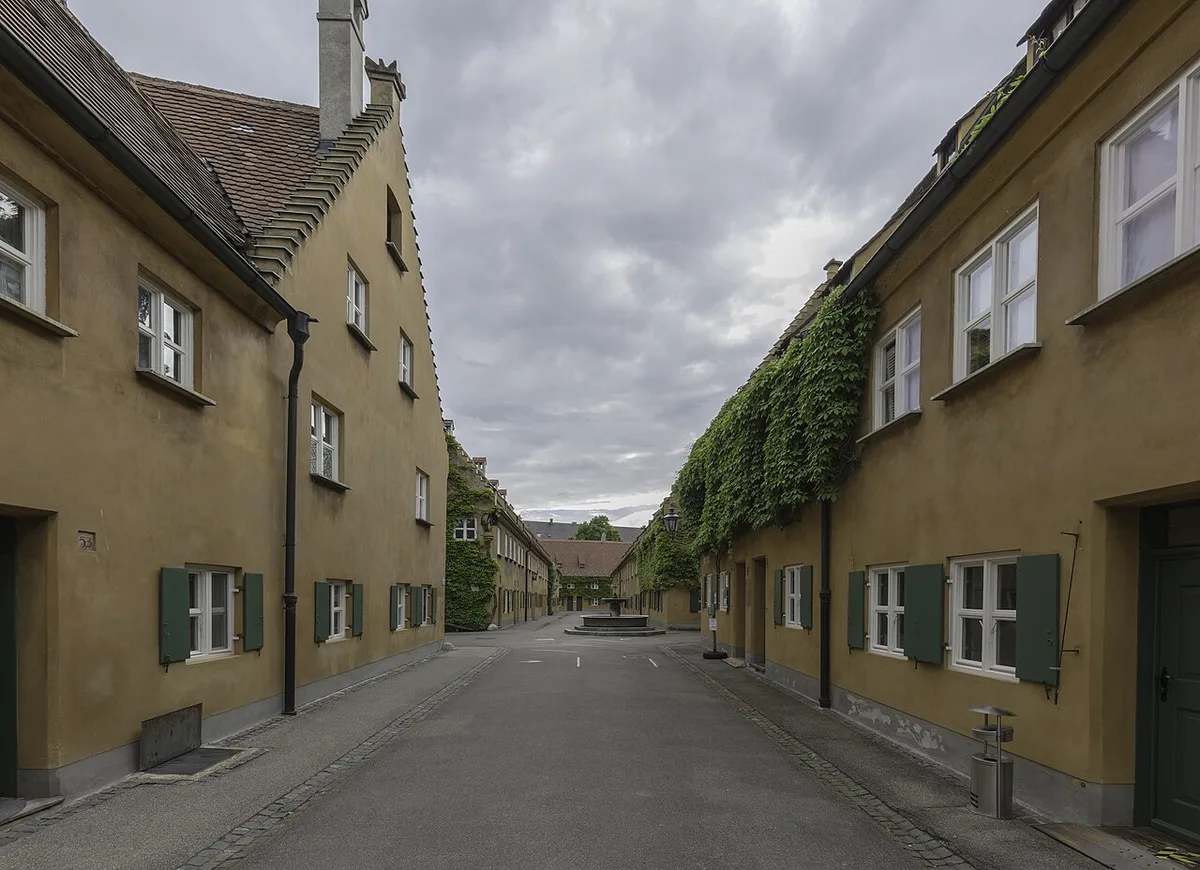
Be clear about what you are buying, because the estate is not a single all-inclusive attraction. A paid ticket opens the museum spaces, including an apartment with period furnishings, but visitors should not assume the whole neighbourhood is one open-air free zone or that every building is visitable. One family reported paying a family ticket rate of 18 euros in 2024; pricing changes, so confirm the current tariff at the entrance or on the operator's site rather than relying on older reports.
The nominal annual rent paid by residents is often repeated as a curiosity, and travel accounts report it as a token yearly sum of 88 cents under a longstanding foundation arrangement, excluding utilities. Treat that as historical context rather than a fact to plan around, and do not confuse it with what tourists pay. The Fuggerei lies east of the town hall and is reachable on foot from the centre, which makes it an easy late-afternoon addition to day one.
Day 1 Evening: Dining Around Rathausplatz and Pacing the Old Town
End day one with dinner close to where you started, because the Old Town's density is its advantage in the evening. Options that trip-planning resources have listed include the Ratskeller in the vaulted basement of the town hall, the historic Altstadtgasthaus Bauerntanz, and lighter choices around Rathausplatz such as Dean & David. Availability and hours shift, so check ahead if a particular table matters to you.
Keep the evening short if you plan a full day two, because the canal walk needs daylight and energy. A stroll along Maximilianstrasse after eating covers the illuminated facades without adding distance. If your visit happens to coincide with a seasonal light festival in the squares, treat it as a bonus rather than something to schedule a trip around, since such events run on their own annual calendar.
Day 2 Morning: The Lech Canals as a Water-Heritage Walk
Day two moves from stone to water. The Lech canal system is Augsburg's UNESCO-listed water heritage, a network of channels that once drove mills, tanneries, paper works and later electricity generation. One family account describes the system as 29 canals with a total length of 77 kilometres and over 500 bridges across the city, but treat such counts as report-based rather than official figures. What matters for planning is that this is a district to walk, not a single sight.
Start in the centre, where channels and historical water towers sit near the red-brick Rotes Tor, and then head north. The Rotes Tor area has an exhibition related to the water system, and guided tours of the canals are organised by Regio Augsburg, which is the best way to understand the engineering if your schedule allows. Book those through the operator rather than assuming a daily departure.
Allow a half day rather than an hour, because the walking stretches out and public transport becomes useful. This is the section of the itinerary where a bike or a tram hop saves the most time. Check local route options on the day, since service details and canal-side paths can change with maintenance work.
Day 2 Midday: The Eiskanal and the Former Olympic Course
The Eiskanal is the striking centrepiece of the canal landscape: the world's first artificial whitewater course, built for the 1972 Munich Summer Olympics. It still hosts major kayak competitions, including world championships, and sits in a green setting with walking paths around it. Even without an event on, watching the water run through the course is worthwhile.
Combine the Eiskanal with the Hochablass dam and the northern Stadtwald, where the same family account describes spending a day walking and cycling along the Lech. There is a small car park near the start of the park if you drive, which is useful given how far this area sits from the Old Town. Bring weather-appropriate layers, since the canal corridor is exposed.
Do not expect a compact ticketed attraction with set hours. The draw here is the landscape and, when the calendar allows, competition viewing, so check any event programme separately if that is your reason for coming. Otherwise, treat the Eiskanal as the natural lunch stop between morning and afternoon.
Day 2 Afternoon: Your Museum, Matched to Weather and Company
This is where the single-museum decision pays off. If rain has set in, move your chosen museum to this slot and shorten the canal walk; if the day is clear, keep the museum late and extend the water-side time. The Naturmuseum with its planetarium suits mixed ages and rainy hours, while the Feuerwehrerlebniswelt is the stronger choice for children who want to touch everything.
Adult-oriented travellers may prefer the Maximilianmuseum for city history or the Schaezlerpalais for art in historic rooms. Whichever you choose, verify the day's opening hours directly, because Augsburg's museums do not follow one shared timetable and some close on particular weekdays. The same family reported paying 38 euros for a family card at the Feuerwehrerlebniswelt in 2024, but current admission should be checked with the operator before you go.
If you are travelling with children and the weather is kind, the zoo in the northern part of the city is an alternative to any museum, with a large site dating to the 1930s. It pairs naturally with the canal and Stadtwald side of town, so it can replace the museum without breaking the day's geography.
Day 2 Evening: Brewery Fare and a Buffer for Add-Ons
Finish with a brewery meal, which is one of Augsburg's genuine pleasures. Riegele, a house with centuries of brewing tradition, has a restaurant with Swabian dishes, a beer garden in warmer months and a shop at the entrance; a visitor reported enjoying Spätzle, meat specialities and Kaiserschmarrn there, along with a small play area for children. Beer gardens across the city open seasonally, so plan around the weather rather than a fixed list.
Keep the final evening loose enough to absorb a delayed museum visit or a longer canal walk. If you have an early departure the next morning, eat closer to your accommodation instead of crossing the city. The point of a two-day plan is coverage, not completion, and leaving one thing undone gives you a reason to return.
Extra Time: Textile Museum, the Puppet Theatre or a Day-Trip Swap
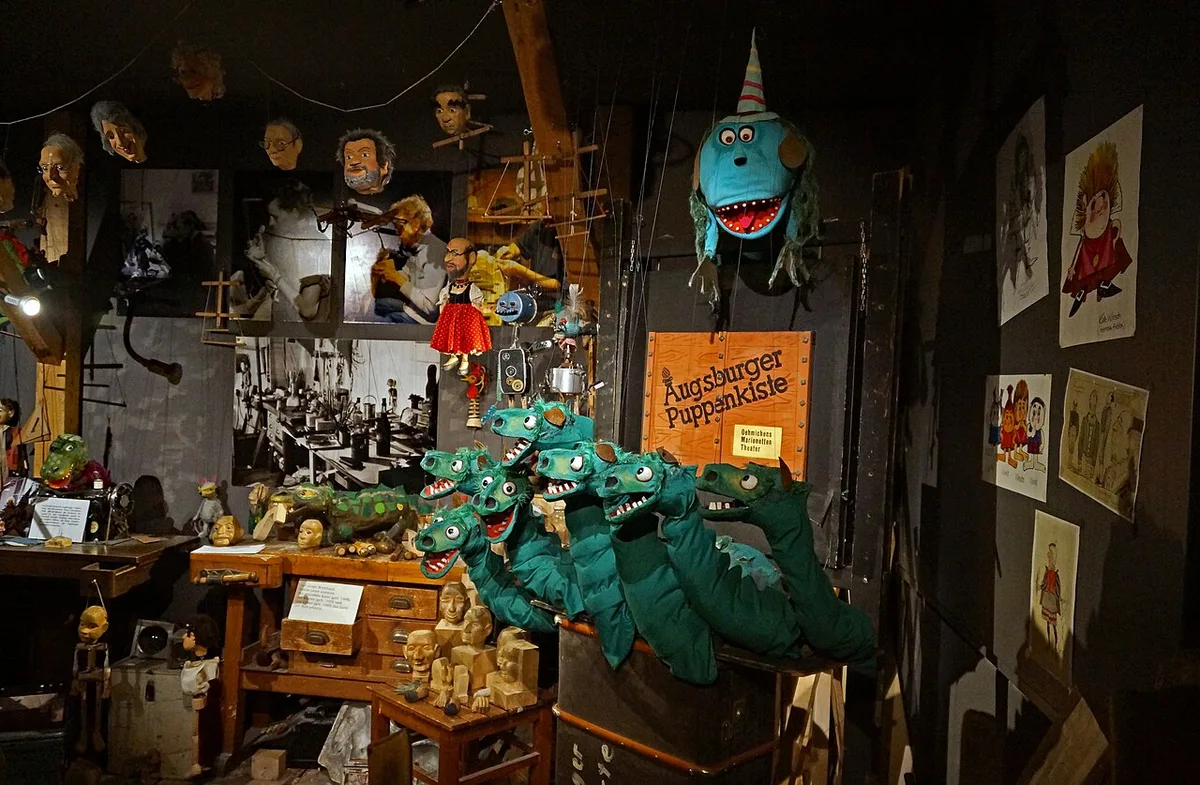
A third day in Augsburg can absorb the sights that did not fit: the Textil- und Industriemuseum, the Augsburger Puppenkiste with its marionette performances and museum, the Leopold Mozart House, or the MAN Museum. The puppet theatre has been based in a seventeenth-century former hospital building since the 1940s, and its programme mixes children's shows with evening performances for adults. Check its schedule, since performances are ticketed and not continuous.
If Augsburg is your base rather than a stand-alone stop, a Munich day trip is a reasonable third-day swap. One 2023 account describes the journey as 30 to 45 minutes depending on the train, with trains running several times an hour and a total reported cost of roughly 30 euros round trip in 2023. Buying on the day or in advance changes the cost, so compare options and current fares before committing.
Nearby options also include the Romantic Road towns and Legoland, which one family account places about half an hour from the city. Treat any of these as a substitution for a third Augsburg day, not as a compression of the two days above. Mixing them into a two-day plan simply means cutting something in the Old Town or on the canals.
Practical Cautions: Hours, Tickets and Renovation Closures
Nothing in this itinerary is fixed, and the items most likely to change are the ones people plan around most tightly: interior access, ticket prices and seasonal event schedules. The town hall interior is the clearest example, since renovation can close rooms that guidebooks describe as open, as one family found in 2024. Before you travel, check the city tourism pages and each venue's own site for current status.
Where a source gives a price or a time, treat it as a historical report rather than a current figure, because published details age quickly. Verify at the door, on the operator's website or by phone for anything that affects your budget. This applies to museum admission, the Fuggerei ticket scope, brewery tours and any transport fares you intend to rely on.
Finally, do not assume any restaurant, shop or attraction is permanently open or closed based on an older review. Seasonal closures, renovation and changes of operator are normal in a city this size. Build one flexible block into each day so an unexpected closure costs you an hour rather than half your trip.
Plan Your Visit
Two days in Augsburg work when you accept the trade-off at the centre of this plan: depth in the Old Town on day one, breadth along the water on day two, and exactly one museum rather than three. That structure fits the city's geography, keeps walking manageable and leaves room for the meals and detours that make a short trip memorable.
Use the city's official tourism information to confirm opening hours, ticket scope and any renovation closures before you arrive, since those are the details most likely to differ from older accounts. If you decide to extend, the three-day version of this plan absorbs the museums and attractions that two days cannot hold.
Frequently Asked Questions
Is Augsburg worth visiting for two days?
Yes, if you want a compact historic city with a strong water-heritage story. Two days let you cover the Old Town, the cathedral, the Fuggerei and the Lech canal landscape without rushing, and much of the centre is walkable. The main limit is interior access at some sights, so check current status before building your day around a specific room or exhibition.
Is two days enough to see Augsburg?
Two days are enough for the headline sights if you choose one museum rather than several. Day one suits the Old Town and the Fuggerei, and day two suits the canals, the Eiskanal and a single museum. If you also want the puppet theatre, the textile museum and a Munich day trip, plan on a third day instead of compressing everything.
What should I see first in Augsburg Old Town?
Start at Rathausplatz, where the town hall and the Perlach Tower give you the city's scale and its Renaissance character in one stop. From there the cathedral and the Fronhof park with its Roman traces are a short walk, and the Fuggerei follows naturally to the east. Beginning here means the rest of day one flows without backtracking.
Do the Fuggerei apartments cost anything to visit?
An entrance fee applies to the site and its museum rooms, but the exact tariff and what it covers should be confirmed with the operator, because published prices go out of date. One family reported a family ticket rate in 2024, which is a historical report rather than a current figure. The residents' token rent is a separate historical matter and is not what visitors pay.
Can I see Augsburg as a day trip from Munich instead?
Yes, trains connect Munich and Augsburg frequently, and the station sits within walking distance of the centre, so a day trip is practical. One day, however, forces a choice between the Old Town and the canals rather than both. Treat a day trip as a highlights visit and a two-day stay as the version that covers the city properly.


