

The Kunsthalle Augsburg im Glaspalast is Augsburg's municipal museum for modern and contemporary art, occupying the ground floor of a light-filled industrial building in the Textilviertel. It shows changing special exhibitions and presentations drawn from the Sammlung Neue Kunst in two halls known as H1 and H2. The one thing that trips up first-time visitors is the name: older listings, maps and even a museum app label the same venue H2 - Zentrum für Gegenwartskunst. Nothing moved and nothing closed; the museum was founded under that name and later adopted Kunsthalle Augsburg, so if you are standing in front of the Glaspalast you are in the right place.
What the Kunsthalle Augsburg im Glaspalast Is Today
Since 2006 the Kunsthalle has been the home of the city's modern and contemporary collection, run by Kunstsammlungen & Museen Augsburg under director Jan T. Wilms. The operator describes two halls, H1 and H2, with a combined area of 2,700 square metres devoted to special exhibitions and rotating collection presentations. Programming covers 20th-century art and contemporary work from regional, national and international contexts, supplemented by public tours, concerts, readings, artist talks and panel discussions.
Older English-language travel pages describe the same museum as the H2 Centre of Contemporary Art, sometimes giving a smaller exhibition area of around 1,500 square metres and stating that it opened in 2006 as the newest addition to the Augsburg museum scene. Those pages remain useful for the collection and programming story, but the figures predate the operator's current description of 2,700 square metres across both halls. Treat the operator's page as the authoritative version of scale, name and remit.
If you are planning a wider museum day in Augsburg, this venue is one stop rather than the whole story, and the city's landmark guides cover the full spread of sights and neighbourhoods. It makes sense to slot the Kunsthalle into a morning or afternoon rather than building the day around it alone.
A Daylight Factory Built for Looking at Art
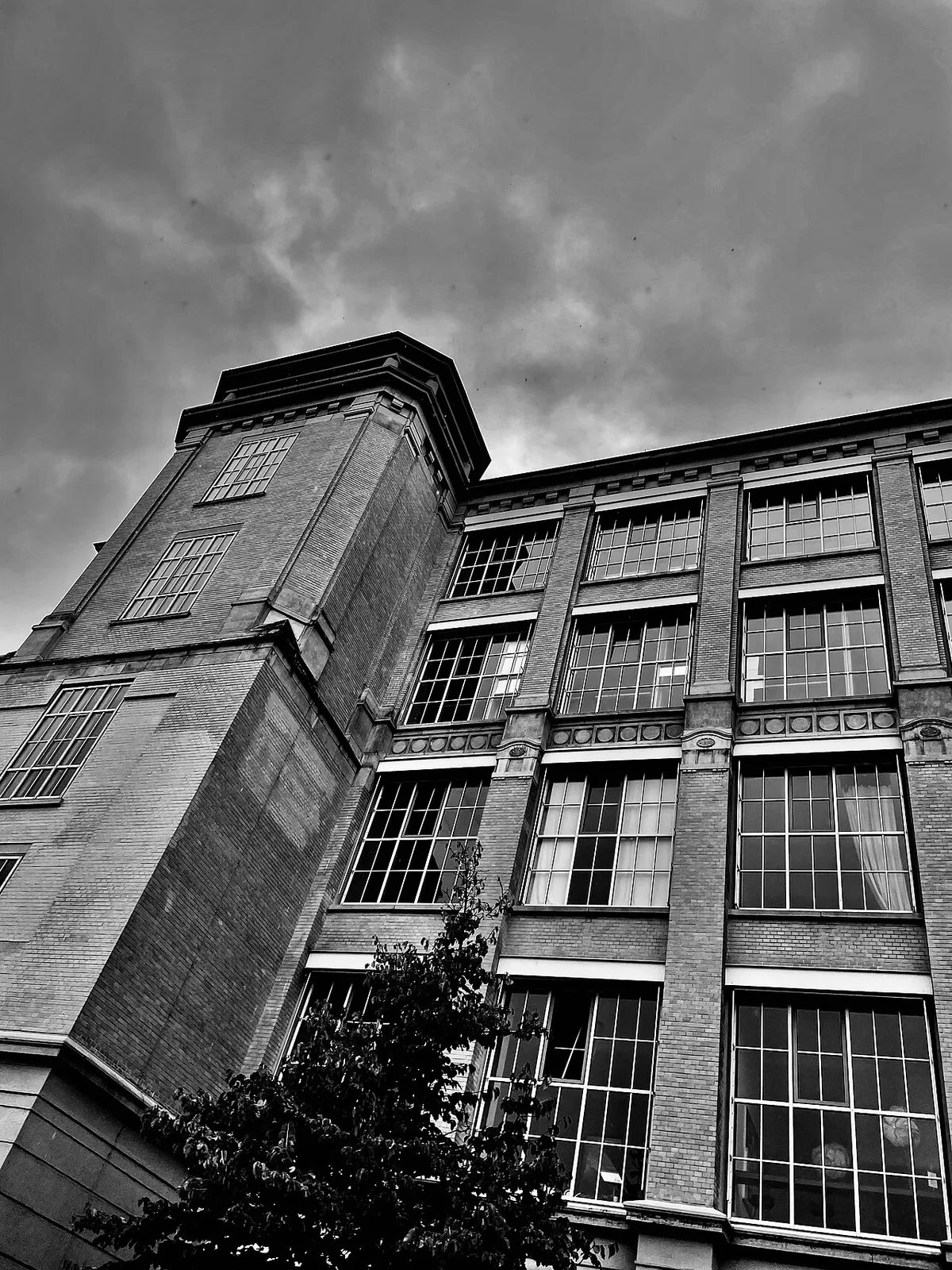
The Glaspalast began as a cotton spinning and weaving works designed by Philipp Jakob Manz and completed in 1910, a five-storey steel-frame structure with 13 window bays along each long side and asymmetric towers attached to the building. Manz worked through calculations on how light enters and scatters so that spinning halls 45 metres deep could be lit properly, an approach known as the daylight factory. It remained in industrial use until 1989, changed hands several times, and was bought in 1999 by the Augsburg builder Ignaz Walter before the current museum use began in 2006.
That history changes how you look at the art rather than merely providing a handsome backdrop. Expect daylight from large, evenly distributed windows rather than the sealed black-box rooms of many contemporary venues, which affects glare, reflections on glazed works and how photographs turn out. Pick your viewing order with the light in mind, and move closer to wall texts and small works where window brightness competes.
The building is also listed as one of Augsburg's notable sights in its own right, alongside the Fuggerei, the Renaissance town hall and the Schaezlerpalais. If industrial heritage is part of your interest, the state textile and industry museum takes that story further, and it belongs on the same trip rather than a separate one. Augsburg itself is Bavaria's third-largest city, founded by the Romans, and the tourism board's city pages are the sensible place to widen the plan. For wider planning, see Augsburg city travel guides.
H2 or Kunsthalle? Reading the Names Correctly
The museum opened in 2006 under the direction of Dr Thomas Elsen as H2 - Zentrum für Gegenwartskunst, and the operator now writes the name as Kunsthalle Augsburg (ehem. H2 - Zentrum für Gegenwartskunst). Older signage, ticket stubs, third-party museum databases and app listings may still carry only the H2 wording. The address is the practical test in every case: Beim Glaspalast 1, 86153 Augsburg, on the ground floor of the Glaspalast.
Third-party museum listings illustrate how far the older name has travelled: one international platform still titles the entry as the H2 Center for Contemporary Art in the Glass Palace and gives its own opening-hours pattern of Tuesday to Sunday, 10:00 to 17:00, with Monday closed. Those times are that site's listing rather than a confirmed operator schedule, so verify before you travel. The address and the founding year on the same listing match the operator, which confirms it describes the same museum.
Inside the Two Halls: H1, H2 and the Sammlung Neue Kunst
The two halls are not separate museums but different rooms with different jobs in the same programme. Large temporary special exhibitions typically occupy one hall, while the other carries rotating presentations of the city's modern and contemporary holdings, shown in varying constellations and thematic groupings. The collection, the Sammlung Neue Kunst, is still being built and runs to several hundred works across every medium, with notable national and international positions alongside regional and Augsburg-based artists.
Because the collection is presented in rotation rather than as a fixed hang, what you see in the collection hall depends heavily on when you visit. If a particular artist or group matters to you, treat the collection as a moving target and check the exhibition archive and current listings before booking travel. The operator's own site carries an exhibitions section, a past-exhibitions archive and a digital collection, which together are the fastest way to see what is actually on.
Photographs published by the museum show recent displays in both halls, including a large Swabian art survey in H1 and a solo presentation in H2, which gives a fair sense of scale and installation style. The same material credits photography to Jan T. Wilms of the museum service. Do not read those images as a current programme; they document past shows only.
Three Different Reasons to Visit: Special Shows, Collection, Artothek
Decide in advance which of three offers you are actually coming for, because they shape the visit differently. A temporary special exhibition is a single curated statement with a beginning and an end; a collection presentation asks you to browse across several hundred works; the Artothek is a lending service rather than an exhibition. Walking in without that distinction is the commonest reason people leave feeling they missed something.
The Artothek is run by the Gesellschaft für Gegenwartskunst and lends contemporary art to the public. More than 140 works on paper by international, national and regional artists are available, loaned for two months against a small fee. Opening hours for the Artothek are published separately from the museum's, so check the Artothek section of the operator's site rather than assuming the Kunsthalle timetable applies.
There is also a museum library focused on monographic and thematic exhibition catalogues, reference works and art periodicals from classical modernism to the present. It doubles as a reading and seminar room and is available free of charge as a reference library to specialists such as art historians and cultural scholars by prior arrangement. That is a research visit, not a tourist stop, and it should be arranged in advance.
How Long to Allow, and How to Pace the Visit
As an editorial suggestion rather than an official figure, allow around 60 to 90 minutes for a single special exhibition with a quick pass through the collection rooms. If both halls are fully installed and you read the wall texts, two hours is a more realistic allowance. Add time if you plan to use the library or discuss a loan at the Artothek, since those are separate transactions.
The practical implication is that a one-show visit and a full collection visit are genuinely different outings, so pick one as your priority. If the Kunsthalle is one of several stops, treat it as a 90-minute block and leave the longer session for a return trip. Building in slack matters because the two halls can be configured very differently from one season to the next.
If the weather turns, museum time becomes the obvious fallback, and the city has enough indoor options to fill a wet afternoon without repeating yourself. A rainy day in Augsburg is a good moment to compare this venue with the larger art collections elsewhere in the city before committing your hours.
Opening Hours, Closure Days and Admission: What to Verify
Opening times are the detail most likely to be wrong on a printed plan, so confirm them with the museum before you set out. Third-party listings state a Monday closure with 10:00 to 17:00 on other days, and one English-language travel page gives the same pattern of every day except Monday, 10 am to 5 pm. Neither is an operator-published timetable in this guide, so treat both as a pattern to check rather than a promise.
Admission is deliberately left without a figure here because the museum association explains where prices are published rather than posting a stable number. The visitor regulations state that the admission prices applying in the houses can be found at the ticket offices of the museums and exhibition houses, and further information is available on the website and in the quarterly programme. Check the ticket office page and the current programme leaflet for the figure that applies on your date.
The same regulations set out access conditions that apply across the association's houses. Entry requires a valid admission ticket, which may be a day ticket or annual ticket, and it must be shown to supervisory staff on request; the ticket is non-transferable and will not be replaced if lost. Children under ten, groups of children and school classes must be accompanied by at least one responsible supervisor.
For questions about exhibitions, guided tours or opening hours, the association's visitor service is reachable Monday to Friday from 9 a.m. to 12 p.m. on the published telephone number and email address. That is the correct channel for confirming a closure or a special arrangement before travelling. It is also where you would ask about booking a guided tour from the education programme.
House Rules That Shape a Photo Visit
The visitor regulations permit photography for private use, but only without flash and without a tripod, and selfie sticks are prohibited. For legal reasons the association also asks visitors not to publish private recordings on publicly accessible media, whether print or online. Commercial, scientific or similar photography requires written approval from the press office, which is worth arranging well in advance if your images have a purpose beyond personal memory.
Wardrobe rules matter more than they sound in a building with large works and narrow sightlines. Large handbags, backpacks, carrying frames, luggage, umbrellas and other bulky items, plus wet rainwear, must be left in the wardrobes, and a board there shows the maximum permitted bag size. Some houses offer lockers for the duration of your stay, and no liability is accepted for the wardrobe, so keep valuables with you.
Inside the exhibition rooms the standard museum rules apply: do not touch the exhibits, eat, drink or smoke, and behave considerately towards other visitors. Animals are not allowed for conservation and allergy reasons, though assistance animals such as guide dogs are permitted with prior notification to the visitor service. Supervisory staff are tasked with enforcing the rules, and repeated breaches can lead to visitors being asked to leave without a refund of the entrance fee.
One Building, Several Museums: The Glaspalast's Other Tenants
The Glaspalast holds more than the Kunsthalle, and confusing the tenants is easy. Travel pages state the building is also home to a gallery and the Walter Museum, while the city's tourism listings describe the Kunstmuseum Walter as one of Germany's largest private collections, showing hundreds of works by around 200 artists, including R. Penck, Markus Lüpertz, Georg Baselitz and Max Ernst, plus sculptures by the Venetian glass artist Egidio Costantini. It occupies roughly 6,000 square metres at the same address.
The Kunsthalle and the Walter Museum share an address but not an operator: the Kunsthalle belongs to the municipal Kunstsammlungen & Museen Augsburg, while the Walter Museum is a private collection. Nothing in the published material indicates a joint ticket covering both, so do not assume one admission covers the other. Budget and plan for them separately, and check each institution's own admission information on the day.
Because the two collections differ sharply in character, the choice is a real one rather than a formality. If you want the city's own collection of modern and contemporary work with rotating special exhibitions, the Kunsthalle is the target; if you want a large private holding of major German post-war names, the Walter Museum is. Reading about the wider museum landscape first makes that either-or decision quicker.
Where the Kunsthalle Sits in Augsburg's Museum Network
The Kunsthalle is one of the houses of Kunstsammlungen & Museen Augsburg, the association of the city's municipal museums, whose published list also includes the Römerlager im Zeughaus, the Maximilianmuseum, the Schaezlerpalais, the Grafisches Kabinett, the Brechthaus, the Leopold-Mozart-Haus, the Neue Galerie im Höhmannhaus, the Archäologisches Zentraldepot and the Dominikanerkirche. That structure is worth knowing because practical information such as visitor regulations applies across the houses, while each house keeps its own exhibitions and hours.
The association operates a hub app, Kunstsammlungen & Museen Aux, designed to connect the cultural landscape digitally and bring together themed tours and highlights from four major institutions: the Maximilianmuseum, the H2-Zentrum für Gegenwartskunst, the Römerlager im Zeughaus and the Schaezlerpalais. It was created as part of the DIWA inclusion project with European Union and AMIF support. Use it to orient yourself across the houses, but treat it as a companion rather than a replacement for each museum's own current information.
Take the app's use of the older H2 name as further confirmation that both labels point to one venue. Its four-institution list is also a useful skeleton for a multi-museum day, since it groups the houses that share a municipal identity. Buildings such as the Schaezlerpalais and the Maximilianmuseum sit in the historic core, while the Kunsthalle is out in the Textilviertel, so group your stops by district rather than zigzagging.
The Textilviertel Setting and Getting Your Bearings
The Glaspalast stands in the Augsburger Textilviertel, the textile district that grew around the city's spinning and weaving industry, and the museum's own history section places it there explicitly. That location is part of the experience: you are visiting a former production building rather than a purpose-built gallery, and the industrial context around it explains the architecture. Allow a little time to look at the exterior and the towers before going in.
For the wider city, the tourism board's welcome pages set the scene: Augsburg is Bavaria's third-largest city with roughly 300,000 residents, founded by the Romans in 15 BC, with a Renaissance core, canals and a UNESCO World Heritage listing among its credentials. That context is useful when deciding how much of the day the Kunsthalle deserves. It also explains why the industrial heritage sites and the old town compete for the same hours.
Practical travel details to the Glaspalast are best confirmed with the museum's own visit pages and the city's transport information rather than from secondary summaries, which age quickly. Ask the visitor service about arrival and access questions when you confirm your date. That single call resolves hours, tickets and any current restrictions in one step.
Planning Your Kunsthalle Visit
The Kunsthalle Augsburg im Glaspalast rewards a little preparation more than most city museums, mainly because of the naming history and the range of separate offers inside one address. Decide whether you are coming for a special exhibition, a collection rotation or an Artothek loan, then confirm the current programme and opening pattern on the operator's site before you travel. That one check removes almost every avoidable disappointment.
If you are travelling as a family, the Kunsthalle works as a shorter stop within a packed day rather than the main event, and the city's family-oriented planning help covers the alternatives. Keep the visit flexible: the two halls can change substantially between seasons, which is exactly why a return trip is worth considering. For wider planning, see Augsburg with Kids.
Frequently Asked Questions
Is the Kunsthalle Augsburg the same place as the H2 – Zentrum für Gegenwartskunst?
Yes. The museum opened in 2006 as H2 – Zentrum für Gegenwartskunst and the operator now writes the name as Kunsthalle Augsburg (ehem. H2 – Zentrum für Gegenwartskunst). Older listings, maps and the museum app may still use H2 alone. The address is the reliable test: Beim Glaspalast 1, on the ground floor of the Glaspalast. If a page points you there, it describes the same venue.
Does one ticket cover the Kunsthalle and the Walter Museum in the Glaspalast?
Do not assume so. The Kunsthalle belongs to the municipal Kunstsammlungen & Museen Augsburg, while the Walter Museum is a separate private collection in the same building. Published material describes the Glaspalast as home to more than one institution but does not indicate a shared ticket. Check each museum's own admission information, since they are operated independently.
Are the Kunsthalle's opening hours the same every day?
Third-party listings state a Monday closure with 10:00 to 17:00 on the remaining days, and one English-language travel page gives the same pattern. These are secondary sources, not the operator's current timetable, so confirm before travelling. The museum association's visitor service answers opening-hour questions on weekday mornings by telephone and email.
How long should I allow for the Kunsthalle Augsburg?
As a suggestion rather than an official figure, around 60 to 90 minutes suits a single special exhibition with a quick look at the collection rooms. If both halls are fully installed and you read the texts, two hours is more realistic. Add time for the library or an Artothek enquiry, which are separate services with their own arrangements.
Can I borrow art from the Artothek at the Glaspalast?
The Artothek is operated by the Gesellschaft für Gegenwartskunst and lends contemporary art to the public. More than 140 works on paper are available, loaned for two months against a small fee. Its opening hours are published separately from the Kunsthalle's, so check the Artothek section of the operator's site for the current arrangements.
Can I take photos inside the Kunsthalle Augsburg?
Private photography is welcome, but only without flash and without a tripod, and selfie sticks are prohibited. The association also asks visitors not to publish private recordings on publicly accessible media for legal reasons. Commercial, scientific or similar photography needs written approval from the press office, so arrange that in advance if your images have a professional purpose.
How do I check current exhibitions and admission prices before I travel?
Use the operator's exhibitions section and its past-exhibitions archive to see what is on and what has run previously. For admission, the association's visitor regulations state that prices are available at museum ticket offices, on the website and in the quarterly programme. Contact the visitor service on weekday mornings to confirm a specific date.
Sources
- Kunsthalle Augsburg im Glaspalast | Kunstsammlungen und Museen Augsburg
- Plan your visit to the H2 Centre of Contemporary Art in Augsburg! - Germany Travel
- H2 - Center for Contemporary Art in the Glass Palace, Augusta | Hours, exhibitions and artworks on Artsupp
- Visitor regulations | Art collections & museums Augsburg
- Art Collections & Museums Augsburg — Fluxguide
- Augsburg Districts - Regio Augsburg Tourism
- Welcome to Augsburg - Regio Augsburg Tourism


