

The Maximilianmuseum occupies a spot that most old-town strolls pass anyway: the centre of Augsburg, between the town hall and St. Anna's Church, at Fuggerplatz 1. That position makes it easy to slot into a walking day, but the building itself is the reason to go inside. It is the parent building of Augsburg's municipal art collections, the museum association's oldest and broadest house, not a single-topic gallery.
Because it has been a museum since 1855 and takes its name from King Maximilian II of Bavaria, the rooms carry layers of collecting history rather than one curatorial argument. That is useful to know before you arrive, because it changes how you plan an hour or two: you are choosing between collection areas, not ticking off a single highlight. A labelled suggestion of 90 to 120 minutes is editorial advice, not an official figure, and the museum publishes its own opening times, which can change seasonally.
What the Maximilianmuseum Is and Where It Sits
The museum stands at Fuggerplatz 1, in the middle of the old town, between the town hall and St. Anna's Church. That means you can walk there from Maximilianstrasse without a tram, and you can combine it with the Renaissance town hall and the church on the same outing. Plan your route through the old town so the museum is not a detour at the end of the day. The Museen in Bayern directory describes the Maximilianmuseum as the parent building of Augsburg's municipal art collections, located between the town hall and St. Anna's Church, which confirms the setting before you commit to a slot.
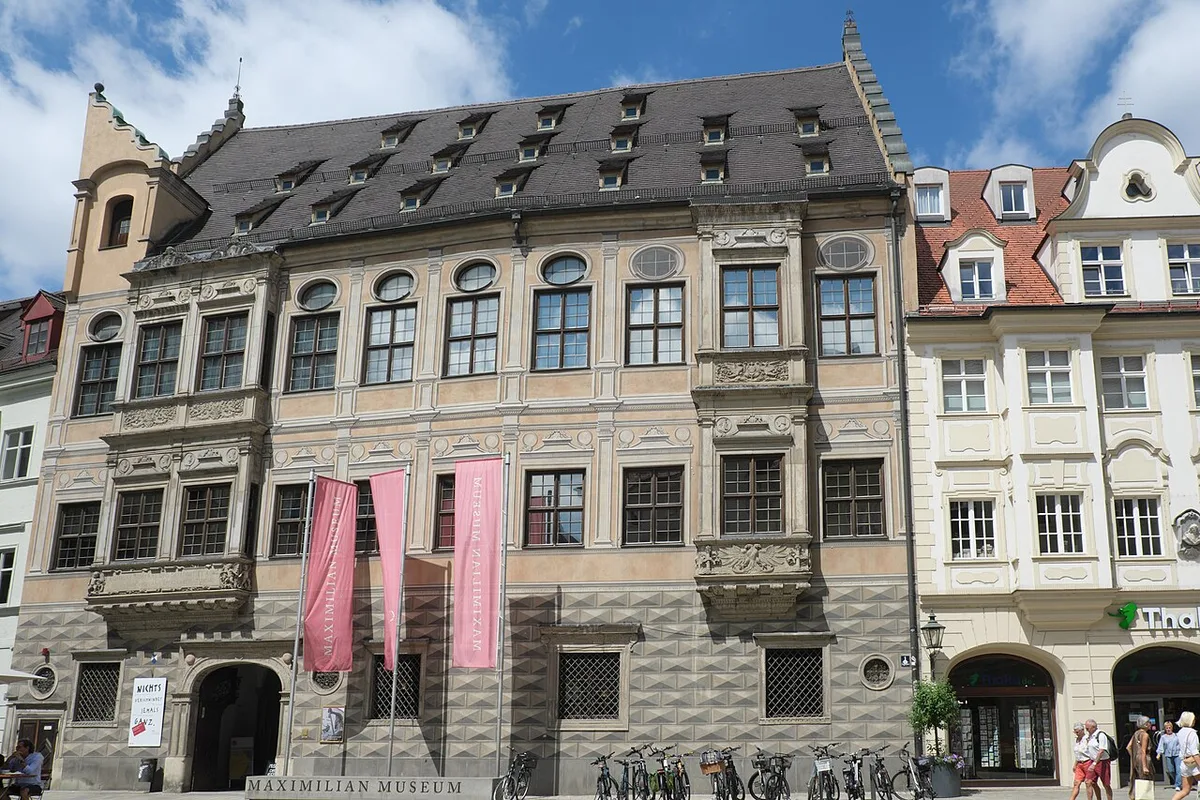
Conceptually, this is the parent building of Augsburg's municipal art collections, which is why its displays range from medieval sculpture to porcelain and city models. Other houses in the Kunstsammlungen & Museen Augsburg network have their own profiles, so do not assume one ticket or one visit covers everything. If you are comparing options, the same organisation operates the Schaezlerpalais and other municipal museums, each with its own focus. The Augsburg tourism board lists the Schaezlerpalais and St. Anna's Church among the city's sights, so pairing the Maximilianmuseum with one of them is a natural move.
The Building: Welserhaus, Hainhoferhaus and the Covered Courtyard
The complex joins two historic town houses: the Welserhaus from the 15th century and the Hainhoferhaus from the 16th century. A reconstruction in 1907 and 1908 under Gabriel von Seidl connected them with two side wings, forming a closed quadrangle around an inner courtyard. That layout matters when you are navigating: you move between historic domestic spaces rather than through a purpose-built gallery sequence. The Museen in Bayern entry describes the Welserhaus and Hainhoferhaus by name and dates, so the two-house layout is a documented feature rather than an assumption.
The courtyard is now covered by a glass roof and holds the original bronze figures from Augsburg's splendour fountains, made by Hubert Gerhard and Adriaen de Vries. Treat the courtyard as a distinct stop rather than a corridor between galleries, because the figures are the anchor object here. The bronze figures in original form are a different experience from seeing replicas on the fountains outdoors, so allow time to look closely before you move into the exhibition rooms. The Museen in Bayern listing identifies the figures as the originals by Gerhard and de Vries, which is why this space rewards a slower pass.
Highlights of the Collection
The strongest holdings are sculptures from the 16th to 18th centuries, including works by Hans Daucher, Sebastian Loscher and Georg Petel. Alongside them you find Augsburg goldsmith work, which reflects the city's role as a centre of precious-metal craft. If you only have a short window, the sculpture and goldsmith rooms give you the clearest sense of what makes this collection distinctive. The Museen in Bayern entry names those sculptors and highlights Augsburg goldsmith art, so these are the collection strengths to prioritise.
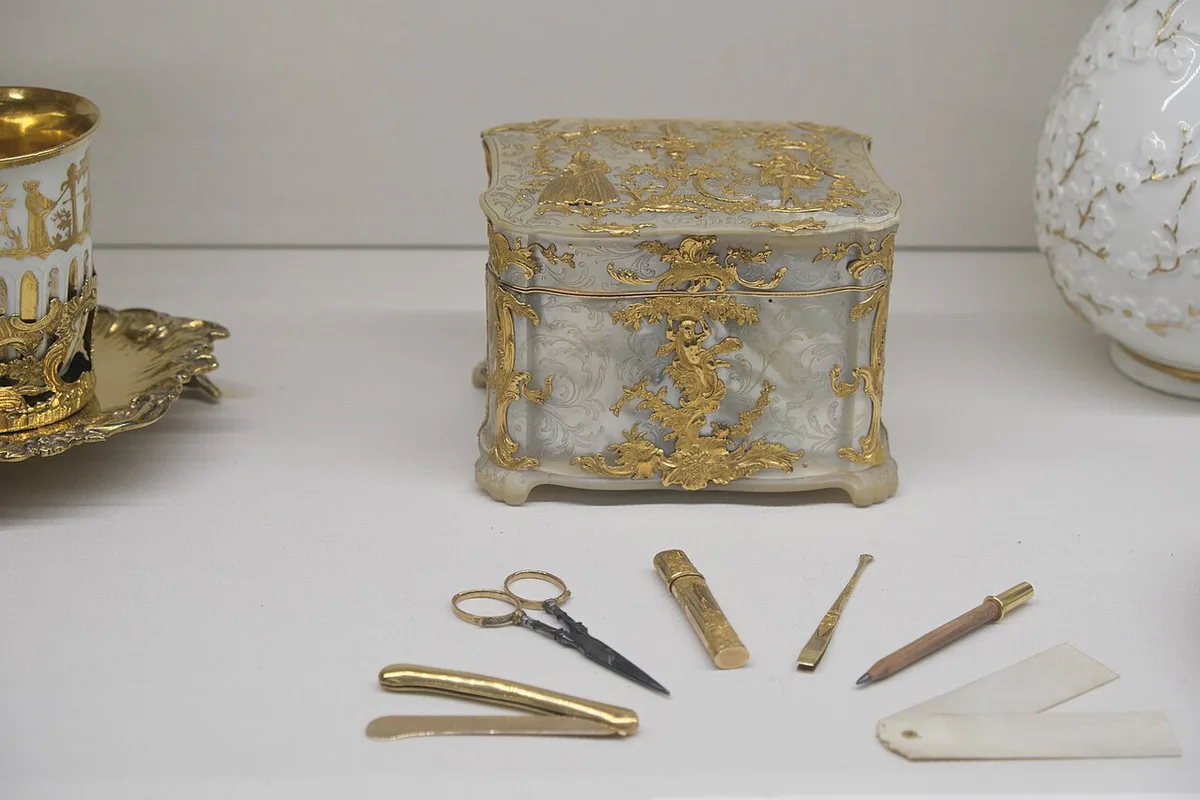
Porcelain and faience are represented too, with pieces from Swabian manufactories including Augsburg, Künersberg, Göggingen and Friedberg. Clocks and scientific instruments round out the decorative-arts profile, showing the technical side of Augsburg's workshop culture. These areas reward slow looking rather than a fast sweep, so decide in advance which two or three sections matter most to you. If you want to compare Augsburg's museum landscape before deciding, the city's best museums guide can help you weigh this decorative-arts house against other collections.
City History and the Elias Holl Models
The city history collection includes the famous wooden models of Augsburg's city hall by Elias Holl. They are a practical complement to a walk to the real town hall, because they let you see the design in miniature before or after you look at the building itself. If architecture is your interest, visit the models first and then walk the few minutes to the Renaissance town hall. The tourism board names the Renaissance city hall one of Augsburg's signature sights, so the model-to-monument pairing works as a single thread.
This section also gives context to Augsburg's wider identity, from its Roman founding to its Renaissance and Fugger-era prosperity. The city's tourism board groups the town hall, the fountains, the Fuggerei and the church landscape as its signature sights, so the models work well as a primer for the rest of your stay. Use them to decide which outdoor sights to prioritise afterwards. If your interest runs more to the Roman layer, the Römisches Museum Augsburg visitor guide covers that separate collection.
Practical Planning: Duration, Pacing and Opening Times
A suggested duration of 90 to 120 minutes is an editorial estimate, not an official figure, and it assumes you focus on two or three collection areas. Add time if you want to read labels in the goldsmith and instrument sections, which are dense with small objects. If you are visiting with children, the city models and the courtyard figures tend to hold attention better than the display cases.
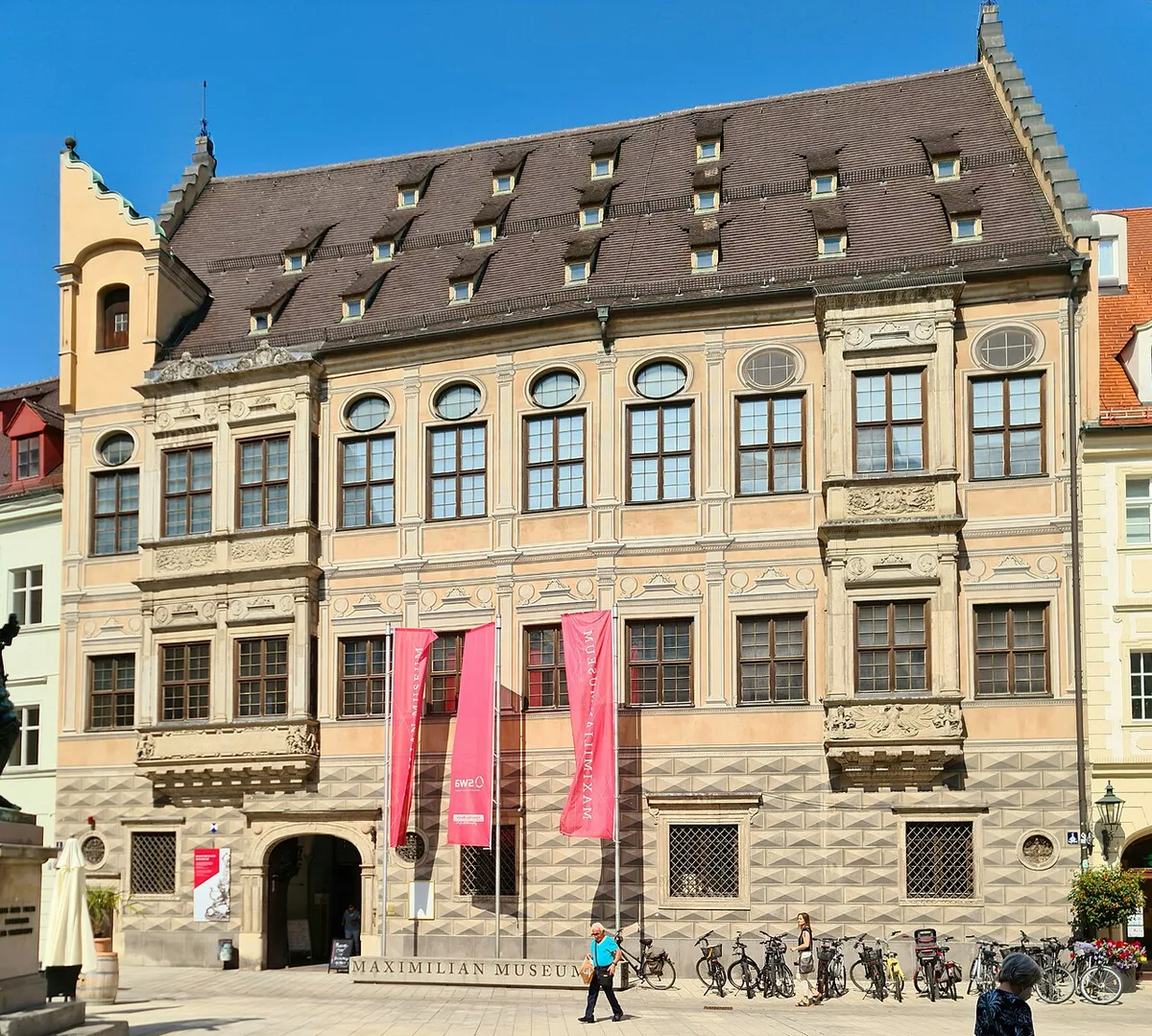
Check the museum's own opening times before you travel, because the published hours can change and holiday schedules differ from regular weeks. The Kunstsammlungen & Museen Augsburg visitor service answers questions about exhibitions, guided tours and opening hours on weekday mornings, and that is the most reliable route for a specific date. Admission prices are posted at the ticket offices rather than in this guide, and children under ten must be accompanied by a responsible adult. The visitor regulations state both the ticket-office approach to prices and the accompaniment rule.
House Rules That Shape the Visit
The visitor regulations apply across the municipal museums and are worth reading before you arrive. You must not touch the exhibits, and that explicitly includes the sculptures in the Maximilianmuseum and the Viermetzhof. Eating, drinking and smoking are not permitted in the showrooms, and large bags and wet rainwear belong in the wardrobe. The rules are set out by the Kunstsammlungen & Museen Augsburg, so treat them as current conditions rather than old advice.
Private photography is allowed without flash and without a tripod, and selfie sticks are prohibited. Publishing private recordings on public media is discouraged for legal reasons, and commercial or scientific photography needs written approval from the press office. Practically, that means a phone camera works fine, but a tripod setup does not. These limits come from the same visitor regulations page, so they apply to the Maximilianmuseum along with the other municipal houses.
Is It Worth a Slot? A Decision Angle
Choose the Maximilianmuseum if you want decorative arts, sculpture and craft in a historic setting rather than a chronological art survey. Skip it if your priority is Roman archaeology, which belongs to a different municipal museum, or if you only have time for one Augsburg interior and prefer the Schaezlerpalais ballroom. The trade-off is depth versus breadth: this house is broad, so it rewards a focused plan. The Kunstsammlungen & Museen Augsburg lists the Schaezlerpalais and the Römerlager im Zeughaus as separate houses, which is why the Roman material is not part of this visit.
Families with younger children often pair a museum stop with the Augsburg Zoo or the puppet theatre, both of which are established city attractions. If you are building a longer stay, the city tourism board lists the Fuggerei, the cathedral, the Ulrich churches and the Renaissance town hall as the headline sights to balance against museum time. Use the museum as one anchor in a day that also includes the old town on foot. For families planning that mix, the Augsburg with kids guide sets out a broader city-level itinerary.
Plan Your Visit
The Maximilianmuseum works best as a focused stop in Augsburg's old town rather than a full-day commitment. Aim for the courtyard bronzes, the sculpture and goldsmith rooms, and the Elias Holl models, then decide whether the porcelain and instrument cases earn more of your time. Confirm opening times and ticket details with the museum before you go, since those are the facts most likely to change.
Frequently Asked Questions
Do I need to book tickets for the Maximilianmuseum in advance?
The museum has not published a general advance-booking requirement for individual visitors, and admission prices are posted at the ticket offices. If you want certainty for a specific date, contact the Kunstsammlungen & Museen Augsburg visitor service, which handles questions about exhibitions, guided tours and opening hours. Group visits and guided offers are the cases where arranging ahead is most likely to matter.
Can I take photos inside the Maximilianmuseum?
Private photography is permitted without flash and without a tripod, and selfie sticks are not allowed. The visitor regulations also discourage publishing private recordings on public media for legal reasons. Commercial, scientific or similar photography requires written approval from the press office.
How long should I allow for a visit?
A reasonable editorial suggestion is 90 to 120 minutes for a focused visit covering two or three collection areas. This is not an official figure, and visitors who read deeply in the goldsmith, clock and instrument sections should add time. The courtyard with the original bronze fountain figures is worth its own pause rather than a quick pass.


