

Kloster Banz and Vierzehnheiligen are two of the most recognisable silhouettes in the Gottesgarten am Obermain, the Main valley landscape north of Bamberg, and they face each other across the river from neighbouring hills. Because they sit so close together near Bad Staffelstein, a single day out from Bamberg can cover both rather than forcing a choice between them. The catch is that the two places are not the same kind of attraction: one is a former Benedictine monastery on a hill, the other an active pilgrimage basilica, and each has its own rules about what a casual visitor can walk into.
This guide treats the viewpoints and grounds as the reliable core of the trip and flags everything that depends on the operators, so you can plan without guessing at hours or tour availability. Everything below is about structuring the day and knowing what to confirm before you set out. A suggested duration for the full loop is roughly a half day of riding or a full day on foot, with breaks; that is a planning suggestion, not an official figure.
Why Pair Kloster Banz with Vierzehnheiligen on One Bamberg Excursion
The two sites sit in the same stretch of the Main valley, and a single documented cycling loop links them from Bad Staffelstein station, passing viewpoints over both. That loop is a user-contributed route on Komoot rather than an official trail designation, so treat its figures as one rider's recording, not as signage you can rely on. It runs about 20 kilometres with roughly 330 metres of climbing and is graded moderate, mainly on paved surfaces with some gravel and cobbles.
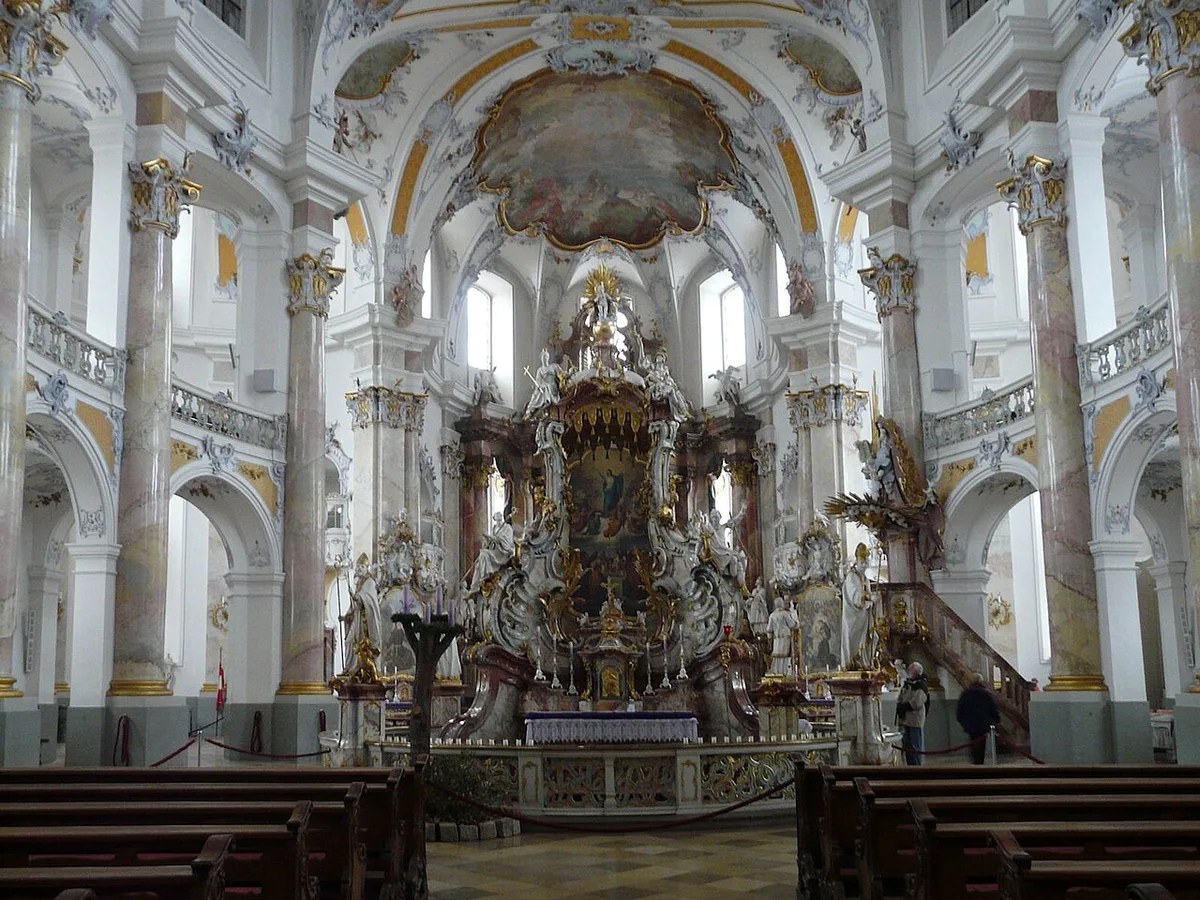
Pairing them works because they complement each other: Banz gives you the monastery hill and the views, Vierzehnheiligen gives you a working pilgrimage church and its own visitor infrastructure. If you only have time for one, Vierzehnheiligen is the easier stop to reach on foot from the station area, while Banz rewards anyone who has wheels or is willing to climb.
Bamberg itself makes sense as the base for this excursion rather than an overnight in Bad Staffelstein, because the city's tourism office frames the surrounding countryside as a day-trip resource with cycling and walking routes. That positioning is the reason a Banz and Vierzehnheiligen loop shows up so often as a Bamberg day out rather than a separate trip.
The Two Sites in the Gottesgarten am Obermain
Kloster Banz is a former Benedictine monastery complex on a hill above the Main valley, and Vierzehnheiligen is a pilgrimage basilica dedicated to the Fourteen Holy Helpers on the opposite side of the valley. They are close enough that the same loop passes both, with the basilica appearing as a waypoint before the return leg. Seeing them together makes the geography click: the monastery on its ridge, the pilgrimage church on its own slope, and the river between.
The basilica's own website treats it as a living religious site with services, pilgrimage information and an Öffnungszeiten page, which is the sign that interior access follows church life rather than museum rules. In contrast, the Banz complex is presented as an institution with its own programme, and this evidence does not cover which rooms are visitable. Plan on the exterior, the grounds and the viewpoints, and confirm interiors separately.
One useful comparison within Bamberg is St. Michael's monastery complex, where the church keeps limited opening days while the gardens, courtyard and observation deck stay accessible at all times. That pattern, a free-to-roam outdoor shell with restricted interiors, is a reasonable expectation for a religious heritage site, but it is not proof of how Banz operates.
Vierzehnheiligen as a Working Pilgrimage Church
Vierzehnheiligen is an active pilgrimage destination, not a museum, and its official site publishes service schedules, a pilgrimage information section and a virtual tour alongside practical contact details. That mix tells you the church is open for worship first, which shapes when a casual visit is appropriate. The site also lists an Öffnungszeiten page for the basilica, though the specific times are not captured here, so check that page close to your travel date rather than assuming a window.
Because pilgrimages and events are scheduled throughout the year, a quiet morning visit feels quite different from arriving during a procession or a diocesan gathering. If you want the interior for contemplation or photographs, look at the events listing on the basilica's site first and build your day around it. Allow a shorter stop if services are running and save the lingering for the viewpoints outside.
The climb up to the basilica from the valley floor is genuinely steep in its upper section, which the loop's route notes describe frankly. Riders should expect to work for it, and walkers should budget extra time and effort. The reward is the church itself plus the view back toward Spitzberg and Staffelberg from the Vierzehnheiligen side.
Kloster Banz: Monastery Hill, Grounds and Interiors Kept Separate
At Kloster Banz the dependable experience is the exterior and the setting: the long building on its ridge with the Main valley spread out below it. This evidence does not establish what is visitable inside the complex, so treat the interior as an open question rather than a plan. The practical move is to enjoy the approach, the architecture and the panorama, and to approach the operator directly if you want to know about rooms or guided access.
Banz also appears as a viewpoint subject from across the valley, which is a good reason to keep it as a landscape stop rather than a ticketed destination in your itinerary. Nearby Bamberg attractions show how much interior access can vary: the New Residence sells its own admission and keeps the Rose Garden free, so free grounds and paid interiors sit side by side in the same city. Use that as a mental template, not as a statement about Banz.
If you are building a wider Bamberg itinerary around religious heritage, the Bamberg Cathedral visitor guide is a useful counterpoint because it explains a working cathedral's visitor rhythm on the Domberg. Reading it before your excursion helps you separate the sightseeing layer from the worship layer at Banz and Vierzehnheiligen.
The Viewpoint Layer: Scheffel, Staffelberg and Schönbrunn
The route documents several distinct vantage points rather than one generic panorama, and knowing which is which helps you decide where to stop. The Victor von Scheffel viewpoint is described as a spot with a refuge and a panoramic window, looking out over Vierzehnheiligen, Kloster Banz and the wider Gottesgarten. That makes it the natural break point for anyone who wants both sites in one frame.
The Staffelberg summit offers a different sweep, described as one of the finest views in the Gottesgarten am Obermain, with the Main valley and the country around Bad Staffelstein and Lichtenfels laid out below. Reaching it involves an ascent and descent to the Staffelbergklause segment, which the route notes flag as a short, sharp effort. If climbing is not your idea of a holiday, this is the section to skip.
A third view comes from the cycle path near Schönbrunn, where the route records a clear look back at Kloster Banz. It is a low-effort viewpoint compared with the summit, useful if you want the monastery in a landscape shot without a climb. Together these three stops give you a sense of scale that a single viewpoint cannot.
The loop crosses the Naturpark Fränkische Schweiz - Frankenjura, and the route page advises checking local regulations for the protected area. That is a reminder to stay on marked paths and respect signage once you are out on the ridge. It also means the character of the day changes with the season, from open views to sheltered woodland.
The Transport Link: Bad Staffelstein Station and Bamberg as Base
The route starts and finishes at Bad Staffelstein's train station, and the page states plainly that the starting point is accessible with public transport. That is the key fact for a car-free day out, because it means you can build the loop around a station arrival rather than a trailhead car park. It does not tell you which services run, how often, or how long the ride takes, so check current connections through the regional transport operator before committing.
For the Bamberg end, Stadtwerke Bamberg is the local operator whose network covers the city and the wider VGN area, which is the right place to look for onward connections. Because timetables, engineering works and route changes shift through the year, treat any planning tool as a starting point and verify close to your date. The route's own page carries construction notices that show how often local services are adjusted.
Bad Staffelstein is the practical anchor for the loop, while Bamberg remains the base city for accommodation, food and the evening. Staying in Bamberg and treating the valley as a day out keeps the trip simple, especially if you are also visiting the cathedral, the Old Town Hall island bridge or the Alte Hofhaltung on other days. Plan the excursion as a self-contained block so a delayed connection does not eat into your city time.
Bike Loop or Slower Walk-and-Viewpoint Day
The trade-off is straightforward: the documented loop covers both sites and several viewpoints in a moderate ride, but it relies on mostly paved surfaces with some unpaved and cobbled stretches and a notable climb. Cycling gets you to the Staffelberg summit, the Scheffel viewpoint and the Schönbrunn view in one sweep. Walking gives you more time at each stop but realistically means choosing between the basilica and the monastery hill.
If you walk, build the day around Vierzehnheiligen and the Scheffel viewpoint, and treat Banz as a distant silhouette rather than a destination you must reach on foot. If you ride, start early enough to allow a proper break at the refuge near the Scheffel viewpoint, which the route describes as a good place to pause with a view. Both versions benefit from a food stop in Bad Staffelstein before or after the climb.
Whichever you choose, the day works best with a buffer at each end, because the interesting parts are spread across the valley rather than concentrated at one address. Check the weather along the ridge before you commit, since exposed sections behave differently from the sheltered valley floor. Keep the plan flexible enough to drop the summit if conditions turn.
What to Confirm with the Operators Before You Travel
This evidence does not cover Kloster Banz opening hours, ticket prices, guided tour times, booking availability or which interiors are visitable, so none of that can be assumed. The honest approach is to check the monastery operator's own site and contact them directly for the current position before you build the day around an interior visit. If interiors turn out to be closed or restricted, the grounds, the architecture and the viewpoints still carry the trip on their own.
For Vierzehnheiligen, the basilica's site publishes its opening hours and event listings, which is where to look for service times and any pilgrimage gatherings that might affect access. Because those change through the year, verify a few days before travelling rather than weeks in advance. If a major pilgrimage is scheduled, plan to visit outside the peak hours or simply enjoy the atmosphere from outside.
Anything about fares, journey times, train or bus line numbers, or wheelchair accessibility is outside what this source material establishes. Use the transport operator's own journey planner and the relevant access information pages for those questions. Treat any figure you see on a third-party page as a snapshot rather than a guarantee.
Pairing the Excursion with a Longer Bamberg Stay
Bamberg's tourism office makes the case that a single day is not enough for the city, and it points visitors toward the surrounding Bamberger Land for cycling and walking. That framing supports a two-part stay: one day in the valley for Banz and Vierzehnheiligen, and at least one full day inside the UNESCO-listed old town. The city's sights sit within minutes of each other, so a city day is easy to assemble without much planning.
If you are choosing between a second excursion and a city day, keep the excursion count low and the city time high, because the valley trip already involves travel and climbing. A city day that takes in the cathedral, the Old Town Hall island bridge and the Alte Hofhaltung covers a lot of ground on foot. Save the longer regional rides for a return visit.
Check local timetables through the city's own transport pages when you stack days together, especially around construction notices that periodically alter routes. Building the excursion early in your stay leaves room to shift it if weather or services change.
Plan Your Visit
Kloster Banz and Vierzehnheiligen make a coherent day out from Bamberg because the valley, the viewpoints and the two hilltop silhouettes are all part of the same landscape. The reliable core is what you can see from outside: the monastery hill, the pilgrimage basilica, the Scheffel viewpoint, the Staffelberg summit and the Schönbrunn look back at Banz. Build the day around those and treat every interior as something to confirm.
Confirm opening hours, tour availability and transport details with the operators close to your date, because this is the layer that changes most and that the available sources do not pin down. If you want the church or monastery interiors specifically, ask before you travel rather than hoping on arrival. Everything else, from the climbing to the breaks, you can plan with confidence.
Frequently Asked Questions
Can you visit Kloster Banz and Vierzehnheiligen in one day from Bamberg?
Yes, if you treat them as one valley excursion rather than two separate trips. A documented cycling loop from Bad Staffelstein passes both, with viewpoints over each, and the start point is described as accessible with public transport. On foot, the two sites are far enough apart that most walkers will realistically prioritise one and enjoy the other from a viewpoint. Check current transport connections before you commit.
Is Kloster Banz free to visit?
That cannot be answered from the available sources, which do not state entry fees or ticket prices for Banz. Many comparable religious heritage sites in the region separate free-to-roam outdoor areas from restricted or ticketed interiors, but that pattern is not proof for Banz. Check the monastery operator's own information and ask directly about which parts are visitable and on what terms.
Where is the best viewpoint over the Main valley near Kloster Banz?
The area offers several distinct vantage points rather than one. The Victor von Scheffel viewpoint looks over Vierzehnheiligen, Kloster Banz and the Gottesgarten, with a refuge and a panoramic window. The Staffelberg summit gives a wide sweep of the Main valley toward Bad Staffelstein and Lichtenfels, while the cycle path near Schönbrunn offers a direct view back at Kloster Banz. Choose based on how much climbing you want.
Is Vierzehnheiligen a monastery or a pilgrimage church?
It is a pilgrimage basilica, and its official site presents it as an active place of worship with services, pilgrimage information and events. That is different from Kloster Banz, which is a former Benedictine monastery complex now used for other purposes. Visiting expectations differ accordingly: at the basilica you are a guest in a working church, so check the service and event schedule before planning your time inside.


