Last updated July 2026, getting around Rome means mixing plenty of walking with occasional Metro, bus, or tram rides, since the ancient center was never built for cars or subways. Centro Storico, Trastevere, and Monti sit close enough to cover on foot, while transit mostly bridges the gaps to the Vatican and outer neighborhoods. This guide breaks down Rome's Metro lines, buses, tickets, taxis, and airport transfers, so you spend less time on logistics and more time at the sights.
The Quick Guide to Getting Around Rome
Most of Centro Storico, the Pantheon, and the Trevi Fountain sit within easy walking distance of each other. Walking beats transit for short hops in the historic core, and unlike a city built around one subway system, Rome's core rewards walking first and transit second. Monti and Trastevere are each walkable on their own, but crossing between them, or reaching the Vatican, usually calls for a bus, tram, or Metro ride. Rome's Metro has only three lines, and none of them tunnel directly under Centro Storico. Archaeologists have long restricted deeper excavation near the ancient ruins beneath the city, which is why the network stays shallow and limited in the core. That gap is also why buses carry more of the historic center's day-to-day transit load than the Metro does. Where you stay affects how much of this you'll actually use. A base near a well-connected neighborhood cuts down on transfers and walking distance. Trip length matters too. If you haven't settled on how many days to spend in the city, transit time is one more factor to weigh. A two-day Rome itinerary can usually lean on walking plus a couple of Metro or bus rides. A three-day Rome itinerary often adds a tram or Urban Railway trip to reach neighborhoods further out.
- Walking: fastest for Centro Storico, the Pantheon, the Trevi Fountain, and other closely packed historic-core sights.
- Metro or bus: best for reaching the Vatican, Termini, or crossing between Trastevere and Monti.
- Taxi: worth it late at night, with heavy luggage, or once the Metro has closed for the night.

The Rome Metro: Lines A, B, and C
Rome's Metro network has three lines, each identified by a letter and a color. Line A (orange) runs across the city toward Vatican City, making it a fast option for that side of town. If Rome's major museums are a priority, factor Metro or bus travel time into your day, since several sit outside easy walking distance from the center. Line B (blue) connects Termini to the Colosseum and continues south from there. Termini, Rome's main train station, also functions as the Metro's busiest interchange, where Line A and Line B meet. Line C is the newest line, and it mainly serves outer districts rather than the historic core, so tourists rely on it less than Lines A and B. Metro trains typically stop running around 11:30 PM on weeknights, and around 1:30 AM on Friday and Saturday nights. Once the Metro closes, a network of 'N' night buses takes over on modified routes until morning service resumes. Accessibility is inconsistent across the network. Many older stations still lack working elevators, which matters if you're carrying heavy luggage or traveling with mobility limitations.
Buses and Trams: Reaching the Historic Center
ATAC operates Rome's buses and trams, and the bus network reaches far more of the historic center than the Metro does. Buses fill the gaps around Centro Storico, Trastevere, and Monti, linking neighborhoods the Metro skips entirely. The H express bus is a useful route between Termini and Trastevere, cutting down on transfers. Rome's six tram lines mostly stay outside the historic core. They matter more for reaching residential districts and some of the lesser-visited corners of Rome than for hitting the main sights. Buses share the roads with Rome's traffic, so a scheduled ride can run behind, especially at peak hours or during a sciopero (transit strike). Strollers roll on and off buses more easily than they do on the Metro, where working elevators aren't guaranteed at every station. That's worth weighing if you're traveling with young kids.
Tickets and Fares: How to Pay for Transit
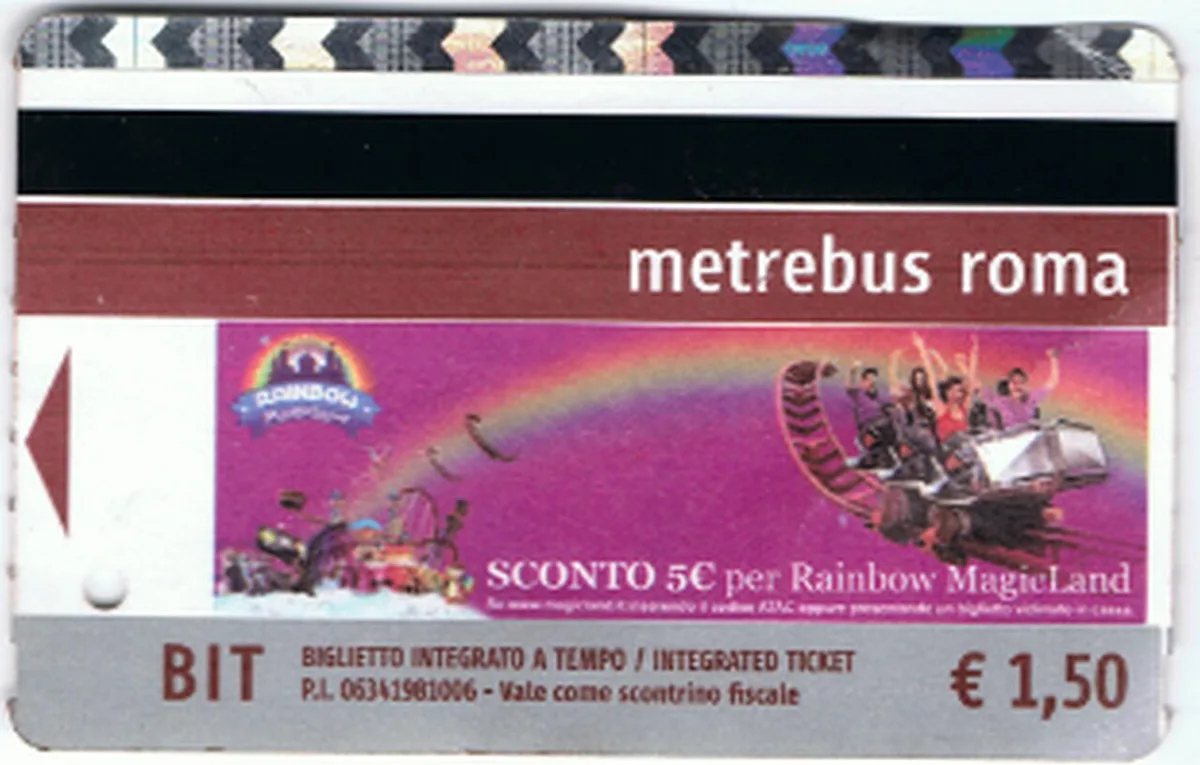
ATAC's standard single ticket, the BIT, covers one Metro ride plus bus and tram transfers within a limited validity window, for around €1.50. Multi-day passes valid for 24, 48, or 72 hours cost more than a single BIT. They pay for themselves once you're taking more than a handful of rides in a day. Check ATAC's current fare page before you travel, since prices are periodically revised. As of 2026, Tap & Go contactless card or phone payment works on a growing share of Rome's buses and Metro turnstiles, so you can board without a paper ticket at all. Paper BIT tickets are still sold at tobacco shops (tabaccherie) and at Metro stations. Whichever you use, validate every paper ticket the first time you ride. Stamp it at the yellow or green box on board, or at the Metro gates. An unvalidated ticket is treated the same as no ticket at all if it's checked, and the fine runs well beyond the ticket price itself. If you're sightseeing heavily and want transit bundled with museum entries, it's worth checking whether a multi-day sightseeing pass fits your trip better than separate tickets.
| Ticket type | Validity | Best for |
|---|---|---|
| BIT (single ticket) | One Metro ride, plus limited bus/tram transfers | A quick one-off trip |
| 24-hour pass | 24 hours from validation | A single full day of sightseeing |
| 48-hour pass | 48 hours from validation | A two-day stay |
| 72-hour pass | 72 hours from validation | A three-day stay |
| Tap & Go | Same fare as BIT, charged per tap | Skipping paper tickets entirely |
Taxis and Ridesharing in Rome
Rome's official taxis are white, metered, and licensed by the city. Hail one at a taxi rank near major sights and stations, rather than flagging one down mid-street. Ranks are the standard, reliable way to find a licensed driver. Official flat rates are meant to apply on set routes such as airport transfers, so ask to see the posted rate if a driver quotes something that seems unusually high. The FreeNow app lets you book a licensed Rome taxi from your phone, which sidesteps language barriers and rank lines. Uber operates in Rome, but only through its Uber Black tier, so it books higher-end licensed cars rather than the everyday ride-share cars available in some other cities. Taxis cost more than transit, so they make the most sense late at night after the Metro has closed, with heavy luggage, or on a trip to or from the airport when time matters more than price.
After the Metro stops around 11:30 PM on weeknights and 1:30 AM on Friday and Saturday nights, a network of night buses takes over. Taxis become the practical option when timing matters more than cost.
Getting from the Airport to the City Center
Rome has two main airports: Fiumicino (FCO), the larger international hub, and Ciampino (CIA), used mostly by budget carriers. Three main options connect Fiumicino to the city center, and picking the right one comes down to luggage, budget, and how much time you have. Terravision and similar coach operators also connect Ciampino to Roma Termini on a similar schedule-versus-cost trade-off. Whichever option you choose, check current fares and timetables on the operator's site before you fly, since both shift from year to year.
| Option | Speed | Relative cost |
|---|---|---|
| Leonardo Express | Non-stop to Roma Termini, the fastest option | Highest of the three |
| FL1 regional train | Local stops, slower than the Express | Less than the Express fare |
| Terravision-style coach | Subject to road traffic, the slowest option | Usually the cheapest option |
Rome Sightseeing Buses: Is the Hop-On Hop-Off Worth It?
Rome's hop-on hop-off buses loop past major landmarks with recorded commentary, and you can get on or off at any stop along the route. They cost more than a standard transit day pass, but they skip the need to plan bus or Metro connections between sights. The routes cluster near several panoramic viewpoints around the city. Some stops are also close to good spots for watching the sunset over Rome. That makes hop-on hop-off routes useful for orientation and photos on a first visit. For a short trip focused on a handful of major sights, the convenience can be worth the extra cost. For a longer stay that mixes sightseeing with errands, restaurants, or day trips, a standard transit pass usually stretches further.
Urban Railway: Reaching the Outskirts and Beyond
Beyond the Metro, three urban railway lines (Ferrovie Urbane) reach areas the subway doesn't cover. The Roma-Lido line runs from the city toward the coast, and the Roma-Viterbo line heads north into the surrounding region. These urban railway trains use the same tickets and fares as the Metro and buses, so a standard BIT or multi-day pass still applies. Trains on these lines run less frequently than the core Metro, so check schedules if you're timing a connection closely. Termini and Rome's other central stations are also the starting point for regional and national trains, which makes them the natural jumping-off point for trips outside the city.
Common Mistakes to Avoid When Getting Around Rome
A few recurring mistakes trip up first-time visitors more than any specific route or line does. Most are easy to avoid once you know what to watch for.
A €1.50 BIT ticket seems cheap, but skipping validation triggers a fine running well beyond that price—always validate your first trip to avoid a major penalty.
- Skipping ticket validation. Paper tickets must be stamped the first time you use them, at the yellow or green box on board or at Metro gates.
- Trusting an old bus route number. Schedules and lines change, so confirm the current route on ATAC's site or a transit app first.
- Ignoring a scheduled sciopero. Transit strikes are common in Rome and can shut down entire bus or Metro lines for the day.
- Assuming a taxi beats walking inside the ZTL. The Zona Traffico Limitato restricts vehicle access in the historic center. Walking is often faster than a car trying to route around it.
- Letting your guard down near Termini. Crowded buses and Metro cars around major stations are where pickpocketing risk is highest.
Leonardo Express or FL1: Which Fiumicino Train Should You Take?
The Leonardo Express and FL1 regional train serve different parts of Rome. The Leonardo Express runs directly from Fiumicino Airport to Roma Termini without intermediate stops. It suits travelers staying near Termini, Monti, or the eastern side of the historic center.
The FL1 does not stop at Termini. Instead, it serves stations including Roma Trastevere, Roma Ostiense, and Roma Tiburtina. Choose it when one of those stations offers an easier connection to your accommodation.
- Roma Trastevere connects with local trams and buses serving Trastevere and nearby districts.
- Roma Ostiense links to Piramide station on Metro Line B through a pedestrian passage.
- Roma Tiburtina connects with Metro Line B and regional or high-speed trains.
Check your hotel’s nearest station before buying a ticket. The fastest airport train is not always the quickest door-to-door option. Follow signs for the airport railway station after arrivals, and confirm the train name and destination before boarding.
Further reading: Rome on Wikivoyage · Rome on Wikipedia
Frequently Asked Questions
What's the fastest way to get around central Rome?
Walking is usually fastest inside Centro Storico, since many major sights sit within easy walking distance of each other. For longer hops, such as reaching the Vatican or crossing to Trastevere, the Metro or a bus is quicker than walking the whole way.
Do you need to validate a paper transit ticket in Rome?
Yes. Stamp every paper ticket the first time you use it, at the yellow or green box on board buses and trams, or at Metro station gates. An unvalidated ticket is treated the same as having no ticket if an inspector checks.
How do you get from Fiumicino Airport to central Rome?
The Leonardo Express train runs non-stop from Fiumicino (FCO) to Roma Termini and is the fastest option. The regional FL1 train also connects the airport to the center, making local stops, and typically costs less than the Express fare. Coach operators such as Terravision run scheduled buses on a similar route for less than either train. Both airports also connect to the wider rail network, so allow extra time if you're continuing beyond central Rome.
Is a transit pass worth buying instead of single tickets?
It depends on how many rides you're taking each day. A 24, 48, or 72-hour pass usually pays for itself once you're taking more than a handful of rides in a day. If you're mixing transit with museum visits, check whether a Rome sightseeing pass makes more sense for your trip.
Are Rome's Metro stations accessible with a stroller or heavy luggage?
Not consistently. Many older Metro stations still lack working elevators, so a bus can be a more reliable option if you're traveling with a stroller or heavy luggage.
What is a sciopero, and how does it affect getting around Rome?
A sciopero is a transit strike, and they happen regularly in Rome, sometimes canceling entire bus or Metro lines for the day. Check ATAC's site or local news before a day with tight connections, especially if you're heading to the airport.
Is it better to walk or take a taxi inside the historic center?
Walking is usually faster inside the ZTL (Zona Traffico Limitato), since vehicle access is restricted in the historic core. Save taxis for airport transfers, late-night trips, or whenever you're carrying heavy luggage.