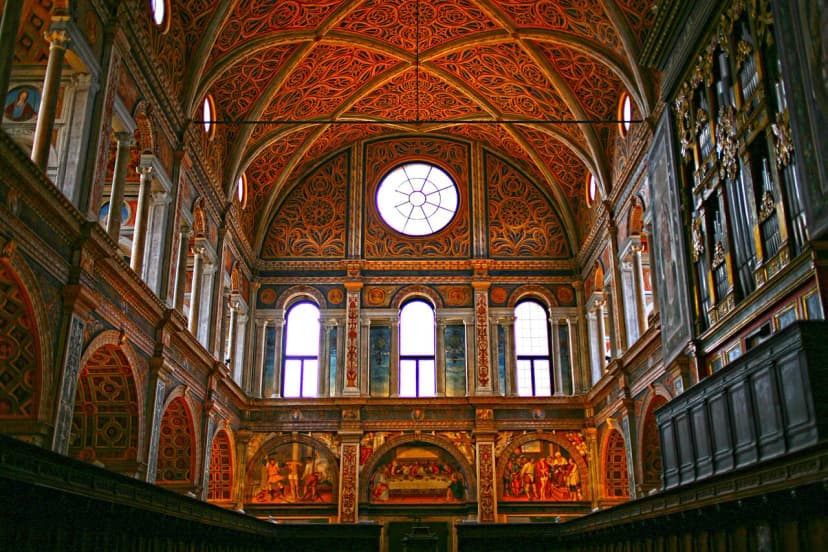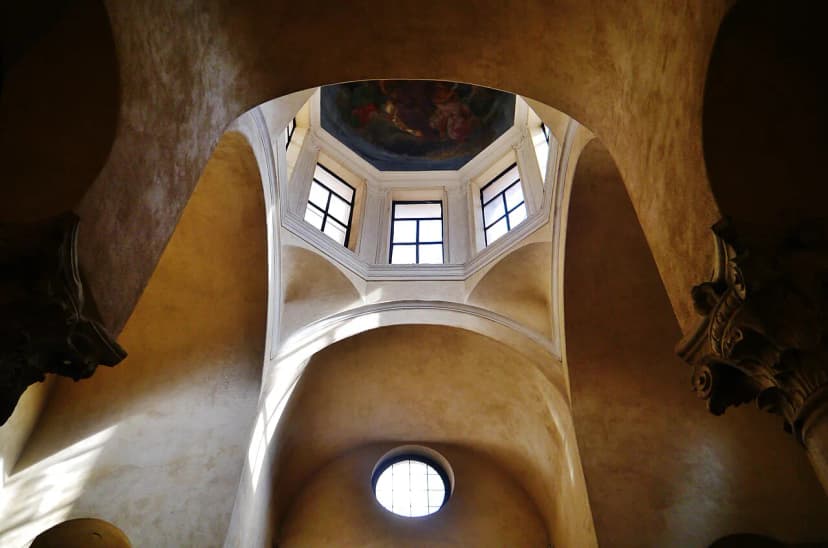

The Vatican Museums charge €20 at the door — or €25 for a pre-booked, skip-the-line online slot — and open 8:00 a.m. to 8:00 p.m. Monday through Saturday, last entry 6:00 p.m. They're closed on Sundays, except the last Sunday of each month, when admission is free. Those numbers only tell part of the story: this is the largest single-museum art collection on earth, and the entire route funnels toward one room, the Sistine Chapel, that roughly 6 million visitors a year are trying to reach at once.
This guide answers what people actually search for once they've decided to go: is it worth it, what to do when tickets are sold out, how long to plan, and how to visit without joining a guided group. For the rest of the city, see our full guide to Rome attractions.
What Are the Vatican Museums?
The Vatican Museums were founded in 1506 under Pope Julius II, built around a single sculpture — the newly unearthed Laocoön group — and expanded by successive popes into a complex of 54 galleries holding an estimated 70,000 works, roughly 20,000 of which are on public display. The full exhibition space runs to about 7 kilometers, though almost no visitor walks all of it; a marked route through the highlights is what most people follow.
That route passes the Gallery of Maps (120 meters of 16th-century topographic frescoes), the Raphael Rooms (including the School of Athens), and extensive Egyptian and Etruscan collections before ending at the Sistine Chapel. Michelangelo's ceiling (1508–1512) and his Last Judgment (1536–1541) on the altar wall are why most visitors are there — the Sistine Chapel is included in the standard ticket, with no separate booking required.
Is the Vatican Museums Worth It? Our Verdict
Yes, for most first-time visitors — with two conditions. Book a timed-entry slot in advance rather than showing up and queuing; the walk-up line at busy periods can run past an hour before you even reach security. And go early (opening, 8:00 a.m.) or on a late-afternoon slot if available, not the late-morning peak between 10:00 a.m. and 1:00 p.m., when the galleries and the approach to the Sistine Chapel are most congested.
Where the verdict softens: if you dislike crowds more than you love art, or you're fitting Rome into 24 hours, the Vatican Museums are a multi-hour commitment, and the Sistine Chapel is a shuffle through a full room rather than a quiet moment. Travelers wanting a comparable collection with less foot traffic often prefer the Borghese Gallery instead. But as a single stop, the density of major works — Raphael, Michelangelo, ancient sculpture, Egyptian antiquities — doesn't have a rival in one building anywhere else in Europe.
Tickets & Prices 2026 (Including What to Do If They're Sold Out)
Full-price admission is €20 at the office (rarely practical given queue lengths) or €25 online through the official ticket portal, which includes the mandatory reservation fee. Reduced tickets — ages 6–18 and students with ID — run €10 at the office or €15 online. Under-6s enter free. Audio guides add roughly €7–8. The official portal is the only authorized seller; third-party sites frequently mark the same slot up 2–3x.
If your preferred date shows sold out, three things help. Recheck the official portal 24–48 hours out, since cancellations release new slots. Try the earliest (8:00 a.m.) or latest entry times first — mid-morning slots sell out fastest. A reputable skip-the-line guided tour operator draws from a separate allocation and can sometimes secure a spot when general admission shows full. Avoid resale sites promising "guaranteed" access at a steep markup with no operator name attached — that's the most common way visitors get scammed here.
Opening Hours & Best Time to Visit
Standard hours are Monday to Saturday, 8:00 a.m. to 8:00 p.m., last entry 6:00 p.m. The museums are closed on regular Sundays. The last Sunday of each month is free, with shorter hours (9:00 a.m.–2:00 p.m., last entry 12:30 p.m.) — expect it to be the most crowded day of the month. That free Sunday, plus a handful of religious and public holidays through the year (Easter, late December, and several others), are excluded from opening — confirm the current closure calendar on the official Vatican Museums website before you book, since specific dates shift year to year.
For crowd levels: Mondays are the busiest weekday, since most of Rome's other major museums close then and funnel visitors to the Vatican instead. Tuesday–Thursday mornings at opening are usually calmest. In peak season the museums also run seasonal Friday evening openings (roughly 7:00–11:00 p.m., last entry around 9:30 p.m., for a supplement) that trade a smaller crowd for a quieter Sistine Chapel — check the official site for the current schedule.
How Long Does the Vatican Museums Take?
Budget a minimum of 3 hours for the marked route through to the Sistine Chapel — the pace most first-time visitors end up moving at once queues to key rooms are factored in. To actually stop and read labels in the Raphael Rooms, walk the full Gallery of Maps, and see the Egyptian and Etruscan wings, plan 4 to 5 hours, effectively a half-day.
Because the exit deposits you a short walk from St. Peter's Basilica, most visitors combine the two in one day. Add 1 to 1.5 hours for the Basilica itself (longer with the dome climb), plus separate queue time for basilica security. Treat "Vatican Museums + St. Peter's Basilica" as a full-day commitment — fitting the Colosseum or Roman Forum into the same day too is tight and rarely worth the rush.
How to Get to the Vatican Museums
The Vatican Museums entrance is on Viale Vaticano, on the north side of Vatican City — a separate entrance from St. Peter's Square and the St. Peter's Basilica, roughly a 10-minute walk around the Vatican walls. The closest Metro stop is Ottaviano–San Pietro on Line A, about a 10-minute walk to the entrance. Bus routes 49, 32, and 81 stop closer, within a few minutes' walk of the ticket entrance.
If you're coming from central Rome (Termini, the historic center, or Trastevere), Line A from Termini to Ottaviano runs directly with no transfer, typically 15–20 minutes. Walking from St. Peter's Square, follow the Vatican walls north — it's a flat, well-signposted route, but not a shortcut through the Vatican grounds themselves; you have to walk around the perimeter.
Visit Tips: Queues, Booking Mistakes, and Visiting Without a Tour
The single biggest mistake is assuming a city pass covers Vatican admission — it doesn't. The Roma Pass doesn't include free or discounted entry; see our take on whether the Rome Pass is worth it for what it actually covers. Book Vatican tickets separately on the official portal, not a bundled "Rome city pass" reseller that quietly marks the ticket up.
Visiting without a tour is straightforward: book a timed slot online, arrive 15–20 minutes early for security, and follow the color-coded route signage — no guide is needed to navigate it, and an audio guide covers the same context a group tour would. Dress code is enforced strictly since the route ends inside a working chapel: shoulders and knees covered, no shorts, tank tops, or short skirts. Large bags, tripods, and selfie sticks aren't allowed. Photography is fine throughout the galleries but prohibited inside the Sistine Chapel itself.
Nearby Attractions Worth Combining With Your Visit
Beyond St. Peter's Basilica next door, Castel Sant'Angelo is about a 15-minute walk south along the river — a fortress-turned-museum with rooftop views, a good lower-key stop if you've had enough art for one day. The Borghese Gallery is the closest thing Rome has to a rival Renaissance collection, at a far smaller, quieter, reservation-only scale — a strong pairing on a different day rather than the same one.
If you're building a longer Rome itinerary, the ancient core — the Colosseum and the Roman Forum and Palatine Hill — sits on the opposite side of the historic center and is best treated as a separate day. Our 2-day Rome itinerary lays out a sensible split between the Vatican side and the ancient/historic-center side so you're not crossing the city twice.
Frequently Asked Questions
Is the Vatican Museums worth the money in 2026?
Yes for most first-time visitors, provided you pre-book a timed slot rather than queuing on arrival. At €20–25 for an unrivaled collection ending at the Sistine Chapel, the value case is strong; the tradeoff is crowding between 10:00 a.m. and 1:00 p.m. Travelers who want a quieter museum may prefer the Borghese Gallery instead.
What happens if Vatican Museums tickets are sold out for my date?
Recheck the official booking site 24–48 hours out, since cancellations release new slots. Try the earliest or latest entry times first, as mid-morning slots sell out fastest. A reputable guided tour operator draws from a separate allocation and can sometimes secure entry when general admission is full. Avoid resale sites promising guaranteed access at a markup.
How long does it take to visit the Vatican Museums?
Plan at least 3 hours for the marked route through to the Sistine Chapel. To properly see the Raphael Rooms, Gallery of Maps, and Egyptian/Etruscan collections, budget 4 to 5 hours. Combined with St. Peter's Basilica next door, treat the outing as a full day.
Can you visit the Vatican Museums without a tour guide?
Yes. Book a timed slot on the official website, arrive 15–20 minutes early for security, and follow the color-coded route signage — no guide is required. An audio guide, rented on-site or via the official app, provides the same context a group tour would.
What is the dress code for the Vatican Museums?
Shoulders and knees must be covered. Shorts, tank tops, and short skirts are turned away at security, no exceptions, since the route ends inside the Sistine Chapel. Bring a light layer even in summer heat.
The Vatican Museums earn their reputation, but the visit only goes well if you plan around the crowd, not just the collection. Book a timed slot in advance, pick an edge-of-day entry time if you can, and treat the day as the Vatican Museums plus St. Peter's Basilica rather than one more stop on a packed itinerary.
If tickets show sold out for your date, don't panic and don't buy from an unofficial reseller — recheck the official portal closer to your date, or book through a reputable guided operator with its own allocation. Either way, arrive dressed for a chapel, pack light for the bag check, and give yourself the 3 to 5 hours the collection actually deserves.