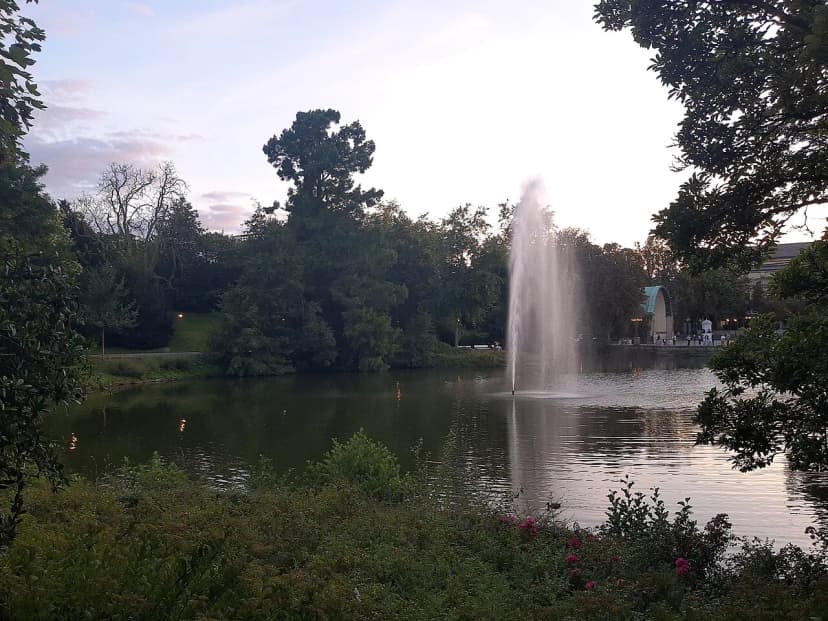
Wiesbaden is a small state capital on the Rhine with an unusual advantage for families: the 245-metre Neroberg hill sits directly above the city, so a half-day of riding, walking and viewpoints needs no long transfer. The city centre itself is compact, with parks, a weekly market and museums close together, which keeps tired legs manageable.
The headline family draw is the Nerobergbahn, a water-ballast funicular that has climbed the hill since 1888 and is described by its operator as a historic leisure and tourist railway rather than ordinary public transport. That distinction matters for budgeting, because the ride has its own tariff. For an overview of the city's landmarks, see Wiesbaden: Landmark Visitor Guides.
This guide concentrates on decisions rather than a flat list: how to time a hill visit, how the funicular's ticketing and rules differ from city transport, and where to look when the weather turns. Pair it with Wiesbaden on a rainy day if your dates are fixed and the forecast is uncertain.
How the Nerobergbahn Actually Works
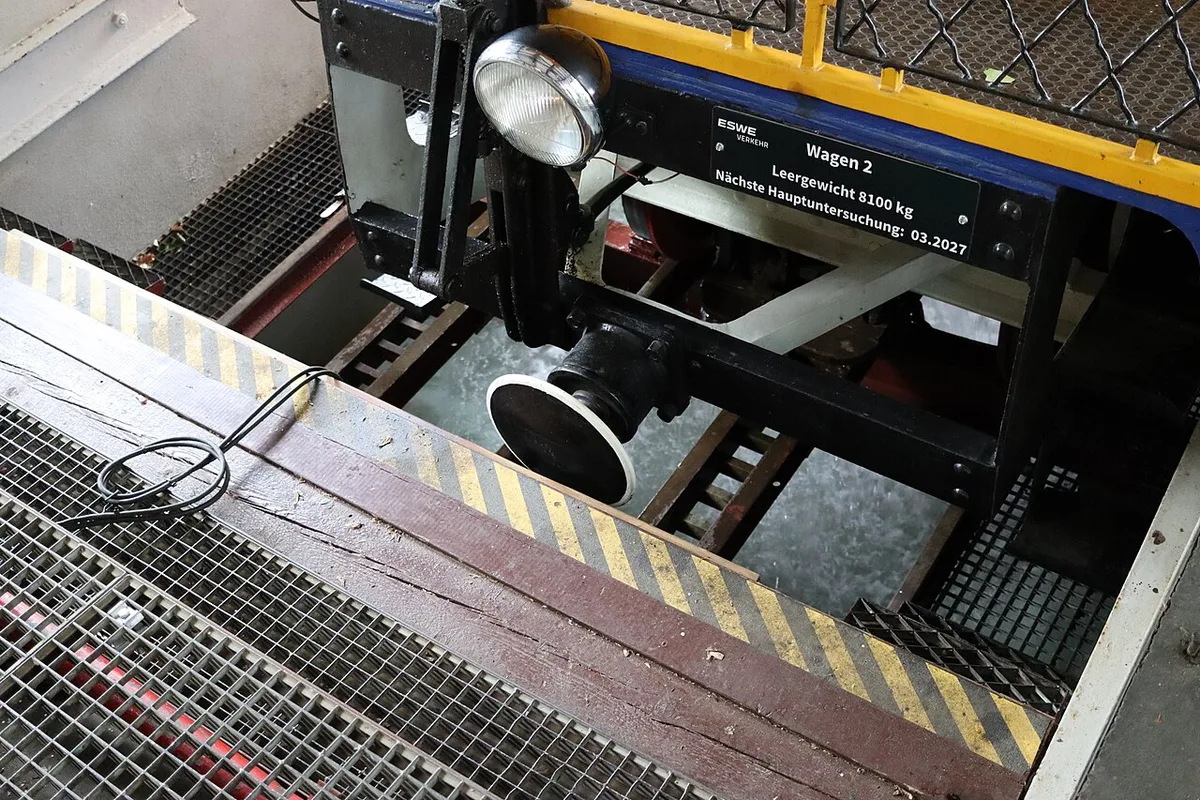
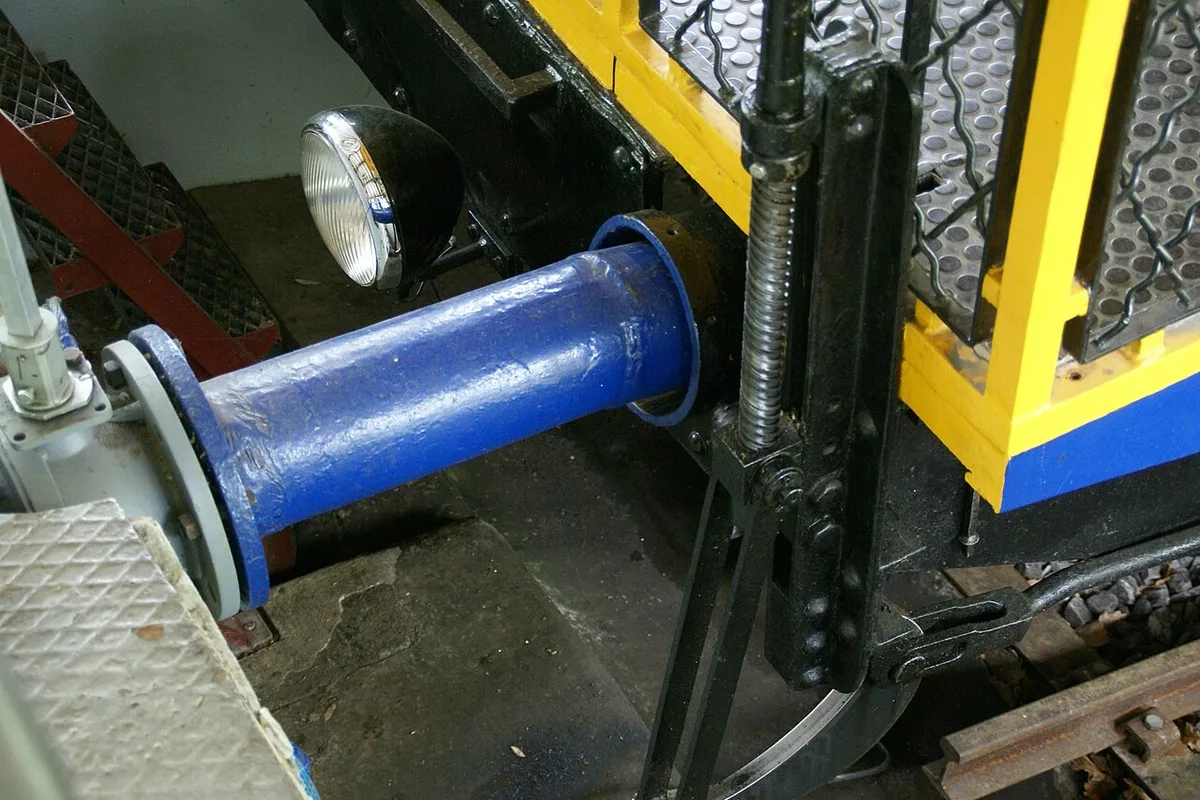
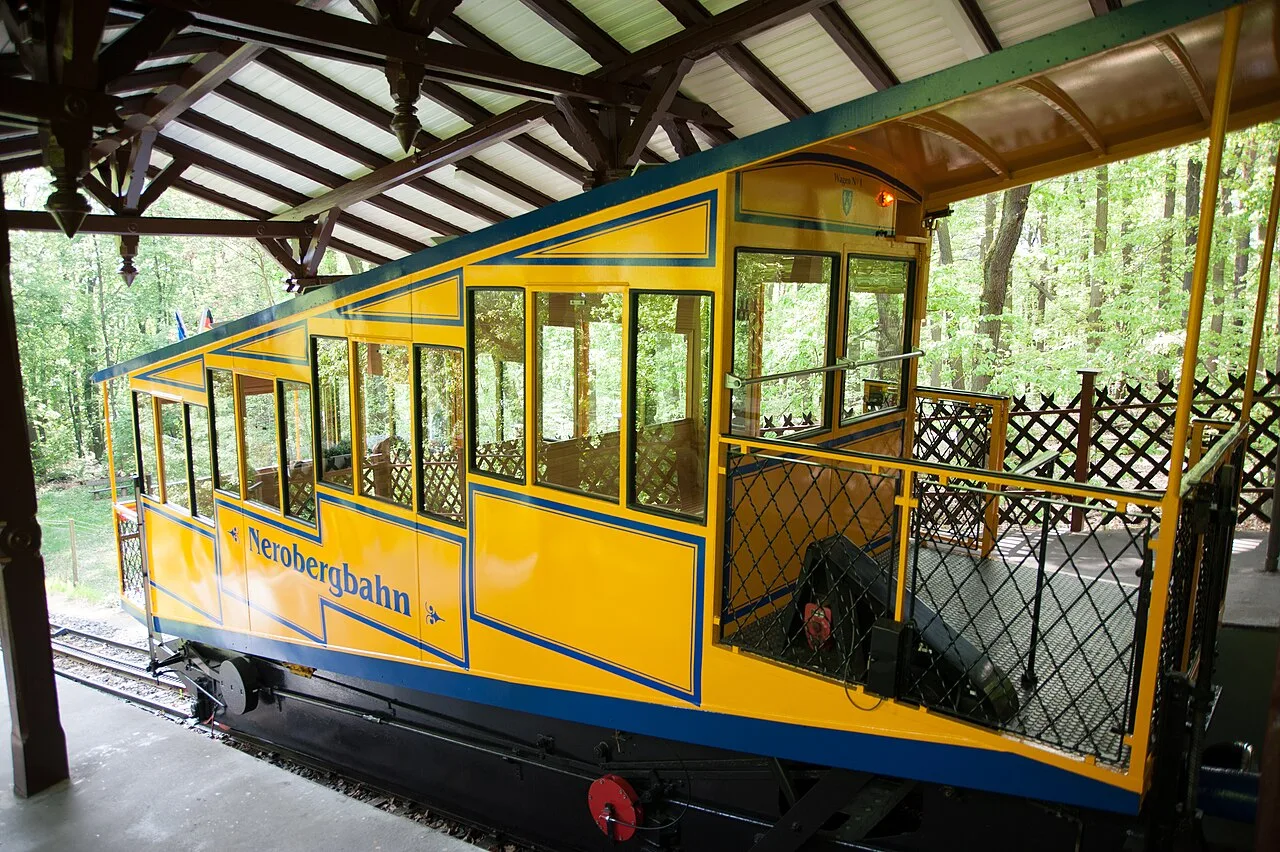
The Nerobergbahn is a funicular, not a gondola: two cars are linked on a single track, and the downhill car's weight helps haul the other one up. The operator explains that the upper car is filled with water ballast, which pulls the paired car uphill on a steel cable, and that the journey takes roughly three and a half minutes along a 438-metre route. Children generally find the mechanics more memorable than the view, so it is worth explaining the water trick before boarding.
The ride climbs the slope of the Neroberg and emerges near the hilltop, where the Neroberg temple, the Russian Orthodox church with its golden domes and forest paths are within walking distance. Because the cars are historic and partly listed structures, expect older, compact fittings rather than modern tram interiors. Keep hold of small children's hands during boarding and on the platform.
One practical consequence of the funicular being a heritage attraction: it works best as the centrepiece of a slow half-day rather than one stop in a packed itinerary. A suggested rhythm is to ride up, spend time at the viewpoints and church, eat something, then either walk down through the Nerotal or ride back. Treat that shape as our suggestion, not an official programme.
Nerobergbahn 2026 Season and Daily Rhythm
The operator publishes a 2026 operating season running from 3 April to 1 November, with departures every 15 minutes and a daily window from 9:00 to 19:00. Those figures apply to the funicular only; do not carry them across to the Opelbad, the animal park or any museum. If you are planning for a later year, check the operator's page again rather than assuming the season repeats on the same dates.
A 15-minute interval removes most of the stress from timing, because a missed car costs only a quarter of an hour. That makes the funicular forgiving for families with toddlers, slow walkers or a last-minute nappy change. It also means you can ride up late in the afternoon and still have a reasonable margin before the last departure.
Since our current date is 12 October 2026, the published season ends on 1 November 2026, so any visit in the coming weeks sits at the very end of the run. Outside the published window the railway is normally out of service, and the hill is then reached on foot or by road. Verify the closing date close to your travel date, since operators can adjust a season.
What a Neroberg Trip Costs
The operator lists a return trip for adults at 6.00 euros and for children aged 6 to 14 at 3.50 euros, with one-way fares lower in both categories. There is a family ticket covering two adults and up to three of their own children aged 6 to 14 on a return journey. Read the tariff board at the station as well, because the operator refers to separate tariff and carriage conditions posted there.
Group rates exist for parties of ten or more and for larger groups of 25 or more, which can matter for school classes, clubs or several families travelling together on the same day. Kindergarten groups and school classes have their own reduced rates, with the school rate tied to term time. If you are organising a group, confirm which bracket you fall into before collecting money.
Two rules catch visitors out. The Deutschlandticket is not valid on the Nerobergbahn, and RMV tickets are likewise not accepted, because the funicular operates as a special transport service with its own tariff. Card payment is possible, so you are not dependent on cash for the ride itself. Budget separately for anything you buy on the hill.
Rules on Board: Wheelchairs, Bikes, Dogs and Strollers
The operator states that non-electric wheelchairs can generally be carried on the large outer platform, while electric wheelchairs cannot be taken because of their weight. It also warns that the paths on the Neroberg are paved entirely with cobblestones. That combination means an accessible ride can still end at a bumpy hilltop surface, so plan the onward route with that in mind.
Bicycles are not carried for safety reasons, and cyclists are directed to a rack at the small museum by the valley station. Dogs travel free of charge, which is unusual enough to be worth knowing if you are moving around the region with a pet. For strollers, the operator's published note covers wheelchairs rather than pushchairs, so ask staff at the station before relying on a particular model fitting.
Getting to the Valley Station and Parking
The valley station sits at Wilhelminenstraße 51 in the north of the city, close to the Nerotal parkland. The operator notes free parking at the valley station, which makes driving a genuine option for families carrying picnic gear, swim bags or a buggy. If you are navigating by app, the operator also lists the Nerotal address as an alternative input point for the car park area.
By public transport, the operator directs visitors to a bus service from Wiesbaden's main station to its terminus at Nerotal, and the page also names a line number for that route. Timetables change with seasons and works, so confirm current departures with the local transport authority rather than a cached page. This matters most on Sundays, public holidays and school-break weekdays.
You can also drive most of the way up the hill, which the operator mentions as an alternative while pointing out that the funicular ride is the experience worth having. Families with limited time sometimes drive up and ride down, or vice versa, to see both the hill and the railway. Decide this on the day based on queues at the station.
At the Top: Viewpoints, Church and Forest
The hilltop is free to walk around, and the operator describes the same panorama that greeted visitors a century ago: views over Wiesbaden toward the Rhine and the Taunus and Odenwald ridges. The Neroberg temple stands on the slope, and the water reservoir that feeds the funicular's ballast system sits beneath it. That pairing of engineering and viewpoint is the reason the hill works as a short outing rather than a full day.
A few minutes from the temple is the Russian Orthodox church with its gold cupolas, one of the city's most photographed silhouettes. German Sights notes that the church was built in the 1850s as a mausoleum for Duke Adolf of Nassau's wife, which gives children a concrete story to hold on to. Check the church's own notices before planning to go inside, as places of worship can restrict visitor access.
Beyond the built attractions, the hill opens onto forest routes in the Rhein-Taunus nature park, with a forest adventure trail and climbing forest among the options listed by the operator. These are outdoor, weather-dependent activities with their own operators and conditions. Treat them as additions to the funicular trip rather than fixed inclusions.
Opelbad, Pools and Swim Planning
The Opelbad is Wiesbaden's hillside open-air pool on the Neroberg, and it is one of the pools managed by the city's baths company, mattiaqua, alongside the Kallebad, Kleinfeldchen, Maaraue and the thermal baths. Because the Opelbad is outdoors, its season and daily opening depend on the time of year and the weather, so check mattiaqua before promising a swim.
Paired with a Neroberg morning, the Opelbad makes a natural full-day plan for warm weather: ride up, look at the view, then spend the afternoon swimming within walking distance. Current entry prices, season dates and family reductions are published on the mattiaqua pages for each pool rather than in one place, so check the specific pool's own price page. Some facilities have textile-free bathing rules, which is worth knowing before booking with children.
Indoor alternatives matter in Wiesbaden's shoulder seasons, when the outdoor pool may be closed while the weather is still unsettled. The indoor pools under the same provider generally run year-round, subject to maintenance closures that are announced on their own pages. Check the provider's news section for short-notice shutdowns before travelling across the city.
Free and Low-Cost City Options
The Kurpark behind the Kurhaus is free to enter and gives families a large lawn, a pond and paths without a ticket barrier, which is useful when children need to run rather than look. The Kurhaus itself is a listed building and event venue, so the surroundings are often livelier than the park suggests. Pair a walk here with the old town if you are staying centrally.
Nerotal Park, at the foot of the funicular, is a streamside meadow with the Schwarzbach running through it and Wilhelminian villas around the edges. It works as a free end to a hill day: children paddle-adjacent play by the water while adults rest before the walk back to town. Bring a change of socks in wet weather.
Wiesbaden's weekly market on the Dernsches Gelände, behind the New Town Hall, is a budget-friendly stop for picnic supplies, and one travel account notes it operates on Wednesdays and Saturdays with roughly 70 vendors. Bring cash and a bag, as market traders may not all take cards. Treat the exact times as something to confirm locally, since market days can shift around holidays.
Rainy Days: Libraries and City Programmes
The city's libraries run regular activities for kindergarten and primary-school-age children, where they read, listen, play, do handicrafts and experiment together. The city lists the central library on Hochstättenstraße and notes bus stops nearby, which makes it a reasonable wet-weather target if you are already in the centre. Sessions are usually tied to term-time schedules, so check the current programme rather than turning up expecting an event.
During Hessian school breaks, the city's social services office runs vacation programmes covering sport, crafts, outdoor education, nature and animals, and media activities. The programme booklet is distributed through schools and is available at local government offices, the town hall, the public library and the social work office, and families apply for places through the city's dedicated vacation programme website. Places are limited and popular, so apply early once the booklet appears.
For a fully indoor afternoon, the city museum in the market cellar covers Hessian capital history across roughly 1,300 square metres and sits right in the old town, close to the market and town hall. It publishes its own opening days, including a later evening slot one day a week, so check the museum's service page for the current pattern before you go. Note that its collections and any special exhibitions may be ticketed separately.
Day Trips: Theme Park and Hands-On Options
Taunus Wunderland, a family theme park at Schlangenbad in the Taunus hills, is the classic add-on for Wiesbaden families and combines rides, a petting zoo and picnic areas. It began as a fairytale forest and petting zoo in 1966 and added rides from 1998, so the mix of old and new attractions is genuine rather than marketing language. Current opening days and prices should be checked on the park's own site, since they change by season.
If you want hands-on science rather than rides, the Mathematikum in Giessen and similar experiment-based museums in the Rhine-Main region are the usual choices, but they sit outside Wiesbaden and need their own travel planning. Confirm opening days, age recommendations and ticket scope on each museum's own pages before building a day around one. Do not assume a single family ticket covers several separate collections.
Schloss Freudenberg, mentioned by the funicular operator among nearby excursion targets, is another option often recommended for children because of its experiential exhibitions. Nearby Biebrich Palace offers a free riverside park setting if you want a low-cost contrast to a ticketed attraction. Check each site's own visitor information for current conditions.
Half-Day Plan vs Full-Day Plan
For families with toddlers or a tight schedule, a suggested half-day runs like this: arrive at the valley station in the morning, ride up, walk the short loop to the temple and the Russian church, have a snack, then ride or walk back down through the Nerotal. Budget roughly three hours plus travel, and treat that as our estimate rather than an official figure. This shape avoids the long uphill walk that can derail small children.
A full day suits older children and warm weather: ride up in the morning, walk the forest paths, swim at the outdoor pool if it is open, then return to the city for the market or an indoor museum if energy remains. Older children cope better with the cobbled hilltop paths and the climb between viewpoints. Build in a rest rather than treating every option as compulsory.
If you have a whole weekend, a 2 days in Wiesbaden itinerary can spread the hill, the old town and a swim across two days so nothing feels rushed. Two days also leaves room for a wet-weather swap without abandoning a booked plan. For a different city comparison with children in mind, the approach in Berlin with kids is similarly about matching activities to weather and energy.
Common Mistakes to Avoid
The most frequent error is assuming a transport pass covers the funicular: neither the Deutschlandticket nor RMV tickets are valid on the Nerobergbahn, because it runs on its own tariff. Budget for the ride separately even if you have already paid for regional travel. Group organisers should also confirm which group bracket applies before promising a per-person figure.
Second, do not promise a swim or an animal park visit without checking that day's status, because outdoor facilities are weather-dependent and indoor pools close for maintenance. Third, allow for the cobblestones on the hill if you are pushing a stroller or wheelchair, and confirm stroller carriage with staff rather than assuming it matches the published wheelchair note.
Finally, resist over-packing the day. Wiesbaden's strength for families is that the hill, the old town and the parks sit close together, so two or three well-chosen stops usually beat a checklist. Follow the same logic as the Dresden with kids approach: fewer venues, more time at each.
Choosing Between Hill, Pool and Indoor Day
The deciding factor in Wiesbaden is usually weather and age mix rather than which attraction is objectively best. Dry and mild: the Neroberg and its funicular, plus a park or market stop. Warm and dry: add the outdoor pool. Wet or cold: the library children's programme or the city museum in the market cellar, with the indoor pools as a backup.
Before each day, confirm the funicular's published season and times, the pool's current status and any museum opening pattern on the operator or city pages, since these are the values most likely to change. Also check whether school holidays are running, because that shapes both city programmes and crowd levels at family attractions.
Book nothing on assumption. The funicular's own tariff, the hilltop's cobblestones and the need to verify pool and programme details are the three facts that most often surprise visiting families, and all three are checkable in advance.
Frequently Asked Questions
Is the Nerobergbahn running in 2026 and how often does it go?
The operator publishes a 2026 season from 3 April to 1 November, with departures every 15 minutes and a daily operating window from 9:00 to 19:00. Those details apply only to the funicular. Because the season is time-limited, check the operator's page shortly before your visit in case dates or intervals are adjusted.
How much is a family ticket for the Nerobergbahn?
The operator lists a family return ticket covering two adults and up to three of their own children aged 6 to 14. Adults and children aged 6 to 14 also have separate return and one-way fares, and groups of ten or more have their own rates. Check the tariff board at the station for the exact current figures and the carriage conditions that accompany them.
Can you take a stroller or wheelchair on the Nerobergbahn?
The operator states that non-electric wheelchairs can generally use the large outer platform, while electric wheelchairs cannot be carried because of their weight. It also notes that the paths on the Neroberg are entirely cobbled. The published guidance covers wheelchairs rather than pushchairs, so ask station staff about your specific stroller before travelling.
Does the Deutschlandticket work on the Nerobergbahn?
No. The operator states that the Deutschlandticket is not valid, and RMV tickets are also not accepted, because the funicular is a special transport service with its own tariff. Card payment is accepted at the railway, so you do not need cash for the ride itself.
What can families do in Wiesbaden when it rains?
The city libraries hold regular reading, play and craft sessions for kindergarten and primary-school-age children, and the city museum in the market cellar offers indoor exhibition space in the old town. The indoor pools managed by the city's baths company are another option, subject to maintenance closures. Check each venue's current programme before setting out.
Are there free things to do in Wiesbaden with kids?
Yes. The Kurpark, Nerotal Park with its stream, Warmer Damm and the riverside park at Biebrich Palace are free to walk through, and the hilltop around the Neroberg temple costs nothing to explore once you are up there. The weekly market is also a low-cost outing if you are buying picnic food anyway. The funicular, pools and museums are the paid elements.
Sources
- Ausflugsziel Nerobergbahn in Wiesbaden - ESWE Verkehr
- Vacation programs for children and young people | Landeshauptstadt Wiesbaden
- Family Fun at Taunus Wunderland Theme Park | Military in Germany | Travel & Lifestyle Tips for American Families Living in Germany
- 12+ Fun Things to Do in Wiesbaden: A Historic Spa City | Tall Girl Big World
- Events for children | Landeshauptstadt Wiesbaden
- Startseite | Kurhaus Wiesbaden
- Wiesbaden Germany - travel guide and information from German Sights
- Home – mattiaqua
- Kaiser-Friedrich-Therme | Visit Wiesbaden
- sam - Museo della città al mercato | Landeshauptstadt Wiesbaden