

Ulm after dark works because the distances are short: the Minster, the painted town hall and the canal-side alleys of the Fischerviertel sit within one continuous stroll, and the Danube closes the loop on foot. You do not need a fixed schedule to enjoy it, but a loose sequence helps, because what looks good at blue hour is different from what is worth doing after ten. This guide treats the evening as a route, not a list, and tells you where to verify the details that change.
Baden-Württemberg's tourism office frames a drink by the river in Ulm as a sundowner experience, listing the city among several southwest German options rather than recommending a specific venue. Ulm's tourist information office publishes the official overview of sights, museums and guided tours, and it is the right place to confirm what is actually open on your date. Treat the walk below as a suggested shape, and treat all hours, prices and tickets as things to check first.
Why Ulm Works After Dark
Orientation after dark is simple because the old town is small and pedestrianised: the shopping streets around Hirschstraße, the Rathaus at Marktplatz, the Minster on Münsterplatz and the Fischerviertel are all linked by lanes you can walk without needing transit. Germany's national tourist board describes Ulm as a city of contrasts where historic buildings sit beside modern ones, and that contrast is easier to appreciate at night, when lit glass and floodlit stone read differently. Plan in hours of walking, not kilometres.
The free public realm does most of the work. Squares, bridges, the city wall and the riverbank cost nothing to walk, and the Rathaus façade is viewable from the public square at any hour. Paid interiors are separate decisions: the Minster tower, museum galleries and the private kunsthalle weishaupt each have their own access rules. If climbing Ulm Minster's tower is on your list, read the Ulm Minster visitor guide first, because the tower and the church interior are managed differently and the tower closes earlier in the evening than the nave.
Start on Münsterplatz: The Minster and the Painted Rathaus
Münsterplatz is the natural first stop, because the Minster's silhouette gives you a fixed point for the whole evening. The square also sets up the city's signature juxtaposition: the Gothic church on one side, the white Stadthaus and the glass pyramid of the city library on the other. Walk it once at dusk and once after full dark if you can, since the lighting changes how the square reads.
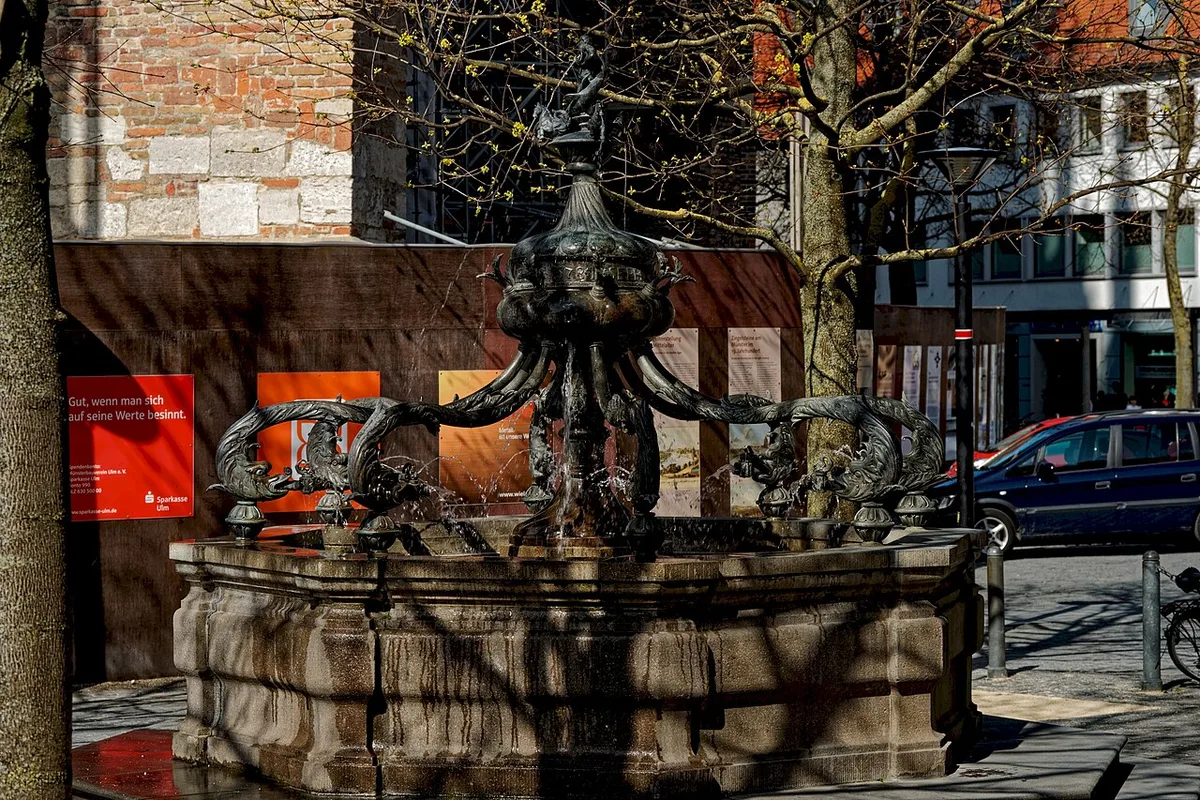
The Rathaus at Marktplatz, a couple of minutes away, is the best exterior-first sight in Ulm at night. City guides note the building was first erected in 1357, that the astronomical clock on the façade dates to around 1520, and that today's painted decoration was restored in 1900 following earlier weather damage. The point of an evening visit is the façade itself, so you do not need the building to be open; interior access is limited to the entrance hall and courtyard and is only possible during office hours.
Two quick pairings work well here. First, the library pyramid and the Rathaus frescoes in one short loop, because they face each other across the lane and make an easy before-and-after photo. Second, the Rathaus as a warm-up for the Fischerviertel, since the lanes begin just beyond it. Full landmark logistics, including how the various Ulm sights fit together, sit in the Ulm: Landmark Visitor Guides collection.
Thread the Fischerviertel: Timber Lanes and the Blau
The Fischerviertel is the single best free night-time wander in the city, and it needs no tickets or reservations. The quarter is built around the Blau, a small tributary that flows through the old town before joining the Danube, and the combination of timber-framed houses, footbridges and narrow channels is what makes it photogenic after dark. Give it an explicitly suggested duration of roughly 20 to 30 minutes at a relaxed pace, more if you stop for a drink.
The headline curiosity is the Schiefes Haus, a late Gothic timber house with a visible lean that has served as a hotel and is often cited as one of the world's most inclined. It sits by one of the canal channels, so it is easy to fold into the same walk. The lanes here stay open as public streets, though the buildings themselves are private, which is the key distinction for anyone planning an evening.
One comparison worth noticing: the Fischerviertel is essentially Ulm's medieval quarter, and it pairs neatly with the modern city if you cross back towards the Minster. Germany's national tourist board highlights the restored Fischerviertel and Gerberviertel as places to eat, drink and relax, so treating the lanes as both a walk and a dinner option is reasonable. If your evening is the first of several days, the 1 day in Ulm itinerary shows how the same streets work in daylight.
Danube Riverside: Stadtmauer, Metzgerturm and Blue Hour
The river is the city's signature evening frame, and the walk along the Stadtmauer towards the Metzgerturm is the standard route to it. The old wall runs above the Danube and gives you a raised line of sight over the water towards Neu-Ulm on the Bavarian side; the tower and the wall together are the classic last light spot. This is public ground, so timing is about light and weather rather than tickets.
For the best blue hour, aim to be on the wall when the sky starts to lose colour rather than after full dark, since the contrast between lit stone and deep sky is strongest then. A useful scenic counterpart is to see the same river and old town from above during the day, which is why tracking the best viewpoints in Ulm beforehand helps you decide whether to add a tower climb to your day and keep the evening purely ground-level. The Ulm Minster tower is the loftiest of those vantage points, but it is a daytime or early-evening errand, not a late-night one.
From the wall, the Danube bank below opens into lawn and promenade space where people sit in the evening, and the Rosengarten is tucked slightly away from the main flow. Combine the wall, the riverbank and the Rosengarten into one loop of roughly 30 to 40 minutes, then decide whether to stay river-side for a drink or head back into the old town for dinner. Weather decides a lot here, so keep an indoor fallback in mind.
A Drink by the Danube: What That Plan Actually Means
A drink by the Danube in Ulm is a position and timing decision more than a venue choice: you want river frontage, an east or north-west view depending on the light, and enough daylight left to enjoy it. Baden-Württemberg's tourism office names Ulm explicitly as a riverside sundowner location in the region, which confirms the idea but not a specific bar. The practical trade-off is that riverside spots are also the first to fill in good weather.
Because venue hours and availability change with the season and the night of the week, the honest approach is to check before you commit. Look at the venue's own website or social channels on the day, ask your accommodation, or stop at the tourist information office on Münsterplatz, which publishes the official event and gastronomy listings for Ulm and Neu-Ulm. Treat any single bar recommendation, including ones you find online, as a lead to verify rather than a guarantee.
Late Dinner and Café Culture
Ulm's restaurant geography makes late dinner easy to sequence: the cluster around Marktplatz and Münsterplatz covers Italian, Indian and burger options alongside cafés, while the Fischerviertel concentrates traditional fish and Swabian cooking in the lanes. That means you can eat before the walk, after it, or split the evening with a café stop in the middle. Because individual kitchens close at different times, confirm the last order time directly with wherever you choose.
A workable pattern is café first, walk second, dinner last, which suits a compact centre and keeps you outdoors during the best light. If you prefer to eat early and finish with a river stroll, book that order instead; there is no single correct sequence. For a broader sense of how meal stops fit into a fuller day, a 2 Days in Ulm plan can help you avoid repeating the same streets three times.
Bars, Clubs and Live Music
Ulm's nightlife is scattered in style rather than concentrated on one strip, so a night out means picking a lane rather than a district. Named Ulm venues cover several distinct moods: ROXY is known for independent and electro club nights across multiple floors, Cat leans towards indie music and dancing, Sauschdall towards live jamming and jazz, and Trödler Abraham towards a relaxed drink rather than a dance floor. Cafébar Kutter sits in the café-bar middle ground and is a reasonable starting point for a low-key evening.
The practical caveat is that a listed venue does not mean an open door tonight. Programmes, door policies and opening nights vary, and a bar that is busy on a Saturday may be quiet or closed midweek. The reliable method is to check each venue's own listings or the city's official overview of sights and events for the specific date, and to assume nothing about a Tuesday if you only saw a weekend review.
One framing worth keeping in mind is that Ulm is a compact student city, and a local guide describes it as having a notably dense bar scene rather than one central nightlife street. That means the evening is often a short walk between venues in different parts of the centre, not a single address. For a comparative sense of how another German city organises its nightlife, the things to do in Munich at Night and things to do in Berlin at Night guides show the opposite pattern, where clusters are far larger.
Museum and Cultural Evenings
Museum late openings exist in Ulm as occasional formats rather than as a standing nightly programme, so the useful skill is knowing where to look. The kunsthalle weishaupt, a private museum for the Weishaupt collection of modern and contemporary art, runs special evening events alongside its regular exhibitions, including an Art & Apéro format that combines a short guided tour with drinks at the in-house bar. Its programme also includes talks, family formats and short guided tours on set days.
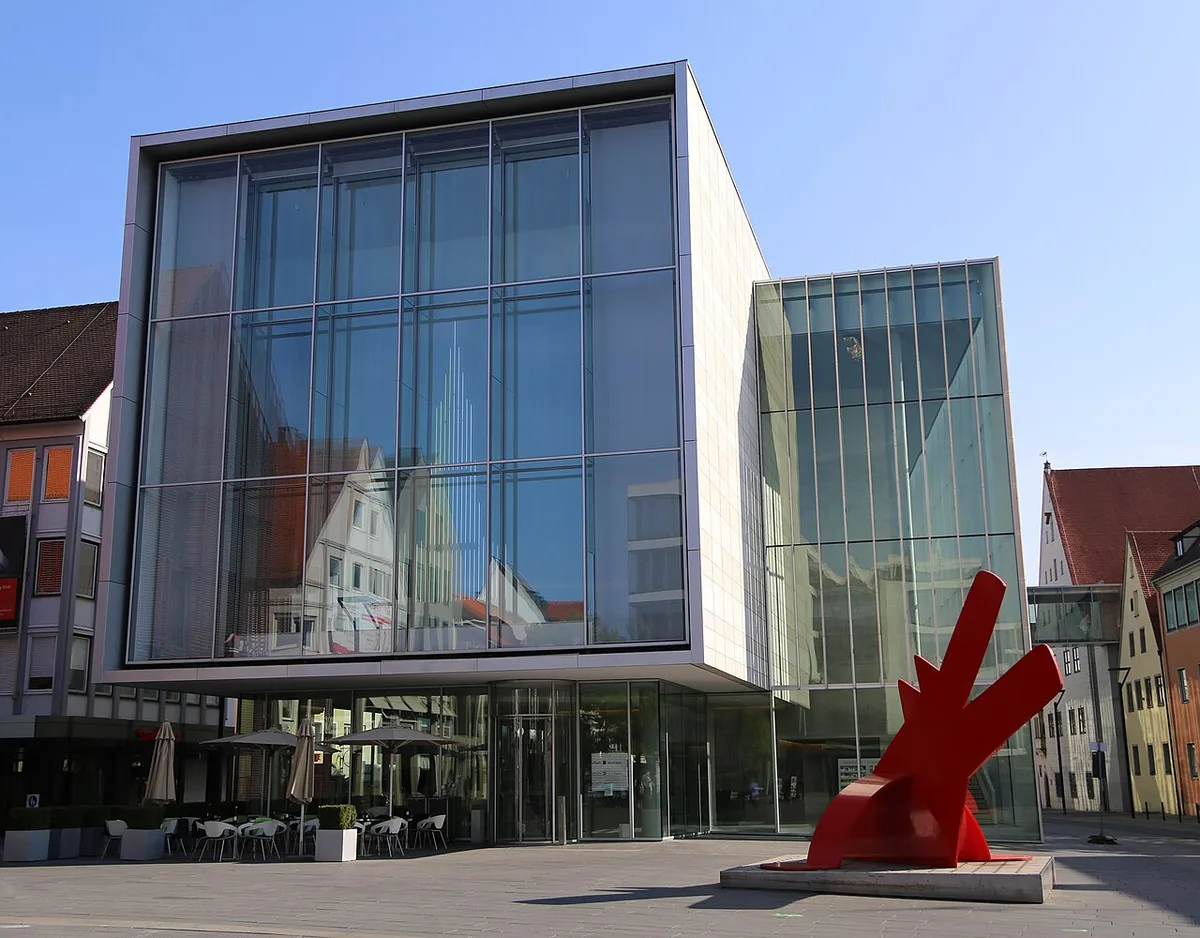
The Landesstelle für Museen Baden-Württemberg lists the kunsthalle among the state's museums and confirms its focus on twentieth-century European and American art, and the museum's own site publishes the current exhibition dates. That combination is what you should check before planning an evening around it, because a special format is not the same as extended daily hours. Other Ulm cultural venues, including the theatre and the larger museums, run their own evening calendars, so verify per venue rather than assuming a city-wide late-night culture.
A Decision Framework for Your Night Out
Sort your evening by energy level rather than by attraction list. Low energy suits the Münsterplatz and Fischerviertel circuit with a café stop; medium energy adds the Danube wall and a riverside drink; high energy ends with music and dancing in one of the named venues. If your group splits, the compact centre means walkers and dancers can separate for an hour and meet again without a long transfer.
Weather is the second filter. Rain pushes you towards covered lanes, cafés and any venue with a seated interior; a clear evening pushes you towards the wall, the riverbank and the squares. For a rainy-night Plan B, a seated bar and a short indoor walk are enough, because the Fischerviertel lanes and the arcades around Marktplatz let you keep moving without committing to a long outdoor stretch. Third, check the date itself: midweek and weekend evenings behave differently in any European city of this size.
Practical Evening Logistics
Ulm's old town is a pedestrian zone, which is why the evening walk works, but it also means you arrive on foot from wherever you park or stay. Confirm your own route and the last connections for your return the same day, using the official arrival and public transport information rather than a remembered line number, because services change. The official UlmGuide and the city's public transport pages explain which sights and services card holders can use, so read the current terms before deciding whether the card helps your specific itinerary.
Keep the free-versus-ticketed distinction clear. Squares, the Rathaus façade, the wall, the riverbank and the Fischerviertel lanes are public and cost nothing; the Minster tower, museum interiors and special formats are separately ticketed and governed by their own rules. That single distinction prevents most of the disappointment people report after an evening in Ulm, where the frustration is usually a closed tower or a quiet bar, not a lack of atmosphere.
If It Rains or You Want Quiet
A wet evening in Ulm does not mean abandoning the plan, it means shortening the outdoor sections and lengthening the indoor ones. The lanes of the Fischerviertel and the covered stretches near Marktplatz let you move between buildings with limited exposure, and a café or bar with a seated corner is the obvious shelter. If the weather turns, cut the river loop first, since the wall and bank have the least cover.
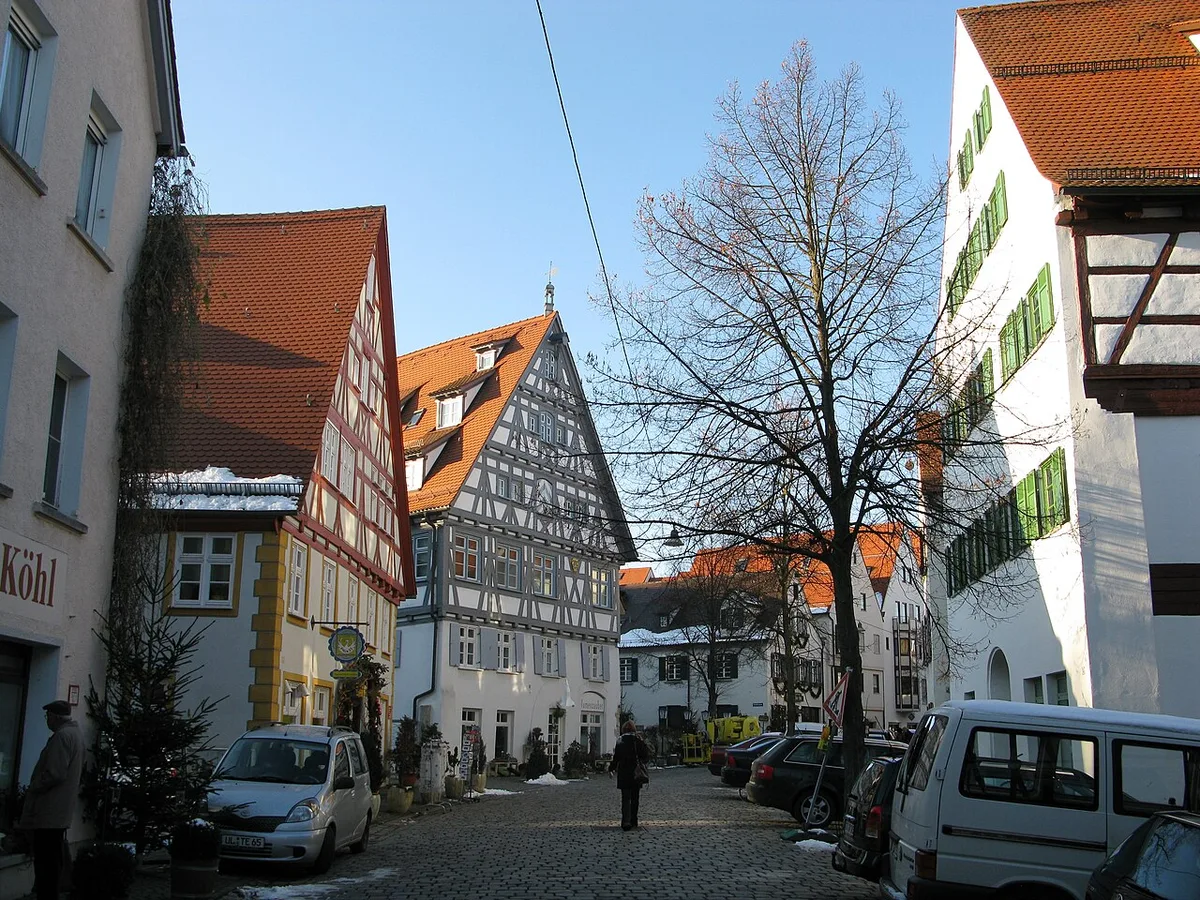
For a quieter night, the sequence matters more than the destination: eat early, walk the illuminated centre when the streets are still busy, and finish in a seated venue rather than a club. Couples and solo travellers often get more out of the Fischerviertel and the riverbank after the dinner rush than during it, because the lanes empty out while the light on the water remains. If you want a calmer alternative to a full night out, checking what is on in the city on your date is more useful than committing to a single venue in advance.
Your Evening in Ulm, Compressed or Extended
A workable full evening runs: Münsterplatz and the Rathaus façade at blue hour, the Fischerviertel lanes on foot, a drink or a short stop near the Danube, then dinner around Marktplatz or back in the lanes, and finally a bar or a music venue if you still have energy. Compressed to about two hours, drop the river loop and the final drink, and you still see the essentials. Because hours, tickets and programmes change, verify anything time-sensitive with the venue or the tourist information office on the day rather than trusting a fixed plan. For wider planning, see Ulm city travel guides.
Frequently Asked Questions
Can you walk Münsterplatz and the Fischerviertel at night for free?
Yes. The squares, the Rathaus façade, the city wall, the riverbank and the lanes of the Fischerviertel are public space, so walking them at night costs nothing. What is separately ticketed are the interiors and vertical attractions, notably the Minster tower and museum galleries. Check the Minster's own information before planning a tower climb, because the tower closes earlier than the church and its access rules differ from simply walking the square.
Where do people go for a drink in the evening in Ulm?
Drinks are spread across the centre rather than concentrated on a single street. Riverside spots near the Danube suit a sundowner, Marktplatz and Münsterplatz have cafés and bar-restaurants, and the Fischerviertel lanes mix dining with smaller bars. Named Ulm venues cover different moods, from relaxed pints to indie and electro nights. Opening days and hours vary, so check the individual venue or the city's official listings for the evening you have in mind.
Is there live music or clubbing in Ulm at night?
Ulm has venues with distinct music identities rather than one large club district. Named examples include a multi-floor club for independent and electro nights, a venue oriented towards indie music and dancing, and a spot known for live jamming and jazz. Programmes change weekly, so the reliable approach is to check the venue's own schedule for your date. Do not assume a listing from a past weekend means the same event runs tonight.
How long does an evening walk through Ulm's old town take?
A suggested, non-official estimate is about 90 minutes for the core loop of Münsterplatz, the Rathaus façade and the Fischerviertel at a relaxed pace, and roughly two hours if you add the Danube wall and a stop. These are planning figures, not measured times, and they depend on how often you stop to look, eat or drink.
Do Ulm's museums or the Minster tower open in the evening?
Do not count on it. Standard museum hours are generally daytime, and the Minster tower closes earlier than the church, so an evening visit usually means admiring illuminated exteriors and public spaces instead. Late-opening formats exist occasionally, including evening events at Ulm's private modern art museum, but they are special programmes rather than extended daily hours. Confirm current opening times with each venue or the tourist information office before you build an evening around one.


