Stuttgart rewards a planned route. The official Stuttgart tourism site publishes its photo-tour ideas as three geographies: city centre, city centre and east, and south and west, a sensible way to organise a walk. The same site lists highlights including the Weissenhof Estate with the Weissenhof Museum, the SWR Television Tower, Schillerplatz and Killesberg, so those are recognised anchor subjects to build around rather than invented ones.
The city sits in a valley, so subjects that look close on a map can require a real walk between them. Grouping stops by area keeps you moving with the light instead of fighting transit. As a suggested planning aid, one area can fill a relaxed half day if you give each subject room; that is an editorial estimate, not an official duration. If you want the wider city context before committing to a route, start with the Stuttgart city guide.
How to Build a Stuttgart Photography Walk
Think of the city in three bands: the central historic core around Schillerplatz and Schlossplatz, the hillside and park viewpoints including Killesberg and the television tower, and the architectural cluster at the Weissenhof Estate. Each band has a different walking rhythm, and mixing all three in one session usually means more time in transit than composing frames. Pick one band per outing.
The official tourism site publishes its photo tours as three loose geographies: city centre, city centre and east, and south and west. You can borrow that logic without inventing a fixed stop list. Choose the geography that matches your available time, then name two or three subjects inside it. Fewer stops with more time at each usually beats a checklist sprint, and a single area can reasonably occupy a relaxed half day.
Separate free public ground from paid interiors before setting out. A facade, a square or a park path is generally open to view, while entering a museum or climbing a tower typically involves a check on current access. The StuttCard is described on the official tourism site as a welcome ticket granting advantages at over fifty partners for 24, 48 or 72 hours, so compare it against individual tickets only if you plan several paid stops.
Two other decisions shape a photography day: where you sleep and how you move. A base near the central stations cuts time spent crossing the valley, while a base near a park suits early starts. Neither is compulsory, but thinking about the first and last frame of the day usually matters more than a long list of stops.
Weissenhof Estate: Modernist Geometry and the Museum
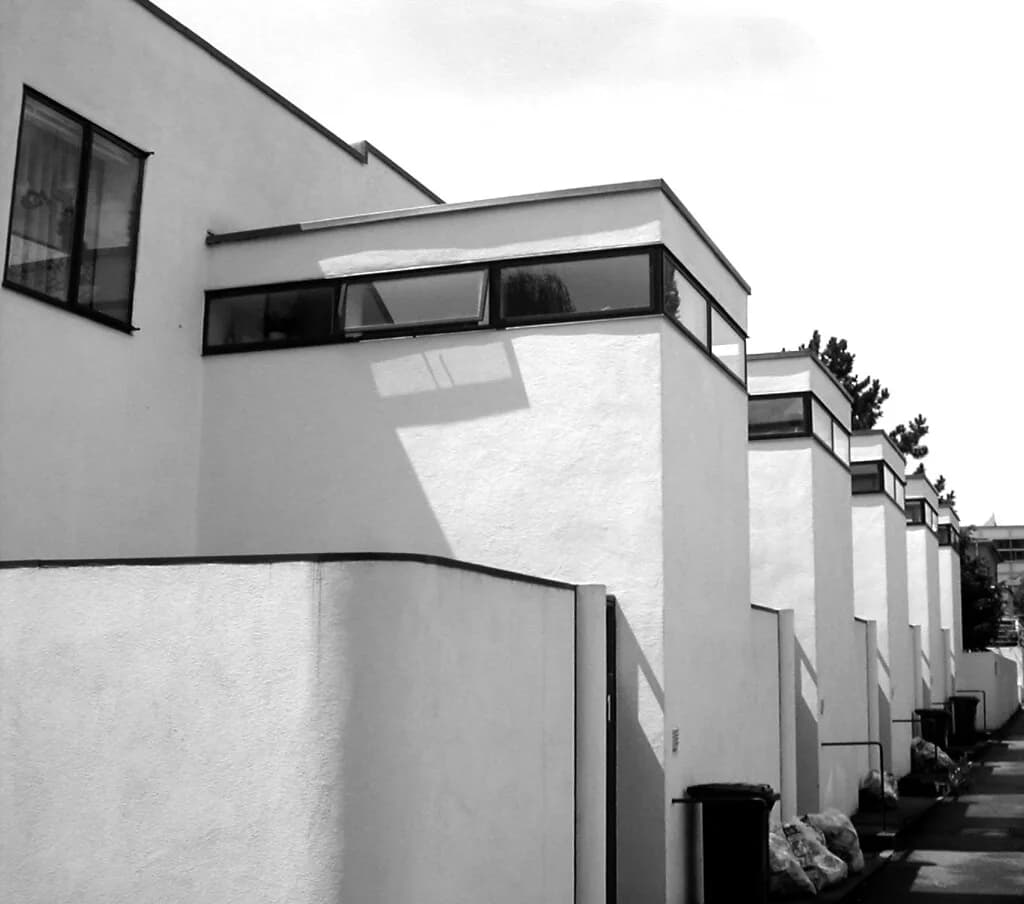
The Weissenhof Estate is Stuttgart's strongest subject for clean lines and repeated forms. Built as a modernist housing exhibition, it presents rows of white-rendered houses whose proportions and windows reward a patient eye. Because the architecture is the point, one lens and a willingness to work a single facade often beat rushing the whole estate. Residents live here, so keep to public paths and avoid framing into private windows for long periods.
The site includes the Weissenhof Museum in the Le Corbusier House, which the tourism site presents as a separate attraction with its own admission, listed from 6.50 € at the time of retrieval. That distinction matters: the surrounding streets are visible from public ground, while the museum interior is a ticketed visit. The museum should be treated as its own booking, not as part of a shared estate-wide ticket, so verify opening days, ticket terms and interior photography rules with the museum before going.
A good way to understand the estate is to pair it with the wider city context. The Stuttgart landmark hub covers how the Weissenhof group fits into the city's architecture and what else sits nearby, which helps decide whether to give the estate a full session or fold it into a longer central walk.
The Fernsehturm and Stuttgart's Hillside Views
The Stuttgart Fernsehturm, also listed as the SWR Television Tower, works as a skyline subject as much as a destination. From the city below it reads as a slender vertical against wooded hills, which makes it a useful anchor for wide frames from several parts of town. The tourism site lists it among Stuttgart highlights but does not publish viewing-deck times or ticket terms in that listing, so confirm those directly with the tower operator.
Hillside viewpoints around Stuttgart generally offer two kinds of frame: looking across the valley toward the centre, or looking up toward the tower and surrounding ridges. Which you choose depends on whether you want layered city depth or a cleaner silhouette. If you want to compare elevation-based options before committing, a dedicated viewpoints guide is more useful than guessing from a map.
Do not assume any tower or viewpoint is open on the day you arrive. Weather, maintenance and seasonal schedules all affect access, and tourism listings do not guarantee current conditions. Check the operator's own page close to your visit for opening times and any ticket requirement rather than relying on a third-party summary or an old blog post, and keep a wet-weather fallback in mind.
Killesberg: Park Land and a Tower to Work With
Killesberg combines open parkland with a tower, which makes it one of the few places where you can work both ground-level and elevated compositions in a single visit. The park is a public green space, so the walking is straightforward and the subject matter shifts with the seasons. Allow more time than you think you need, because the best frames often appear between the obvious ones. For wider planning, see Killesberg Park in Stuttgart.
Tower access and photography rules at Killesberg are not detailed in the tourism listings reviewed here, so treat them as something to verify on site or through the park's own information. If the tower is closed or crowded, the park paths still offer a full session. Build a flexible plan with a fallback rather than betting the day on one structure.
Killesberg pairs naturally with the hillside viewpoint theme, since both involve elevation and city context. If you are planning several days, slot the park into a broader route rather than treating it as a standalone stop. A multi-day itinerary can help you see where it fits without turning the trip into a series of disconnected errands.
Vineyard Terraces: A Working Landscape
Stuttgart is unusual among German cities for having vineyards within its boundaries, and the terraced slopes are a distinctive photographic subject. The lines of the vines create repeating diagonals that work well with morning or late-afternoon light, though the exact appearance depends on the season. Spring brings fresh growth, summer is dense green, and autumn turns the slopes gold before the harvest. For wider planning, see Stuttgart parks and gardens.
These are working agricultural landscapes, not landscaped viewpoints. Stay on public paths, do not enter vine rows, and respect local signage about access or spraying. If a path looks private or blocked, find another route rather than climbing over anything, and remember that people working the slopes have priority over your composition.
Because vineyard access and seasonal conditions change, check local information before going rather than assuming a route from a map. The official tourism site is the right starting point for what is currently promoted, but specific terrace names and viewpoints should be confirmed on the ground. Treat the slopes as a slow subject: pick one section, walk it properly, and let the light do the rest.
Historic Facades Around Schillerplatz
Schillerplatz and the surrounding streets are where Stuttgart's historic layer is most concentrated and most walkable. The square is named among the city's highlights, and the nearby Altes Schloss, Neues Schloss and Schlossplatz extend the architectural variety within a short radius. This is street-level photography: facades, squares, roofs and the small details between them.
Half-timbered and older facades reward a slower walk than a modern district does. Look at window proportions, ground-floor shopfronts and the way buildings meet at corners, because those transitions often hold the most interesting frames. A compact lens or a short zoom will keep you moving without drawing attention on busy pavements.
The city centre is also where crowds are densest, so early starts usually mean cleaner frames and less waiting. If the square feels too busy, adjacent streets and courtyards often give you the same architectural language with more breathing room. Save the wide shots for when the light is low and soft, and use the middle of the day to scout rather than shoot. If a museum interior tempts you out of the street, the museum comparison can help you choose without losing the day.
Practical Checks Before You Go
Before relying on any paid interior, confirm current opening days, ticket terms and whether photography is allowed inside. The tourism site lists attractions such as the Porsche Museum and the Mercedes-Benz Museum alongside the Weissenhof Museum and Staatsgalerie, but those listings are not a guarantee of today's schedule. The operator's own page is the safe source for times, closures and admission conditions.
If you plan to visit several paid sites, price the StuttCard against buying individual tickets. The official tourism site describes the pass as valid for 24, 48 or 72 hours and covering over fifty partners. Whether it suits a photography-led trip depends on how many interiors you actually enter, so list your paid stops first and then decide. Prices and partner conditions change, so confirm the current offer before buying.
Transport, accessibility and tour availability should be checked on official pages rather than assumed. The tourism site publishes city tours and a hop-on hop-off option, but schedules and terms change. For a photography-focused trip, the most important checks are usually opening days, entry rules for tripods or interiors, and whether a location is currently accessible at all. If you would rather leave the car behind, see getting around Stuttgart by public transport.
Plan Your Visit
A good Stuttgart photography walk is less about covering the whole city and more about choosing one coherent subject per session. Modernist geometry, a hillside tower, vineyard slopes and historic squares each ask for different pacing, and trying to combine them all in one day rarely produces better images than focusing on two.
Use the official tourism site to confirm what is currently open and what a pass or ticket actually covers, then build your own route around a single area. Check each paid interior with the operator before you travel, and keep a flexible fallback for weather or closures. That approach leaves room for the unexpected frames that make a city walk worthwhile.
Frequently Asked Questions
Are there free photo spots in Stuttgart?
Yes. Public squares, streets, parkland and many facades can generally be photographed from public ground without a ticket. The Weissenhof Estate's streets, Killesberg's park paths and the area around Schillerplatz are examples of subjects you can work from outside. Paid interiors and tower access are separate, and their terms should be checked with the operator before you go.
How long does a Stuttgart photo walk take?
It depends on how many subjects you group together and how long you linger at each. A single central area or a single park can occupy a relaxed half day, while trying to combine three distant areas in one session usually means more walking than shooting. Choose one area per outing and treat any suggested duration as a planning aid rather than an official figure.
Do I need a guided photo tour in Stuttgart?
No, a guided tour is optional. The official tourism site publishes photo tour categories based on city geography, which you can use to shape your own route, but you are free to walk the same areas independently. A guided option may suit you if you want local context or fixed logistics, while independent walking gives you more control over timing and light.