
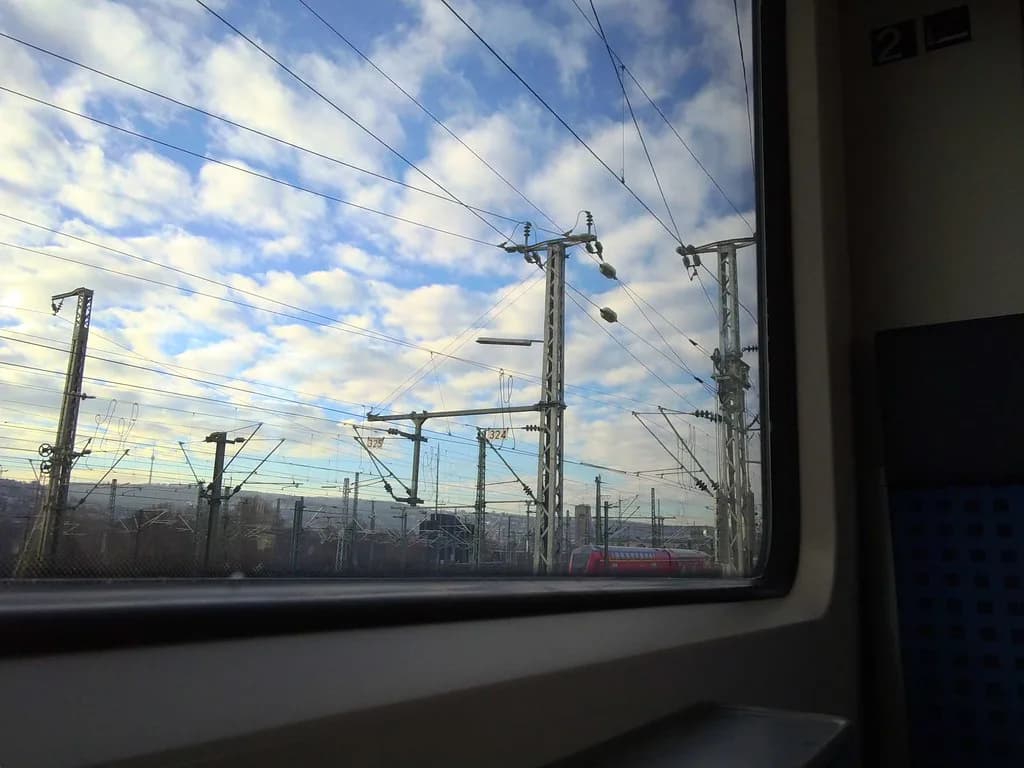
Stuttgart's public transport comes in three layers, and they share a single zone-based fare system rather than charging by distance. The S-Bahn is the green commuter railway reaching out to nearby cities, the U-Bahn (Stadtbahn) is the blue tram-style network covering the centre and closer suburbs, and buses fill in the rest. A third-party guide written in 2019 describes exactly this breakdown of bus, U-Bahn and S-Bahn.
One concrete planning detail before you buy anything: the Killesberg Hill Park is a green destination in the middle of the city with a 40-metre tower, children's play areas, a petting zoo and an open-air swimming pool, as the city's tourism listing describes. A suggested duration of two to three hours for the park and tower is the kind of figure you can use as an editorial starting point, not an official timing.
This guide covers the zone principle, the main ticket types, when a day pass makes sense, and how the network reaches a few visitor destinations. Where the available material is silent or dated, it says so instead of guessing. For the sightseeing side, see Stuttgart: Landmark Visitor Guides.
The Three Networks: S-Bahn, U-Bahn and Bus
The S-Bahn is the commuter railway that connects Stuttgart with nearby cities such as Esslingen, Filderstadt, Böblingen and Herrenberg. The U-Bahn, also called Stadtbahn, is the tram-style network that mainly runs within downtown and the closer outskirts. Buses are the third layer. The 2019 description matches each layer to its letter and colour sign: a green S, a blue U and a red or green H for buses.
Operator SSB runs the Stadtbahn and city buses and publishes its own service and disruption notices, which is where you should look for engineering works or line changes close to your travel date. VVS is the transport authority and holds the fare and zone information. For a short trip, decide by destination: inside the ring the U-Bahn usually does the job, beyond the city boundary it is the S-Bahn.
A useful habit is to sort the ticket question before you line up sights: count likely rides, not kilometres. If you are still choosing where to go, the One Day in Stuttgart itinerary lines up stops that can be reached with a single day of transport.
Zones, Not Stops: How Fares Are Calculated
Fares in Stuttgart are calculated by how many zones your journey crosses, not by the number of stops. The 2019 guide puts it plainly: passengers buy tickets for different zones, and its partial list of eleven ticket options were all sold by zone. Two journeys of the same number of stops can cost differently if one stays inside a single zone and the other crosses a boundary.
The tools for this are the zone map, called the Tarifzonenplan, and the three-digit destination numbers displayed at stations. According to the 2019 description, you can enter a destination number or a zone into a ticket machine or use the online planner, which asks only for the start and end of your journey. The official VVS site is where the current zone plan and fare tables live and is the only sensible source for numbers that change regularly.
Two buying habits save trouble. First, buy before boarding: tickets come from machines, online channels and, on buses, from the driver. Second, if your plans are uncertain, buy the zones you might need rather than the minimum, because travelling outside your paid zones is treated as travelling without a valid ticket.
Ticket Types and Which One Fits
The short trip ticket, or Kurzstreckenkarte, covers a very short hop; the 2019 description said three consecutive stops. The single ticket, Einzelfahrschein, is for one ride in one direction and, per the same description, allowed travel of up to three hours with the option to get off and continue in the same direction. Whether those exact conditions still apply must be confirmed on the operator's current pages before you rely on them.
The four-trip ticket, Mehrfahrtenkarte, is four single rides on one card and must be validated before use. The 2019 guide says it has the same price as the online single ticket and that unused rides must be used within a year. The three-day ticket was designed for overnight hotel guests and conference visitors staying within the network area, which makes it a short-break product rather than a day-trip one.
Day tickets and group day tickets are the two products visitors use most. The group day ticket covered up to five people in the 2019 description, with a dog permitted to replace a person. The StuttCard is a different thing: the city's tourism partner sells it for 24, 48 or 72 hours with benefits at over 50 partners, so it is not simply a transit ticket.
The KombiTicket is worth knowing about because it changes the arithmetic: with certain events the admission ticket doubles as a transit ticket. Whether it applies to the event you are attending depends on the organiser and the current ticket terms.
When a Day Ticket Makes Sense
The test is ride counting. A day ticket gives unlimited rides within the zones you bought, and the 2019 description said it was valid until 7 a.m. the following day. Three or more separate rides in a day generally tips the balance toward a day ticket; one ride clearly does not.
Groups change the calculation decisively. The 2019 description of the group day ticket covered up to five people, and the operator SSB has advertised that with selected day tickets up to three children aged 6 to 14 can travel free. Both details belong to their dates, so check the current rules and zone scope with VVS or SSB before travelling.
The three-day ticket, designed for hotel guests and conference attendees, suits a two- or three-night stay better than a day trip. Because these products and their conditions change, treat everything above as a description of how the system worked when that guide was written and verify the current version before you commit.
Reaching the Car Museums and the Neckar Corridor
The Mercedes-Benz Museum sits in the Neckar corridor at Bad Cannstatt. A stadium guide's directions describe taking S-Bahn line S1 from the main station in the direction of Kirchheim and getting off at the Neckarpark stop, followed by a five-minute walk. Those directions were written for the neighbouring arena, but Neckarpark is the same stop. Because long-standing S-Bahn patterns can be interrupted by construction, confirm the current line and stop on the operator pages close to your trip.
Football matchdays reshape the area. The same stadium guide notes that on matchdays a supplementary Stadtbahn line also ran from the main station to the arena. Kick-off times vary, so check the club's official fixture list before planning a museum visit on a matchday afternoon and expect crowded trains.
The Porsche Museum in Zuffenhausen is a different direction, and none of the available sources states a line for it. This guide therefore gives no line number: look the destination up in the official journey planner. If you are weighing up the two collections, the Mercedes-Benz Museum Stuttgart tickets page covers that museum's own ticketing so you can decide how to split your days.
Killesberg and the Northern City
Killesberg is the classic northern trip: a hill park with a tower, play areas, a narrow-gauge railway and an open-air pool. The Weissenhof estate sits in the same northerly area. In 1927, seventeen architects built an exhibition settlement there, according to the city, and the estate has been a listed building since 1958, with the Le Corbusier houses added to the UNESCO World Heritage List in 2016.
The 2019 guide supports a U-Bahn approach to Killesberg in general but does not give a line number, so plan by destination name rather than by memory. What matters for ticketing is that the park and the estate sit in the same reachable northern part of the city, which makes them a sensible pairing under one day ticket instead of two singles. If you have only one day, the 1 day in Stuttgart itinerary shows how northern stops can be combined with the centre.
One fact saves planning time: the Weissenhof Museum states plainly that it is the only house of the settlement open to visitors. Walking the street itself is free, but the interiors are a single building, so check the museum's own opening days and any ticketed events rather than assuming daily access.
Two Scenic Rides Worth Building Into a Day
Two of Stuttgart's most enjoyable rides are not really about getting anywhere. The Zacke is a cog railway running between Marienplatz and Degerloch which, in the 2019 description, carried bicycles uphill free of charge and made a pleasant ride in its own right. The cable car from Südheimer Platz up towards the Waldfriedhof, described as a nostalgic trip in very old cars with a beer garden and walking paths nearby, is the other.
Both are network services rather than paid attractions, so they fit naturally under a day ticket, and both are short enough to pair with something else nearby. The city's tourism partner lists the Cogwheel Train Stuttgart (Zacke) among its city highlights, a sign that it is treated as an experience rather than merely a commute. Check operating days before building a day around either, since heritage-style services are more likely to have restricted schedules than main lines.
Boarding, Validating and Buying Tickets
Buy before boarding. The 2019 guide describes tickets being available from machines, electronically and, on buses, from the driver. It also states that tickets bought online or through the app were cheaper than machine tickets, though any current price difference has to be confirmed with the operator rather than assumed.
The multi-ride card is the one that catches people out. According to the same description, the Mehrfahrtenkarte must be validated in a yellow stamping machine directly after entering a bus or U-Bahn, or at the S-Bahn station before entering. Unstamped, an otherwise valid card reads as an invalid ticket, so stamp one field before each journey and keep count of what remains.
Doors do not always open on their own. Per the 2019 guide, you press a button on or at trains to open the doors, and press the red stop button on a bus before your stop, or the driver may pass it. Both habits are worth adopting from your first ride, particularly with luggage or children in tow.
Bikes, Children, Dogs and Inspections
Bike rules differ between the two rail networks. The 2019 description said bicycles were barred on the U-Bahn from Monday to Friday between 6 and 8:30 a.m. and 4 and 6:30 p.m., and free at other times and at weekends; on the S-Bahn they were allowed at all times, but a children's ticket was required between 6 and 9 a.m. on weekdays. Buses did not carry bikes in the downtown area, though they did on the outskirts. These are dated rules and should be verified before you roll a bike onto a platform.
Child and dog rules follow age bands in the 2019 account: under-sixes travelled free, children aged 6 to 14 needed a children's ticket, anyone 14 or older needed an adult ticket, and a dog required a children's ticket unless carried on a lap. Fines were stated as 60 euros at the time, but the amount is set by the operator and belongs on the operator's own pages, not in a traveller's memory.
If your party spans ages or includes a dog, sort out everyone's ticket before boarding. It is faster and avoids a conversation with an inspector in a language you may not share, and group day tickets are usually the simplest way to cover a mixed-age group.
Three Visitor Profiles and the Ticket to Buy
A couple staying centrally for two days, doing museums and Killesberg, should compare zone-appropriate day tickets against a multi-day product. With two people, a group day ticket may already beat singles. Because the day ticket runs to 7 a.m. the next morning under the 2019 rules, an early next-day run can fall inside it.
A solo day-tripper doing the Mercedes-Benz Museum, the centre and Killesberg will usually make three or four rides, which points to a day ticket rather than singles; a short trip ticket only fits if the whole day is two or three stops. If the sports car collection is also on your list, look at Porsche Museum Stuttgart tickets alongside the Mercedes-Benz option before deciding how many transport days you need.
A family of four with children between 6 and 14 should start with the group day ticket, then check whether the current child-carriage rule on selected day tickets covers children in that age band free of charge, as the operator has advertised. If it applies, only adult tickets may be needed. Confirm the terms in force for your travel date rather than relying on a rule remembered from a previous trip.
Plan Your Visit
The sequence that works is simple: identify the zones you cross, choose between singles and a day ticket by counting rides, validate any multi-ride card, and press the door button. Fares, validity and service patterns move, so confirm them on the VVS and SSB sites close to your travel date; many of the ticket descriptions above come from a 2019 guide and are useful as orientation rather than as current terms.
One last trade-off is worth naming: convenience against cost. Buying in advance through official channels is usually the simpler option, but it removes flexibility if plans change. For a short city break, buying day tickets as you go is a reasonable middle path, and the 3 days in itinerary page helps spread the sights across a longer stay.
Frequently Asked Questions
How do I get from Stuttgart Airport into the city centre by public transport?
Airport connections run on the regional rail network rather than the city tram, and the exact line and journey pattern should be checked in the official journey planner for your travel date, because engineering works can alter routes. Enter your start and destination in the VVS or SSB planner and it will show the current connection and the zones you need. Buy for those zones before boarding.
Is a day ticket in Stuttgart better value than single tickets?
It depends on how many separate rides you take. One or two rides usually favours singles; three or more in a day generally makes a day ticket the better buy, because it covers unlimited rides in the zones you purchased. Groups shift the arithmetic further, since a group day ticket can cover several people for less than the same number of singles. Compare your actual ride count against the current fares on the operator's site.
Do I need to validate my ticket before boarding in Stuttgart?
Tickets bought for immediate use are generally ready to travel, but multi-ride cards are not. A four-trip ticket has to be stamped in a yellow machine before you travel, either on a bus or U-Bahn immediately after entering or at an S-Bahn station before entering. An unstamped card counts as an invalid ticket, so stamp one field per journey and keep the card with you.
Can I take a bike on the S-Bahn or U-Bahn in Stuttgart?
The rules differ between the two networks and have been restrictive at weekday peak hours on the city tram network, while the S-Bahn has been more permissive with an early-morning ticket requirement on weekdays. Because these conditions change, check the operator's current bicycle rules before planning a ride. Buses have separate restrictions and generally do not carry bikes in the city centre.
Which ticket covers the Mercedes-Benz Museum and the Porsche Museum?
Both museums sit on the same zone-based fare system, but they are in different parts of the city, so the zones you need may differ. Buy according to the zones your journey crosses rather than looking for a special attraction ticket. For the Mercedes-Benz Museum, published directions point to the Neckarpark access point in the Neckar corridor; for Porsche, look the destination up in the official planner instead of relying on a listed line number.
Sources
- Stuttgarter Straßenbahnen AG - SSB
- Public Transport in Stuttgart ❘ blog by Kiramiga
- Official event website
- Weissenhofmuseum im Haus Le Corbusier
- Weissenhofsiedlung | Landeshauptstadt Stuttgart
- Visit Stuttgart - discover the home of Porsche and Mercedes-Benz
- VfB Stuttgart | Offizielle Webseite des VfB Stuttgart
- Mercedes-Benz Arena - Stuttgart - The Stadium Guide
- Höhenpark Killesberg in Stuttgart - a green destination for the whole family


