Berchtesgaden rewards photographers who plan by light direction and travel logistics rather than by a ranked list of pretty places. The region separates into three working zones: the compact town, the Königssee corridor, and the national park valleys and viewpoints. Treat each zone as a separate half-day at minimum, because squeezing them into one walkable loop is the most common planning error here.
Start with five compositions that justify the trip: the Königssee with St. Bartholomä, the Obersee basin above the Salet dock, the Archenkanzel view down over the lake, the framed Ramsau church across the Im Tal river, and the mirror surface of Hintersee. Each faces a different way and demands its own time of day, so the sequence matters more than the shot list.
For orientation and current seasonal information, the region's official tourism site is the starting point for opening periods and conditions, and it also confirms that autumn colour is an active part of the local visitor season. Check its pages directly before finalising a route, since high-level access in this valley is seasonal rather than year-round.
Quick answer: five compositions and why they need different light
The Königssee and St. Bartholomä deliver a wide lake-and-chapel frame that depends on still water and a clear sightline down the lake. Hintersee offers a tighter, more intimate reflection with the Zauberwald forest at its edge, which means it performs differently when wind picks up. The Archenkanzel gives the aerial overview that no shoreline position can match, and it is the one composition here that costs real effort to reach.
Ramsau's church and the Im Tal river produce the region's most recognisable framed composition, with the river and bridge leading the eye toward the church and the Watzmann massif behind. Wimbachklamm is the outlier: a shaded, spray-heavy gorge where your settings change completely from everything else on this list. Build the day around two of these, not five.
How the geography shapes your shooting day
Berchtesgaden town holds the train station, cafes and shops, while the lakes, gorges and high viewpoints sit out in the national park and the wider Berchtesgadener Land district. Public transport exists but is not dense enough to string many distant viewpoints together in one day, and taxis add up fast. Assume one major location per half-day and accept that travel time is part of the shoot.
This is also why the town deserves its own short session rather than being treated as a base only. Its market square and surrounding streets carry the regional wall-painting tradition, which photographs well in flat, overcast light when contrast is low. If you want the broader set of elevated town views documented elsewhere, the best viewpoints in Berchtesgaden collection covers the options that need their own trip.
Königssee and St. Bartholomä: a lake with one working direction
The Königssee runs in a long trough between steep walls, so the light on the water changes markedly as the sun moves across the valley rather than around it. The chapel at St. Bartholomä sits low on the western shore, its red onion domes against pale walls and dark forest. That contrast is what carries the frame when the light is soft.
You cannot photograph the chapel from the water without accepting the boat's own rhythm, and the crossing traditionally includes a trumpet demonstration that echoes off the walls. Treat that as a scheduling constraint, not a photo opportunity, and plan your position at the dock rather than mid-crossing. The operator's current timetable and seasonal routing are the only reliable source for how the day is structured, because in winter the route can be shortened.
Obersee: the small lake that rewards an early arrival
Above the final boat stop, a short walk leads to the Obersee, a compact basin enclosed by steep slopes and forest. Because it is small and sheltered, it holds still air longer than the main lake, which is exactly what you want for reflections. Arriving on the first practical crossing gives you the calmest window and the fewest people in frame.
The basin is a short climb from the Salet landing, and continuing around the shore opens up different foregrounds, including the alm buildings at the far end. Whether you can reach the Salet stop at all depends on the season, so verify the current boat routing with the operator before building a day around Obersee. In winter this composition is simply not available.
The Archenkanzel view over the Königssee
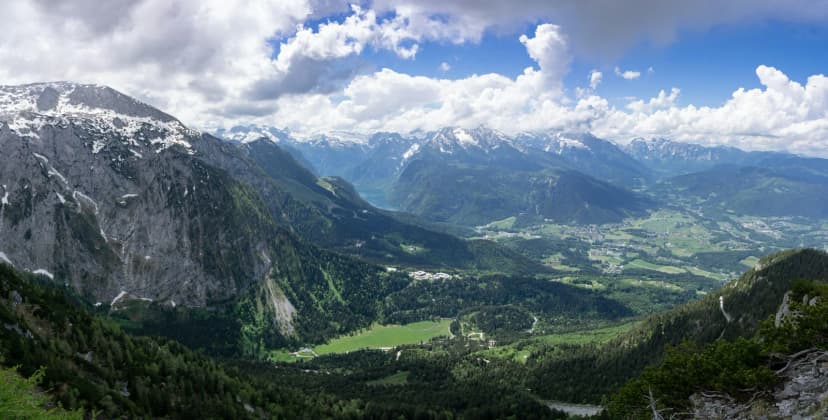
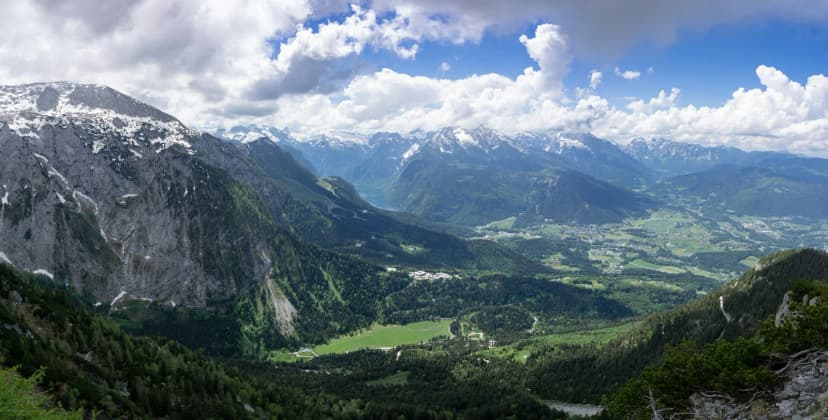
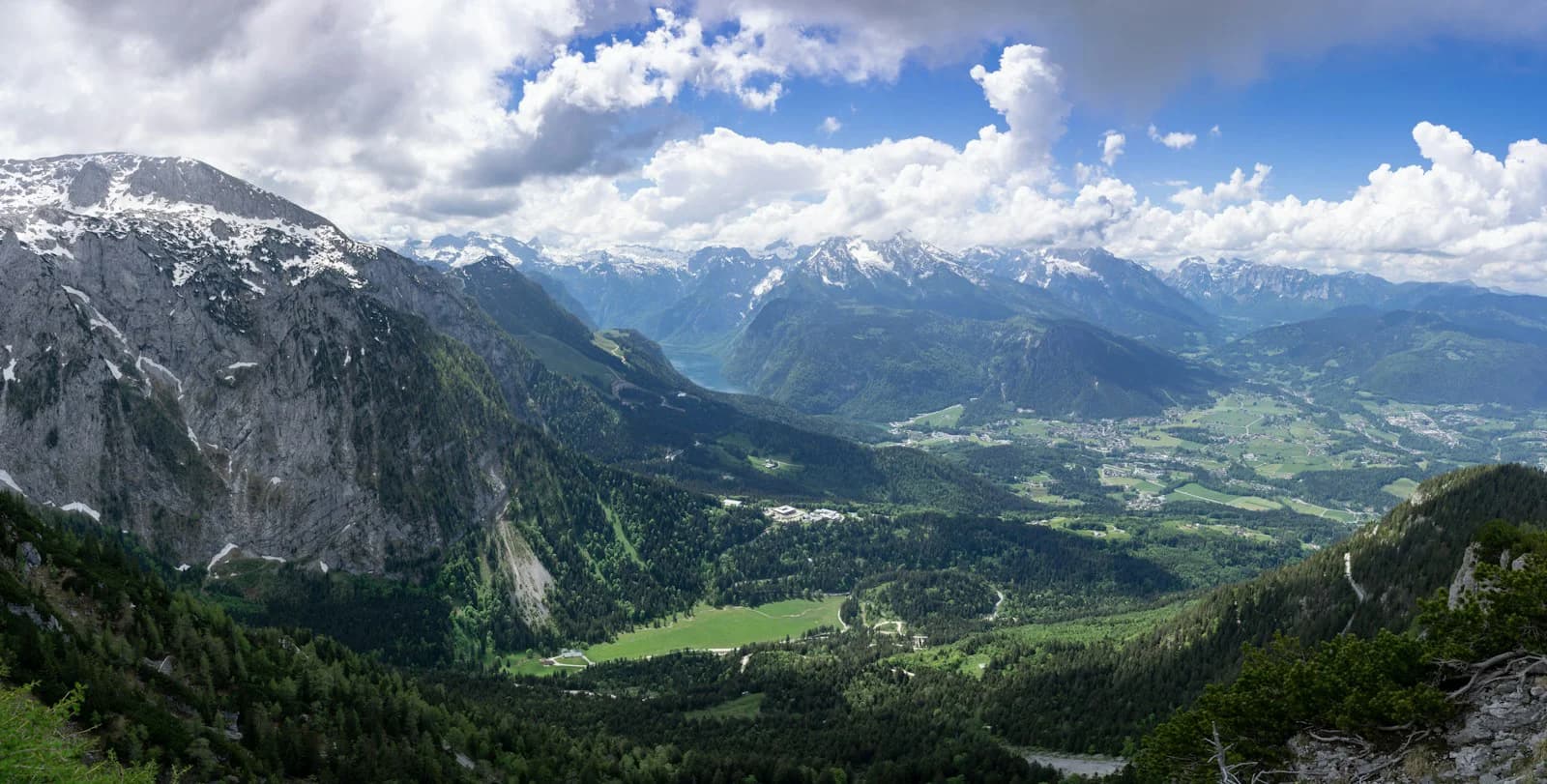
The Archenkanzel is the classic high vantage point above the Königssee, looking down the length of the water toward St. Bartholomä. It is the composition the national park itself uses as its lead image in its press photo library, where the first downloadable picture is captioned as the view from the ark pulpit to the Königssee with St. Bartholomä. That gives you a clear reference for the exact framing you are chasing. Reaching it involves a genuine climb, not a roadside pull-off, so budget the effort accordingly.
Long-lens compression from up here flattens the lake and stacks the chapel against the Watzmann wall behind it, which is why the view reads differently from anything shot at water level. Because you are working at altitude with changing conditions, treat this as a half-day on its own rather than an add-on. For current path conditions and safety information, use the national park's own visitor guidance.
Wimbachklamm: a gorge where shade and spray set the exposure
The Wimbachklamm is a narrow, wet gorge where direct sun rarely reaches the water and the rock stays in deep shade. That means long exposures and a stable support matter far more than light direction, since you are effectively photographing a dim interior. Spray on the front element is the other constant problem, so bring something to wipe the lens and expect to shoot between gusts. The national park's own picture library includes a waterfall in the Wimbachklamm, which shows how the water and rock interact in that enclosed space.
Because the gorge is enclosed, it pairs badly with a bright high-sun day and well with overcast conditions, when the contrast between water and rock stays manageable. It also works as a wet-weather substitute when the lakes are washed out by wind. Confirm current access and any closures through the national park before travelling, since gorge paths are the first to be affected by conditions.
Ramsau church and the Im Tal river: the framed composition
The parish church at Ramsau sits beside the Im Tal river, and the standard composition uses the water and bridge as a foreground leading line toward the church with the Watzmann range behind. It is a genuinely public roadside view rather than a ticketed attraction, which means the main variable is the light on the mountain, not access. Sunday services bring local worshippers, so keep a respectful distance from the building when people are arriving.
This is one of the few compositions in the region that holds up in flat or slightly dull conditions, because the frame is built on structure rather than on luminous water. Haze is your real enemy: if the Watzmann is washed out, wait rather than shoot, since the mountain is the point of the picture. For the wider area around the church, including the forest and second lake, the Hintersee and Ramsau Zauberwald guide is the natural companion read.
Hintersee: reflections, wind and the painter easels
Hintersee is known for smooth, glassy reflections with mountain slopes rising directly from the shoreline, and a relatively flat loop trail runs around the water. That flatness makes it one of the easier locations on this list to work slowly with a tripod. It also means wind is the deciding factor: a breeze that barely registers elsewhere will break the reflection here.
Easels displaying paintings of the lake stand along the shore, a reminder that this view has been painted for generations and that the compositions are well established. Use them as a prompt to look for foreground structure rather than reproducing them. Because the loop path is short and even, this is the location to choose when you want a productive session without a major climb.
Watzmann: working with a backdrop, not a subject
The Watzmann is best understood as the region's horizon: it appears behind the Ramsau church, above the lake, and in the national park's own landscape images, including a hiker in the terrain in front of the Watzmann and a summit cross in front of the massif. Its east face is a vast wall, but from almost every accessible viewpoint it functions as context rather than as a foreground subject. The exceptions are long-lens frames from across the valley, where the wall fills the frame.
Long-lens mountain work here depends heavily on atmospheric clarity, and haze softens the face considerably on warm days. If the mountain is your priority, plan around conditions rather than fixed positions, and be prepared to abandon the shot when the summit is veiled. Check the region's webcam listings on its official tourism pages for a live read before committing to a long trip.
Jenner and the Kehlsteinhaus: what each elevated viewpoint gives you
Jenner and the Kehlsteinhaus are both elevated positions, but they are not interchangeable, and choosing between them is a question of what you want in the frame. A lift-served mountain station gives you a wide alpine panorama and quick access. The Kehlsteinhaus is a historic building with its own architecture and outlook, so the visitor experience and the photograph differ from a pure viewpoint.
The Kehlsteinhaus is seasonal, and the region's tourism site lists it as open until 8 November 2026, with online tickets mentioned on the same page. That listing is specific to the 2026 season and does not establish dates for any later year, so check the operator's own current information before planning a climb. Whether the lift is running on your date is a question only the operator can answer.
For a photographer, the difference matters most on the descent: one option gives you a fast retreat when the light fails, the other ties you to a schedule. If your goal is a broad high panorama rather than a specific building, the viewpoint option is the more flexible one. Either way, plan an alternative for the same day, because high viewpoints are the first thing to lose visibility.
Autumn colour and mountain light: seasonal context
The region actively promotes autumn as a season of clear mountain air and forests turning yellow, orange and red, which is why the shoulder season is a strong choice for landscape work. The tourism site describes autumn as a time of clear mountain air and forests glowing in yellow, orange and red, with a special calm before winter. Deciduous colour around the lakes and along the valley floors adds texture that midsummer greens do not provide, and it extends useful shooting into the middle of the day, when summer light is often too harsh.
The trade-off is that boat routing, lift operation and high-level access narrow as the season advances, so a late-autumn trip has a smaller set of available compositions than a summer one. Plan around what is actually running rather than what you hoped to shoot. If you are building a single-day structure, the one day in Berchtesgaden itinerary is a useful skeleton to adapt.
Gear and settings for lakes, gorges and a bright valley
A polarising filter is the single most useful accessory here: it cuts glare on lake surfaces and deepens the forests behind the water, particularly at Hintersee and along the Königssee. Bring a solid tripod for the Wimbachklamm and for any low-light work in shaded valleys, plus a cloth for spray. A mid-range zoom covers the framed Ramsau view, while a longer lens is what makes the Watzmann wall and the Archenkanzel compression work.
Expect high dynamic range in the limestone valley, where pale rock faces sit against dark conifer slopes and bright water. Graduated filters help with horizons, but in the gorge you will need to expose for the highlights and let the wet rock fall dark. If you shoot drone, remember that the national park publishes its own rules and permits, and that a separate permissions process applies to filming.
Free grounds, paid interiors and logistics to verify
Several of the compositions here are free public viewpoints: the Ramsau church view from the river and bridge, the Hintersee shoreline loop, and the town's squares are open to anyone with a camera. Others sit behind a ticket or a scheduled service, and those are not interchangeable. Do not assume a single ticket covers a complex of attractions, because in this region they are generally operated separately.
Prices and operating periods change, and older third-party figures circulating online for the lake boats, lifts and historic sites are not reliable for a current trip. Check the operator of each specific service for current fares, timetable and seasonal status, and confirm the national park's own visitor information for path and access conditions. That two-step check removes almost all of the guesswork from a photo trip here.
If you want context on the region's history while you are in the valley, the Dokumentation Obersalzberg is a documented exhibition rather than a scenic stop, and it fills a wet or flat-light afternoon productively. Pairing it with a town session keeps the day useful when the mountains are hidden.
A suggested photo day, plus a two-day version
Day one, single-day version: start in the Königssee corridor with the first practical boat movement, shoot toward St. Bartholomä, continue to the Salet landing for the Obersee basin if it is running, then reposition to Ramsau for the framed church view as the light softens. Finish in the town for the market square and wall paintings. This is a full day with real transit between zones, and it is honest about that.
Day two, for people who want both lakes: give Hintersee the morning, when the water is most likely to be still along the flat shoreline loop, and keep the afternoon for the Archenkanzel climb or an elevated viewpoint such as Jenner. The two-day split avoids the trap of racing between the lakes on consecutive crossings. Neither schedule is fixed, and both should bend to the weather.
Mistakes photographers make here
The most expensive error is underestimating the distances: the town, the Königssee, Hintersee and Ramsau are separate destinations, and bus frequency limits how many you can combine. Packing four viewpoints into one day usually means shooting none of them well. Pick two anchors and let the rest be optional.
The second is treating the region as year-round: boat routing beyond the first stop and some lifts are seasonal, so a winter version of the Königssee trip simply has fewer frames available. The third is assuming you can use the national park's imagery freely. Its downloadable pictures carry a credit requirement and a request to send a specimen copy, as its photo page explains. If you want to compare how another German city handles public photography viewpoints, the Dresden photography guide is a useful contrast.
Plan Your Visit
Build a Berchtesgaden photo trip around two anchors, not five, and choose them by light behaviour rather than by reputation. The Königssee and Obersee suit a still-water morning, Ramsau and the Watzmann backdrop tolerate flatter light, and Hintersee rewards a short, unhurried walk with a tripod. The Archenkanzel and the elevated viewpoints are separate half-days that you should keep flexible.
Before you travel, verify three things with the operators themselves: whether the boat is running to your intended stop, whether your lift or historic site is open on your date, and what the national park currently says about path conditions. Those checks matter more than any packing list. Once they are done, the light is the only variable left, and that you can wait for.
Frequently Asked Questions
Where are the best photo spots in Berchtesgaden?
The strongest compositions in the region are the Königssee with St. Bartholomä, the Obersee basin reached from the final boat stop, the Archenkanzel high view over the lake, the framed Ramsau church across the Im Tal river, and the reflective surface of Hintersee. Wimbachklamm is a different kind of subject, a shaded gorge best shot in overcast conditions. Each one faces a different direction, so they perform at different times of day rather than all being suitable for a single session.
Is the Archenkanzel viewpoint worth the climb for photographers?
If you want the classic downward view over the Königssee toward St. Bartholomä, it is the only accessible position that delivers it, and the national park uses that exact framing in its own downloadable picture library. The trade-off is that reaching it involves a genuine climb rather than a short walk from a car park, and conditions at height can hide the view even when the valley is clear. Treat it as a half-day commitment and check current path conditions with the national park before setting out.
What is the best time of day to photograph the Königssee?
Because the lake sits in a long trough between steep walls, the light on the water shifts as the sun moves across the valley rather than circling it, and the calmest reflections occur when the air is stillest. Practically, that favours an early start on the first available boat movement, and it means the middle of a bright day is the least useful window for reflection work. The operator's current timetable determines when you can actually be on the water, so check its seasonal routing first.
Do you need a permit to take photos in Berchtesgaden National Park?
The national park publishes royalty-free downloadable images for editorial use, but they carry a credit line identifying the national park and a request that a specimen copy be sent to its communication office. That is a separate matter from taking your own photographs on a visit. For anything beyond ordinary visitor photography, including aerial work or commercial filming, the park maintains its own rules and a filming permit process, so check its current service pages rather than assuming an answer.
Is Hintersee better than Königssee for reflections?
They behave differently rather than one being better. Hintersee is small and sheltered, with a flat loop path around the shore and mountain slopes rising directly from the water, which makes it easier to work slowly and to catch glassy reflections. The Königssee is far larger, so a breeze affects a longer stretch of water and reflections are harder to hold. Choose Hintersee when you want a calm, tripod-friendly session and the Königssee when you want the chapel-and-lake panorama.
Can you photograph the Ramsau church from the bridge over the Im Tal river?
Yes, the view from the river and bridge is a public vantage point and functions as a framed composition, with the water and bridge leading toward the church and the Watzmann range behind it. It is not a ticketed attraction, so access is straightforward. Be aware that services take place in the church, and keep a respectful distance when worshippers are arriving or leaving rather than blocking the approach with a tripod.