Rain in Berchtesgaden is not a rare interruption; it is ordinary alpine weather that mostly takes away views, not the day itself. What changes is the order of your plan: boat queues and cable cars lose their appeal when cloud sits low, while a valley town and a handful of indoor sights keep working. The official tourism site organises a dedicated For rainy days interest category, which is the most sensible place to start browsing before you commit to anything. Use it as a shortlist, then check each site's own current information.
The core decision on a wet morning is simple: commit to a valley day or gamble on altitude. Valley days hold up in almost any weather because town streets, churches and covered interiors do not depend on a view. Altitude days depend on cloud height, wind and lift operations, so they can be cancelled or pointless even when the forecast looks merely grey. Decide which one you are doing before you buy anything.
This guide sets out how to read the forecast, how to use the tourism board's indoor shortlist without assuming shared tickets, why the salt mine is a commonly suggested indoor option whose details you confirm with the operator, and what to do if a storm catches a booked mountain day. It also covers low-exposure walks and how the Guest Card fits into wet-weather bus planning. Nothing here promises fixed prices, opening hours or tour lengths, because those change and belong to the operators.
Why Rain Changes the Plan in Berchtesgaden
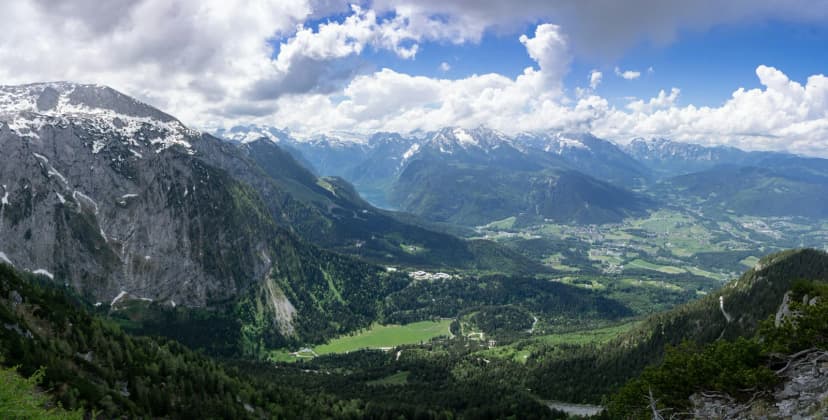
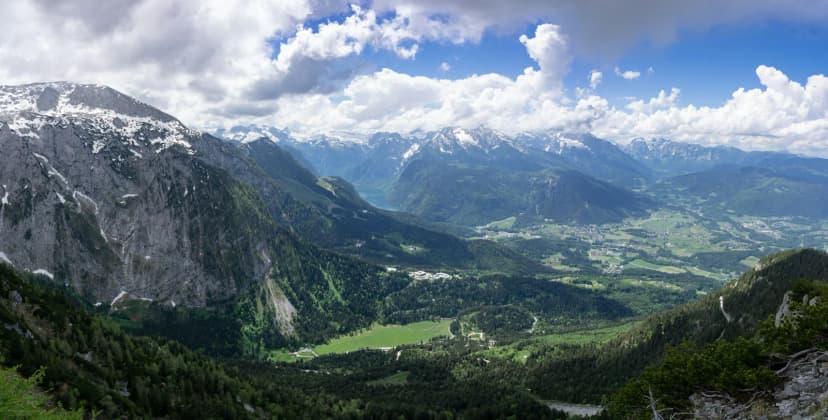
The town sits in a deep basin below Watzmann, Jenner and the mountains around Königssee, and that topography drives fast local weather changes. Cloud can sit in the valley while summits are clear, or the reverse, which is why a single regional forecast is a weak guide. Check webcams and the mountain lift status pages the same morning you plan to travel. If low cloud is sitting at lake level, assume the lake and summit views are compromised.
Rain affects different attractions in different ways. A boat crossing stays operational in drizzle but loses the point when the surrounding walls are invisible, and peak-season queues at the dock can be long regardless. Cable cars may run while the upper station is inside cloud, which is a waste of a ticket if the panorama is the reason you went. A museum or a mine does not care what the sky is doing.
Deciding the night before is often too early, because alpine forecasts shift quickly. Decide at breakfast, with a live webcam and an updated forecast in front of you, and keep both options costed so the switch is quick. If you have already bought a dated ticket, check the operator's own terms before assuming you can move it.
First Decision: Valley Anchor or Altitude Gamble
A valley day means staying low and accepting that you will not see the big panoramas. In exchange you get something that cannot be rained off: town streets, church interiors, exhibitions and food. This is the right choice when cloud is low, wind is strong, or the forecast shows thunderstorms building through the afternoon. It is also the better choice with children or anyone who dislikes being cold and wet.
An altitude day only makes sense when the cloud base is high enough for the view you paid for and the lifts are confirmed running. Before committing, check three things: the webcam at the top station, the lift operator's live status, and the afternoon storm risk. If any of the three looks poor, treat it as a valley day and move the mountain plan to a better slot in your trip rather than forcing it.
A useful compromise for mixed days is to keep the morning flexible and take a short low-level walk first, then decide over lunch. Trails close to town and in the valleys are less exposed than ridgelines and summits. If the cloud lifts by early afternoon, you still have time for a lift; if it does not, you have lost nothing.
How to Use the Official Rainy-Day Shortlist
The tourism board's site groups sights by interest, including a For rainy days category alongside family, history and views, which lets you filter indoor-friendly options without guessing. The same navigation also lists top sights such as Königssee, Kehlstein, the salt mine, Jenner and the historic centre. Treat that grouping as a starting point rather than a guarantee that everything listed will suit a wet day; some entries are outdoor viewpoints. Start with the tourism board's official visitor site and work outward.
The most important rule is that a shared complex or a shared brand does not mean a shared ticket. Separate collections, separate buildings and separately operated attractions each set their own admission, hours and closure days, even when they sit next to each other or appear under one heading. Check the individual operator page for the specific thing you intend to enter, on the day. Do not buy one ticket assuming it covers a neighbour.
Opening information is genuinely volatile: seasonal closures, rest days and short-notice changes are normal. Rather than relying on a blog post or a directory listing, use the operator's own site or phone number for the day you plan to visit. If a site publishes no English page, the German version usually carries the same status information. Build in one backup so a closed door does not end your afternoon.
The Salt Mine as a Suggested Indoor Option
The Salzbergwerk Berchtesgaden is the indoor option most often suggested for wet days, and the logic is sound: the tour runs underground, so surface weather matters mainly for the walk to the entrance and the journey there. The route typically involves a train into the mountain and boat crossings on the underground salt lake, which is why it appeals to families. Our Salzbergwerk Berchtesgaden salt mine tour guide walks through what the visit involves. Confirm current opening times, tour availability and any age or mobility requirements with the operator before you set out.
What this guide will not do is promise you a tour length or a departure frequency, because those are operational details that change with season and demand. Slots can sell out on wet days precisely because everyone has the same idea, so booking ahead is the safer approach if your dates are fixed. If you are travelling without a car, check how you will actually reach the mine entrance from your accommodation. The salt-mining story also extends to Bad Reichenhall, whose own salt works is a separate operation with its own tickets and timetable.
Underground temperatures feel cool and stable, and surfaces can be damp, so grippy shoes beat sandals whatever the forecast says. Leave large bags behind if the operator restricts them, and read the access notes rather than assuming step-free routes. If anyone in your group has mobility needs, ask the operator directly and in advance. A confirmation call takes two minutes and avoids a wasted trip.
Museums, Churches and the Historic Centre
Berchtesgaden's compact historic centre is the cheapest wet-weather asset you have: wandering lanes, arcades and church interiors costs nothing and works in drizzle. Schlossplatz and the area around the Stiftskirche make natural shelter points between showers. Treat the centre as a free base layer and add paid interiors only where the subject genuinely interests you. That keeps a wet day from becoming an expensive box-ticking exercise.
For the darker twentieth-century history, the Dokumentation Obersalzberg is the obvious indoor counterpart to the outdoor Kehlstein site, and it is a museum visit in its own right rather than an add-on to a summit trip. Because it is a single operated site with its own admission and its own closed days, check its current information directly. Our Dokumentation Obersalzberg visitor guide explains what to expect before you go.
Distinguish free-to-enter grounds from paid interiors when you plan. A churchyard, a town square or a cemetery you can wander without paying, while a museum collection behind a door needs a ticket, and a neighbouring collection may need its own. Assume nothing about combined admission unless the operator says so in writing. If two sites in one building look connected, verify at the desk rather than at the turnstile.
Small local museums in the region often keep limited days and seasonal closures, so a rainy day is exactly when you should confirm before travelling. Phone numbers and contact forms on operator pages are more reliable than third-party listings. If you find a closed door, the tourist information offices in town can suggest alternatives on the spot. Keep one indoor fallback in reserve for precisely this situation.
Mountain Safety When the Weather Turns
The tourism board's own guidance is blunt about mountain thunderstorms: between May and August they are especially common in the afternoons, they often form locally, and they are hard to predict. The same page advises starting early to avoid afternoon heat storms and watching for towering cumulus, gusty winds and a static buzz in the air. If the gap between lightning and thunder falls to ten seconds, the storm is roughly three kilometres away and it is time to act. Read the full guidance before you set off.
If a storm catches you, the official advice is to leave exposed areas quickly, avoiding summit crosses, rock towers, ridgelines, forest edges, isolated trees, water and wet rock, and to aim for a mountain or alpine hut with lightning protection. If none is reachable and the storm is overhead, crouch in a hollow with your feet together, sit on something insulating, and move metal items such as trekking poles and carabiners away from you. Keep at least a metre between people so current cannot jump between you. For route-specific advice, the Alpine Information Service of the German Alpine Club's Berchtesgaden section is the right contact.
This is why a booked mountain day should be rescheduled rather than pushed through when the forecast deteriorates. Lift operators and guides cancel for good reason, and a summit with no view is a poor reward for real risk. Fold a valley day into the same trip so the switch costs you nothing but a reshuffle. If your booking was made through an operator, ask them directly how changes are handled.
Covered Walks, Short Outdoor Windows and the Guest Card
You do not have to stay indoors all day. Short, low-exposure walks in the valley and around town let you get air between showers without committing to a summit. Riverside and valley-floor paths near Ramsau are the kind of low-risk option that still feels like a proper outing. If you want to build a photography-led plan around whatever light the clouds give you, this Berchtesgaden photography guide is a useful companion.
The Guest Card issued by accommodation is the most useful wet-weather planning tool because it covers most local buses in the region, according to the tourism board's guest card pages. That makes it practical to leave the car parked and switch plans mid-day without worrying about parking in the rain. Note that some specific services sit outside the included network, including the Eagle's Nest bus and the toll road, so check the current conditions of use with your host. Confirm the exact scope with your accommodation on arrival rather than relying on an old blog post.
Bus frequencies and last departures vary by season and route, so check the current timetable the day before a wet-weather outing, especially if you plan to stay out into the evening. Wet buses fill up, and a missed last connection in the rain is a poor end to the day. Having a car remains the most flexible option for reaching trailheads and the scenic toll road, but it is not necessary for a town-and-mine day. Decide based on your specific plan, not on general advice.
Pacing a Rainy Day: One Anchor, One Window
The most reliable wet-weather structure is one firm indoor anchor plus one short outdoor window, rather than a packed list of five attractions. Book the anchor, then treat everything else as optional. This removes the pressure to race between sites in the rain and leaves room for the weather to improve. A suggested shape is a morning indoor visit, a lunch break, then a short valley walk if the sky clears.
Two or three nights in the area gives you enough buffer to absorb a washout without losing the highlights, which is the same conclusion most trip-planning advice reaches. If your stay is short, protect the one thing you most want to do and build the wet day around it. Our suggested duration here is a suggestion only, based on how the region's sights cluster, not an official recommendation. Adjust it to your own pace and transport.
Keep the mountain day genuinely flexible. If the forecast for the second half of your stay looks better, swap days rather than accepting a summit in cloud. That single swap is usually the difference between a frustrating trip and a good one. If you want to compare how other German cities handle wet days, Berlin on a Rainy day and Dresden on a rainy Day cover the same decision framework in different settings.
Plan Your Wet-Weather Day Around One Firm Booking
Rain in Berchtesgaden usually costs you views rather than the whole day, so build the plan around one indoor anchor and keep the outdoor part optional. Use the tourism board's rainy-day category to shortlist, then confirm each site's current opening and ticket details with the operator itself. The Berchtesgaden: Landmark Visitor Guides hub collects the individual sights if you want to check several at once.
Treat any mountain booking as movable. If the forecast shows low cloud or afternoon storms, swap the day, take the valley option, and use the downtime for the salt mine, a museum or the historic centre. Check the tourism board's thunderstorm guidance before any hike and contact the Alpine Information Service if your route involves exposed terrain. That approach turns a washout into a plan rather than a loss.
Frequently Asked Questions
What can you do in Berchtesgaden when it rains?
Start with the tourism board's For rainy days category, which groups indoor-friendly and cultural options alongside the region's main sights. In practice the reliable choices are the salt mine, museum and exhibition visits, church interiors and the compact historic centre, all of which work regardless of cloud. Pick one indoor anchor for the day, then add a short low-level walk only if the weather eases. Confirm opening times and ticket details with each operator, because hours and rest days change seasonally.
Is the salt mine a good rainy-day option in Berchtesgaden?
It is the indoor option most commonly suggested, largely because the tour runs underground and surface weather matters mainly for getting there. It suits families, and it is a sensible fallback when summits and lakes are lost to cloud. What you should not assume is a fixed tour length, a guaranteed slot or a particular price; those are set by the operator and change with season and demand. Check the operator's current information and book ahead if your dates are fixed, since wet days fill up.
What should you do if a thunderstorm catches you on a hike near Berchtesgaden?
The tourism board's guidance says to leave exposed ground quickly, avoiding summit crosses, ridgelines, rock towers, forest edges, isolated trees, water and wet rock, and to head for a mountain or alpine hut with lightning protection. If the storm is directly overhead and no shelter is reachable, crouch in a hollow with your feet together, sit on something insulating, put metal items such as trekking poles at a distance, and keep at least a metre between people. If the gap between lightning and thunder is about ten seconds, the storm is roughly three kilometres away and you need to act.
Do you need a car in Berchtesgaden in bad weather?
Not necessarily. The Guest Card provided by your accommodation covers most local buses, which makes a town-and-mine day straightforward without a car, and it lets you change plans mid-day without hunting for parking in the rain. A car remains the more flexible choice for trailheads, the scenic toll road and outlying sights. Some services, including the Eagle's Nest bus and the toll road, sit outside the included bus network, so confirm the current scope with your accommodation rather than relying on older advice.
What should you do if you already booked a mountain day?
Treat it as movable. If the forecast shows a low cloud base or afternoon thunderstorm risk, reschedule rather than pushing through, because a summit in cloud gives you neither the view nor the safety margin. Fill the day with a valley alternative such as the salt mine, a museum or the historic centre, and keep the mountain plan for a clearer slot in your stay. If you booked through an operator, ask them directly how date changes are handled.