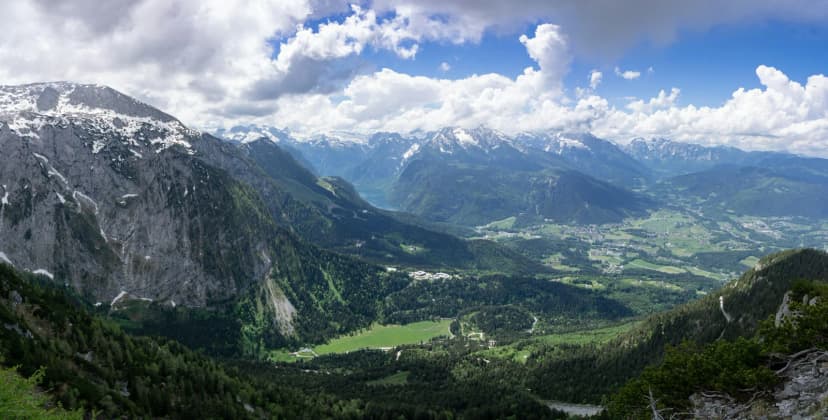
Two days in Berchtesgaden covers one lake day and one mountain or history day, not all four of the region's big draws. The town sits in Bavaria's far southeast against the Austrian border, with Germany's only Alpine national park spread around it.
The official destination site lists a short valley walk from Ramsau, the Wanderung zur Ragertalm, at about 1 hour 30 minutes over roughly 5.8 kilometres with 95 metres of ascent, which is a workable suggested half-day anchor after a lake morning. Treat that as the operator's published walk figure, not an official schedule, and recheck it before you set out.
The honest structure is a Königssee and national park day followed by a second day built around either the Obersalzberg area or the mountain lift and salt mine side. Accept that now and the trip feels generous rather than rushed, because the region's sights sit in different valleys that do not chain together neatly.
The Two-Day Structure at a Glance
Day one runs east to the Königssee corridor for the boat across the lake and a shorter walk in the afternoon, then returns to town for an easy evening on foot. Day two picks one direction and stays there: the Obersalzberg area with the Kehlsteinhaus if the summit is the priority, or the Jenner and salt mine if you want altitude and an indoor fallback within reach of each other.
The spread of the region is what forces the choices. Königssee, Ramsau's Klausbachtal, the Obersalzberg road and the Jennerbahn all sit in separate arms of the valley system, so a plan that tries to touch four of them in two days spends most of its daylight in transit.
Write the fallback into the plan before you leave, not on the morning you need it. A low-cloud day that kills a summit view should redirect you to the salt mine or the town's historic centre, both of which work in rain. For wider planning, see Berchtesgaden on a Rainy Day.
Choosing a Base: Königssee or the Town Centre
If you are travelling without a car, staying near the Königssee side is often the more practical base, because the lake corridor is where many bus lines run and it puts you close to the water for an early start. The trade-off is a quieter evening, with fewer restaurants and shops within walking distance than the centre offers.
Staying in the town centre flips that equation: you get the historic core, breweries and restaurants on foot, and you accept a bus or drive out to the lake in the morning. Travellers reporting on the region described the lakefront as the better base for car-free visitors and the centre as better if you want to walk out to dinner.
Book around your transport mode rather than around a specific property. The destination site lists accommodation across the region, and the sensible filter is simply how close the nearest bus stop or parking is to the door.
Day 1 Morning: Königssee and the National Park
Start day one early and head straight for the Königssee, because the lake corridor absorbs almost everyone who arrives in the region on the same morning. Boats cross the lake toward the St. Bartholomä peninsula, and the return leg is what most visitors build the morning around.
Everything here funnels through one entry point, which is why an early arrival matters more than an optimised route. Do not plan the morning around fixed departure times copied from old blog posts; boat schedules are seasonal and change, so confirm the current operating pattern and fares with the operator before you set the alarm.
The national park framing is worth holding onto while you plan: the landscape protection is the reason the shoreline still looks the way it does. Berchtesgaden is the gateway to Germany's only national park in the Alps, and the region's marketing leans on exactly that contrast between lake, forest and high peaks. For wider planning, see Berchtesgaden: Landmark Visitor Guides.
Day 1 Afternoon: A Walk Sized by Published Figures
For the afternoon, pick one shorter walk and treat it as the day's second anchor rather than an add-on. The official destination site lists the Wanderung zur Ragertalm from Ramsau at about 1 hour 30 minutes over roughly 5.8 kilometres with 95 metres of ascent, which is a realistic companion to a lake morning.
If you prefer a longer valley floor option, the destination site publishes the Wanderung durchs Klausbachtal near Ramsau at around 4 hours over 14 kilometres with 380 metres of ascent, so it is a genuine half-day and pairs badly with a slow lake start. Choose between the two based on how early you actually got onto the water, not on ambition.
Both figures come from the operator's own listings, which is the place to trust for walk length and elevation in this region. Recheck them before you go, because trail descriptions are updated and conditions on the ground change with the season.
Day 1 Evening: The Historic Centre on Foot
Keep the first evening deliberately simple, because day one is the longest day of the trip. The historic centre is compact and walkable, with painted facades and narrow lanes that make an hour of strolling worthwhile before dinner.
Local brewery taverns are the obvious dinner choice and the reason to stay in town rather than at the lake for at least one night. A beer in one of the town's breweries is one of the standard recommendations in older write-ups of the area, and it remains the easiest way to end a long day without another bus ride.
If your second day depends on an early bus, check the printed schedule your accommodation can usually provide. Travellers reporting on the region note that online transport information does not always match what is running, and a paper timetable is a cheap insurance policy.
Day 2, Option A: Obersalzberg and the Kehlsteinhaus
The Obersalzberg area and the Kehlsteinhaus are two different experiences on the same mountain, not one stop with one ticket. The documentary site at Dokumentation Obersalzberg deals with the history of the Nazi period in a museum setting, while the Kehlsteinhaus itself is a summit house reached by a special bus and a lift, and each has its own access arrangements.
Plan this as a half day rather than the whole of day two, because the access road and the transfer system limit how much you can compress the visit. The Kehlsteinhaus is seasonal; the destination site advertised it as open until 8 November 2026 at the time of writing, but check whether it is operating during your travel window before you build anything else around it, and confirm current access and ticketing details with the operator.
Pair the morning with a short afternoon walk rather than a second summit. The destination site lists the Söldenköpfl von Engedey route at around 2 hours over 5.8 kilometres with 389 metres of ascent, which fits after a morning on the mountain.
Day 2, Option B: Jenner or the Salt Mine
When the high summits are in cloud, switch to the Salzbergwerk Berchtesgaden side of the day and add the Jenner only if the weather clears. The salt mine is underground and unaffected by rain, whereas the Jennerbahn gondola and any walk above it are wasted on a grey day.
The destination site also lists the SalzErlebnisPfad as a short themed route from Berchtesgaden, published at around 30 minutes over 758 metres with 32 metres of ascent. That makes it the easy filler option if you are waiting out a shower or bridging time before an evening bus.
Check operating status and timings for both the mine and the gondola directly with the operators on the day. Tour times, prices and booking requirements change, and none of them should be assumed from a blog post written years earlier.
Getting Around Berchtesgaden: Buses Versus a Rental Car
Transport is the real constraint on a two-day plan, not the number of attractions. Buses reach most of the key points, but many routes run only about once an hour, and the hub sits at the train station, so a missed connection can cost you a full hour of daylight. A detailed Getting around Berchtesgaden guide is worth reading before you commit to a car-free plan.
That structure punishes tight itineraries. Travellers who have relied on public transport here describe connections that are hard to make and buses that run less often later in the day, with the practical result that a rental car buys flexibility that no schedule can match.
If you drive, you gain the freedom to chase the clearer valley in the morning, but you take on parking and mountain-road logistics. If you do not drive, stay near a main bus corridor, build slack into every transfer, and accept that one missed bus reshapes the day.
What to Skip on a Two-Day Trip
Skip anything that requires a second long transfer on the same day, including trying to combine the Königssee with the Kehlsteinhaus. They sit in different directions from the town and each eats most of a morning before you have accounted for the return journey.
Skip a Salzburg day trip from Berchtesgaden as well if you only have two days, unless you are treating it as the whole of a day rather than a stop. It is close enough to make a tempting add-on, but the border crossing and city time consume the entire day.
Anyone trying to fit the lake, the Kehlsteinhaus, the Jenner and the salt mine into 48 hours should read the one day in Berchtesgaden itinerary instead, which is honest about how little fits when you compress further.
Should You Visit in Autumn?
Autumn is a strong window for this itinerary because the crowds thin after the summer peak and the valleys turn gold. The destination site openly markets its autumn walking, with colour in the forests around the national park as the headline draw.
What autumn changes is the margin for error. Daylight shortens quickly, so a late start and a missed bus bite harder than they would in July, and the seasonal Kehlsteinhaus operation may close before or during your window, which is a reason to check before booking anything else around it.
Carry layers and assume rain at some point in two days, because a wet morning is the most likely disruption to any plan built on views. Keep the salt mine and the town centre listed as ready-made substitutes rather than improvising on the day.
For a wider look at how this short trip fits alongside the region's other options, the Berchtesgaden: Itineraries and City Travel Guides overview collects the longer and shorter versions in one place.
When Two Days Is Not Enough
Add a third day if you want both a summit and a full valley walk without watching the clock. The extra day absorbs one weather failure, which on a two-day trip is the difference between seeing everything on your list and seeing half of it.
Three days also makes a Salzburg day trip genuinely feasible, because you can dedicate a whole day to it rather than squeezing it around a lake morning. The three days in Berchtesgaden itinerary spells out how that extra day is best spent.
Plan Your Visit
Two days in Berchtesgaden works if you commit to one lake day and one mountain or history day, and accept that the bus schedule, not your ambition, sets the pace. Start early on day one, keep the evening simple, and hold a wet-weather fallback in reserve.
Before you travel, confirm the Kehlsteinhaus season, boat operating details, mountain lift and salt mine arrangements, and current walk figures with the relevant operators. Everything volatile should come from them on the day, not from an itinerary written months earlier.
Frequently Asked Questions
Is two days enough for Berchtesgaden?
Two days is enough for one lake day and one mountain or history day, which covers the Königssee and one of either the Obersalzberg area or the Jenner and salt mine side. It is not enough for all four, and it leaves little slack for bad weather. Add a third day if a summit and a full valley walk both matter to you.
Should I stay near Königssee or in Berchtesgaden town for two days?
Stay near the Königssee side if you are travelling without a car, because the lake corridor is where many bus lines run and it puts you close to the water for an early start. Stay in the town centre if you want evenings on foot, with breweries and restaurants within walking distance. The trade-off is bus access against evening convenience.
Do you need a car in Berchtesgaden, or are buses enough?
Buses reach the main sights, so a car is not strictly necessary, but many routes run only about once an hour with the hub at the train station. A missed connection can cost an hour or more, and travellers who have relied on public transport here often say a rental car would have given them more flexibility.
Can you visit Königssee and the Kehlsteinhaus in the same day?
It is not a sensible pairing on a two-day trip, because the two sit in different directions from the town and each takes most of a morning before you count the return journey. Give the lake its own day and treat the Obersalzberg area as a half day on day two. The Kehlsteinhaus is also seasonal, so check before building a plan around it.
What should you do in Berchtesgaden if the weather is bad?
Move to the salt mine, which is underground and unaffected by rain, or spend the time in the town's historic centre and the Obersalzberg documentary site. Skip the mountain lifts and any high walk if the summits are in cloud. Decide the fallback in advance so you are not rearranging the day in a wet bus stop.