Mainz is compact, and its old town stacks sacred interiors, museums and a covered Roman site within a short radius, which is exactly what a wet day needs. The useful approach is to treat rain as a sequencing problem: choose one anchor museum, then fill gaps with shorter indoor stops nearby instead of crossing the city between showers. Mainz Tourismus, the city tourism organisation, publishes general information about museums, tours and the mainzcardplus savings card, but its overview page does not set out per-venue opening times.
A suggested shape, and it is only a suggestion rather than an official itinerary, is a half day built around the cathedral squares: one long museum block, one or two church interiors, and a short indoor Roman visit. If you want to stretch it into a full day, add a second museum and a cafe break rather than more walking. Because the city sources are city-level rather than per-attraction, treat every duration below as a planning estimate and confirm actual times with each venue before travelling.
How to Structure a Wet Day in Mainz
The most useful rule is to cluster interiors by district instead of by interest. The cathedral, the Gutenberg Museum area and the shopping streets around the Romerpassage sit close together in the old town, so a single loop can cover several indoor stops without long exposed walks. Save anything on the citadel hill or out towards the university for a dry window, because those are grounds-and-ruins visits rather than rain shelters.
Give one museum the biggest block of your day and treat everything else as filler around it. Choose that anchor by subject rather than by fame: printing history, regional art and archaeology, or natural history each appeal to different travellers, and deciding early avoids queueing at the wrong door. Keep one flexible slot open in the afternoon, because a church visit that is closed when you arrive can be swapped for a museum or a coffee stop with no real loss.
The Old Town Core: Cathedral and Churches in the Rain
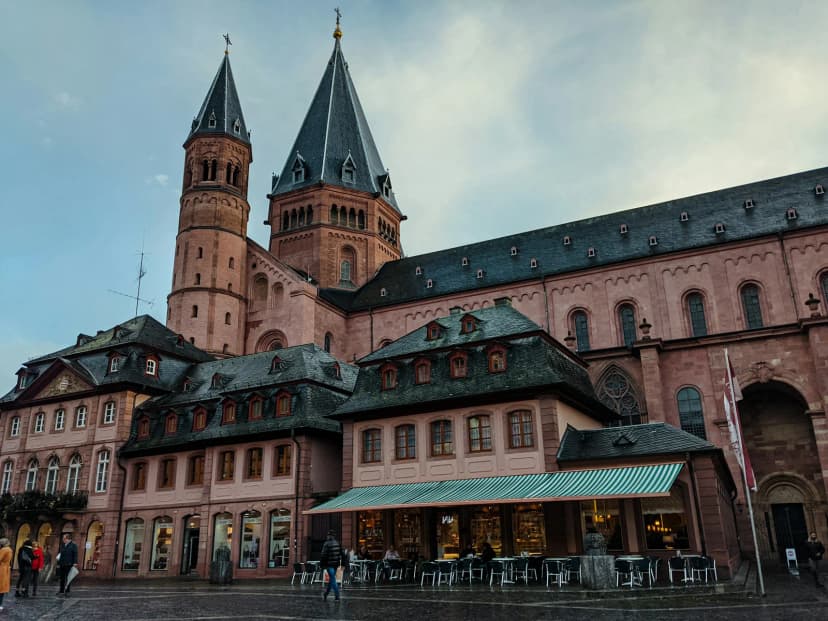
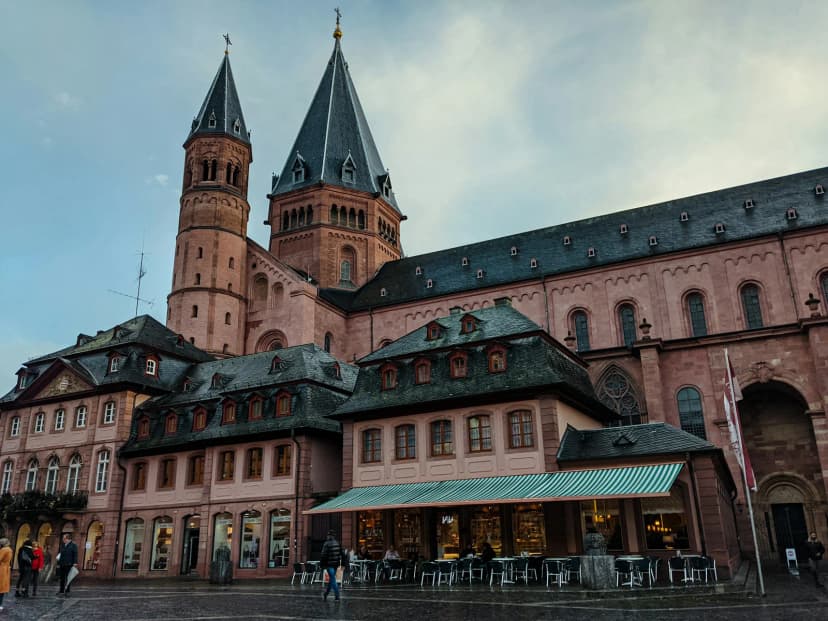
Mainz Cathedral is the obvious first shelter: a Romanesque building with six towers, begun in the tenth century, sitting on the Liebfrauenplatz side of the old town. As a working Catholic cathedral, entry to the building itself is generally free and donations are customary, but that is not the same as a museum ticket, and any treasury or museum space attached to a religious site is usually a separate, ticketed thing. Check the cathedral's own pages for current visiting conditions rather than relying on a general city overview.
St. Stephan's Church, a short walk south of the cathedral, is the one most rain-day visitors ask about because of its Chagall windows. It is an active parish church rather than a museum, so the sensible expectation is that you can step inside for quiet prayer or viewing when services and parish use allow, and that you may be asked to keep visits brief. Because window visibility and access can vary with light, services and conservation work, verify with the parish before making it the centrepiece of a wet afternoon.
Moving between sacred interiors is best done as a small loop rather than a series of separate trips, since the cathedral, St. Stephan's and the old-town lanes sit within a compact area. Dress for the walk even if the stops are indoors, and keep bags small, because churches are places of worship first and visitor attractions second. If you want the full religious-and-museum comparison in one place, the Gutenberg Museum vs Cathedral Museum Mainz breakdown covers how the two ticketed collections differ.
Anchor Museum: The Gutenberg Museum
The Gutenberg Museum, founded in 1900 to mark the 500th anniversary of Johannes Gutenberg's birth, is the city's signature indoor stop and the natural anchor for a wet day. It is one of the oldest printing museums anywhere, and its subject matter rewards slow reading rather than a quick lap, so it earns the longest single block in your plan. Because the city is also working on a new Gutenberg Museum project, expect the visitor experience to evolve, and confirm the current address, opening arrangements and ticket scope on the museum's own site before you go.
The decision to make is how much of the day to surrender to it. If you are travelling with children or with someone who prefers objects to text, a shorter visit plus a second museum usually works better than a marathon; if you are a printing or typography enthusiast, the reverse is true. Do not assume a single ticket covers every museum in the city, because Mainz's collections are run by different bodies and a combined city card is not the same as one venue's admission.
Second-Tier Indoor Options and Backups
The Landesmuseum Mainz on Grosse Bleiche is the strongest alternative anchor, with collections that run from prehistory and the Roman era through medieval material to European painting and sculpture. Its breadth makes it a good wet-day substitute when the printing museum is crowded, and it suits travellers who want art and archaeology in one building. Confirm current opening arrangements and what a ticket includes, because large regional museums often separate special exhibitions from the permanent collection.
Two other indoor backups sit within the same old-town fabric: the Natural History Museum, with its focus on regional wildlife and geology, and the Roman-Germanic Central Museum, which combines archaeological collections with research. Both are useful when one museum is full or when you want a shorter, more object-led visit. If you are planning around children, the Mainz with kids guide suggests how to balance museum time with breaks, and a short Rhine promenade walk fits neatly into any gap between showers.
If you are extending your stay, a 2 days in Mainz itinerary helps you split museum time across two days instead of compressing everything into one wet afternoon. The same logic applies across Germany: Berlin on a Rainy day and Dresden on a rainy Day show how other cities handle the same indoor-versus-outdoor trade-off. For a deeper look at the state museum's rooms before you commit an afternoon, the Mainz State Museum visitor guide walks through what is inside.
The Sanctuary of Isis and Magna Mater: Indoor Roman Mainz
The Sanctuary of Isis and Magna Mater is the stop most rain-day lists miss, and it is genuinely indoor: the remains sit in the basement of the Romerpassage shopping centre, with a glass walkway over the ruins and cases of small finds. The sanctuary was unearthed during the centre's construction and is usually described as dating to roughly the third and fourth centuries. You can combine it with a shopping-centre coffee stop, which makes it an efficient filler between two larger visits.
Treat it as a short visit rather than a museum-scale one, and check locally what is currently accessible, since an underground site managed alongside a commercial building can have its own arrangements. The same caution applies to the Museum of Ancient Seafaring, which is widely listed as temporarily closed: do not build a plan around it, and confirm its current status with the operator or the city before travelling.
Costs, Cards and What Still Needs Checking
Mainz Tourismus describes the mainzcardplus as offering numerous discounts, including free entry to Mainz museums and a city tour, and notes that it comes with or without a public transport ticket. That is a general claim rather than a per-venue guarantee, so before buying it, list the paid interiors you actually intend to visit and check each one's current ticket terms. The tourist information point at Markt 17 near the cathedral square is the place to ask, and current opening times for that office are published by Mainz Tourismus.
Three things are worth verifying for any wet-day plan, because the city-level sources do not settle them: whether a card still applies at a specific museum, what a given ticket actually includes, and whether any venue is closed for works or a change of site. Confirm opening days and closures directly with each museum, and check church parish pages for services and access. If a stop turns out to be closed, the old-town cluster gives you enough alternatives that a single disappointment will not break the day.
When the Rain Pauses: Short Outdoor Breathers
Even a wet day usually has gaps, and Mainz has short outdoor options that work in twenty minutes. The cathedral squares, the lanes around the market, and the Rhine-side city centre are all close enough to the indoor cluster that you can step out when the rain eases and retreat without a long walk back. Keep these as bonuses rather than commitments, since cobbles and steps get slippery and outdoor time is what the weather decides.
If the weather clears properly, the Mainz Citadel and the Roman theatre ruins above the old town are grounds visits that only make sense dry, and they are free to explore. Because they are exposed and unroofed, save them for a genuine window rather than a drizzle. Checking the city's event calendar before you travel is also worthwhile, since a performance at the Staatstheater is one of the most comfortable ways to spend a wet evening if programming and tickets line up.
Plan Your Visit
A rainy day in Mainz works when you stop trying to see everything and start sequencing what is genuinely indoors. Anchor the day with one museum, cluster the cathedral and church visits in the old town, and keep the Isis sanctuary as a covered Roman wildcard that most visitors overlook. Verify opening days, ticket scope and any closures with each venue first, because the city's own pages describe options rather than per-attraction timetables.
Build in a flexible slot and a cafe break, and the weather stops dictating the day. If you decide to add a second full day, spread the larger collections across both rather than rushing them in the rain.
Frequently Asked Questions
What can you do in Mainz when it rains?
Start with one anchor museum, such as the Gutenberg Museum or the Landesmuseum Mainz, then fill the rest of the day with the cathedral and St. Stephan's Church, which sit close together in the old town. The Sanctuary of Isis and Magna Mater, in the basement of the Romerpassage shopping centre, is a rare fully indoor Roman site. Confirm opening days and ticket terms with each venue, since city tourism pages do not publish per-attraction details.
Which Mainz museums are best on a wet day?
The Gutenberg Museum suits anyone interested in printing history and rewards a long visit, while the Landesmuseum Mainz covers regional art and archaeology in one building. The Natural History Museum and the Roman-Germanic Central Museum are useful shorter backups when one venue is crowded. Opening days, closures and what a ticket includes should be checked directly with each museum before you go.
Is the Sanctuary of Isis and Magna Mater indoors and free to visit?
It is indoors, set below the Romerpassage shopping centre, with a glass walkway over the excavated remains and display cases around them. Because it is managed alongside a commercial building, arrangements can change, so check locally about access rather than assuming conditions. Do not rely on general city pages for admission details.
Does the mainzcardplus still include free entry to Mainz museums?
Mainz Tourismus describes the card as giving free entry to Mainz museums and a city tour, with or without a public transport ticket. That is a general description, not a guarantee for every venue, so list the paid interiors you actually plan to visit and confirm each one's current terms before buying. The tourist information point near the cathedral square is the best place to ask.
Is St. Stephan's Church worth visiting in the rain for the Chagall windows?
St. Stephan's is a working parish church, so it is worth including only if you accept that access depends on services and parish use. The Chagall windows are the main draw, and light conditions affect how well you see them. Check with the parish before making it the centrepiece of a wet afternoon.
Is the Museum of Ancient Seafaring open?
The museum is widely listed as temporarily closed, but status can change, so check with the operator or the city's tourism information before travelling. Do not plan a wet day around it until you have confirmed that it is receiving visitors again.