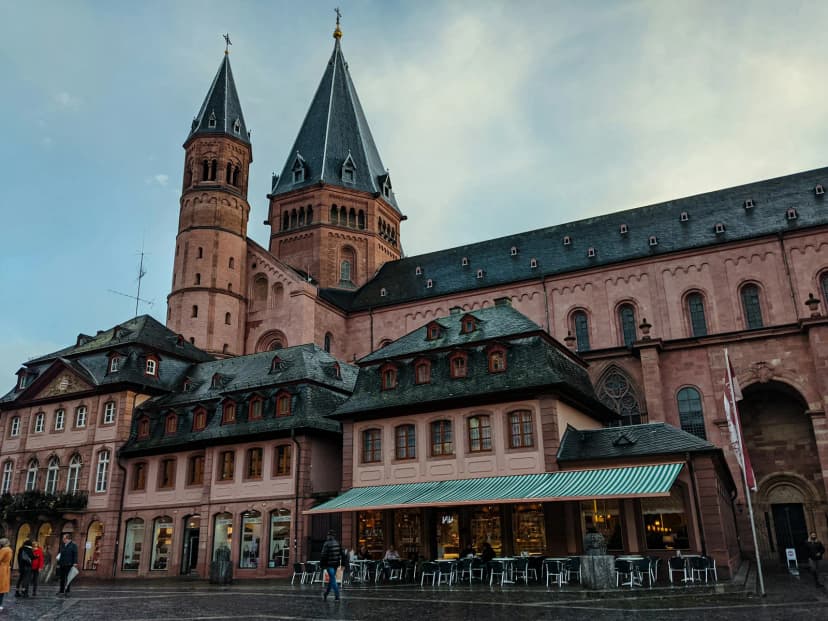
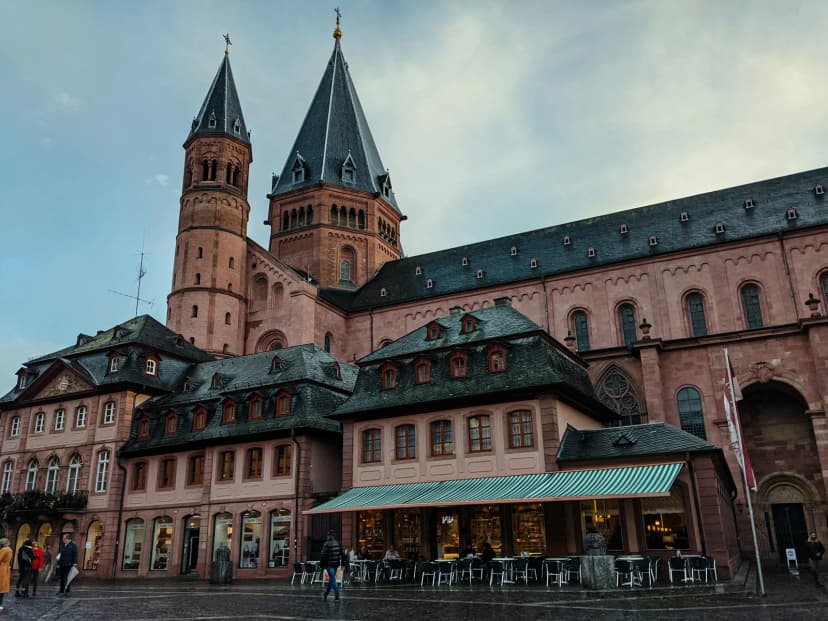
The Landesmuseum Mainz fills the baroque Golden-Ross-Kaserne on Große Bleiche, a short walk from the cathedral square, and the city lists its collection as spanning the beginnings of culture through to contemporary art. As a planning suggestion rather than an official figure, allow roughly two hours for a focused circuit of the main galleries, and more if you linger in the Roman stone hall. Almost every other museum in Mainz sells its own ticket, so the Landesmuseum is one stop, not a city-wide pass.
What the Landesmuseum Mainz Is
This is the state museum of Rhineland-Palatinate rather than a city-history collection. The national tourism board describes it as one of the oldest museums in Germany, and the city's museum pages summarise its holdings as an art and cultural-history collection running from early cultures to contemporary art. That range is unusually wide for a museum of its size and is the main argument for choosing it when your time in Mainz is limited.
The address is Große Bleiche 49 in the 55116 postcode, close enough to the old town that you can fold the visit into a walking day instead of treating it as a separate excursion. Arriving on foot from the Marktplatz takes only a few minutes, which matters if you are slotting the museum between the cathedral and a walk along the river. Keep the street name handy if you are navigating by phone rather than a paper map.
The Building Is Part of the Visit
The museum occupies the baroque Golden-Ross-Kaserne, a former barracks, and a modern glass-and-steel construction opens onto the inner courtyard. The tourism board notes that this building, the courtyard wing and the electoral stables together form what it calls a charming complex, so the architecture changes character as you move through the site rather than reading as one uniform block. Build in a few minutes to look at the courtyard wing from outside; it is an easy architectural detour on the way in.
One caution: the stables are a neighbouring structure in the same ensemble, not automatically part of your museum visit. A different source describes an earlier Mainz State Museum as housed in a former electoral palace and credits Napoleon with donating much of its art collection in 1803; that account conflicts with the barracks location given by the city and the museum itself, so treat the palace and Napoleon details as unreliable. Rely on the operator and municipal descriptions for what the building actually is.
The Collection, Era by Era
The displays are organised chronologically, covering prehistory, the Roman period, the Middle Ages, the Renaissance and Baroque, Dutch painting, nineteenth-century painting and twentieth-century art. That sequence lets you walk the arc of European art and regional history in one continuous route rather than hunting individual masterpieces. If you have a fixed interest, head straight for that gallery and work outward from there.
The presentation is not wall labels alone. The tourism board notes exhibits designed to be touched and explored alongside audio stations, plus biographies of historical figures that introduce different periods, with a royal burial site and a bedroom from Goethe's era used to make those eras concrete. Interactive elements will slow you down if you are visiting with children, so factor that in when setting your timing.
The timeline continues into twentieth-century and contemporary art, so this is not purely an antiquities stop. Visitors expecting only Roman stonework and Baroque altarpieces are often surprised by how far forward the collection runs. Because temporary shows can reshape what is on view on a given floor, check the museum's own site for the current exhibition programme before you commit a half-day to it.
Roman Mainz Inside the Museum and in the Streets
This is where first-time visitors most often get confused. The reconstructed Great Jupiter Column from Roman Mogontiacum, rediscovered in the early twentieth century, can be seen in the stone hall of the State Museum in Mainz, so that is the place to go for it. The city's Roman heritage is not otherwise concentrated in this building.
Separate Roman sites around the city have their own access arrangements. The sanctuary of Isis and Mater Magna lies in the Römerpassage, and the municipal museum list treats it as an independent site run by the Roman Mainz initiative rather than as part of the Landesmuseum. Do not plan a museum visit expecting to cover both under one admission.
Think of the museum's Roman galleries as the curated indoor version of that story and the scattered city remains as a separate walk. If Roman archaeology is your priority, this split actually helps: one ticket gives you the stone monuments, while the open-air locations cost only walking time. Keep the two halves of the day apart rather than trying to merge them.
Accessibility and Moving Through the Building
The museum states on its English pages that it is fully accessible for visitors with restricted mobility, with level access, ramps, large lifts and automatic doors. That combination is notable in a historic building and genuinely changes planning for anyone using a wheelchair or pushing a pram, since it means you can move between floors without hunting for a staffed side entrance.
The city's museum listing echoes the point, describing the ensemble as completely barrier-free. Because the building is a converted barracks with several wings, lifts matter more here than they would in a purpose-built gallery. If you need anything beyond step-free movement, contact the museum directly before travelling rather than relying on a general description.
Ticket Scope: What One Admission Covers
Mainz has a dense museum landscape and each institution runs its own admission. The city's museum pages list the Gutenberg Museum, the Natural History Museum, the Landesmuseum, LEIZA, the Cathedral and Diocesan Museum, the Isis sanctuary, the Kunsthalle and others as distinct entries with their own addresses, websites and contacts. There is no indication that one stub admits you to all of them, so budget for separate tickets on a museum-heavy day.
Current prices, reduced rates and combined offers change, and the museum publishes them on its own pages rather than in third-party summaries. Check the official site on the day, or ask at the mainz STORE tourist information on Marktplatz. Note from that listing that the shop keeps its own hours; the tourism site gives its address as Mark 17 on Domplatz and states it is closed on Sundays, so do not build a Monday-to-Sunday plan around it without checking.
Visitor cards deserve a caveat rather than an assumption. Mainz Tourism describes the mainzcardplus generically as including free admission to Mainz museums, a guided city tour and other benefits. That general description should not be stretched into a specific claim about the Landesmuseum's participation or about which collections are covered, so ask at the point of sale which museums the card currently includes before buying it for that purpose.
One further distinction worth holding onto: free public spaces and paid interiors are different things here. The Roman sites scattered around the city, such as the aqueduct remains, are outdoor locations rather than ticketed museum galleries, so a day mixing the Landesmuseum with city Roman remains involves one paid interior and several free outdoor stops. Do not assume a single ticket stitches them together.
Does It Fit a Short Stay?
For a two- or three-hour window, the honest trade-off is between this museum and the Gutenberg Museum, with the cathedral as a free third option that rarely competes for the same slot. The real decision is which museum gets your remaining time: the whole sweep of regional art and history, or a single focused subject. Comparing them side by side helps.
The Gutenberg Museum is currently showing its interim exhibition at the Natural History Museum on Reichklarastraße while its own building project continues, which changes how you read a map. Its collection centres on printing and on two copies of the Gutenberg Bible shown in a walk-in treasure chamber; the tourism board notes the museum left its long-standing Liebfrauenplatz home in early October 2024. If printing history is not a personal draw, the Landesmuseum covers more ground.
A practical approach for a short stay is to give the Landesmuseum a focused block on the ground floor and Roman galleries, then decide on the spot whether to continue upstairs. That keeps the rest of your day intact for the old town. If you are in Mainz for less than a full day, put the cathedral and Marktplatz first and add the museum only if time remains.
Pairing the Museum With the Rest of the City
Because the museum sits on the edge of the old town, it works as either the opening or the closing stop of a compact loop. A sensible order is Marktplatz and the cathedral, then the pedestrian lanes around Kirschgarten, then the Landesmuseum, finishing at the Rhine promenade. Walking between these points takes minutes, so the sequence costs you almost nothing in transit.
For a different kind of half-day, the Cathedral and Diocesan Museum beside the cathedral presents sacred art from late antiquity onward, and the city lists early Gothic stone sculpture and the cathedral treasury among its highlights. It is a natural counterweight to the Landesmuseum's broader survey, giving you religious and secular strands of the same city. Our Cathedral Museum Mainz guide covers what that separate ticket includes.
Weather will shape the plan more than you might expect, since much of Mainz's appeal is squares, riverbank and open-air Roman remains. If rain sets in, shifting your museum block earlier and saving the promenade for a dry spell keeps the day workable. A Mainz on a rainy day plan shows how to reorder an itinerary around indoor stops.
Who Should Prioritise the Landesmuseum
Prioritise the Landesmuseum if you want one coherent run through the region's art and cultural history, if you want to see the Roman stone monuments kept indoors, or if step-free access is a deciding factor for your group. Its mix of a baroque shell, a modern courtyard wing and a genuinely wide collection is hard to match elsewhere in the city. Treat two hours as a suggested minimum and add more if the Dutch and nineteenth-century galleries hold your attention.
Save it for a return trip if your short stay is built around Gutenberg and the printing story, or if you have only an afternoon and would rather spend it on the cathedral, the market square and the Rhine promenade. Either way, confirm current opening times, admission and any special exhibition on the museum's own website before you go.
Frequently Asked Questions
What can you see at the Landesmuseum Mainz?
The collection runs chronologically from prehistory and the Roman period through the Middle Ages, the Renaissance and Baroque, Dutch painting, nineteenth-century painting and twentieth-century art, according to the national tourism board. Presentation includes audio stations, exhibits designed to be handled and biographies of historical figures. The reconstructed Great Jupiter Column from Roman Mogontiacum is displayed in the museum's stone hall. Special exhibitions change what is on view, so check the museum's own website for the current programme.
Does one ticket cover all the museums in Mainz?
No. Mainz's museums are separate institutions with their own addresses, opening arrangements and admission, including the Landesmuseum, the Gutenberg Museum, the Cathedral and Diocesan Museum, LEIZA, the Kunsthalle and the Isis sanctuary site in the Römerpassage. A city visitor card may include museum benefits, but which museums participate can change, so confirm the current list at the point of sale before buying one for that purpose.
How long do you need at the Landesmuseum Mainz?
As a suggestion rather than an official figure, allow about two hours for a focused circuit of the main galleries and the Roman stone hall, and add an hour or more if you read labels closely or work systematically through the Dutch and nineteenth-century painting rooms. Visitors with a strong interest in one period should go straight to that section and build the rest of the visit around it. The museum has not published a recommended duration, so treat these as planning estimates.
Is the Landesmuseum Mainz wheelchair accessible?
The museum states on its English pages that it is fully accessible for visitors with restricted mobility, with level access, ramps, large lifts and automatic doors. The city's museum listing similarly describes the building ensemble as completely barrier-free. Because the museum occupies a converted barracks with several wings, the lifts are the key feature for moving between floors. If your requirements go beyond step-free access, contact the museum directly before your trip.
Does the Landesmuseum include the Roman sites in the city?
No. The Landesmuseum holds Roman material indoors, most prominently the reconstructed Great Jupiter Column in its stone hall, but the sanctuary of Isis and Mater Magna in the Römerpassage is a separate site run by the Roman Mainz initiative, and other Roman remains around the city are open-air locations rather than part of the museum. Plan the museum and the city's Roman sites as two separate parts of your day.
Is the Landesmuseum worth it on a short trip to Mainz?
It is the strongest single choice if you want the region's art and cultural history in one building, running from early cultures to contemporary art. If your short stay is built around printing history, the Gutenberg Museum is the more targeted option, and the cathedral and market square are central and free to enter. Travellers with only a few hours often pair the cathedral and old town with one museum rather than several.
Sources
- The Mainz State Museum is the perfect destination for a fun and informative day out. - Germany Travel
- Museums | Landeshauptstadt Mainz
- Mainz Tourism: Mainz Tourismus
- Art and Culture | Landesmuseum Mainz . ...
- 57 Sights in Mainz, Germany (with Map and Images) | Visit Sights
- Gutenberg Museum: Mainz Tourismus