Lübeck's Old Town is an island, a compact brick-built UNESCO World Heritage site that you experience almost entirely on foot. The official city tourism site notes that seven church towers shape the famous old town skyline, and that around 90 winding passages and courtyards survive on the island. That matters on a wet day: rain does not cancel the visit, it just shortens how long you stand still outdoors and pushes more of your hours inside.
This guide treats rain as a planning variable rather than a disaster. It sets out indoor anchors, suggests how to sequence them, and explains which outdoor landmarks still work as a short, brisk loop when the weather eases. Treat any price, opening time or event detail as something to confirm with the venue or the tourism board before you set out, because those change and this guide deliberately avoids stating them.
What Rain Actually Changes in Lübeck
The reason a wet day works here is geography. The old town sits on an island ringed by water, and distances between the Holstentor, the market square and the northern gate are short enough to cover in a series of dashes rather than a full day's march. Rain changes the rhythm of the day, not the inventory of things to see.
Steady rain affects the open-air objectives first. Lingering at the Holstentor for photographs and walking the full ring of the old town walls become uncomfortable, while anything behind a door becomes more attractive. Light drizzle is a different proposition from a sustained downpour, and the practical response is to decide early which kind of day you are having and commit to it.
One caution frames everything else. Lübeck's churches, museums and historic interiors are separate institutions with separate arrangements. Nothing here should be read as a claim that one ticket covers several venues, or that a combined pass exists at all. Check each venue's own current information before you build a plan around it, using the Landmark Visitor Guides hub as a starting point for individual sights.
Your Indoor Anchor: The Hanseatic History Museum
If you choose one indoor block for a wet day, make it the European Hanseatic Museum. The state tourism board of Schleswig-Holstein describes it as inviting visitors on a journey through 800 years of the Hanseatic League, with presentations, audio stations and original objects, and recommends it as a cultural destination when the weather outside is stormy. That combination of length and depth is exactly what a rainy afternoon needs.
The museum sits on the northern edge of the old town island, near the Burgtor and the former castle quarter, which makes it a natural first or last stop on a walking loop. Because it absorbs a long stretch of time, build the rest of your day around it rather than treating it as one item on a list of many. A museum of this kind rewards unhurried reading, and hurrying through it to fit in other stops defeats the purpose.
Before you go, check the museum's own current visitor information for opening days, last entry and whether timed admission applies. Do not plan around prices or hours quoted in old blog posts, including the ones that suggest this is a quick stop before a train. If you want more time indoors afterward, the St. Annen Museum Lübeck visitor guide is a sensible next place to read up on, since it covers a different slice of the city's collections.
Interior Stops That Are Not Museums
The Heiligen-Geist-Hospital is the most distinctive non-museum interior in the old town. The city tourism site calls it globally unique, and it is known for its historic rooms and its long association with care for the sick and elderly. Going inside is a different kind of experience from a curated exhibition: you are standing in a working historic building rather than walking a designed gallery route.
The hospital also has a second life across the seasons, when the building and the square in front are turned over to seasonal markets and stalls. That means the interior may be arranged differently depending on when you visit, so treat any description of its rooms as a general expectation rather than a fixed layout. Confirm current access arrangements with the venue or the tourism board rather than assuming the building is open on the day you arrive.
Lübeck's churches and the cathedral give you several more weatherproof interiors, and the city tourism site groups five Gothic churches as a set worth visiting for their architecture and stories. Each is its own building with its own opening pattern, and some are active congregations rather than attractions. The safest approach is to pick one or two near your route and check locally, rather than trying to sweep through all of them.
Keep the free-and-paid distinction clear in your head. Church interiors and the hospital's historic spaces function differently from ticketed museum galleries, and in Lübeck it is normal for grounds and exteriors to be open to the public while specific interiors, collections or displays are separately arranged. When something is unclear, ask at the door or check the tourism board's pages instead of relying on an old travel post.
Shelter-Hopping Through the Old Town
The old town's structure works in your favour on a wet day. The tourism board notes that around 90 winding passages and courtyards survive inside the island, and these are exactly the kind of in-between spaces that let you move from one doorway to the next without a long exposed crossing. Think of the day as a series of short hops rather than one continuous walk.
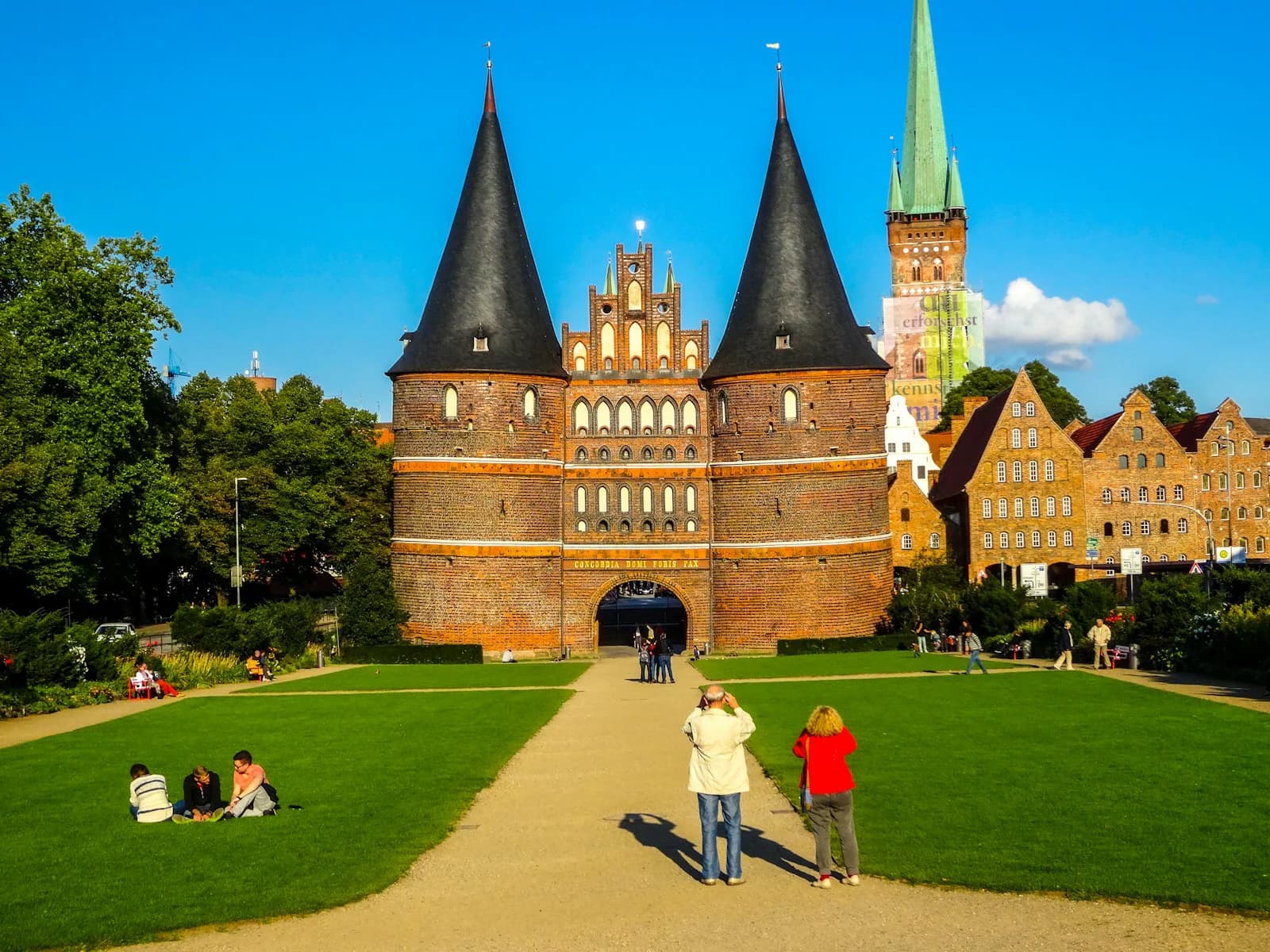
Between indoor stops, the town gates still justify a look. The Holstentor is a late Gothic survivor of the city fortifications, and the Burgtor marks the northern approach near the castle quarter, so both fit neatly at the ends of a route rather than in the middle of an exposed walk. Photograph them when the rain slackens, then move on rather than lingering.
Inside the island, the market square with the town hall and St Mary's Church forms the natural centre of any route, and it is where you will most often be tempted to stop outdoors. Use it as a junction rather than a destination on a wet day: look, take the photograph, then step into whichever side street or passage offers cover next. A short loop that touches the centre and returns indoors beats a heroic circuit of the whole island.
If you have more than one day, the 2 days in Lübeck itinerary spreads these stops across a longer stay and lets you save the outdoor stretches for the drier half of a day. On a single wet day, accept a smaller radius and go deeper instead. The city rewards that trade-off because so much of its character sits behind doors.
A Suggested Shape for a Wet Day
Start with an indoor block rather than gambling on the morning weather. Beginning at the Hanseatic museum means that even if the rain settles in, your most substantial experience of the day is already secured. Note that the order here is an editorial suggestion, not official guidance, and should bend to whatever opening arrangements the venues publish.
Use the middle of the day for a compact outdoor loop between the gates, the market square and the hospital, with a warm stop for food or coffee when the rain intensifies. Lübeck's marzipan tradition gives you a ready-made reason to sit down indoors rather than pressing on through the worst of it. The point of the loop is to keep the outdoor landmarks in view without committing to a long walk.
Late in the day, choose between a second indoor stop and a short evening walk depending on how heavy the rain is. If it is still steady, a museum interior or a church visit is the better use of your remaining hours. If it has eased, the lit old town streets are worth a gentle circuit before you call it a day.
The Buddenbrookhaus Lübeck visitor guide is worth reading if literature appeals more than another history gallery, and it gives you a genuinely different option for a second indoor block. Keep it as an alternative, not an addition, if your day is tight.
Indoor-Heavy Plan or Mixed Plan: How to Decide
The decision rule is simple. If rain is steady and likely to persist, keep the outdoor landmarks as a single short loop and move the bulk of your day indoors, accepting that you will see fewer places but understand them better. If rain is showery with brighter gaps, run a mixed plan and use the dry windows for the gates, the square and the waterside views.
When you have to drop something, drop the outdoor extras first: the second gate, the longer riverside stretch, the hunt for the perfect photograph. Keep the anchor museum and one historic interior such as the hospital or a church, because those are the experiences that rain cannot spoil. This ordering protects the parts of the day you cannot recreate at home.
One warning about planning from older write-ups: some describe the Hanseatic museum as a brief stop squeezed in before a train, which reflects a rushed visit rather than what the museum offers. Others list free entry and Christmas-market use of the hospital as fixed facts, but seasonal arrangements and access can change. Verify anything you intend to rely on with the venue or the tourism board, and treat blogged prices and times as historical rather than current.
Practical Wet-Weather Logistics
Pack for standing around in damp air rather than for a hike. A compact umbrella, a waterproof layer that covers your bag, and shoes that cope with wet cobblestones matter more than heavy gear, because you will be going in and out of buildings all day. Interiors are often warm, so dressing in layers you can shed is more comfortable than one thick coat.
Cobblestones and the old town's narrow passages get slippery, so take the short crossings slowly and use the arcades and courtyards when they are on your route. Keep paper maps and tickets in a dry pocket or a plastic sleeve, since damp hands are the usual reason a plan falls apart. Charge your phone before you leave, because you will be checking venue information more often than usual.
Before any indoor stop, check current opening times, admission arrangements and any seasonal changes directly with the venue or through the official Lübeck tourism site, which also publishes events and city information. Never assume that two neighbouring attractions share an entrance or a ticket, and never assume a building described as free in an old post is still open to visitors on the day you arrive.
Plan Around the Rain, Not Against It
A wet day in Lübeck is a manageable day. Anchor it with the European Hanseatic Museum, add one historic interior such as the Heiligen-Geist-Hospital or a church, and treat the gates, the market square and the waterside as short loops taken between showers. That structure uses the old town's compact, walkable island shape instead of fighting it.
The one habit that keeps this plan reliable is verification. Check each venue's current information before you go, keep a couple of indoor alternatives in reserve, and accept that a rainy day means fewer stops seen properly rather than a checklist rushed through. For the wider city picture, start from Lübeck: Itineraries and City Travel Guides and build your own order from there.
Frequently Asked Questions
Is Lübeck worth visiting on a rainy day?
Yes, because the old town is a compact island that you explore on foot, and much of its substance sits indoors. Rain mainly shortens your outdoor stretches and pushes you toward museum and church interiors rather than removing things to do. The main adjustment is accepting a smaller walking radius and spending longer in each stop.
What can you do indoors in Lübeck besides museums?
The Heiligen-Geist-Hospital's historic rooms and the interiors of the city's churches and cathedral are the obvious non-museum options, along with cafés and the passages and courtyards that thread through the old town. These are separate buildings with their own arrangements, so check locally whether the space you want is open on your visit, and do not assume one entry covers several venues.
How much of Lübeck's Old Town can you still see in the rain?
Most of the layout is reachable, because the gates, the market square and the northern quarters sit close together on the island. What you lose is lingering time, not coverage, so plan a short loop around the centre and use the surviving passages and courtyards as cover between stops. If rain is heavy and steady, cut the outdoor extras first and keep your indoor anchor.
Is the European Hanseatic Museum a good bad-weather option?
It is the strongest indoor anchor, presenting 800 years of Hanseatic history with presentations, audio stations and original objects, and the state tourism board recommends it specifically for stormy weather. Because it rewards an unhurried visit, build the rest of your day around it. Check the museum's own current opening information before you go.
Do Lübeck's museums and churches share one ticket?
There is no basis for assuming a single shared ticket or combined pass across Lübeck's museums and churches. These are separate institutions with their own admission arrangements, and some interiors are places of worship rather than ticketed attractions. Confirm entry rules with each venue or through the official Lübeck tourism site rather than relying on older travel posts.