Potsdam is built around gardens, terraces and long axial avenues, so wet weather does not just remove one activity from the plan, it forces a decision about how the whole day is routed. Rather than treating rain as a reason to abandon the trip, it is more useful to think of it as a prompt to cluster indoor stops and shorten the walks between them.
This guide works through the options the city and independent guides actually name: the Museum Barberini at the Old Market, the Naturkundemuseum, the Biosphäre and the palace interiors within the UNESCO-listed park landscape. It also separates what is genuinely free from what needs a ticket, so you do not arrive assuming the entire Sanssouci ensemble is either weatherproof or free.
Prices, opening hours and which specific buildings close in poor weather are not stated here because the sources do not settle them. Where a detail is genuinely uncertain, the honest move is to check the operator's own page on the morning of your visit rather than rely on a blog.
Why Rain Changes the Shape of a Potsdam Day
Potsdam's headline sights are spread across a large park and garden landscape rather than stacked in a single town-centre block. Walking between Sanssouci, the New Palace and the smaller pavilions takes real time on foot, and that time is spent in the open. In dry weather the distances are the point; in rain they become the main cost of the day.
A sensible wet-weather plan therefore trades breadth for depth. Instead of trying to see four palace buildings and a park, choose one indoor anchor in the historic centre, one in the park, and a warm break in between. You will see less, but you will spend far more of the day dry and far less of it sheltering under a tree.
For a fuller picture of how the city's sights fit together before you commit to a route, the city's own tourism pages and the Potsdam guides on this site are a better starting point than a random list.
The Wet-Weather Shortlist: Museums and the Biosphäre
The Museum Barberini sits on the Old Market in the rebuilt Barberini Palace, and it is the most convenient fully indoor cultural stop in the historic centre. Its programme is built around temporary exhibitions, so what you see depends entirely on what is on at the time of your visit. Check the current exhibition before you go, because a rotating programme means a repeat visit is rarely the same. See the Museum Barberini visitor guide for the practical shape of a visit, from the building itself to how the galleries are laid out. The Kubi city guide lists Museum Barberini among Potsdam's main attractions, and describes the city's ensemble of palaces and gardens as a UNESCO World Heritage site.
The Naturkundemuseum Potsdam is a natural history museum and appears in the city's own events calendar, which lists its special exhibitions. It is a compact, indoor option that suits families and anyone who wants a shorter stop than a full art exhibition. The same city page lists the Biosphäre as a venue for a public information event, which confirms it operates as an indoor space, though it does not settle admission rules.
The Biosphäre Potsdam is the alternative that most changes the character of a wet day: a covered tropical landscape rather than a gallery, so the rain outside becomes almost irrelevant. The Biosphere Potsdam visitor guide covers what to expect on site.
Free Park Grounds Versus Ticketed Interiors
The single most useful distinction for a rainy day is that the park grounds and the palace interiors are not the same product. One widely read account of a Sanssouci day trip describes entering through the gardens and notes that the park is free admission, while the palace interiors are a separate, ticketed experience with an audio tour. Treat that as the traveller's account it is, and confirm current terms with the operator before you travel.
That split matters twice over in the rain. Free parkland is still free, but it is also the part of the visit with no roof, so its value drops sharply in bad weather. Conversely, an interior ticket buys you shelter as well as contents, which makes it relatively better value on a wet day than on a dry one.
Do not assume one ticket covers everything. The Sanssouci ensemble in Potsdam comprises multiple separate buildings and collections, and the palaces in the wider complex can be ticketed individually or through a combined pass depending on the operator's current scheme. Confirm exactly what your ticket includes before you pay. A broader overview sits in the Potsdam: Landmark Visitor Guides hub.
Palace Interiors in Wet Weather, and Their Limits
Palace interiors in Potsdam are genuinely indoor experiences, but the visit around them is not. Even the compact original Sanssouci Palace, built for Frederick II between 1745 and 1747, sits at the top of a multi-level terraced vineyard, so reaching the entrance means climbing exposed terraces. The New Palace is roughly a mile from the original palace, a distance one traveller crossed by shuttle bus rather than on foot. The Kubi guide also describes Sanssouci Park as ideal for long walks, which is exactly the problem when the weather turns.
That geography is the reason a palace-heavy plan is risky in rain. You may be dry inside the rooms and soaked in between, and the courtyards and grounds around the buildings offer limited shelter. If your priority is staying dry rather than seeing the most famous rooms, a town-centre museum will usually serve you better than a park itinerary.
It is also worth remembering that palace tours do not always cover every part of a building. One account notes that a New Palace tour did not include the main art galleries in the central section or the theatre in the south wing, which is a reminder to read what a specific ticket actually admits you to.
Sequencing Two or Three Indoor Stops
The guiding principle for a wet day in Potsdam is to minimise open-ground crossings. Group the Old Market and the historic centre first, because the Museum Barberini and the surrounding streets are close together and largely walkable under cover or in short bursts. Then decide whether a second indoor stop is worth the exposure of getting there.
If you want a park building, treat the crossing as a deliberate part of the plan rather than an afterthought. Go directly to one interior, spend proper time inside, and leave rather than wandering the grounds in the rain hoping it eases. A short walk in drizzle is fine; an hour of aimless looping in a downpour is not.
For a dry-weather counterpoint, a Potsdam 1 day itinerary makes more sense on a clear day, when the long park walks are an asset rather than a problem.
Art, Natural History or a Tropical Greenhouse?
With one wet day, the choice between the Museum Barberini, the Naturkundemuseum and the Biosphäre is really a question about what kind of time you want to have indoors. The Barberini suits visitors who want a serious exhibition and are happy to spend two hours in galleries. The Naturkundemuseum suits families and shorter attention spans. The Kubi guide lists the Museum Barberini as a must for art lovers, but does not state opening hours or admission fees.
The Biosphäre sits apart from both because it is an environment rather than a collection. It rewards visitors who want space to move, warmth and greenery, and it works well when children need to burn energy somewhere rain cannot reach. It is also the option most sensitive to timing, since a popular indoor attraction on a wet weekend fills quickly.
If you are weighing it against the palaces, a day at the Biosphere is simply a different day out, not a lesser version of the same one. Decide which experience you would rather have and plan the route around that single choice. The Biosphäre Potsdam visitor guide covers what to expect on site.
Rain as a Reason to Slow Down
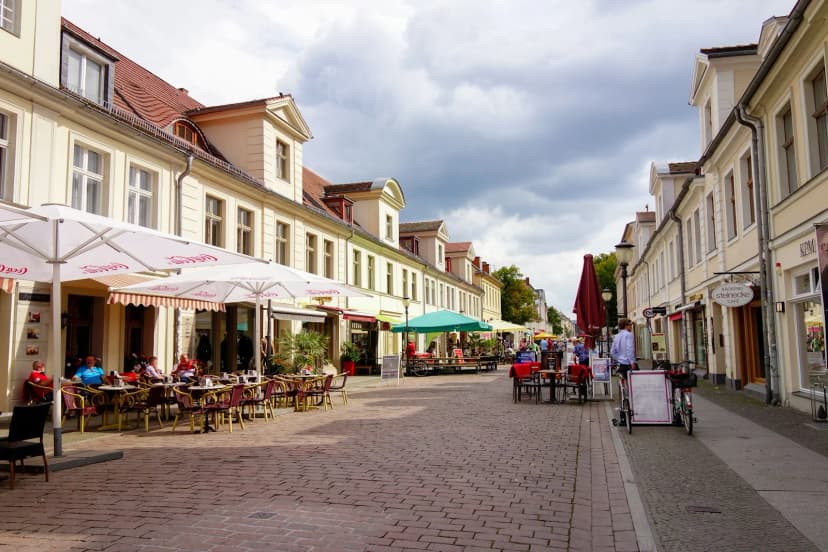
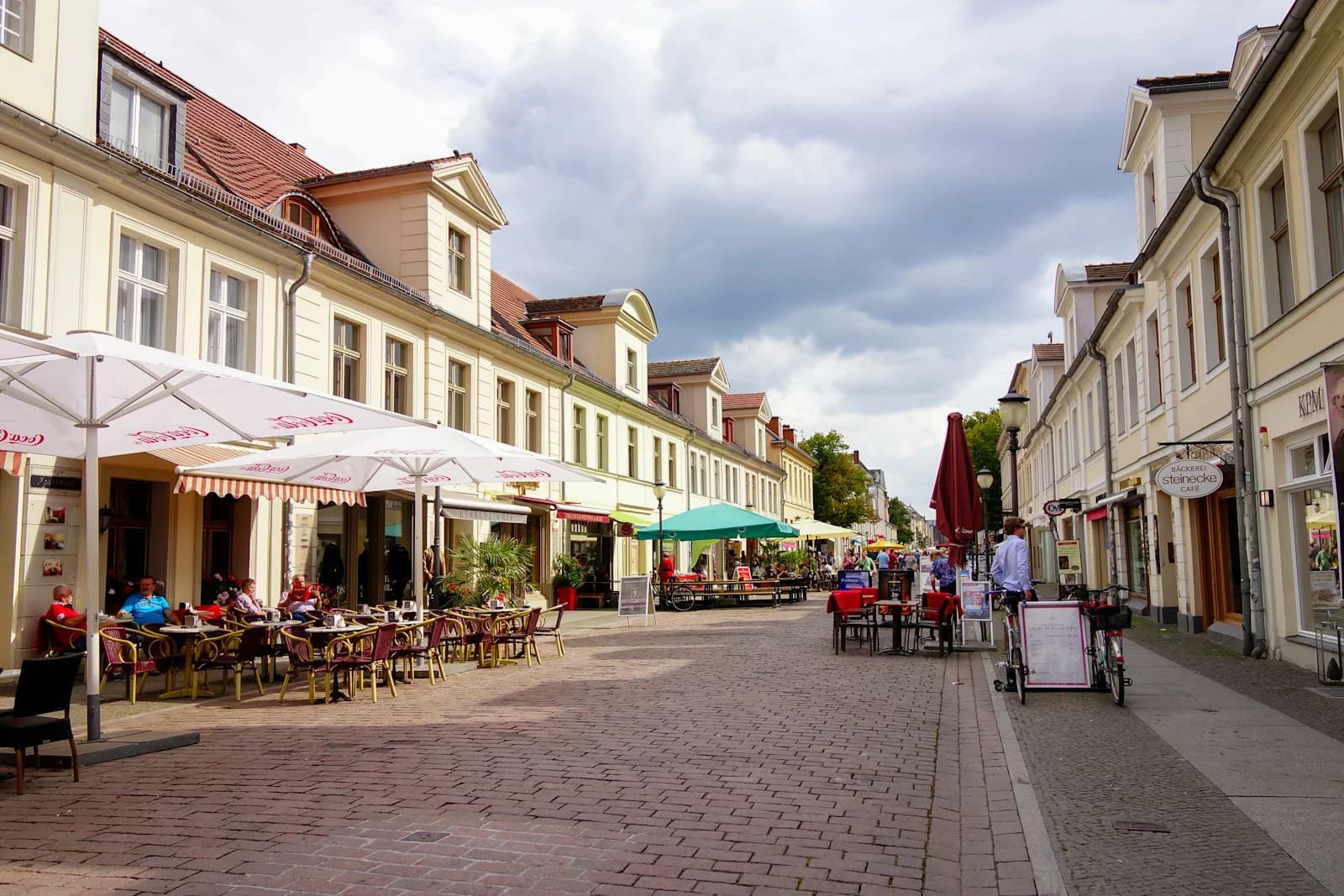
Potsdam's Old Market and the Dutch Quarter are the parts of the city that absorb rain best, because they are compact, built up and full of places to duck into. The Kubi guide describes the Old Market as retaining its Baroque charm and the Dutch Quarter as having streets lined with bars, cafes and restaurants that stay open into the evening. A wet afternoon there is a slower afternoon, not a wasted one.
This is also the moment to reconsider a palace-heavy plan. If the weather is set against you, replacing one park building with a longer lunch and a single museum is usually the better trade, even though it looks like giving something up on paper. If photography is your reason for the trip, a Potsdam photography guide is more useful on a dry day than a wet one.
What You Cannot Confirm Before You Go
Several details that would shape a wet-weather plan are not settled by the sources worth trusting here. Current admission prices for any museum, palace or the Biosphäre, exact opening hours and last admission times, and which specific buildings close in poor weather are all things the operator controls and can change. Nothing in this guide should be read as a statement about those.
It is equally unsafe to assume that a major indoor attraction will admit you without booking, or that advance booking is compulsory. Whether the Biosphäre requires a timed slot is a question for the Biosphäre, not for a general guide, and the answer can differ between a quiet weekday and a wet school holiday.
The practical response is a short checking routine the night before. Confirm the opening status and admission terms on the operator's own page, confirm exhibition dates for the Museum Barberini, and keep one town-centre museum as a fallback that needs no park crossing. The city of Potsdam is the reliable starting point for the official Potsdam listings, and the Potsdam section of this site covers the wider itinerary picture.
Plan the Wet-Weather Version of Your Potsdam Day
A rainy day in Potsdam works best when you stop trying to see the whole UNESCO landscape and choose two or three indoor anchors instead. Pair the Old Market with the Museum Barberini, add the Naturkundemuseum or the Biosphäre if you want a second stop, and treat any palace interior as a single deliberate target rather than the start of a park circuit.
Keep the free-versus-ticketed distinction in mind throughout: park grounds cost nothing but offer no shelter, while interiors are ticketed and keep you dry. Before you set out, check the current terms on each operator's own page, since prices, hours and wet-weather arrangements are theirs to change and are not fixed by any guide.
Frequently Asked Questions
What can I do in Potsdam when it rains?
Focus on fully indoor venues and keep the walking between them short. The Museum Barberini at the Old Market, the Naturkundemuseum, the Biosphäre and palace interiors are the options most often named. The Old Market and the Dutch Quarter also work well in rain because they are compact and lined with places to shelter. Check each venue's current opening status before you travel.
Are the Sanssouci park grounds free if I only want to walk around?
The park is generally described as free to enter, with the palace interiors treated as a separate ticketed experience. Since park access rules are set by the operator and can change, confirm current terms before you go. Remember that in heavy rain the free grounds are also the part of the visit with no roof.
Do all the palace buildings in Sanssouci Park share one ticket?
No. The Potsdam ensemble includes multiple separate buildings and collections, and tickets may be sold individually or through a combined pass depending on the operator's current scheme. Read the ticket description carefully so you know which interiors are included before you buy, and do not assume one purchase covers everything in the park.
Is the Biosphäre a good rainy-day alternative to the palaces?
It is a different kind of day rather than a substitute. The Biosphäre is a covered tropical environment, so rain outside matters far less than it does on a palace terrace. It suits visitors who want warmth, greenery and room to move, especially families. Admission rules and whether timed entry applies should be checked directly with the operator.
Which Potsdam palaces still work in wet weather?
Interiors are indoor spaces, but the routes to them often are not. The original Sanssouci Palace sits above terraced vineyards, and the New Palace stands roughly a mile away, so getting between buildings involves exposed ground and courtyards. Because which specific buildings open or close in poor weather is not something a general guide can settle, check with the operator on the day.