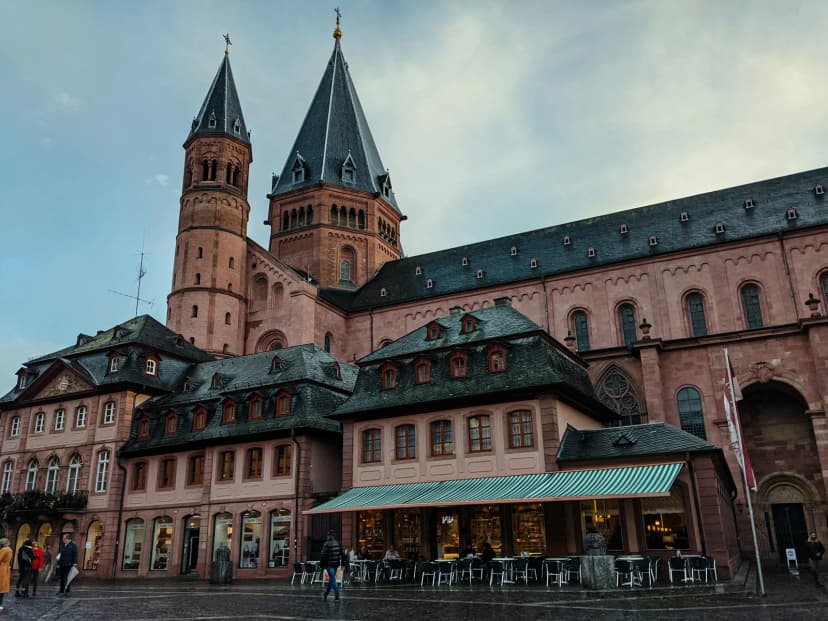
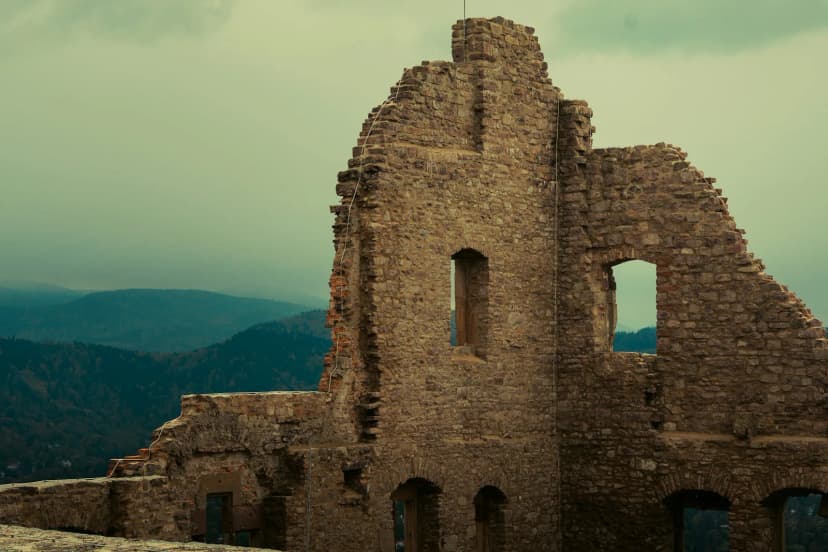
The European Hansemuseum is not a single gallery but a site of almost 12,000 square metres on Lübeck's Castle Hill, where a modern exhibition building connects to the restored Burgkloster. Guidance in the permanent exhibition is offered in four languages — German, English, Russian and Swedish — which shapes how much a non-German-speaking visitor can absorb.
That pairing of new building and Gothic monastery is the reason the visit feels like two experiences at once: a contemporary presentation of the Hanseatic League and a walk through a brick complex that housed a Dominican convent until the sixteenth century. Castle Hill, in the north of Lübeck's insular Old Town, is one of the city's earliest settlement locations and sits beside the harbour from which Hanseatic merchant ships once sailed north.
What the European Hansemuseum Actually Is
The museum brings together two very different buildings: a new museum structure that has received several architectural prizes and the lavishly restored Burgkloster next to it. The site covers almost 12,000 square metres, so this is not a single-room attraction you can absorb in a quick pass. Understanding that scale before you arrive helps you decide whether to treat the museum as the main event of a day or as one stop among several in the Old Town.
The ensemble sits in the north of Lübeck's insular Old Town. The island core is compact enough to explore on foot, but the museum's position means you can pair it with the historic harbour side of the city rather than crossing town. If you are building a broader plan, the Lübeck: Landmark Visitor Guides collection covers other landmarks in the same quarter.
Why Castle Hill Matters to the Hanseatic Story
Castle Hill is one of Lübeck's earliest settlement locations, and the museum's placement there is deliberate rather than incidental. The neighbouring harbour was the point from which richly laden merchant ships sailed north, linking the city into the wider Hanseatic trading network. Reading the exhibition with that geography in mind makes the trade routes and the four Kontore feel concrete rather than abstract.
The Hanseatic League was a trade network that shaped politics, economics and culture across northern Europe, and Lübeck sat at its forefront. The museum's interpretation covers the merchants' rise, medieval life and trade, the victories and defeats, and the organisation and meetings of the League. It also examines the myths and legends that grew up after the League transitioned into other social and economic forms.
The Permanent Exhibition and the Four Kontore
The permanent exhibition is structured around the most important trading centres where the long-distance traders had branches, known as Kontore. Those four centres — Novgorod, Bergen, Bruges and London — give you a natural sequence to follow instead of wandering between themes. Treat them as four chapters: each one shifts the geography and shows how the League operated across very different regions.
Presentation relies on staged scenes supported by extensive research, alongside original artefacts borrowed from international museum collections. Interactive features keep the material active rather than purely observational, which suits visitors who prefer to engage with exhibits rather than read long panels. If you read none of the four guidance languages comfortably, plan to lean more on the visual staging and the artefacts themselves.
Language and Comprehension Planning
Guidance is available in German, English, Russian and Swedish, which covers a wide range of visitors but not every language. If English is your working language, you can follow the narrative and the Kontore structure without difficulty. If you read none of the four comfortably, the staged scenes and original objects still carry much of the story, though the written context will be less accessible.
The presence of Russian and Swedish reflects the Hanseatic League's reach across the Baltic and North Sea worlds, so the language provision is part of the historical framing rather than an afterthought. Budget a little extra time if you are relying on translated guidance alone, since reading in a second language slows the pace. Groups with mixed languages should agree on a meeting point and a rough end time before entering.
The Burgkloster: A Gothic Brick Monastery in the Route
The Burgkloster was home to a Dominican convent until the sixteenth century and is now part of the museum circuit. Its wall and ceiling paintings survive, and the Gothic brick building is regarded as one of the most important monastery complexes in northern Germany. The restored complex is also used as a setting for musical performances, so its role extends beyond static display.
Because the Burgkloster is a historic monument in its own right, it rewards a slower pace than a conventional exhibition hall. Look up: the ceiling paintings are easy to miss if you move through the rooms focused only on the modern displays. This is the point where the visit shifts from exhibition to architecture, and it is worth letting that transition happen naturally.
The Research Centre and Special Exhibitions
The museum works with the affiliated Research Centre for Hanse and Baltic History, known by its German abbreviation FGHO. Through special exhibitions, discussions and lectures, the partnership keeps the Hanseatic League's relevance visible and creates space for debating its past, present and future. Programming of this kind changes over time, so the current line-up is always worth checking before you travel.
The museum's official site announced an innovative exhibition starting on 9 October 2026 that goes beyond classic museum presentations. Because that date has now passed, treat any listing for it as historical and look to the museum's own pages for what is currently on show. Check the official site for the current position rather than relying on a dated programme announcement.
Suggested Duration and Pacing
As an editorial suggestion rather than an official timing, allow around two to three hours for the permanent exhibition and the Burgkloster together. The four-Kontore structure gives you a way to pace yourself: roughly half an hour per trading centre, plus time in the monastery spaces. If you are short on time, prioritise the staged scenes and the surviving wall and ceiling paintings; if you have longer, slow down in the Burgkloster and read the interpretive material in full.
Note that the museum does not publish a fixed visit duration, so the figure above is a planning aid you can stretch or shorten. The site's size of almost 12,000 square metres means crossing between areas takes a few minutes each time. Build in a short break between the permanent exhibition and the Burgkloster rather than treating them as one continuous run.
Practical Decisions Before You Go
Admission prices, opening hours, closing days and last-entry times are not confirmed in the material available for this guide, so settle those on the museum's official site before travelling. Do the same for any questions about tickets: the official site is the authoritative source for what is currently on sale and what a ticket covers. Do not assume that the Castle Hill grounds or the Burgkloster courtyard are freely accessible, because that distinction is not settled by the sources consulted here.
The museum does not share verified details here about on-site ticket counters, online booking requirements or advance purchase, so confirm those directly if they matter to your plans. The same applies to step-free routes, lifts and wheelchair provision, which are not documented in the sources used for this guide. If accessibility is essential to your visit, contact the museum before you go rather than relying on general assumptions.
A practical precaution: there is no verified information here about combined tickets or shared admission with neighbouring museums, and none should be assumed. Keep your planning centred on the Hansemuseum itself and treat anything else as a separate decision. If you want to pair the visit with more of the Old Town, the Lübeck: Itineraries and City Travel Guides hub is a sensible starting point.
Rounding Out the Visit in Lübeck's Old Town
The Hansemuseum sits in a quarter with several other landmarks within walking distance, so you can build a half-day or full-day route without long transfers. One natural companion is the St. Annen Museum Lübeck visitor guide, which covers a separate collection and a different angle on the city's art and history. Read that guide before you go if you want to decide which museum deserves the larger share of your time.
The Burgkloster Lübeck visitor guide is also useful if the monastery architecture appeals and you want to understand what you are looking at before entering. Literary travellers may prefer the Buddenbrookhaus Lübeck visitor guide for a contrasting, more modern slice of the city's cultural history. None of these should be assumed to share a ticket with the Hansemuseum; treat each as its own visit and check each museum's own information.
Plan Your Visit
The European Hansemuseum rewards a deliberate approach: decide in advance whether you are there mainly for the permanent exhibition, the Burgkloster, or both, and allocate your time accordingly. Confirm prices, opening times and ticket scope on the museum's official site before travelling, since those details are the ones most likely to change. Allow roughly two to three hours as an editorial suggestion, and treat the four Kontore as your structural guide through the show.
Because the site pairs a modern exhibition building with a restored Gothic monastery, the visit works best when you move between the two with different expectations: information-dense in the exhibition halls, slower and more architectural in the Burgkloster. Check the museum's announcements directly if a special exhibition is part of your reason for going, since announced programmes can shift. With those checks done, Castle Hill is a manageable and rewarding stop in Lübeck's Old Town.
Frequently Asked Questions
What is the European Hansemuseum about?
It tells the history of the Hanseatic League, the northern European trade network that shaped politics, economics and culture across the region, with Lübeck at its forefront. The permanent exhibition covers the merchants' rise, medieval life and trade, the League's victories and defeats, its organisation and meetings, and the myths and legends that developed afterwards. The site also includes the restored Burgkloster and works with the affiliated Research Centre for Hanse and Baltic History on special exhibitions, discussions and lectures.
How is the permanent exhibition structured?
It is organised around the four Kontore, the branch trading centres at Novgorod, Bergen, Bruges and London, rather than following a simple chronological walk. Within that structure, the museum uses staged scenes based on extensive research, original artefacts from international museum collections, and interactive features. Following the four Kontore in order gives you a clear route through the show and helps you notice how the League operated across different regions.
Which languages is the exhibition presented in?
Guidance is available in four languages: German, English, Russian and Swedish. If English is your working language, you can follow the narrative and the Kontore structure comfortably. If you read none of the four, the staged scenes and original objects still convey much of the story, but the written context will be less accessible, so allow extra time or focus on the visual elements.
Is the museum inside a historic building?
Both, in effect. The museum joins a new building that has received several architectural prizes to the lavishly restored Burgkloster, a Gothic brick complex that housed a Dominican convent until the sixteenth century. Its surviving wall and ceiling paintings make it one of the most important monastery complexes in northern Germany, and it forms part of the museum circuit. The result is a visit that moves between contemporary exhibition spaces and historic architecture.
How long should I allow for a visit?
Allow roughly two to three hours as an editorial suggestion, not an official figure, and split that between the permanent exhibition and the Burgkloster. The site covers almost 12,000 square metres, so crossing between areas takes a few minutes each time. If you are short on time, prioritise the staged scenes and the surviving monastery paintings; if you have longer, slow down in the Burgkloster and read the interpretive material in full.
Does the museum host special exhibitions?
Yes. The museum works with the Research Centre for Hanse and Baltic History to present special exhibitions, discussions and lectures that explore the League's lasting relevance. The museum's own site announced an innovative exhibition beginning on 9 October 2026; that date has now passed, so check the official site for the current programme rather than relying on the original announcement.