

Konstanz is the largest city on Lake Constance and the only German municipality on the lake's southern shore, where the Seerhein drains the Obersee and flows northwest past the old town. That geography is the whole reason the city works for photography: from almost anywhere in the centre you can be at a western-facing riverbank, a harbour mouth or a hilltop above the rooftops within a short walk. The practical question is not where the famous sights are, but which ones suit the light and the sky you have on the evening you are there.
Two things make planning easier. First, the open lakeside and riverside spots are free to use, while interiors such as the Rosgartenmuseum collection, the archaeological museum and SEA LIFE Konstanz are separately ticketed — there is no single photo pass covering them. Second, opening times and admission change, so treat any figure you read as a starting point and confirm before you travel.
The suggestions below are organised by the framing problem each location solves rather than as a ranked list, so you can pick one or two spots that fit a single evening instead of racing between them. A realistic pairing is one elevated or open-water location for the main light plus a short old-town block afterwards when the sky is still glowing.
Bismarck Tower and the Raiteberg: the one genuinely wide view
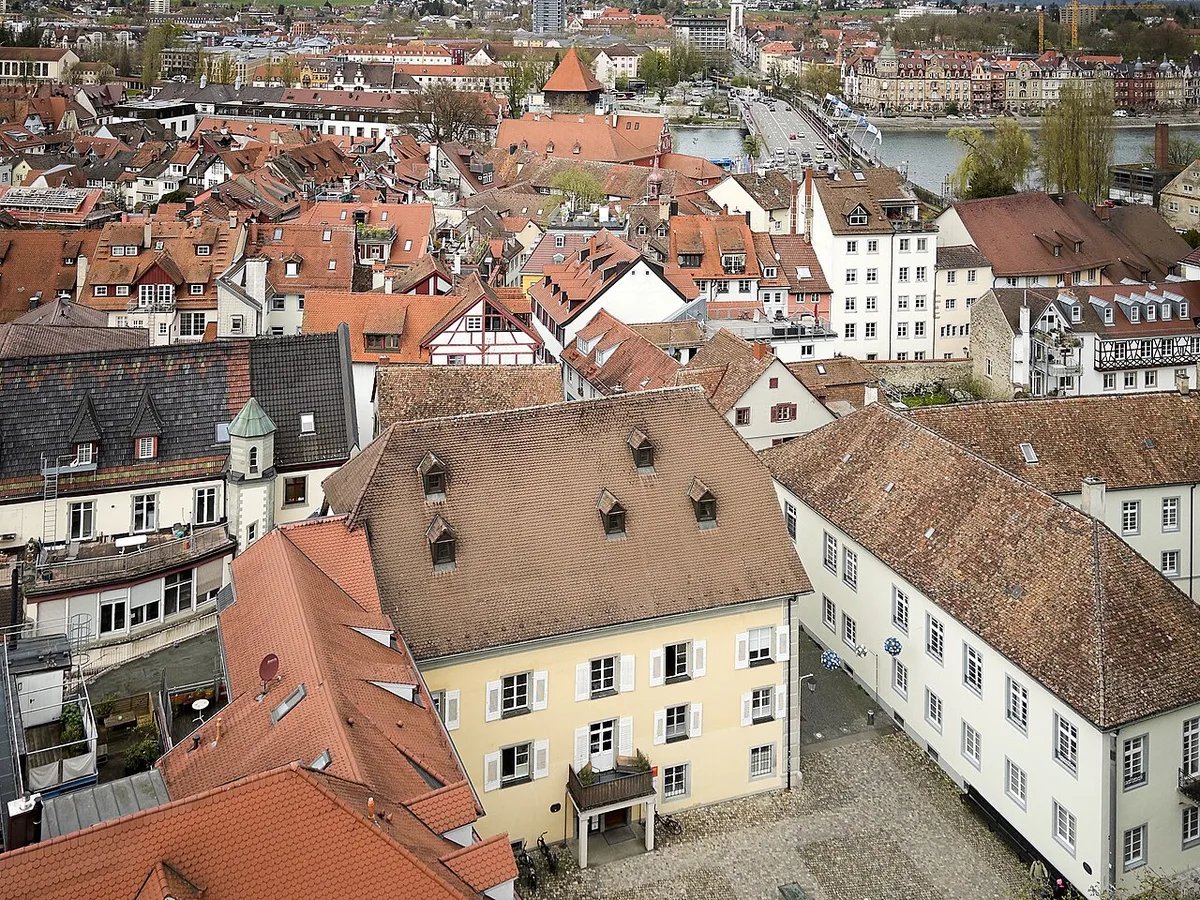
If you only have one clear evening, the Bismarck Tower on the Raiteberg is the location with the widest sweep of the city, lake and Alps, and it is the spot most often described as the best all-rounder for picture-perfect sunset conditions. The alpenglow and the layered rooftops give you a landscape frame rather than a street frame, which suits wide lenses and stitched panoramas. It is a hilltop walk rather than a five-minute detour from the old town, so budget the uphill leg into your timing.
The trade-off is people and repetition: it is a known viewpoint, so on a good-weather evening you are sharing the platform and the foreground trees with other photographers. Arriving well ahead of the light gives you time to test two or three compositions before the colour arrives, and staying past the main event usually thins the crowd. Tripod and drone permissions are not published in the sources used here, so check with the operator or the city before you plan a shoot that depends on them.
Seerhein west-facing banks: Schänzleufer and Dreieckswiese
The Schänzleufer and Dreieckswiese stretch along the Seerhein and offer the most straightforward western exposure in the city, with open sky and water reflections in the foreground. Low water's edge is where the reflections compress best, so getting close to the waterline matters more here than lens choice. This is a relaxed, low-effort spot to end an evening: you sit on grass and the frame fills itself.
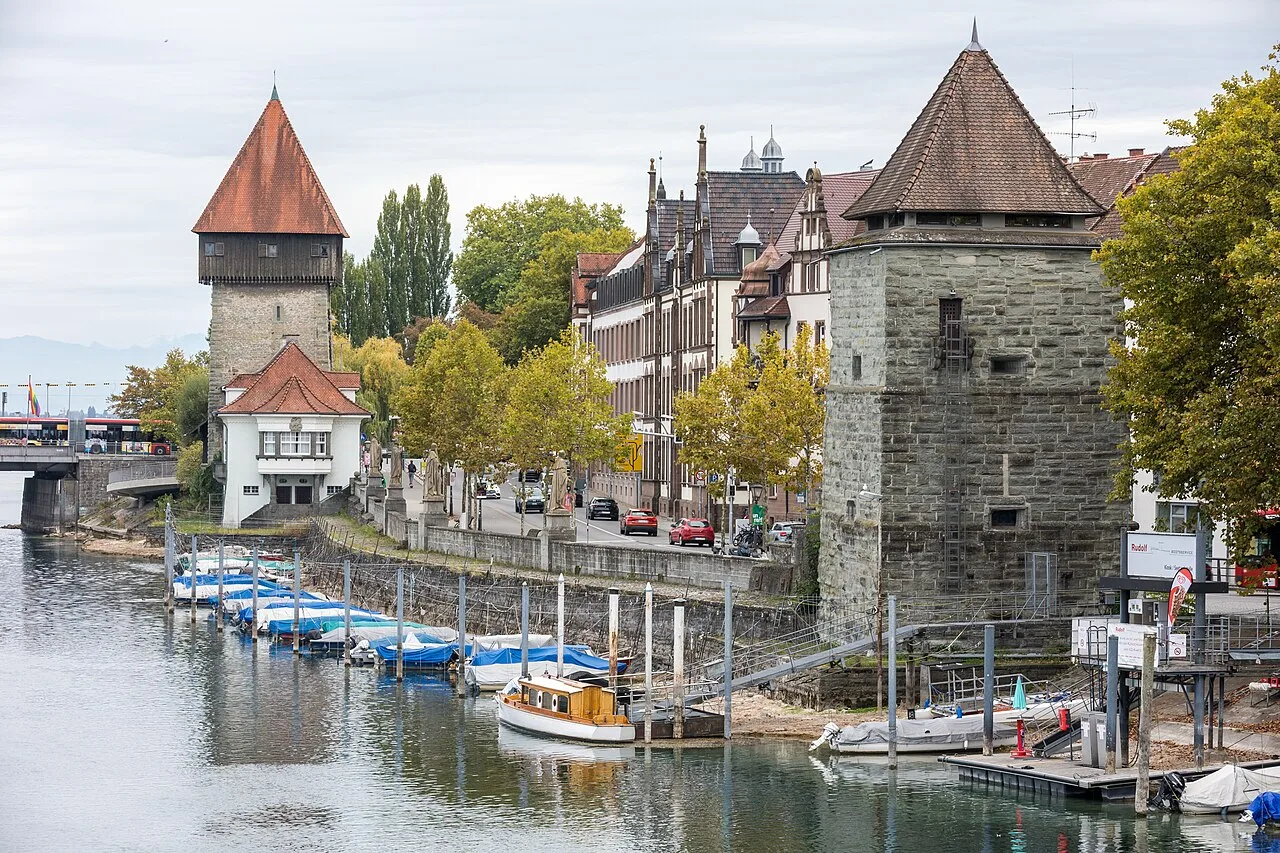
Because the bank faces open water, you get clean silhouettes of riverside trees and passing boats rather than a skyline, which is a different picture from the harbour. Pair a wide frame for the sky with a tighter frame on the water's surface texture, and you have two distinct images from one position. The view is documented as particularly good in spring and summer, so if you are visiting in the colder half of the year, manage expectations and check what the light is doing before you commit.
Where the sun sets out of frame: Smugglers' Cove, Hörnle and Little Venice
A common assumption about Smugglers' Cove is that you will photograph the sun dropping into the lake, but the sun actually sets just out of sight from there. What you get instead is a pebble beach, a wide water surface and, on a clear day, warm orange and pink light washing over the alpine silhouettes and the sky. The adjacent Seestraße works well for a late stroll with the same light, so a blanket and a low viewpoint will earn you more than waiting for a sunset disc that never appears in frame.
Hörnle behaves the same way: you do not see the sun disappear over the lake, but the opposite shore, with Meersburg, vineyards and sailing boats, takes on the warm evening glow. That makes it a good place for sweeping sky shots and for a large sunbathing lawn where you can spread out and compose slowly. A light breeze helps here by breaking the water into a glittering texture that reads as sparkle rather than a flat sheet.
Little Venice is the third of these afterglow locations: the sun disappears behind the buildings, but the last minutes of light over the water make it worth saving for the end of an evening. Treat all three as sky-and-silhouette locations rather than sunset locations — that single reframing will change how you shoot them. Nearby Meersburg on the northern shore is a separate excursion rather than a subject you can reliably shoot from these banks.
Herosé Park and the bicycle bridge: movement in the frame
Herosé Park sits on the Seerhein and is the best choice when you want people rather than landscape: cyclists crossing the bridge, joggers silhouetted against the light, and groups on the riverbank all become foreground elements. The park itself is on the site of an old textile factory, and its trees and paths give you structure to frame through. It is popular in summer, so arriving slightly before the light builds gives you room to position.
The cycle bridge offers a clean vantage point, but it carries real bicycle traffic, so keep your position safe and shoot in short bursts rather than standing in the lane. This is also the location where a mid-range focal length beats a very wide one, because the story is the mix of motion, water and reflected light. If you want a completely different urban scene later in the evening, the rooftop garden above the LAGO shopping centre frames the golden hour against rooftops, glass and the harbour.
Harbour and old town: anchor subjects with fixed geometry
The harbour mouth, the Imperia statue and the Konzil building give you recognisable anchors that work in almost any weather, because you are photographing form, reflection and architecture rather than a dramatic sky. The Konzil is a historic building with a terrace facing the lake, and Marktstätte's red-stone Kaiserbrunnen fountain provides a built-in meeting point and a strong foreground object in the middle of the old town.
Ferry and passenger-boat connections are part of the harbour's character, but timetables published by operators change seasonally and are outside what this guide can confirm. Check the operator's own pages if a boat needs to be in your frame, and use the fixed architecture as your fallback. A harbour visit also pairs naturally with the sightseeing the city's own tourism information office promotes.
Niederburg and the Minster quarter: soft light for narrow lanes
The Niederburg and the Minster quarter are where you go when the sky is flat, because half-timbered facades, the Schnetztor gate and narrow lanes read better in even, shadowless light than they do against a hard sun. The Schnetztor is a fourteenth-century city gate with a half-timber front, clock face and bell tower, and it survived as one of the last remaining pieces of the medieval fortifications that once ringed the town. The gate alone gives you an architectural subject that rewards a straight-on frame and a patient wait for a passer-by.
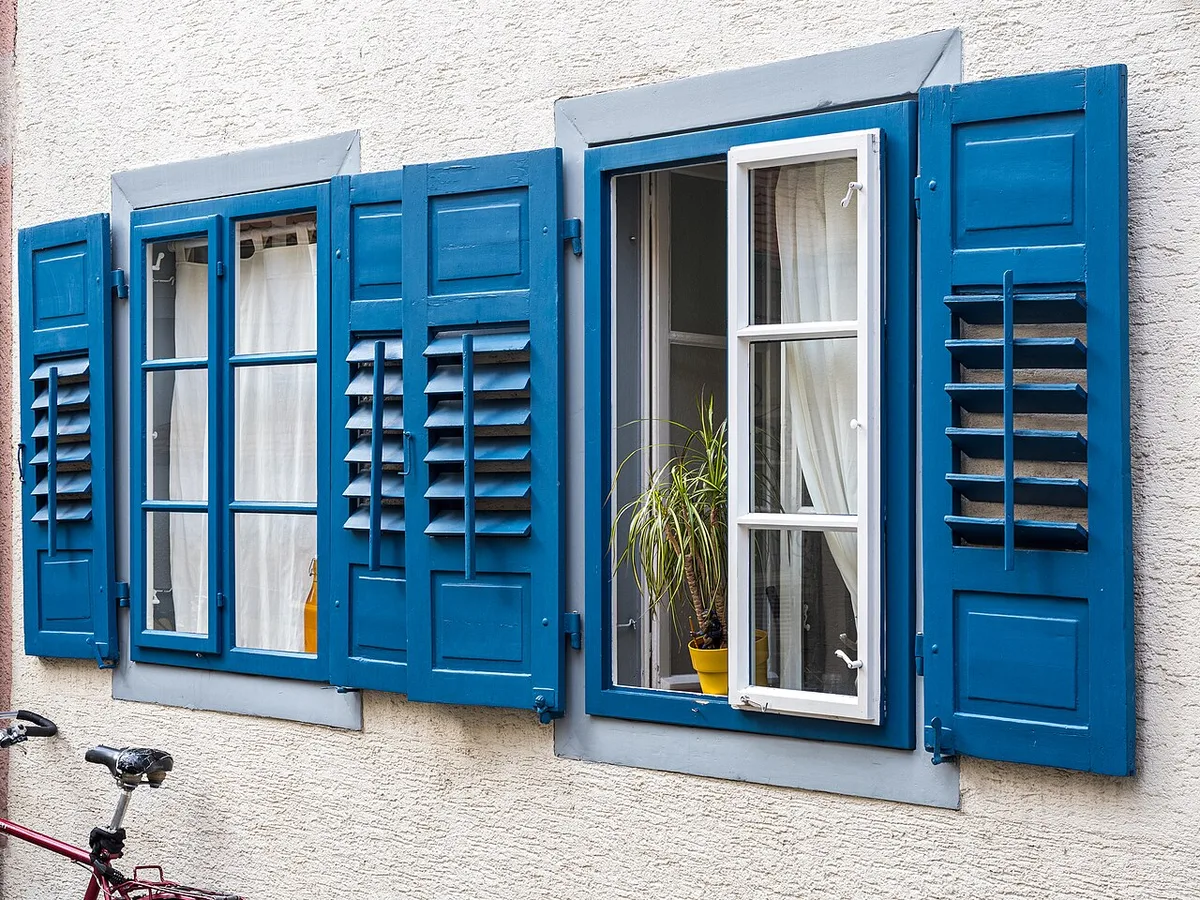
A short, plotted route through these lanes is more effective than wandering, so a self-guided Konstanz old town walking tour gives you a sequence of subjects with transition time built in. Allow roughly an hour for the lanes and the gate alone if you are shooting rather than simply strolling, and expect to spend longer if you want the Minster in frame. Cathedral tower access is a separate matter not covered by the sources used here; ask on site if that view matters to you.
Rainy days and low light: what an interior gives you
On a wet or heavily overcast day, the Rosgartenmuseum is the most practical indoor option: it occupies a former butchers' guild house first mentioned in 1324 and united with a neighbouring building in 1454, and the preserved halls and rooms give you architecture as well as exhibits. It was founded in 1870 by the pharmacist and city councillor Ludwig Leiner, and its collection covers the history of the city and the Lake Constance region. Rooms of this kind let you work with soft, directional window light that the lakefront cannot offer in bad weather.
Adult admission is listed at 5,00 € on the regional tourism page, with reduced and card-based options, but you should confirm current prices and season-dependent opening hours on the operator's own site before your visit. The museum's guided-tour pages quote separate admission rates for guided tours, which is a reminder that ticket scope differs between a normal entry and a booked tour. Photography conditions inside are not published in the sources available here, so ask staff at the desk rather than assuming.
If you want a second indoor subject, the State Archaeological Museum covers the Stone Age to the Middle Ages with models, a ships and boats section and a dedicated Constance room, and it publishes its own contact details at Benediktinerplatz 5. Both museums are individually ticketed, so do not assume one admission covers the other or that any city-wide photo pass exists. For an overview of what else is indoors in Konstanz when it rains, the range of excursion destinations and indoor attractions is listed in one place.
A simple two-session shooting plan
Session one is the outdoor block: choose either the Bismarck Tower for the wide view or the Schänzleufer for reflections, and commit to that one location rather than travelling between them. Arrive early enough to scout two compositions and stay for the afterglow, which is often better than the moment of brightest colour. This is the session that depends most on weather, so keep it flexible and swap it with the indoor block if the sky collapses.
Session two is a short old-town walk: harbour and Imperia first while the light is still useful, then into the Niederburg and the Minster quarter for the gate and the lanes. If you want more structure across several days, a two days in Konstanz itinerary and a 3 days in Konstanz itinerary both sequence these areas without duplicating the same evening. Keep the walking block deliberately short — two subjects done well beats six locations seen from a moving queue.
What you cannot fix from a desk
Several things that matter to a serious shoot cannot be resolved in advance from written sources: the exact sun position for your date, whether tripods or drones are permitted at a given location, and current boat and ferry schedules that determine what appears in your harbour frame. Check directly with the location, the city and the transport operator rather than relying on a general guide. Seasonal sun direction does shift through the year, and the light changes with it, so a composition that works in one month may need a different position in another.
It is also worth remembering that Konstanz sits on the Swiss border, and the old town, the lake and the Seerhein all sit within a compact area, so you rarely need transport between the spots described here. If you want to plan beyond the centre, treat outlying lakeside stops as separate outings rather than add-ons to a golden-hour session. Verify anything time-sensitive shortly before you go, since hours, prices and services published online are the ones most likely to have moved.
Plan Your Visit
The most useful decision you can make before a Konstanz photo evening is not which spot is best in the abstract but which light condition you are likely to have. A clear sky argues for the Bismarck Tower or the Seerhein banks; a hazy one for a harbour frame; a flat grey one for the Niederburg lanes and a museum interior. Choosing on that basis, rather than on a list of names, gets you better pictures in the conditions you actually meet.
Build in a buffer for the two things most likely to change your plan: weather and published opening times. Confirm museum hours, prices and any photography conditions on the operator's own pages, and confirm boat or ferry schedules with the transport operator if vessels need to be in your shot. Free waterfront locations let you pivot quickly when the sky does something unexpected, and that flexibility is the real advantage of shooting in a city this compact.
Frequently Asked Questions
Where are the best photography spots in Konstanz?
For a wide elevated view, the Bismarck Tower on the Raiteberg is the strongest all-round choice, with the city, lake and Alps in one frame. For reflections and open sky, the Schänzleufer and Dreieckswiese on the Seerhein are the most reliable western-facing banks. Herosé Park suits people-and-movement images, while the harbour mouth, Imperia and Konzil give you recognisable architectural anchors that work in most weather.
Can you see the sunset from Hörnle or Smugglers' Cove?
No, not the sun itself. At Smugglers' Cove the sun sets just out of sight, and Hörnle behaves the same way. What both locations do deliver is warm light and colour across the water, the sky and the alpine silhouettes, which is why they work best for sky-and-reflection compositions rather than a sunset disc over the lake. If seeing the sun drop matters to you, plan for a west-facing bank instead.
What can you photograph in Konstanz on a rainy day?
Interiors are the practical answer. The Rosgartenmuseum occupies a former guild house with preserved halls and rooms, and the State Archaeological Museum covers the Stone Age to the Middle Ages with models and a dedicated city room. Both are separately ticketed, so check current opening hours and admission on the operator's own site. Half-timbered lanes and the Schnetztor gate also photograph well in flat, even light, which is exactly what an overcast day gives you.
Do you need a tripod for golden-hour shots in Konstanz?
A tripod helps in low light and for the blue hour after the main colour fades, but whether it is permitted at a specific location is not something you can assume from a general guide. The sources used here do not publish tripod or drone rules for these spots. Ask the operator or the city before planning a shoot that depends on one, and have a hand-holding fallback ready.
How long should you allow for a photo walk in the old town?
Roughly an hour is a reasonable suggestion for the lanes and the gate alone if you are actually shooting rather than strolling, and longer if you want the Minster in frame. That is a suggested duration, not an official figure. Add time for the harbour and Marktstätte if you want architectural anchors as well, and keep the walk short enough that you are not rushing the light.
Sources
- Herzlich willkommen in Konstanz am Bodensee
- Konstanz am Bodensee | Lake Constance Tourism
- The 13 best views, scenic lookouts, and viewpoints in Konstanz
- GOLDEN HOUR GUIDE TO KONSTANZ: WHERE YOU CAN EXPERIENCE THE MOST BEAUTIFUL SUNSETS - LAGO KONSTANZ
- Various Excursion destinations in Konstanz at Lake Constance
- Rosgartenmuseum Konstanz am Bodensee
- Tours / Education – Rosgartenmuseum
- State archeological museum – Archäologisches Landesmuseum
- SEA LIFE Konstanz - Unterwasserwelt am Bodensee


