

Most visitors to Konstanz never leave the harbour promenade. The Imperia statue, the ferry piers and the flower island across the water absorb nearly all the attention, and the compact old town behind them gets a hurried lap on the way to dinner. That is a shame, because the city's quieter finds are almost all indoors and within a short walk of the water.
The museum's own description notes that its late-medieval halls, rooms and works of art have come down to the present largely intact, and it flags its connection to the UNESCO World Heritage listing of prehistoric pile dwellings around the Alps. Lake Constance Tourism describes the Rosgartenmuseum as a roughly sixty-minute visit and lists an adult admission of 5.00 euros, with a one-time free adult admission for Bodensee Card PLUS holders. Hours and prices are the operator's to change, so confirm before you travel.
This guide treats hidden gems as a decision problem rather than a list. It separates free grounds and courtyards from ticketed interiors, explains what each collection actually contains, and suggests how to sequence two or three of them in one afternoon without seeing the same kind of display twice.
What Makes a Konstanz Find Hidden
In Konstanz, hidden rarely means remote. It means overlooked, or tucked above a shopfront, or reached through a courtyard that looks private but is not. The old town is small enough that the difference between a busy sight and a quiet one is often a single turning off the main shopping street.
The second reason these places stay quiet is seasonal. Konstanz is a summer city: the lake, the boats and the lidos take the crowds from late spring, while the museums do their best work on grey days. A rainy afternoon in the old town is the single best time to have a gallery or a guild hall almost to yourself. For wider planning, see Free Things to Do in Konstanz.
A practical consequence is that you should not budget a whole day for any single one of these collections. They are half-hour to ninety-minute visits, which is what makes them combinable additions to a longer itinerary rather than replacements for it. The tourist office at the station publishes current visitor information if you want to check anything before setting out.
Rosgartenmuseum: A 1454 Guild House in the Heart of the Old Town
The Rosgartenmuseum sits on Rosgartenstrasse in the pedestrian core, and the building itself is the first exhibit. The house known as Zum Rosgarten was the guild house of the butchers, grocers, apothecaries, stove makers and ropemakers, first mentioned in 1324 and merged with the neighbouring Zum Schwarzen Widder in 1454.

Inside, the attraction is the survival of the original rooms rather than blockbuster objects. The museum's own description notes that late-medieval halls, rooms and works of art have come down to the present largely intact, and the listed Leiner Hall on the ground floor still displays the personal collection of the museum's founder. That founder was Ludwig Leiner, a Konstanz pharmacist and city councillor who established the museum in 1870.
The permanent exhibition covers the art and cultural history of the city and the wider Lake Constance region, with rotating themed shows alongside it. The museum also flags its connection to the UNESCO World Heritage listing of prehistoric pile dwellings around the Alps, which links it thematically to the archaeology museum across town.
Behind the displays, a historic extension and an inner courtyard hold a museum cafe, and it is the obvious place to break a museum afternoon. The museum has published a free audioguide in German, English and French, which solves the language problem for visitors who do not read German labels.
What the Rosgartenmuseum Costs and When It Opens
The Bodensee tourism listing for the museum gives the general opening pattern as Tuesday to Friday from 10am to 6pm and Saturday and Sunday from 10am to 5pm, available all year. It recommends allowing about an hour for a visit, which matches the scale of the house.
The same listing quotes an adult admission of 5.00 euros and states that holders of the Bodensee Card PLUS receive one-time free admission, with a separate one-time free admission for children holding the card. Because these figures and conditions are published by the tourism organisation rather than fixed forever, treat them as the starting point and confirm on the day.
The museum's own education page quotes a different admission figure of 3.00 euros per person, reduced 1.50 euros and 1.50 euros for groups of ten or more, in the context of guided tour pricing. Different pages carry different figures depending on when they were written and what is included, another reason to verify at the door.
The same page confirms that guided tours must be booked in advance, that groups are capped at twenty-five people, and that only English and Spanish foreign-language tours are currently available. It also notes that guided tours by external guides are not permitted inside, so a private guide hired elsewhere cannot simply walk you through the collection.
Free Grounds Versus Paid Interiors
The most common mistake in Konstanz is assuming that a ticket to one part of a complex covers everything. It does not. The archaeology museum, the Hus House and the Rosgartenmuseum are three separate institutions with separate admissions, and treating them as one combined sight will leave you either overpaying or turned away at a desk. For wider planning, see Which Konstanz Museum Fits Your Trip? Rosgarten, ALM, Hus-Haus and SEA LIFE Compared.
Free access is usually found outdoors: courtyards and lakefront paths. In the Rosgartenmuseum's case, the inner courtyard, the historic museum cafeteria, and the museum cafe are open to visitors, but the collection itself is ticketed. Check each operator's own page before you travel, since free and paid zones can change with refurbishment.
One genuine exception is worth knowing about. At SEA LIFE Konstanz, entry to the Lake Constance Nature Museum in the same building is included in the SEA LIFE ticket rather than sold separately, and the operator is explicit that SEA LIFE admission itself is not covered by the Bodensee Card PLUS, though children holding the card get one-time free admission.
Archäologisches Landesmuseum: Lake Dwellers and the Trossingen Grave
The state archaeology museum for Baden-Württemberg occupies a site at Benediktinerplatz on the Petershausen side of the river, a short walk from the old town. Its remit runs from Stone Age pile dwellings and Celtic barrows through Roman urban life to the graves of Alemannic nobles and the Middle Ages.
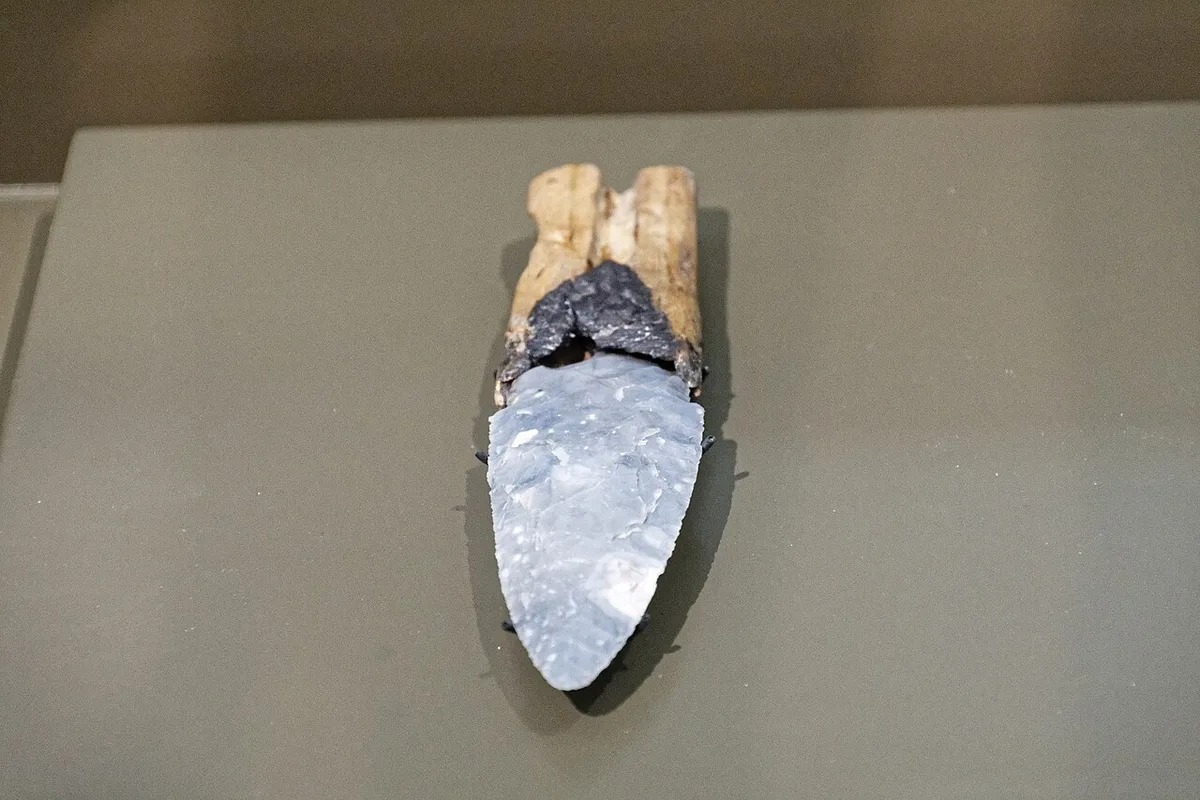
The newly curated World of the Lake Dwellers section is the headline for anyone who has already seen the reconstructed stilt houses at Unteruhldingen and wants the archaeological evidence behind them. The same source describes a new Constance room that traces the town from prehistoric lakeside village to Roman fort to lively medieval episcopal town using models and media technologies.
The other draw is the Trossingen grave, presented in two new exhibition rooms. The burial of an early medieval warrior is shown with its surviving furnishings and weapons, and the outstanding object is a lyre described as the best-preserved example from the early Middle Ages in Europe. That single piece justifies the trip for anyone interested in the period.
Admission prices, opening hours and any seasonal family exhibition are not published in the material consulted here, so do not plan around a remembered figure. Check the museum's own site, alm-bw.de, or the Konstanz tourist information before you go, and pair your visit with the old town walking tour if you want the medieval city in context.
Hus House: A Reformer, a Council and a Medieval Building
The Hus House on Hussenstrasse is small, specific and unlike anything else in the city. Its exhibition is devoted to Jan Hus, the Bohemian church reformer who was condemned by the Council of Constance and sentenced to death on 6 July 1415 for his criticism of the Church and his interpretation of its role.
The building matters as much as the display. For centuries the medieval house was believed to be where Hus spent his final days of freedom, which is why the museum sits here rather than in a purpose-built hall. The exhibition walks through his time lecturing at Charles University in Prague, his sermons at the Bethlehem Chapel, his reform proposals and his end at the stake.
It also covers his importance to Czech and European history, modern literature and art, and presents him as a forerunner of the European Reformation. Because the city of Konstanz runs the museum, its own pages are the place to confirm current visiting arrangements.
Pairing the Hus House with a walk through the old town works well, because the Council of Constance is the event that put this city at the centre of European politics in the early fifteenth century. A route that touches Münsterplatz and the surrounding lanes gives the museum's subject a physical setting rather than leaving it abstract.
SEA LIFE as an Honest Family Trade-Off
SEA LIFE Konstanz is not a hidden gem and should not be sold as one. It is a busy, family-oriented attraction on Hafenstrasse with more than three thousand five hundred sea creatures, an eight-metre glass tunnel, green sea turtles, sharks, rays and ten Gentoo penguins in an Antarctica section.
The genuine value for a curious visitor is the add-on. The Lake Constance Nature Museum occupies the same building and its entrance is included in the SEA LIFE ticket, which turns an aquarium visit into a two-part stop covering both the lake's wildlife and its underwater world. That inclusion is stated by the operator and repeated by the regional tourism body.
Two practical points are worth knowing before you commit. The operator states that large strollers, bicycle trailers and handcarts are not allowed inside for safety reasons, and the regional tourism body describes the attraction as fully accessible to wheelchair users, with an accessible toilet on site.
If your group splits between aquarium fans and museum lovers, this is the one place where a single ticket satisfies both. For everyone else, the quieter collections above will be a better use of an afternoon.
Sequencing Two or Three in One Afternoon
The sensible rule is one collection of each kind. Start with the Rosgartenmuseum for urban and art history, cross the river to the archaeology museum for prehistory and the early Middle Ages, and finish with the Hus House for a single dramatic narrative. That gives you three distinct registers rather than three variations on regional history.
Timing matters more than distance. The Rosgartenmuseum is central and easiest to slot in around lunch or a coffee in its courtyard cafe; the archaeology museum and the Hus House sit on opposite sides of the centre, so walk them in the same direction rather than doubling back. Allow roughly an hour for the guild house, in line with the tourism body's recommendation, and ninety minutes for the archaeology museum if you read labels.
If you only have a single grey afternoon, choose two and do them properly rather than racing through three. The museum cafe at the Rosgartenmuseum is a legitimate rest stop, and the old town walking route between the sites is interesting in itself, so the transitions are not dead time.
Practical Judgement Calls Before You Go
Guided tours at the Rosgartenmuseum are the clearest example of a constraint that catches people out. They must be booked in advance, groups are capped at twenty-five, and the museum currently offers foreign-language tours only in English and Spanish. Two guided tours on the same topic cannot run at once, so popular slots fill.
Late arrivals carry a cost. The same page states that if a booked tour cannot start on time and the delay reaches fifteen minutes, the opened hour is charged an additional twenty euros. Arriving early at Rosgartenstrasse 3-5 is therefore sensible for group organisers.
For the archaeology museum, the Hus House and SEA LIFE, hours and prices change and are not reproduced here for that reason. Verify directly with each operator: the city pages for the Hus House and the tourism company's listings for the others. Booking platforms and aggregator listings are convenient, but they are not the authority on admission conditions.
Finally, do not assume a regional pass covers everything. The Bodensee Card PLUS is documented as giving one-time free admission at the Rosgartenmuseum and one-time free admission for children at SEA LIFE, but SEA LIFE adult admission is explicitly excluded. Read the inclusions list for your own card before you rely on it.
Plan Your Visit
The hidden gems of Konstanz are not secret addresses; they are the collections that sit a few streets back from the water and ask for an hour rather than a day. A guild house with its original halls, an archaeology museum built around a warrior's grave, and a medieval house devoted to a reformer give three very different versions of the same city.
Plan around opening patterns and bookings rather than around a fixed list, and check each operator's own page for current prices, hours and tour availability, since those details shift. The Konstanz city guide and landmark pages can help you fit the museums into a wider route through the old town.
Frequently Asked Questions
What are the hidden gems in Konstanz that most tourists skip?
Most visitors stay on the harbour promenade and never reach the small museums inland. The Rosgartenmuseum in its 1454 guild house, the state archaeology museum at Benediktinerplatz and the Hus House on Hussenstrasse are the three that consistently reward the detour, and all three are within easy walking distance of the old town centre.
Is the Rosgartenmuseum worth visiting in Konstanz?
Yes, particularly if you care about the building as much as the objects. The former guild house retains late-medieval halls and the founder's collection in the listed Leiner Hall, and the museum covers the art and cultural history of the city and the Lake Constance region. Lake Constance Tourism suggests allowing around an hour, which fits the scale of the house.
How much does the Rosgartenmuseum cost to enter?
Lake Constance Tourism lists an adult admission, plus one-time free admission for Bodensee Card PLUS holders and one-time free admission for children holding the card, while the museum's own education page quotes a lower figure in the context of guided tour pricing. Because different pages carry different figures, check the museum before you travel.
What can you see at the Archaeological State Museum in Konstanz?
The collection runs from Stone Age pile dwellings and Celtic barrows through Roman town life to Alemannic noble graves and the Middle Ages. The World of the Lake Dwellers section and the new Constance room are the current highlights, alongside two rooms dedicated to the Trossingen grave and its exceptionally well-preserved early medieval lyre.
Is the Hus House in Konstanz about the reformer Jan Hus?
It is. The permanent exhibition follows his time as a lecturer at Charles University in Prague, his sermons at the Bethlehem Chapel, his suggestions for church reform and his sentence of death by the Council of Constance on 6 July 1415. The medieval house itself was long believed to be where he spent his last days of freedom.
Is the Lake Constance Nature Museum included with SEA LIFE Konstanz?
Entry to the Lake Constance Nature Museum, which occupies the same building, is included in the SEA LIFE ticket rather than sold separately. SEA LIFE admission itself is not covered by the Bodensee Card PLUS, although children holding the card receive one-time free admission.
Which Konstanz museums are good on a rainy day?
All three of the quieter collections work well in poor weather because they are fully indoors. SEA LIFE is the busiest option, so on a wet weekend the Rosgartenmuseum, the archaeology museum and the Hus House will generally give you a calmer visit.


