

As a suggestion rather than an official figure, allow roughly two to three hours for a Konstanz old town walking route that does not enter any museum. That covers Münsterplatz, the lanes of the Niederburg and the lakefront with time to pause. The Rosgartenmuseum publishes a duration of about 1.5 hours for its own guided walks across town, which is a fair benchmark for the walking portion alone.
The old town is compact, so the main quarters sit within easy walking distance and you rarely need transport between them. Lake Constance Tourism describes Konstanz as the largest city on Lake Constance and the only German municipality on the southern shore, with the Rhine leaving the Obersee as a broad stretch flowing north-west through the city. That geography is why one loop can cover a minster square, a medieval quarter and a harbour without rushing.
Use this page to decide the shape of the day and where to stop, then check the wider Konstanz landmark guides if you want to add a single attraction in depth. If the medieval lanes interest you most, the Niederburg Konstanz quarter guide covers that quarter on its own terms rather than as one leg of a loop.
Why Konstanz Old Town Works So Well on Foot
The centre sits between the lake, the Swiss border and the Rhine, so the historic core is hemmed in rather than spread out. That is why most visitors can leave the train station on foot and reach the minster and the water without a bus ride. It also means you can change your plan mid-walk without losing much time.
For orientation before you set off, the Tourist-Information sits at Bahnhofplatz 43 inside the station and handles questions about the city and region, mobility advice and ticket sales. Opening hours and services change, so check the official tourism site before relying on them. Picking up a city map there remains a sensible first move if you prefer paper to a phone.
On clear days, the view from Konstanz harbour stretches over sailing vessels to the peaks of the Alpine foothills, according to Lake Constance Tourism. That view is the natural reward for walking the route in the direction below, and it gives you a fixed point to aim for if you lose your bearings in the lanes.
How to Structure the Route: Three Quarters, Water Last
Treat the walk as three linked quarters rather than a checklist of separate sights: Münsterplatz and the minster vicinity, the Niederburg lanes, and finally the lakefront and harbour. Walking them in that order keeps the water view as the finish. It also puts any museum stop early, when you still have energy for it.
The quarters sit close enough together that the sequence is a matter of preference, not logistics. Reverse it and you trade a strong finish for a strong start. Either way, the loop brings you back near the station or the old town centre, so you are never far from a café or a train.
This connecting order is what separates a city walk from a single-site visit. If one quarter interests you most, build the day around it and treat the rest as a bonus. The Niederburg is the natural place to slow down and let the street pattern lead you.
Suggested Duration and Pacing
Allow roughly two to three hours for the walk without entering any museum, and longer if you add one. The Rosgartenmuseum states that its guided walks across town run for roughly 1.5 hours, which gives a real-world benchmark for a structured route through the old town. Museum time, coffee breaks and the harbour sit on top of that.

If your time is tight, prioritise the minster square and the Niederburg lanes, then finish at the water with a short harbour circuit. If you have a full afternoon, insert one collection and slow the pace in the lanes. Trying to do two museums and the full loop in one afternoon usually means rushing all three.
Weekday mornings tend to be quieter in the lanes, while summer evenings bring people to the promenade and harbour. Neither is better in absolute terms; they suit different preferences. Carry water in warm months, because much of the route is exposed once you reach the water.
Start Point and Orientation
Arriving by train puts you almost at the edge of the old town, which is why many visitors walk the centre without planning transport at all. The station also houses the tourist information, so you can collect a map and ask about current city tours there. From the station it is a short, signposted walk into the pedestrian centre; the Konstanz city travel guides set out longer stays if you want more than one day here.
Orientation is straightforward: the minster and Münsterplatz sit in the heart of the old town, the Niederburg lanes lie between the square and the river side, and the harbour and promenade form the edge. The Rhine flowing north-west through the city is a useful bearing. If you lose the thread, head downhill toward the water.
Before setting out on a specific day, confirm any details that matter to you with the operator rather than assuming. For a shorter version of this same area, a one day in Konstanz itinerary narrows the choices further.
Stop 1: Münsterplatz and the Minster
Münsterplatz is the square around the minster, and it is the natural first stop because everything else radiates from it. The square itself is public space you can cross and linger in freely. What you see from the square, however, is not the same as what access to the interior involves.
Travel listings describe the minster as a historic cathedral with Romanesque and Gothic architecture, which is why it anchors most descriptions of the old town. No operator page reviewed here publishes a confirmed current entry rule or price for the tower or interior. Treat tower access as something to verify with the operator on the day rather than something to plan around.
Budget twenty to thirty minutes for the square if you are not going inside. That is enough to read the facade, walk the perimeter and get your bearings for the lanes beyond. If you do go inside, add whatever time you would normally give a large church.
Stop 2: Rosgartenmuseum
The Rosgartenmuseum is the most logical indoor stop on the route because it sits in the middle of the old town and tells the story of the city you are walking through. The building was the guild house of butchers, grocers, apothecaries, stove makers and ropemakers, first mentioned in 1324 and merged with the neighbouring Zum Schwarzen Widder in 1454. The museum lists a free audio guide in German, English and French.
The museum's own Tours and Education page states admission at 3.00 € per person, reduced 1.50 €, and 1.50 € for groups of ten or more. That scope matters: these are the terms published alongside its guided-tour information, not necessarily a walk-up price for a future visit. Check the museum's visitor information for current admission before you go.
The Bodensee.eu listing gives a recommended visiting time of 60 minutes and notes a museum café in the historic extension and inner courtyard, which makes a natural break point on the walk. Its stated opening pattern is Tue–Fri from 10 am to 6 pm and Sat–Sun from 10 am to 5 pm; treat those as the listing's figures and confirm them before a visit.
The same listing notes one-time free admission for Bodensee Card PLUS holders. That is a specific card benefit, not a general discount, and it should not be read as applying to other museums in the city. Do not assume the Rosgartenmuseum's card benefit extends to SEA LIFE either: the SEA LIFE listing states plainly that it does not.
Stop 3: The Niederburg Lanes and the Hus-Haus
The Niederburg is the medieval quarter between the minster area and the water, and it is the part of the walk that rewards slow, unplanned movement most. The street pattern is old and irregular, with narrow lanes and small squares rather than a single axis. Walking it quickly defeats the point; give it forty minutes or an hour and let yourself drift.
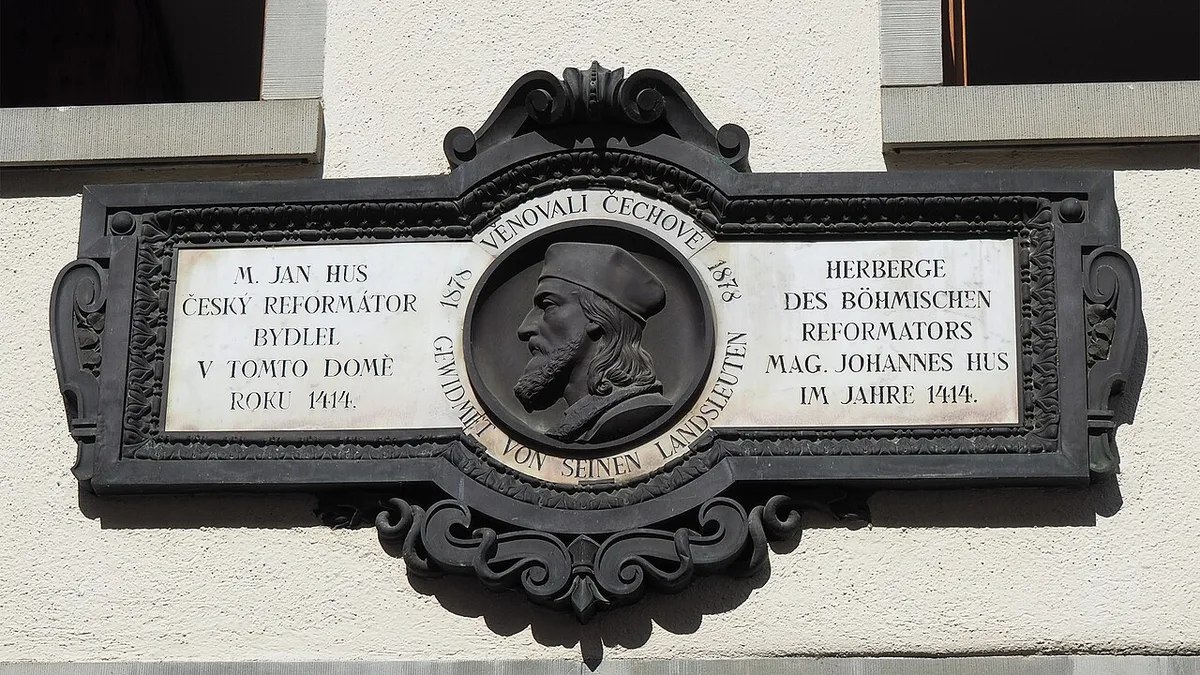
The Hus-Haus sits at Hussenstrasse 64 and focuses on the Bohemian church reformer Jan Hus, who lived around the turn of the fourteenth to fifteenth centuries. He was sentenced to death by the Council of Constance on 6 July 1415 for his criticisms of the Church and his interpretation of its role. The museum occupies a medieval Konstanz house long believed to be where Hus spent his last days of freedom, and its permanent exhibition covers his time as a lecturer at Charles University of Prague, his sermons in Bethlehem Chapel and his proposals for church reform.
Anchoring the Council of Constance to a specific building keeps the history concrete rather than turning the whole quarter into vague medieval atmosphere. If the Hus-Haus is closed, the lanes themselves remain the point of this section. Check current opening details with the city before planning your day around the museum.
Stop 4: The Lakefront and Harbour
The lakefront and harbour close the walk with the view that defines Konstanz: the promenade, the boat traffic and, on clear days, the Alpine foothills. Lake Constance Tourism states that a regular car and passenger ferry operates between Konstanz and Meersburg on the northern shore, so the harbour is also a practical exit point if you are continuing elsewhere. The Imperia statue at the harbour is the city's best-known landmark and a convenient meeting point if your group splits up.
Boat schedules and fares change by season and operator, so check the current timetable rather than assuming a departure time. If you are extending your stay, the 2 days in Konstanz itinerary and the 3 days in Konstanz itinerary build outward from this same compact centre.
Museum Choices Along or Near the Route
If you want one archaeological alternative, the Archäologisches Landesmuseum Baden-Württemberg at Benediktinerplatz 5 covers the Stone Age to the Middle Ages, including pile dwellings, Celtic barrows and Roman urban life. Its Constance room traces the town from prehistoric lake village to Roman fort to medieval episcopal town, using models and newer media. It sits on the other side of the river from the old town, so it is a deliberate detour rather than an on-route stop.
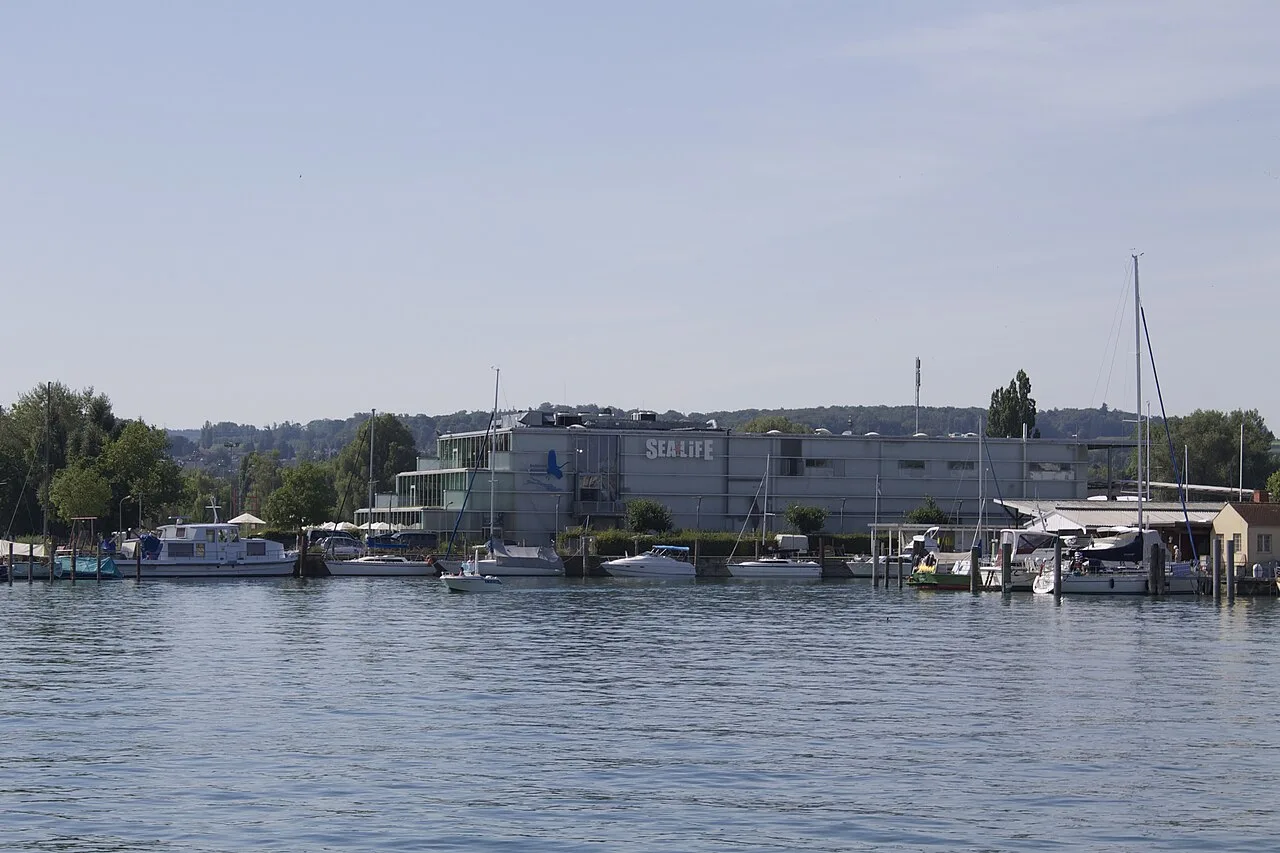
SEA LIFE Konstanz at Hafenstrasse 9 is the family option, and the Bodensee.eu listing states that admission is only guaranteed with a pre-booked online ticket or a time slot reservation. The same listing states that entrance to the Bodensee-Naturmuseum in the same building is included in the SEA LIFE ticket. It also states plainly that admission to SEA LIFE is not included in the Bodensee Card PLUS.
These are three separate ticketing arrangements: the Rosgartenmuseum's own card benefit, SEA LIFE's pre-booking requirement and its exclusion from the same card, and the archaeological museum's own admission. Do not assume one entry covers another. Decide which, if any, collection you actually want before you start walking.
Practical Decisions: When to Walk and What to Book
Konstanz tourism sources describe the city as open 365 days per year, and the seasons genuinely change the walk: spring for blossoms, summer for the promenade, autumn for quieter streets, winter for the Christmas market in the centre. Late summer can be busy, while spring and autumn generally give milder walking conditions. Pick the season for the experience you want rather than the one with the best weather statistics.
Book ahead where a source tells you to: SEA LIFE states that admission is only guaranteed with a pre-booked online ticket or a time slot reservation, which makes it a poor spontaneous mid-walk stop on a busy day. Museum opening hours also shift by season, so verify the day before. Everything outdoors on this route needs no booking.
If you have only an afternoon, choose Münsterplatz and the Niederburg lanes over a museum and finish at the harbour. That combination gives you the old town's two distinct textures plus the lake view without clock-watching. Save the collections for a return visit or a longer stay.
Accessibility and Pace Caveats
The old town is pedestrian and largely flat, but the lanes are cobbled and include uneven surfaces that slow a wheelchair or a stroller. The Bodensee.eu listing for SEA LIFE states the attraction is fully accessible to wheelchair users and has an accessible toilet, which is specific to that site rather than the old town generally. Check individual venues rather than assuming a uniform standard.
Crowd levels in the narrow lanes can peak in high summer and around major events, when the promenade and harbour fill up too. Walking early in the day avoids most of it without changing the route. If mobility is a concern, plan the harbour and square as your fixed points and treat the lanes as optional.
Rules, hours and access arrangements change, so confirm anything you plan to rely on with the operator before you travel. The city's own tourism information is the most direct place to check current conditions. Treat all timings in this guide as suggestions you can adjust to your own pace.
Plan Your Visit
The strength of this route is that it needs almost no planning: arrive, walk the square, drift through the Niederburg, finish at the water. Add a museum only if you have the time to give it properly, and check its current opening pattern and admission first. Everything else is a matter of pace and weather.
Verify the volatile details before you go: museum hours and admission, SEA LIFE's booking requirement, and any boat timetable you intend to use. The Rosgartenmuseum's own published city-walk length of roughly 1.5 hours is a useful sanity check on your own pacing. With those confirmed, the walk itself is the easy part.
Frequently Asked Questions
Do you need a guided walking tour in Konstanz, or is self-guided enough?
Self-guided works well because the old town is compact and the main quarters sit within walking distance of each other. The Rosgartenmuseum runs its own guided walks of roughly 1.5 hours, which gives you a sense of what a structured tour covers. A guided option adds narrative and context, while a self-guided route gives you control over pace and stops. Check what the city's tourism office currently offers if you want a guide.
How long does a Konstanz old town walking tour take?
As a suggestion rather than an official figure, allow roughly two to three hours for the loop through Münsterplatz, the Niederburg and the harbour without entering any museum. The Rosgartenmuseum publishes roughly 1.5 hours for its own guided city walk, which is a useful benchmark for the walking portion alone. Museum visits, meal breaks and time on the promenade add to that total.
Which stops on the walk are free and which need a ticket?
Münsterplatz, the Niederburg lanes and the lakefront promenade are public space you can walk freely. Interiors and collections are ticketed separately: the Rosgartenmuseum publishes its own admission terms, and the Bodensee.eu listing for SEA LIFE states that admission is only guaranteed with a pre-booked online ticket or time slot reservation. Do not assume one ticket covers several museums, and check each operator's current terms before your visit.
What is the Niederburg district and is it worth walking through?
The Niederburg is Konstanz's medieval quarter, sitting between the minster area and the water, with narrow lanes and an irregular street pattern. It rewards slow walking rather than a quick pass-through, and it is where the Hus-Haus focuses on the reformer Jan Hus and the Council of Constance. Give it forty minutes to an hour if you want to absorb it properly.
Can you combine the old town walk with a visit to the Rosgartenmuseum or SEA LIFE?
The Rosgartenmuseum sits directly on the route, so it fits naturally as a mid-walk stop and has a café in its historic courtyard. SEA LIFE is at the harbour and its listing states that admission is only guaranteed with a pre-booked online ticket or time slot reservation, so it needs planning rather than spontaneity. Each venue has its own ticket, so decide which one you actually want before you set out.
Is the Konstanz minster free to enter, and is tower access separate?
No operator page reviewed here publishes a confirmed current entry rule or price for the minster tower or interior. Treat both as things to verify with the operator on the day rather than assumptions. The square around the minster is public space you can cross freely regardless.


