

For a concrete anchor before you start: the regional tourism board recommends about 60 minutes for the Rosgartenmuseum, the medieval guild house in the centre of the old town, which makes it an easy add-on to a quarter wander rather than a half-day commitment. That figure is a suggestion, not an official duration, and a special exhibition will stretch it. The Niederburg itself has no entry gate: the lanes, squares and church exteriors are free, while museum interiors are sold separately.
Konstanz is the largest city on Lake Constance and the only German municipality on the lake's southern shore, with a well-kept historic centre bordering Switzerland, the lake and the Seerhein. That geography explains why the Niederburg feels less like a single sight and more like the oldest layer of a compact, walkable town. The plan below assumes you are on foot and that you let the quarter set the pace rather than chasing a checklist.
This guide keeps two things separate on purpose: what you can see freely from the street, and what sits behind a ticket desk. It also flags where prices, hours and access rules must be confirmed with the operator, because those details change season to season and no third-party page should be treated as current.
Where the Niederburg Sits in the Old Town
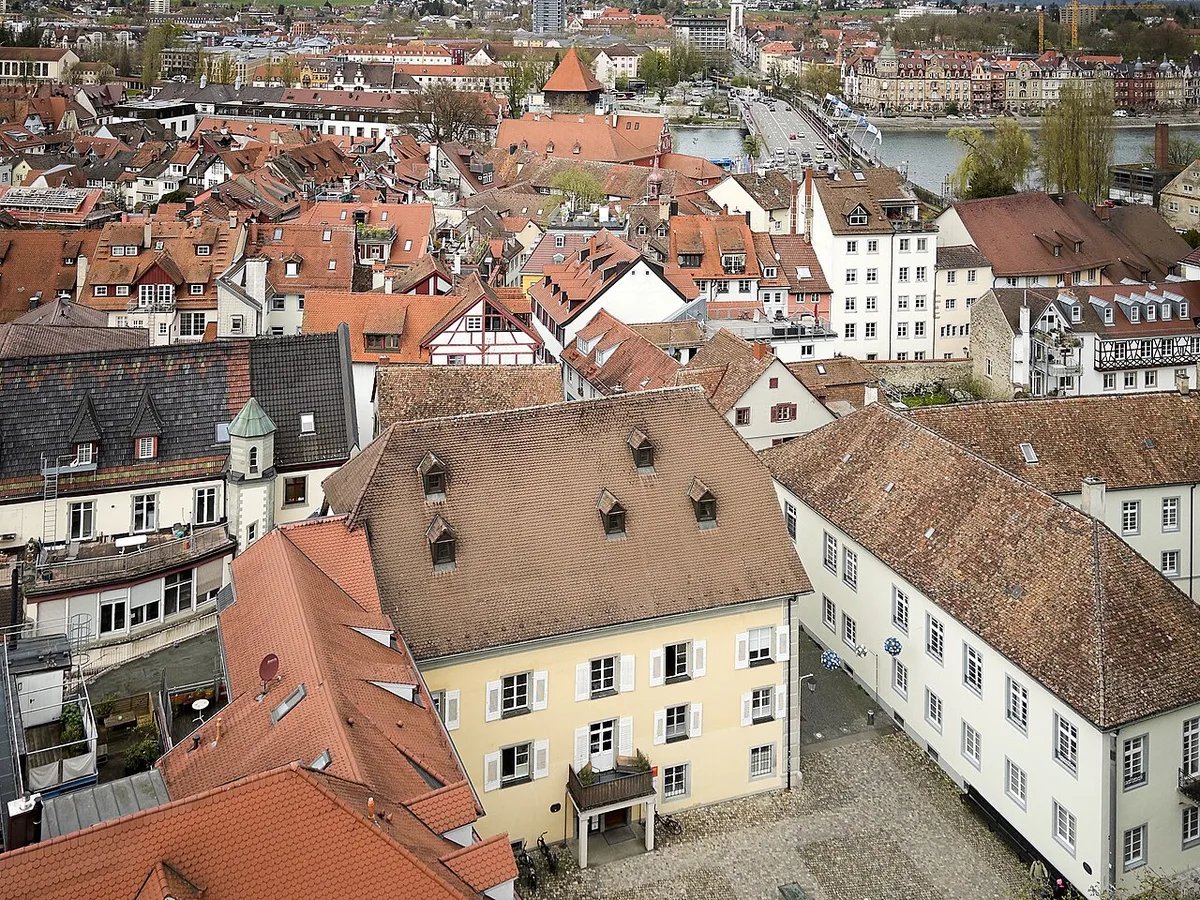
The historical centre is wedged between Switzerland, the lake and the Rhine as it leaves the Obersee, so orientation is easier than the tangle of lanes suggests. Use the Münster as your fixed point and the harbour as your second: if you can place one of them, you are never genuinely lost. Walking dominates here, and that is the intended way to experience the quarter.
Practical orientation starts at the Tourist-Information at Bahnhofplatz 43, inside the railway station, where you can pick up city maps and ask current questions about tours and tickets. The station sits on the edge of the centre while the Niederburg sits inside it, so plan the walk in one direction rather than doubling back. If you want a formal city tour, that office is the right place to ask what is running.
Because the old town is compact, a wander through the Niederburg pairs naturally with the Münster, the Stadtgarten and the lakefront promenades in a single loop. The trade-off is depth: trying to cover all of it in one pass means skimming each part. Decide in advance whether you want breadth on foot or real time inside one building.
What to See While Wandering
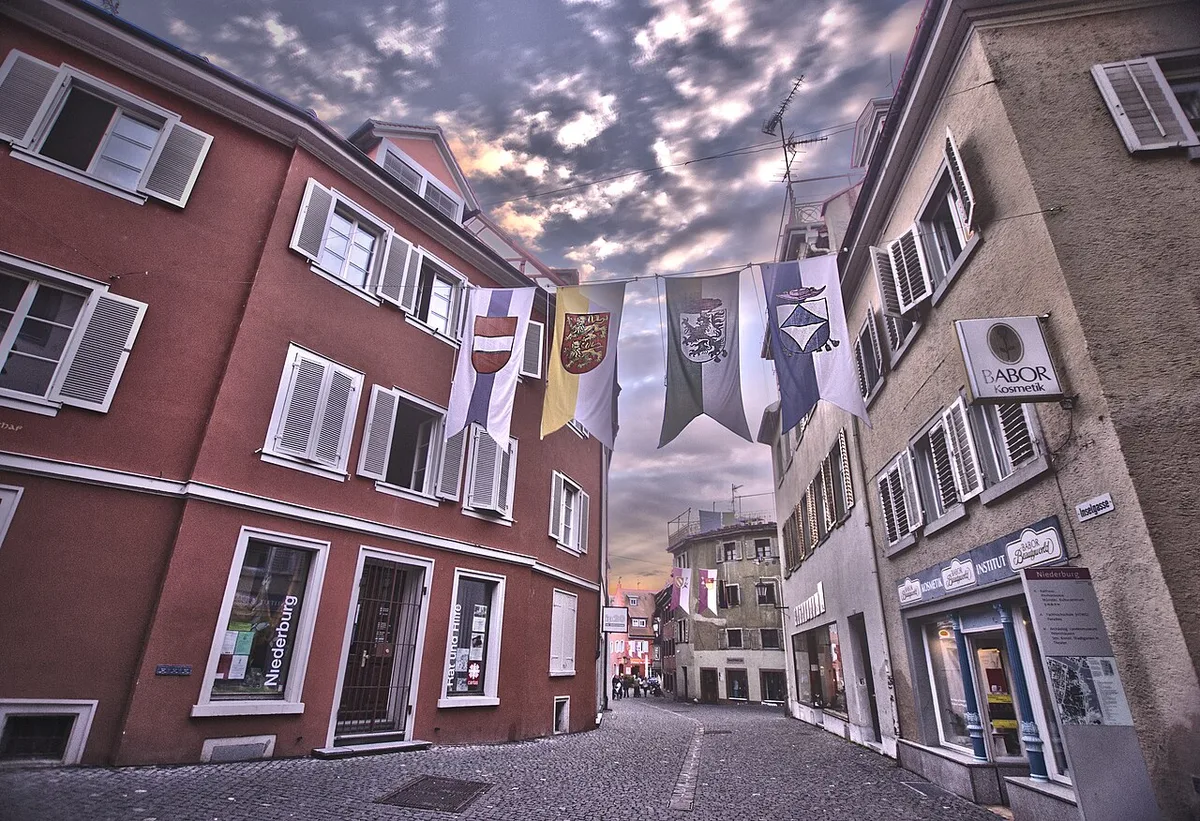
The appeal of the Niederburg is architectural texture rather than a single headline monument: preserved medieval fabric, guild-era houses, small squares and the lanes that connect them. Konstanz's old town was largely spared wartime destruction, which is why the street pattern still reads as a coherent whole rather than a reconstruction. Walk slowly and look up; much of the detail is on facades rather than information boards.
The Münster Unserer Lieben Frau anchors the old town and is the natural hinge between the quarter and the rest of the centre, with the tower offering the elevated view over the lake and rooftops. Treat the church interior and any tower access as two separate decisions, because arrangements sit with the parish and can differ. Check the current position before you build a day around climbing.
Down at the water, the harbour front with the Imperia statue is the city's most photographed corner and an obvious end point for a quarter wander. Light here is best in the morning and early evening, which also tends to be when the lanes are quieter. If photography is a priority, sequence the walk around that light rather than around museum opening times.
Free Streets Versus Ticketed Interiors
The single most useful thing to understand before you go is that Konstanz does not sell one ticket covering the old town. Streets, squares, the harbour and the Stadtgarten are free public space, while museums charge separately and each sets its own admission. Church interiors are generally places of worship rather than attractions with a turnstile. Plan your budget around one or two paid interiors instead of assuming a combined pass.
Admission prices and opening hours are exactly the kind of detail that shifts, so verify with the museum itself in the week you travel. The Rosgartenmuseum sits at Rosgartenstrasse 3-5 in the old town, and the regional tourism board currently lists adult admission there at 5.00 euros with one-time free admission for holders of the Bodensee Card PLUS, a regional pass. If you hold that card, check its current validity list before assuming coverage.
One caveat worth repeating: several museums clustered around the same stretch of old town are independently run, so a ticket for one tells you nothing about the next. Keep the free-versus-paid line clear in your plan and you will avoid an unwelcome surprise at the door.
Museum Options Inside and Near the Quarter
The Rosgartenmuseum occupies the former butchers' guild house on Rosgartenstrasse, first documented in 1324 and merged with the neighbouring house in 1454, and it has held city and regional collections since its founding in 1870. Its preserved late-medieval halls and rooms are part of the experience, not just the exhibits. The museum also has a café in its historic extension and inner courtyard if you want a pause mid-visit.
As a planning figure, roughly 60 minutes is the time the regional tourism board recommends for the Rosgartenmuseum, which makes it an easy add-on rather than a half-day commitment. Treat that as a suggestion; a special exhibition will obviously take longer. Check what is currently on show before you go, since temporary exhibitions change the balance of the visit.
If you would rather spend your museum hour on archaeology, the Archäologisches Landesmuseum Baden-Württemberg at Benediktinerplatz in Petershausen covers the Stone Age to the Middle Ages, including pile dwellings, Roman urban life in the region and early medieval finds such as the Trossingen grave. It sits outside the tightest part of the old town, which makes it a deliberate detour rather than a stroll-by. Its programme includes temporary exhibitions and family activity, so check the calendar before committing.
Choosing between the two comes down to what you want from an hour: the Rosgartenmuseum gives you the city's own art and cultural history in an intact medieval setting, while the state museum gives you deep archaeology and prehistory. Doing both is possible but pushes the day toward a museum itinerary rather than a quarter wander. Pick one unless the weather has other plans.
Best Times to Wander the Quarter
Morning and early evening are the two windows that tend to work best: softer light for the lanes and harbour, and thinner crowds in the squares. Midday concentrates visitors around the Münster and the main shopping stretches, which changes the feel of the quarter noticeably. If you only have one window, take the earlier one and use the middle of the day for a museum.
Season matters as much as hour. Lake Constance Tourism suggests spring for the tulips on Mainau and summer for a dip in the region's free lidos, which tells you when the area expects its heaviest footfall. Shoulder months give you the same streets with more room to move. Winter is genuinely quieter, with the Constance Christmas market as the seasonal draw.
Order your day around opening hours rather than the other way round. Museums keep daytime hours, while streets and the waterfront never close. Build the fixed stops first, then fill the gaps with wandering, which is the part of the Niederburg that does not need a schedule.
Combining the Münster, Lakefront and a Boat
The classic compact route runs from the Niederburg lanes to the Münster, then down to the harbour and Imperia, and finally along the lakefront promenades toward the Stadtgarten. All of it is walkable and none of it requires transport, which is why this is the most efficient way to see the centre in a single outing. Add the Stadtgarten last so you finish by the water.
From the harbour you can extend by boat. The regional tourism board notes a regular car and passenger ferry between Konstanz and Meersburg on the northern shore, catamarans reaching Friedrichshafen, and excursion boats linking Konstanz to most lakeside municipalities, with Mainau reachable by boat, on foot or by bike. Schedules and fares change seasonally, so check the operator's current timetable rather than any stored figure. The trade-off is clear: a boat trip turns a quarter wander into a full day.
If Mainau is the goal, remember it belongs to Konstanz and can be reached without the water at all, which is useful when sailings are affected by weather. Either way, keep the boat as the final leg so a delay does not cost you the old town. Do not schedule a museum and a long boat crossing back to back.
Practical Planning: Time, Walking and Tours
A self-guided wander of the quarter fits comfortably into a couple of hours, and adding one museum plus the harbour and Stadtgarten brings it to roughly half a day. Those are estimates, not official durations, so scale them to how much time you spend reading facades. If you have only a morning, skip the museum and let the streets carry the visit.
On whether to add a guided city tour: the regional tourism board promotes guided tours of Konstanz as a year-round offer covering anecdotes and lesser-known detail. The Rosgartenmuseum also runs its own walks across town, which must be booked in advance, are limited to 25 people and are currently only available in English and Spanish. Group tour pricing is published by the museum directly, so ask there rather than relying on secondary listings.
For anyone pairing the quarter with a specific historic building, the Hus-Haus in the same walkable centre covers the Bohemian reformer Jan Hus, so it can slot into the same loop. Read up on it first if the early fifteenth-century context is what you came for. Otherwise, keep the day loose and let the quarter do the work.
Plan Your Visit
The Niederburg rewards a simple approach: walk it in the morning or early evening, treat the streets as free and the museums as individually ticketed, and anchor the route on the Münster and the harbour. Confirm admission prices, opening hours and any tower access directly with the operators close to your travel date, because those are the details that move.
If you want to extend, add one museum and then a lakefront finish, or take a boat onward to Mainau, Meersburg or Friedrichshafen when the timetable suits. Two well-chosen stops beat five rushed ones in a quarter this compact.
Frequently Asked Questions
Is the Niederburg quarter free to visit?
Yes. The lanes, squares, harbour area and waterfront promenades are public space and cost nothing to walk. What you pay for separately are museum interiors such as the Rosgartenmuseum or the Archäologisches Landesmuseum, plus any tower access at the Münster if it is being offered. Because there is no single old-town ticket, budget for one or two paid interiors rather than assuming a combined pass, and check each museum's own admission page before you travel.
How much time should I allow for the Niederburg and the old town?
A self-guided wander through the quarter fits comfortably into a couple of hours, and adding one museum, the harbour and the Stadtgarten brings it to roughly half a day. Those are planning estimates rather than official durations. As a comparison point, the regional tourism board recommends about 60 minutes for the Rosgartenmuseum, which is a suggestion and not a requirement. If your time is tight, skip the museum and let the streets carry the visit.
Can I combine the Niederburg with the Münster and the lakefront in one walk?
Yes, and it is the most efficient way to see the centre. A natural sequence runs from the Niederburg lanes to the Münster, then down to the harbour and the Imperia statue, and finally along the lakefront promenades toward the Stadtgarten. Everything is walkable, so no transport is needed. Put the Stadtgarten last so you finish by the water, and if you plan to climb the Münster tower, verify current access with the parish first.
Which museum is worth adding, the Rosgartenmuseum or the Archaeological State Museum?
Choose based on what you want from an hour or two. The Rosgartenmuseum is a medieval guild house on Rosgartenstrasse holding the city's art, cultural and regional history collections in preserved late-medieval rooms, with a café on site; the regional tourism board suggests around 60 minutes there. The Archäologisches Landesmuseum at Benediktinerplatz covers the Stone Age to the Middle Ages, including pile dwellings and Roman finds, and sits slightly outside the tightest part of the old town. Doing both is possible but pushes the day into a museum itinerary.
When is the best time of day to wander the quarter?
Morning and early evening give you the best light and the thinnest crowds in the lanes and at the harbour. Midday concentrates visitors around the Münster and the main shopping streets, which noticeably changes the atmosphere of the quarter. Build your fixed museum stops around daytime opening hours first, then fill the remaining time with wandering, since streets and the waterfront never close. Season matters too: spring and summer bring the heaviest regional footfall, while winter is quieter apart from the Christmas market.


