The single most useful planning detail for families is that Heidelberg Castle's Palace Ticket includes use of the funicular railway as well as the courtyard, the Great Barrel and the German Apothecary Museum, so those are not separate purchases. The castle administration publishes current opening times, tour slots and admission figures on its visitor information page, and these change with the season, so check there before you commit to a morning or afternoon. Family-suitability notes below are suggestions drawn from route descriptions and city family pages, not official ratings.
Heidelberg is a compact university city on the Neckar, and its main family sights sit close together, which matters more than any single attraction when you are travelling with children. The castle rises directly above the old town, the riverbank runs along its edge, and a wooded hill opposite gives you a panorama without leaving the city. The historic core fits inside a walkable area, and the castle grounds are largely outdoors, so weather shapes the day as much as opening hours do.
Why Heidelberg Works Well for a Family Day
The castle funicular removes the steepest climb, the Old Bridge and riverbank are free and open, and the headlined sights sit within a short walk of one another. City tourism lists the castle, Old Bridge, Philosopher's Walk, mountain railway, Königstuhl and Neckarwiese among its main attractions, which confirms that the family-relevant pieces are all central rather than scattered. You are not choosing between a culture stop and an outdoor stop; they sit on the same slope.
The city's own family pages point to playgrounds, the municipal swimming pools, the zoo, the city forest with its themed paths and adventure trails, and the Natürlich Heidelberg programme of guided woodland excursions, some of them aimed specifically at families. That list matters because it shows how much of the family offer depends on weather rather than ticketing. The city also names its public library, with books, quiet reading corners and a café, as a wet-weather option.
A suggested shape for a first visit is a castle morning while energy is high, a riverbank or old-town break at midday, and one short outdoor walk in the afternoon. Treat that as a template rather than a schedule, since children's stamina and the weather will decide the second half. The sections below separate what one ticket covers from what costs nothing at all.
Heidelberg Castle with Children: What One Palace Ticket Covers
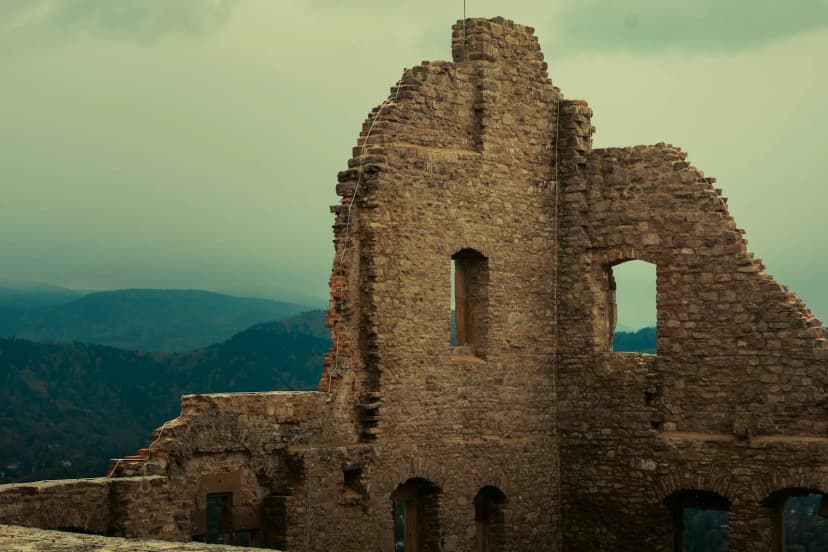
The castle administration separates the things you can wander from the things you cannot. The Palace Garden is open to the public during daylight hours, and the courtyard, the Great Barrel cellar and the German Apothecary Museum sit inside the Palace Ticket rather than behind separate admissions. The castle interiors are different: viewing them is only possible on a guided tour, which carries an additional fee on top of the Palace Ticket. Families who mainly want the views, the barrel and the apothecary collection can therefore skip the tour without losing access to the grounds.
Reduced admission applies to children aged six and over as well as to students and several other groups, while anyone aged 15 and over counts as an adult unless they qualify for a concession. Because those thresholds are published alongside the current ticket figures, confirm them on the castle page rather than relying on an older guide. Note also that the apothecary museum keeps slightly different seasonal dates from the castle's all-year opening pattern, with a winter schedule from early January to the end of March.
Plan the castle for the part of the day when your children are freshest, because the site is exposed and the walking surfaces are uneven. A short visit built around the courtyard view, the barrel and the apothecary museum is usually enough for younger children. If you want the interiors, match your arrival to a tour slot rather than assuming you can join the next one, since tours run to a published timetable rather than continuously.
Riding the Funicular and Deciding How Far Up to Go
The Palace Ticket includes use of the funicular railway, which is the practical reason many families ride rather than walk to the castle. The railway does not stop at the castle; it continues higher up the hill, so you are really choosing between three levels rather than between riding and walking. Decide in advance whether you are getting off at the castle, staying on for the upper section, or doing both.
Heidelberg Marketing lists the Königstuhl as the city's local mountain at 567 metres and the traditional mountain railway as the way up, so the upper stop is a genuine add-on for families with children who still have energy after the castle. It is equally reasonable to skip it for those who do not. Either way, check the castle page for what your ticket includes on the day of your visit rather than assuming the railway is running normally, because the operator does not publish disruption status in advance.
If you are unsure how your children will handle the height and the crowds, ride up first and walk down through the old town afterwards, so the climbing stays optional. Walking up is a genuine option for older children, but it adds time and effort to a day that already involves standing. Families with strollers should verify stroller handling and step-free routes with the operator before travelling, since the castle's visitor information does not publish accessibility details for the railway or the castle.
Free Family Time Along the Neckar and at the Old Bridge
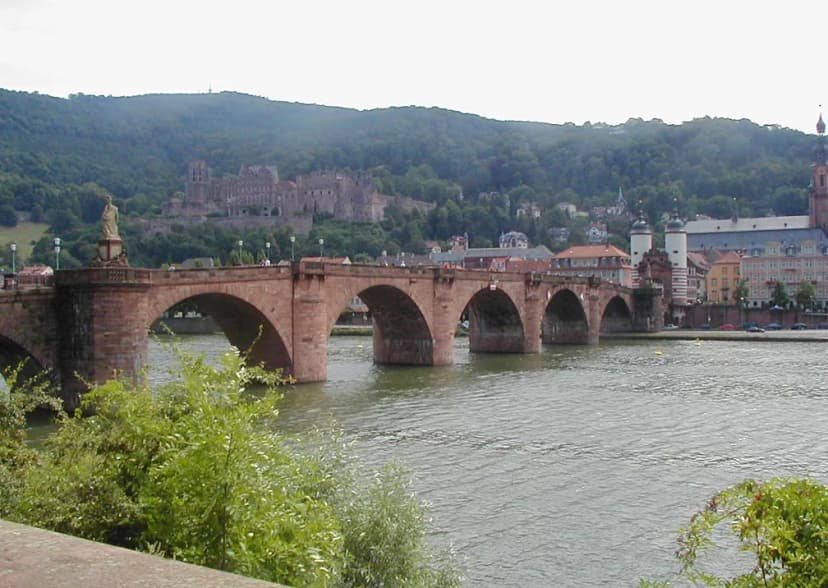
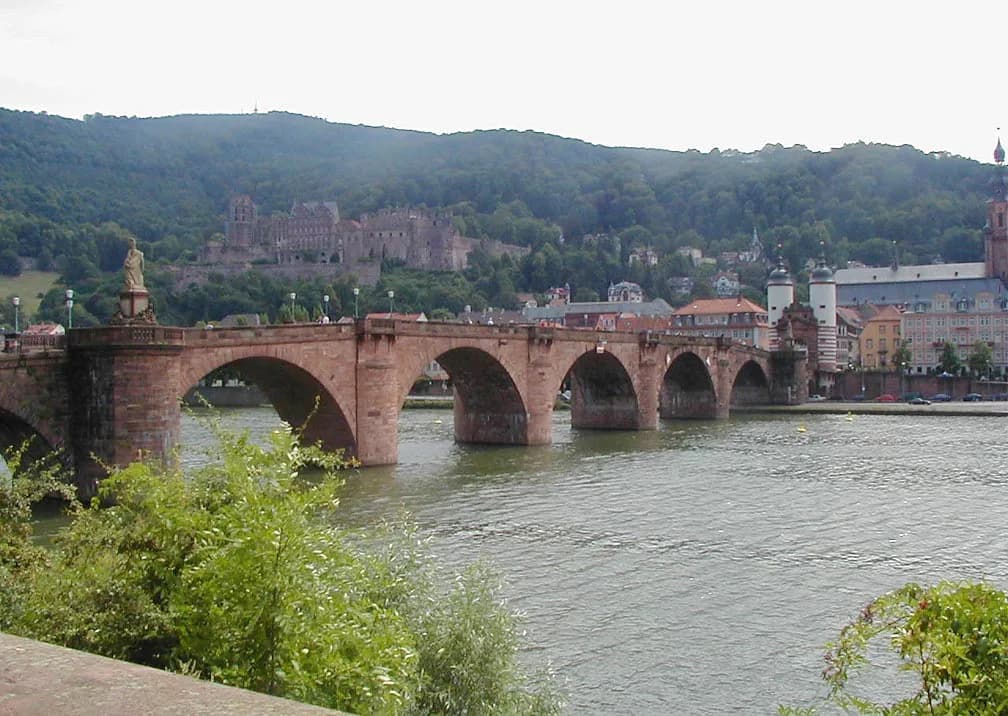
The Old Bridge, officially the Karl Theodor Bridge, is a public pedestrian crossing over the Neckar linking the old town with the Neuenheim district, and it is open around the clock with no ticket, booking or registration. It is around 200 metres long with nine arches, so crossing it and back is a manageable leg-stretch rather than an outing in itself. Views back towards the castle and the tiled roofs of the old town are the reason to linger rather than rush across.
At the southern entrance stands the bronze bridge monkey, and the legend attached to it is a reliable hit with children: rubbing the mirror is said to bring wealth, touching the fingers means you will return to Heidelberg, and the nearby mice are said to promise children. The original carving was destroyed in the 17th century and the current bronze dates from 1979. Treat the rubbing as a game rather than a rule, and expect a small crowd at peak times.
On the Neuenheim side, the Neckarwiese is the city's riverside meadow for games, sport and simply sitting, and Heidelberg Marketing lists it among the main things to do. It is the obvious place to let children run after a morning indoors, and it costs nothing beyond whatever you bring. Pair it with the bridge crossing so you cover both in one loop instead of walking back and forth. Further visitor details appear in Old Bridge Heidelberg: Visiting Guide and History.
The Philosopher's Walk: Which Route Suits Your Children's Ages
The Philosopher's Walk is a free path on the north bank of the Neckar, open at any time, and the climb is the part that decides whether it suits your family. Two approaches are commonly described: the steep Schlangenweg, a zigzagging path partly made of stairs that climbs from near the Old Bridge, and a longer approach from the Theodor-Heuss-Brücke side that avoids many of the steps but involves steady uphill walking and traffic awareness. Choose the gentler route for younger children and the steps for older ones who want a short, punchy climb.
Allow roughly 30 to 60 minutes for the path itself at a relaxed pace, plus about 20 to 30 minutes each way if you are walking up from the old town; that is a personal estimate from route descriptions, not an official timing. The path is paved at first and later becomes dirt, and it passes a small garden with memorials to writers and thinkers, benches and open viewpoints. Bring water and snacks, since apart from a seasonal ice cream cart there is generally nothing to buy along the way.
The name is a student inheritance rather than a philosophers' club: in the Romantic era students studied philosophy in their early semesters, so student and philosopher were used interchangeably, and the quiet path became a favourite for walks and conversation. The slope is also unusually warm and sheltered, which is why palms, lemons and other exotic plants grow there. For children, the payoff is the panorama of the castle, river and old town from across the water.
Rainy-Day and Animal-Based Options
When the weather turns, Heidelberg's own family page recommends the public library, with books, media, quiet reading corners and a café, and notes the Kulturfenster cultural centre's family leisure programme, the children's cinema at the Gloria & Gloriette and the youth theatre at the city theatre. Those are indoor, city-run options rather than a single rainy-day attraction. Agree on one indoor plan before you leave in the morning rather than improvising in the rain.
The city also names Heidelberg Zoo and the city forest, with its themed paths and adventure trails, as family outings, and runs the Natürlich Heidelberg programme of expert-led excursions, some designed for families. It does not publish zoo admission or opening details on that page, so check the zoo's own site for current prices, hours and any booking requirement before travelling. Treat the forest trails as a flexible alternative on dry days rather than a fallback.
Museums inside the old town are the other obvious wet-weather lever, and the university library is a free indoor option in the old town, with public areas and exhibitions open without a ticket. Opening patterns for smaller museums vary by day and season, so verify times with each institution rather than assuming a uniform schedule across the city. If you have a second day available, a two day itinerary lets you park the indoor items on the wetter of the two.
Sample Half-Day and Full-Day Family Plans
A half day: ride the funicular to the castle, spend the time you have on the courtyard, the Great Barrel and the German Apothecary Museum, then descend and cross the Old Bridge to see the monkey and let the children run on the Neuenheim riverbank. This keeps transport time close to zero and puts the ticketed stop first. It suits families with younger children or a late arrival.
A full day: start at the castle when it opens, add the funicular ride higher up if the children are still keen, eat in the old town, then walk the Philosopher's Walk using whichever of the two approaches matches their ages. Finish on the riverbank rather than starting there, so the reward comes after the effort. This version needs an early start and tolerates one dropped stop.
If the weather is unsettled, swap the walk for the library or the zoo and keep the bridge crossing as the fixed outdoor moment. The main shopping street is pedestrianised, but cross streets carry delivery and resident traffic and cyclists ride legally, so children should be told the rules before you set off. Carrying some cash is useful for small bakeries and shops with card minimums.
Practical Family Considerations
The Altstadt is car-light rather than car-free: the main shopping street is pedestrianised, but side streets and crossings still carry vehicles and bicycles, so hold younger children's hands at junctions. Cobbles and stone steps are the real daily constraint, more than distance, and wet weather makes both slippery. Comfortable shoes with grip matter more here than in a flatter city.
Check the castle page for the day's opening hours, last admission and tour times before you leave, and check the zoo's own site for its hours and entry rules, because none of these are stable year-round. For anything the operator has not published, such as stroller handling on the funicular or step-free routes at the castle, ask ahead rather than discovering it at the gate. Building the day around verified times avoids the common mistake of arriving after last admission.
Restaurant kitchens in the old town often close in the mid-afternoon and last dinner orders come earlier than in southern Europe, so plan meals with children before those gaps rather than during them. Menus and child portions vary by venue and are not published centrally, so look at a couple of options on arrival. A bakery stop covers the awkward hours well.
Plan Your Visit
Heidelberg rewards a simple plan: one ticketed castle visit that already includes the funicular and the main castle collections, one free walk, and one riverbank stretch where children can stop being tourists. Keep the walking optional for the youngest and treat the Philosopher's Walk as a choice of two routes rather than a single obligation. Confirm the castle's hours, tour times and ticket scope on the official page, and check the zoo's own site if animals are on the list.
If you are building a longer Germany trip, the family approach that works here transfers to other compact cities with a child-friendly headline sight, and our Berlin family guide and Dresden family guide follow the same logic. Use the city guide hub to compare attractions before you decide how many days Heidelberg deserves.
Frequently Asked Questions
Is Heidelberg Castle good for young children?
The parts most children enjoy, the courtyard, the Great Barrel and the German Apothecary Museum, are included in the Palace Ticket and involve walking and looking rather than long readings. The castle interiors are only viewable on a guided tour with an extra fee, so families with short attention spans can skip them without losing the grounds. Surfaces are uneven and the site is partly outdoors, so plan around the weather.
Do we need a guided tour to see inside Heidelberg Castle?
Yes. The castle administration states that viewing the interiors is only possible in a guided tour, and the tour costs extra on top of the Palace Ticket. Everything else in the ticket, including the courtyard, the Great Barrel and the German Apothecary Museum, can be visited without a tour. Tour times differ between the summer and winter schedules, so check the day you plan to visit.
How hard is the Philosopher's Walk with kids?
The path itself is gentle once you are up, but getting there is the effort: the Schlangenweg is a steep, partly stepped zigzag, while the approach from the Theodor-Heuss-Brücke side avoids many steps but is a steady uphill walk with traffic crossings. Allow roughly 30 to 60 minutes for the path and about 20 to 30 minutes each way from the old town, as a suggestion rather than an official timing.
Is the Old Bridge free to cross?
Yes. The Old Bridge is a public pedestrian crossing with no ticket, booking or registration, and it is accessible at any hour. Expect a crowd at the bronze monkey by the southern gate, where children can rub the mirror, the fingers and the nearby mice. It is also the shortest link between the old town and the riverside meadow on the far bank.
What can families do in Heidelberg when it rains?
The city's family pages point to the public library with its reading corners and café, the Kulturfenster family programme, the children's cinema and the youth theatre as indoor options. University library public areas and exhibitions are another free indoor possibility in the old town. Decide on one indoor plan in the morning rather than improvising in the rain.